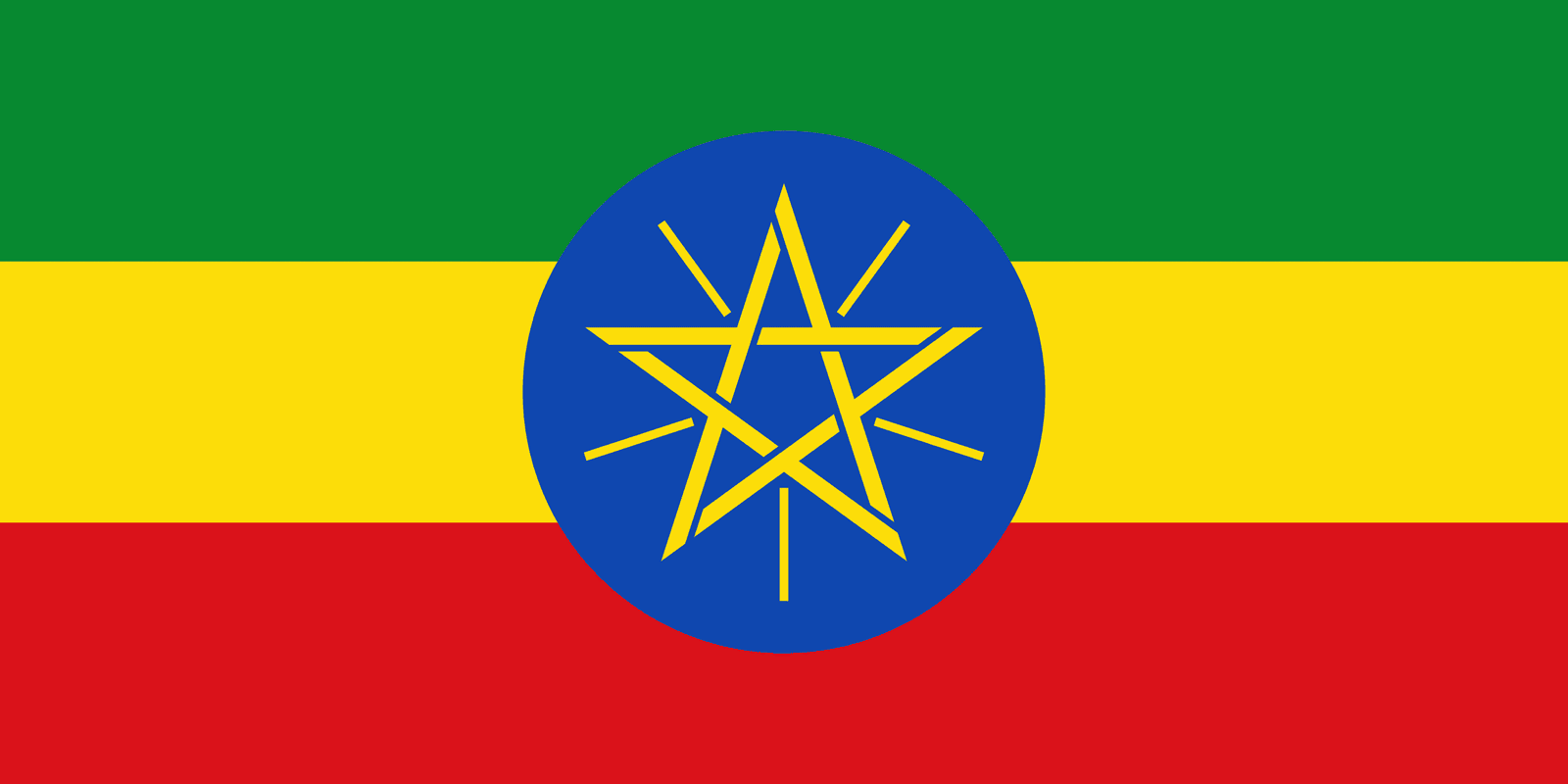
Flag of Ethiopia
| Legal Name | Federal Democratic Republic of Ethiopia |
|---|---|
| Flag |
|
| Capital City |
Addis Ababa |
| Total Area | ~1,104,300 km² |
| Land Area | ~1,000,000 km² |
| Water Area | ~10,000 km² |
| Population | ~126 million |
| Major Cities | Addis Ababa (~5.5m metro), Dire Dawa (~500k), Mekelle (~350k), Hawassa (~350k), Bahir Dar (~300k), Gondar (~350k) |
| Currency | Ethiopian Birr (ETB) |
| GDP | ~USD 155 billion |
| GDP Per Capita | ~USD 1,200 (nominal) |
About of Ethiopia
Ethiopia is a landlocked country located in the Horn of Africa in eastern Africa. It occupies a strategically significant position at the crossroads of Sub-Saharan Africa and the Middle East, with proximity to the Red Sea corridor via neighboring states. Ethiopia shares land borders with Eritrea to the north, Djibouti and Somalia to the east, Kenya to the south, and South Sudan and Sudan to the west.
The capital, Addis Ababa, is the political and diplomatic heart of the nation and one of Africa’s most important cities. It hosts the headquarters of the African Union and numerous international organizations. Other major urban centers, including Dire Dawa, Mekelle, and Hawassa, serve as regional administrative, economic, and cultural hubs.
Ethiopia is one of Africa’s most populous countries and among the fastest-growing in demographic terms. Its population is highly diverse, encompassing dozens of ethnic groups, languages, and cultural traditions. Despite rapid urbanization, a large share of the population still lives in rural areas and depends on agriculture for livelihoods.
Internationally, Ethiopia holds a unique status as one of the world’s oldest continuous civilizations and as a symbol of African independence. Its historical resistance to colonial rule, combined with its central role in continental diplomacy and regional security, underpins its strategic and geopolitical importance.
Etymology
The name “Ethiopia” derives from the ancient Greek word Aithiopia, meaning “land of the burnt-faced people,” a term used by classical writers to describe regions south of Egypt. Over time, the name became associated specifically with the highlands of the Horn of Africa.
In local usage, the country has long been known as Ityopp’ya in Ge’ez and later in Amharic, reflecting continuity between ancient and modern identities. The name evolved from a broad geographic descriptor into the recognized name of a sovereign state, carrying historical, cultural, and symbolic significance.
History
Ethiopia is one of the earliest centers of human civilization, with archaeological discoveries in the Rift Valley providing some of the oldest evidence of early hominids. Ancient societies developed agriculture, metallurgy, and trade networks thousands of years ago.
During antiquity, the Kingdom of Aksum emerged as a major regional power between the 1st and 7th centuries CE. Aksum was deeply integrated into Red Sea trade and was among the first states in the world to adopt Christianity as an official religion. Its legacy continues to shape Ethiopian culture and identity.
In the medieval period, a succession of Christian kingdoms dominated the highlands, while Islamic sultanates flourished in lowland and eastern regions. Ethiopia maintained political continuity through dynasties that traced their lineage to ancient rulers, reinforcing a strong sense of historical legitimacy.
Unlike most of Africa, Ethiopia largely avoided long-term colonial rule. Although briefly occupied by Italy in the 1930s, it successfully restored sovereignty and emerged as a founding member of the United Nations. In 1974, the monarchy was overthrown, leading to a socialist military government known as the Derg.
Following years of conflict and political upheaval, a federal republic was established in the 1990s. In recent decades, Ethiopia has experienced significant economic growth alongside political reforms and internal challenges, shaping its modern political landscape.
Government and Politics
Ethiopia is a federal parliamentary republic governed under a written constitution adopted in the mid-1990s. Sovereignty resides with the people, and power is shared between the federal government and regional states.
The executive branch consists of a President, who serves as head of state, and a Prime Minister, who holds executive authority as head of government. Legislative power is vested in a bicameral parliament, while the judiciary operates independently through federal and regional courts.
Administratively, Ethiopia is divided into regional states and chartered cities, structured largely along ethno-linguistic lines. This federal arrangement aims to accommodate the country’s diversity while maintaining national unity.
Ethiopia plays a prominent role in regional and continental affairs. It is an active member of the United Nations, African Union, and Intergovernmental Authority on Development. The country maintains one of Africa’s largest and most experienced military forces, primarily focused on national defense and regional peacekeeping.
Economy
Ethiopia is classified as a developing, low- to lower-middle-income economy with strong growth potential. Agriculture remains the backbone of the economy, employing a large portion of the population and contributing significantly to exports.
Key agricultural products include coffee, oilseeds, pulses, cereals, and livestock. Ethiopia is widely regarded as the birthplace of coffee, which remains its most important export commodity. Manufacturing has expanded in recent years, particularly in textiles, leather goods, and food processing, while services continue to grow steadily.
The country possesses significant natural resources, including fertile land, water resources, and hydropower potential. Major infrastructure projects have focused on energy generation, transportation, and industrial development.
Economic challenges include poverty reduction, inflation, foreign exchange constraints, and vulnerability to climate variability. Future prospects depend on continued reforms, regional stability, industrialization, and sustainable development strategies.
Demographics
Ethiopia’s population is one of the most diverse in Africa, comprising numerous ethnic groups with distinct languages and cultural traditions. The largest groups include Oromo, Amhara, Somali, and Tigrayan communities.
Amharic is the federal working language, while many regional languages are officially recognized and widely spoken. Ethiopia is religiously diverse, with Christianity and Islam as the dominant faiths alongside traditional beliefs.
The population is predominantly rural, though urbanization is accelerating. Ethiopia has a young population with high growth rates, presenting both opportunities and challenges in education, employment, and social services.
Culture and Society
Ethiopian culture is deeply rooted in ancient traditions, religious practices, and communal values. National identity is shaped by a shared history of independence, resilience, and cultural continuity.
The country has a rich artistic heritage, including distinctive music, dance, literature, and visual arts. Ethiopian cuisine is internationally recognized, featuring injera bread and a variety of spiced dishes that reflect regional diversity.
Social customs emphasize respect, hospitality, and strong family ties. Cultural and religious festivals play a central role in public life, reinforcing social cohesion. Football and long-distance running are popular sports, with Ethiopian athletes achieving global acclaim.
Education and Healthcare
Ethiopia’s education system includes primary, secondary, and tertiary levels, with expanding access in recent decades. Literacy rates have improved significantly, and universities have grown in number and capacity.
The healthcare system combines public and private providers, with a strong focus on primary healthcare and community-based services. Ethiopia has made notable progress in reducing child mortality and combating infectious diseases, though challenges remain in access, funding, and non-communicable disease prevention.
Geography and Climate
Ethiopia’s geography is highly varied, dominated by the Ethiopian Highlands, deep river valleys, and sections of the Great Rift Valley. Major rivers, including the Blue Nile, originate in the highlands and are vital to regional hydrology.
The climate ranges from cool highland conditions to arid and semi-arid lowlands. Seasonal rainfall patterns are crucial for agriculture, while droughts and floods remain significant natural hazards.
Environmental concerns include land degradation, deforestation, and climate change impacts, prompting increased focus on conservation and sustainable land management.
Flora and Fauna
Ethiopia is a biodiversity hotspot, hosting numerous endemic plant and animal species due to its varied terrain and climate. Native flora ranges from alpine vegetation to savannas and forests.
Wildlife includes iconic species such as the Ethiopian wolf, gelada baboon, and mountain nyala. The country has established national parks and protected areas aimed at conserving ecosystems and promoting ecotourism.
Map of Ethiopia
Ethiopia’s national symbols reflect its history, unity, and natural heritage. The tricolor flag and central emblem represent equality and diversity. The coat of arms and national anthem symbolize sovereignty and shared identity.
Natural and cultural symbols, including historic monuments and religious sites, hold deep national significance.
National Flag (Detailed Section)
The Ethiopian flag consists of three horizontal stripes: green on top, yellow in the middle, and red at the bottom, with a blue circle and yellow star emblem at the center. The tricolor has influenced many other African national flags.
The design dates back to the late 19th century and evolved over time, with the current emblem introduced to represent unity, equality, and cooperation among Ethiopia’s peoples.
Flag usage follows official protocol, with display on government buildings, during national celebrations, and in international settings. It is treated as a respected national symbol.
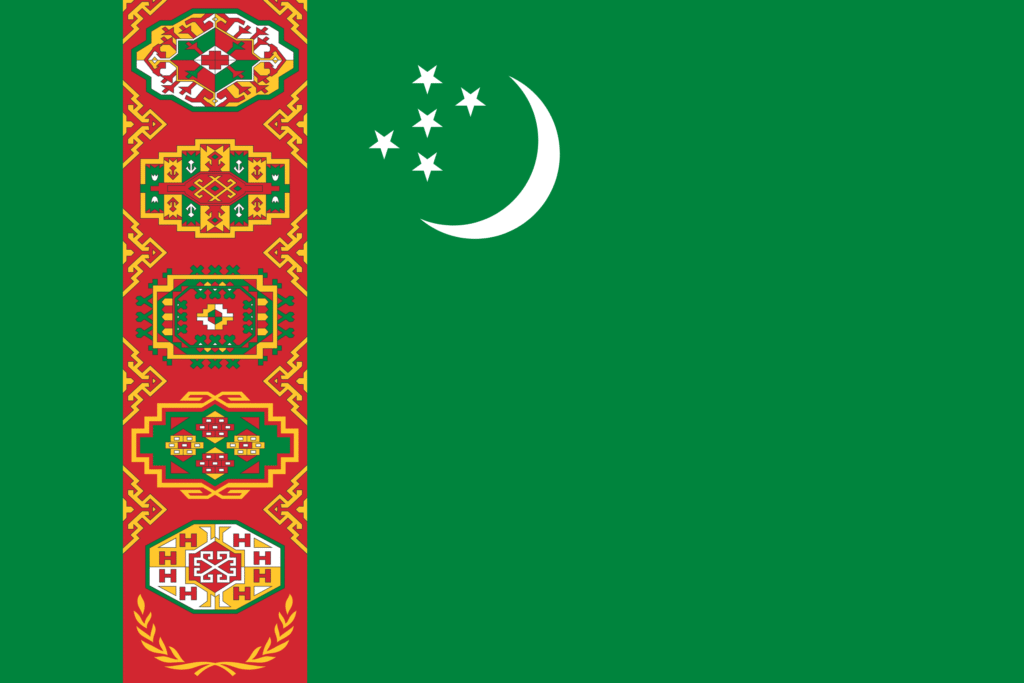
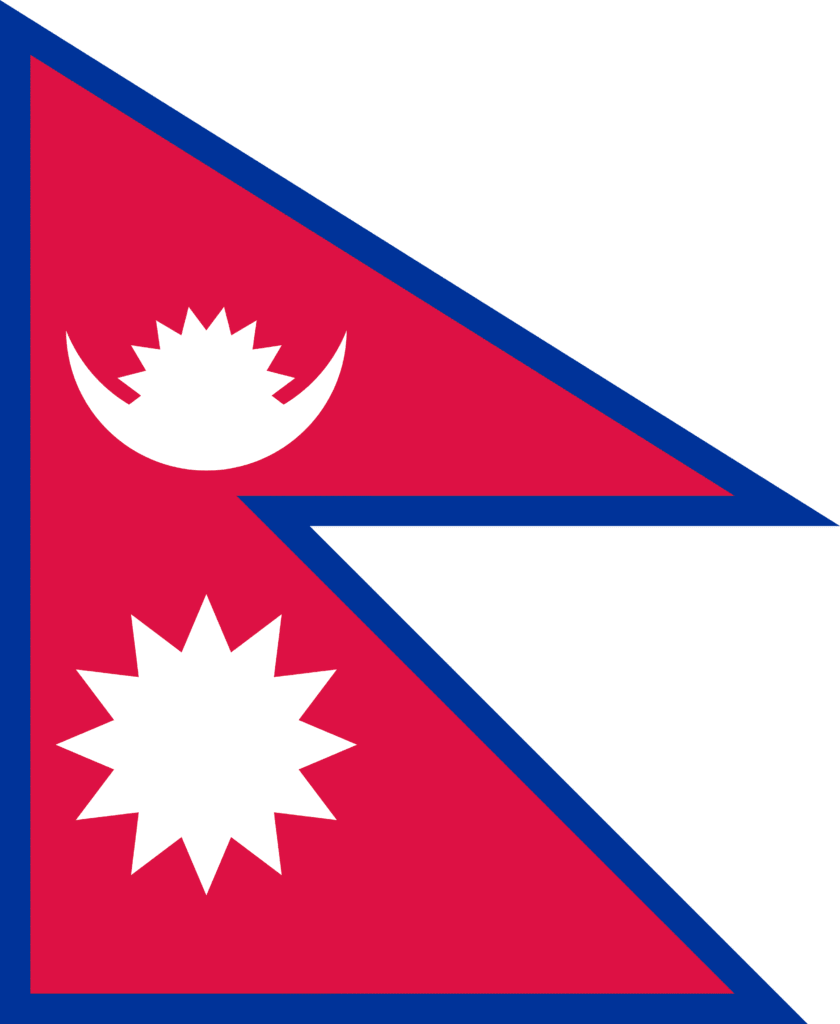
Realted Flags
Flag flying days
| Date | Flag Position | Occasion or Reason |
|---|---|---|
| March 2 | Full-mast | Victory of Adwa |
| May 5 | Full-mast | Patriots’ Victory Day |
| May 28 | Full-mast | Downfall of the Derg |
| September 11 | Full-mast | Ethiopian New Year |
| National Mourning Days | Half-mast | Official state mourning periods |