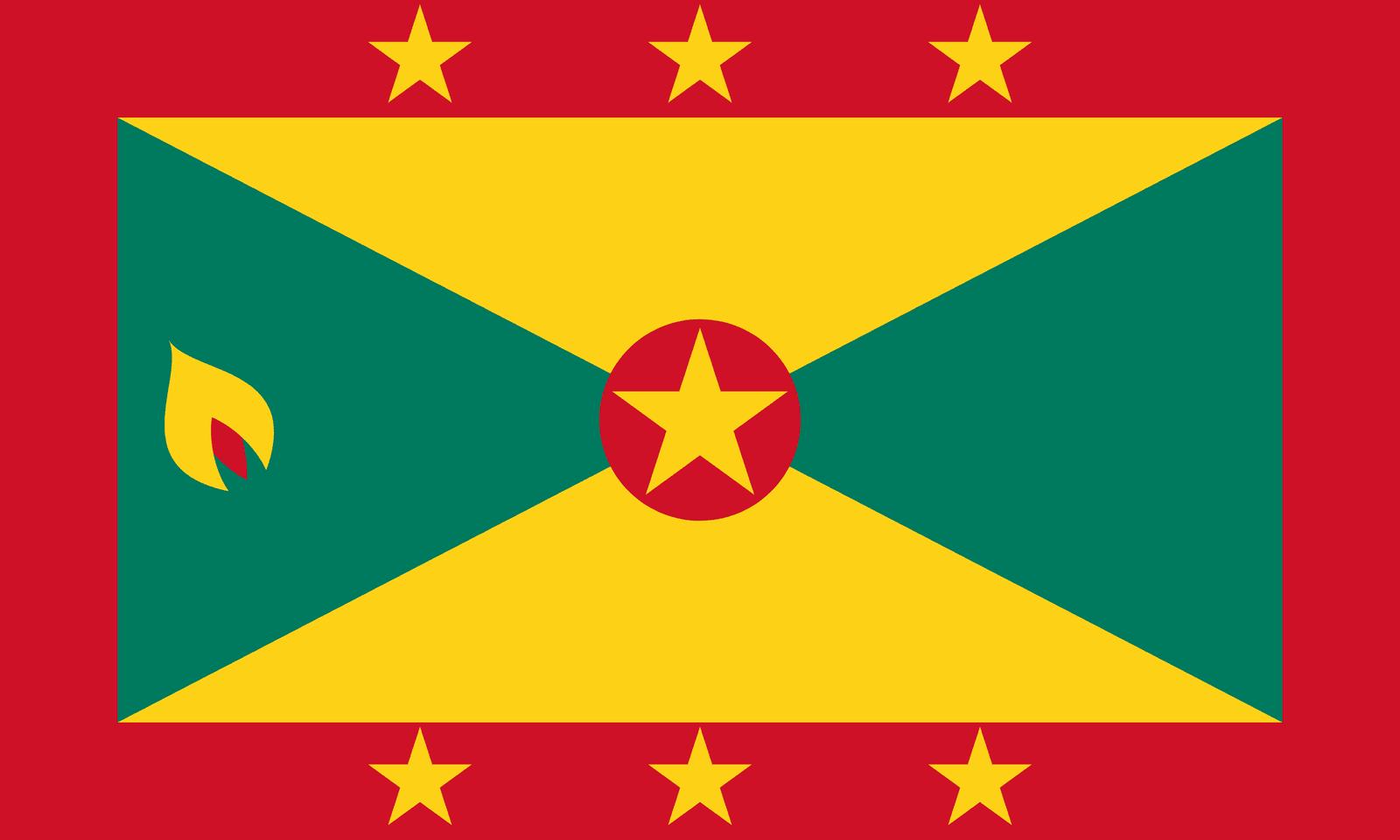
Flag of Grenada
| Legal Name | Grenada |
|---|---|
| Flag |
|
| Capital City |
St. George’s |
| Total Area | Approximately 344 km² |
| Land Area | Approximately 344 km² |
| Water Area | Negligible |
| Population | Approximately 126,000 |
| Major Cities | St. George’s (~34,000), Gouyave (~3,500), Grenville (~2,500), Victoria (~2,000) |
| Currency | Eastern Caribbean dollar (XCD) |
| GDP | Approximately USD 1.4 billion |
| GDP Per Capita | Approximately USD 11,000 (nominal) |
About of Grenada
Grenada is a small island nation located in the southeastern Caribbean Sea, at the southern end of the Grenadines island chain. It lies north of Trinidad and Tobago and forms part of the Lesser Antilles in the West Indies. Despite its modest size, Grenada is well known for its natural beauty, agricultural heritage, and vibrant cultural traditions.
The country consists of the main island of Grenada and several smaller islands, including Carriacou and Petite Martinique. Grenada has no land borders, and its maritime boundaries connect it to neighboring Caribbean states. St. George’s, the capital and largest city, is a picturesque harbor city that serves as the political, economic, and cultural center of the nation.
Grenada’s population is relatively small and close-knit, with a strong sense of national identity. Internationally, the country is recognized as a sovereign state and is an active participant in regional Caribbean affairs. Its strategic importance lies in its location along Caribbean maritime routes and its role within regional political and economic organizations.
Etymology
The name “Grenada” is derived from the Spanish word Granada, named by Spanish explorers after the city of Granada in southern Spain. The name reflects Spain’s early influence in the Caribbean during the age of exploration.
Over time, the spelling and pronunciation evolved into “Grenada,” which became firmly established during the colonial period and was retained after independence.
History
Archaeological evidence indicates that Grenada was originally inhabited by indigenous peoples, including the Arawaks and later the Caribs, who referred to the island as Camerhogne. These communities lived by fishing, farming, and inter-island trade.
European contact began in the late 15th century with Spanish explorers, though Spain did not establish a permanent settlement. In the 17th century, France colonized the island, leading to conflicts with indigenous populations and the establishment of plantation agriculture based on enslaved African labor.
Britain gained control of Grenada in 1763, following the Treaty of Paris, though France briefly regained the island before Britain reasserted control. Grenada remained a British colony until it achieved independence in 1974.
Post-independence history included political instability, culminating in a brief revolutionary government and a foreign military intervention in 1983. Since then, Grenada has developed as a stable parliamentary democracy, with regular elections and peaceful transitions of power.
Government and Politics
Grenada operates as a parliamentary democracy within the Commonwealth, recognizing the monarch of the United Kingdom as head of state, represented locally by a Governor-General.
Executive power is exercised by the Prime Minister and Cabinet, drawn from the elected House of Representatives. Legislative authority resides in a bicameral Parliament, consisting of the House of Representatives and the Senate. The judiciary is independent and forms part of the Eastern Caribbean Supreme Court system.
Administratively, Grenada is divided into parishes, along with the dependency islands of Carriacou and Petite Martinique. The country maintains diplomatic relations worldwide and is a member of the United Nations, the Commonwealth of Nations, the Caribbean Community (CARICOM), and the Organization of Eastern Caribbean States.
Grenada does not maintain a standing army; national security is handled by the Royal Grenada Police Force, supported by regional security arrangements.
Economy
Grenada is classified as a small, developing economy with upper-middle-income characteristics. Its economy is service-oriented and heavily influenced by tourism, education, and agriculture.
Tourism is a major contributor to GDP, supported by Grenada’s beaches, marine environment, and cultural attractions. Agriculture remains significant, particularly the production of nutmeg, mace, cocoa, bananas, and spices, earning Grenada the nickname “Island of Spice.”
Natural resources include fertile volcanic soil and marine resources. Grenada’s main trading partners include the United States, the United Kingdom, and other Caribbean nations. Key exports include spices, agricultural products, and processed foods.
Economic challenges include vulnerability to natural disasters, external economic shocks, and limited diversification. Future growth prospects focus on sustainable tourism, climate resilience, renewable energy, and human capital development.
Demographics
Grenada’s population is predominantly of African descent, with smaller communities of mixed heritage, East Indian descent, and European ancestry. This diversity is reflected in cultural traditions and social life.
English is the official language, while Grenadian Creole is widely spoken in informal settings. Christianity is the dominant religion, with Roman Catholicism and Protestant denominations being most prevalent.
The population is largely urban or semi-urban, with St. George’s serving as the main population center. Population growth is relatively low, with migration playing a significant role in demographic change.
Culture and Society
Grenadian culture is a vibrant blend of African, European, and Caribbean influences. Music, dance, storytelling, and community celebrations are central to social life.
Cuisine is rich in spices and local produce, featuring dishes such as oil down, the national dish, made with breadfruit, coconut milk, and meat or fish. Social customs emphasize hospitality, respect, and strong family bonds.
Festivals play an important role in national identity, including Carnival and Independence Day celebrations. Cricket is the most popular sport, followed by football, athletics, and sailing.
Education and Healthcare
Grenada’s education system includes primary, secondary, and tertiary institutions. Literacy rates are high, and the country hosts several higher education institutions, including international medical schools.
Healthcare is provided through a network of public and private facilities. Public health achievements include high immunization coverage, while challenges include non-communicable diseases and healthcare access in remote areas.
Geography and Climate
Grenada is of volcanic origin, featuring mountainous terrain, fertile valleys, rivers, waterfalls, and coastal plains. The island has numerous beaches and coral reefs.
The climate is tropical, with a dry season and a rainy season. Grenada is vulnerable to hurricanes and tropical storms, as well as flooding and landslides. Climate change poses long-term risks, particularly to coastal areas.
Flora and Fauna
Grenada supports a wide range of plant and animal life, including rainforests, mangroves, and marine ecosystems. Nutmeg trees, cocoa plants, and tropical hardwoods are among the most notable flora.
Wildlife includes monkeys, reptiles, tropical birds, and diverse marine species. Protected areas and marine reserves play a key role in conserving biodiversity and supporting eco-tourism.
Map of Grenada
Grenada’s national symbols reflect its independence, unity, and agricultural heritage. These include the national flag, coat of arms, national anthem, and the nutmeg, which holds special national significance.
National Flag (Detailed Section)
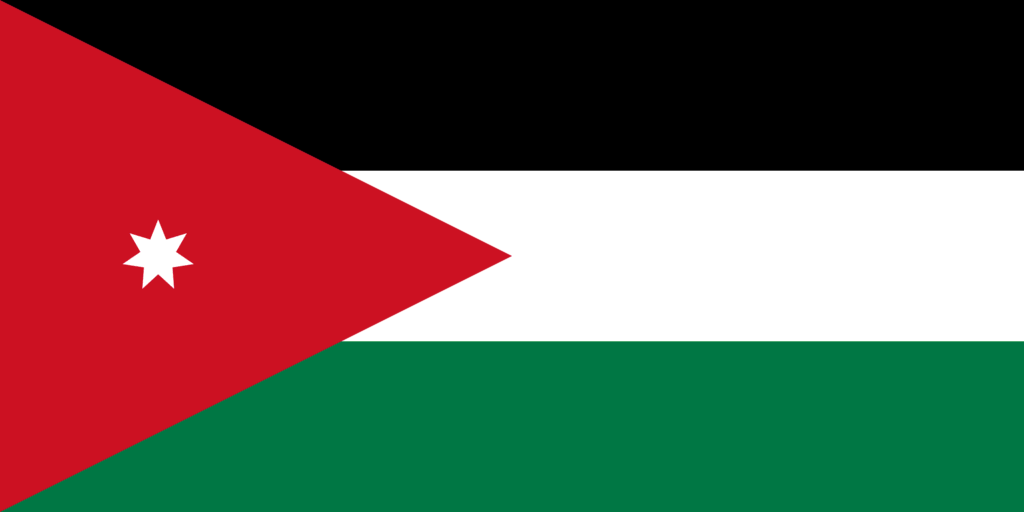
The flag of Grenada features a red field bordered in green, symbolizing vitality and agriculture. Six yellow stars around the border represent the parishes, while the central star stands for national unity. A nutmeg symbol near the hoist highlights Grenada’s role as a major global producer of the spice.
Adopted at independence in 1974, the flag is flown on public buildings and during official ceremonies in accordance with national protocol.
Flag flying days
| Date | Flag Position | Occasion or Reason |
|---|
| February 7 | Full-mast | Independence Day |
| April 21 | Full-mast | Queen’s Birthday |
| August (Carnival period) | Full-mast | National Carnival Celebrations |
| November 25 | Full-mast | Thanksgiving Day |
| Official Mourning Periods | Half-mast | National days of mourning |