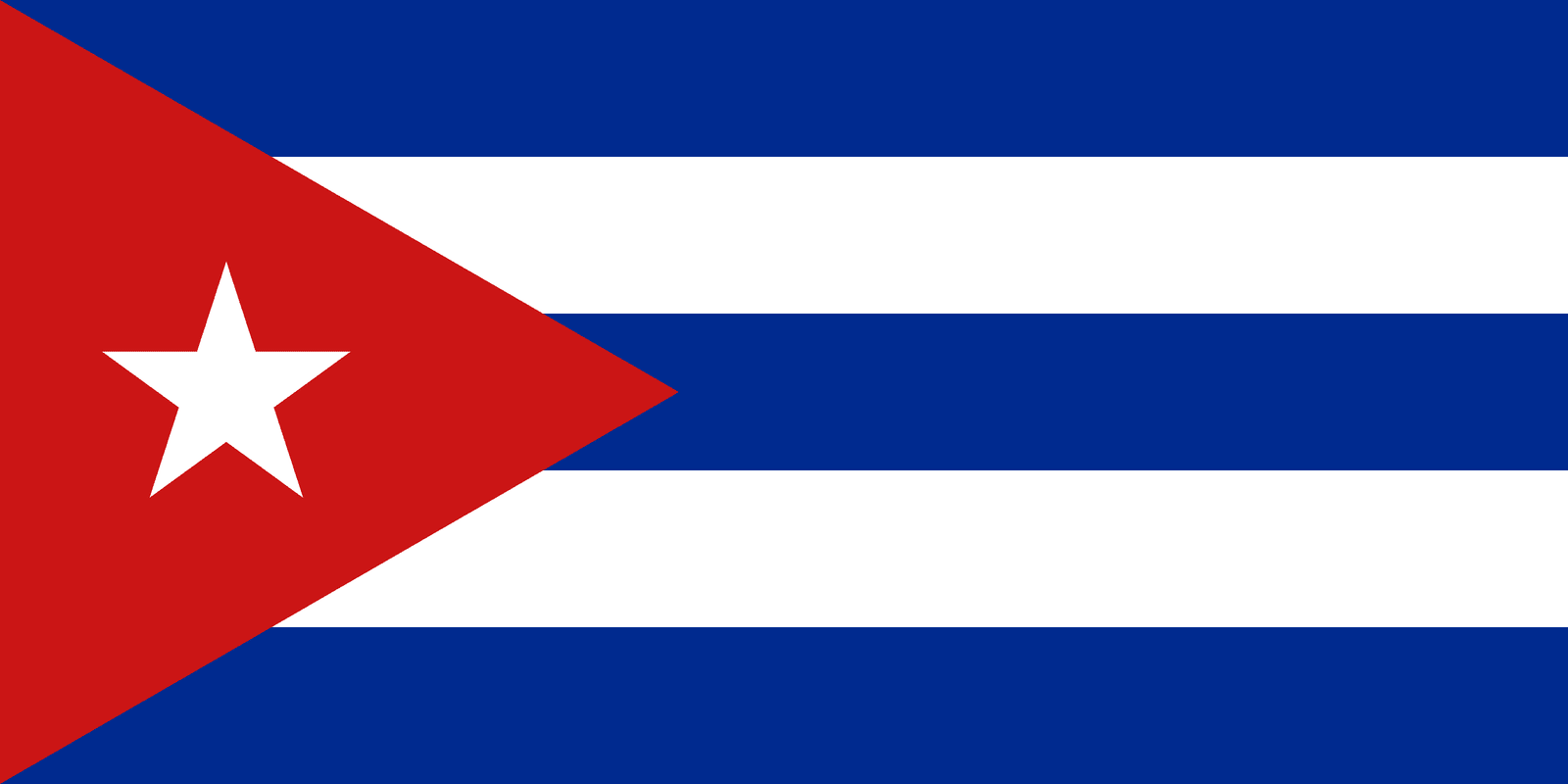
Flag of Cuba
| Legal Name | Republic of Cuba |
|---|---|
| Flag |
|
| Capital City |
Havana |
| Total Area | ~109,884 km² |
| Land Area | ~109,884 km² |
| Water Area | Negligible (island nation) |
| Population | ~11.1 million |
| Major Cities | Havana (2.1 million), Santiago de Cuba (430,000), Camagüey (300,000), Holguín (280,000), Santa Clara (240,000) |
| Currency | Cuban Peso (CUP) |
| GDP | ~US$110–120 billion (estimated) |
| GDP Per Capita | ~US$10,000–11,000 (PPP-based) |
About of Cuba
Cuba is a Caribbean island nation located at the northern edge of the Caribbean Sea, where the Gulf of Mexico meets the Atlantic Ocean. It is the largest island in the Caribbean, both by land area and population. Cuba lies south of the United States, east of Mexico, west of Haiti, and north of Jamaica, giving it a central and historically strategic position in the region.
As an island country, Cuba has no land borders, but it maintains extensive maritime boundaries with several neighboring states. Havana, the capital and largest city, is the political, cultural, and economic heart of the country. Other major urban centers include Santiago de Cuba in the east, Camagüey in the central region, and Holguín, an important industrial and cultural city.
Cuba has a diverse population shaped by Indigenous roots, European colonization, African heritage, and later migration. Internationally, Cuba is a sovereign state and a member of the United Nations, as well as many regional and global organizations. It is particularly known for its unique political system, its role in Cold War history, and its influence on global culture, especially in music and sports.
Geopolitically, Cuba has long held strategic importance due to its location near major shipping lanes and its proximity to North America. This position has influenced its history of colonial competition, revolutionary politics, and international diplomacy.
Etymology
The name “Cuba” is widely believed to originate from the Taíno language, spoken by the island’s Indigenous inhabitants before European contact. It may derive from words meaning “where fertile land is abundant” or “great place,” reflecting the island’s natural richness.
When Spanish explorers arrived in the late 15th century, they adapted the Indigenous name into Spanish usage. Over time, “Cuba” became firmly established as the name of the island and later the modern nation, retaining its original phonetic form with minor linguistic adaptation.
History
Cuba’s history begins with Indigenous civilizations, primarily the Taíno, Ciboney, and Guanahatabey peoples, who lived on the island for centuries before European arrival. These societies practiced agriculture, fishing, and trade and developed complex social structures.
In 1492, Christopher Columbus reached Cuba, initiating Spanish colonization. Over the following centuries, Cuba became a key Spanish colony, deeply integrated into the Atlantic economy through sugar production, tobacco cultivation, and the transatlantic slave trade. The island played a central role in Spain’s Caribbean empire.
The 19th century saw growing resistance to colonial rule, culminating in wars of independence against Spain. In 1898, the Spanish-American War ended Spanish control, and Cuba emerged as an independent republic in the early 20th century, though heavily influenced by the United States.
A major turning point came in 1959, when the Cuban Revolution led by Fidel Castro overthrew the existing government. Cuba adopted a socialist system, aligned itself with the Soviet Union, and became a focal point of Cold War tensions. Since the late 20th century, Cuba has experienced economic reforms, leadership transitions, and gradual changes in domestic and foreign policy while maintaining its distinctive political identity.
Government and Politics
Cuba is a socialist republic with a political system based on a single-party structure. The Communist Party of Cuba is recognized as the leading force in society and the state. The country operates under a constitution that defines socialist principles and state governance.
The executive branch is headed by the President, who serves as head of state and government. Legislative authority resides in the National Assembly of People’s Power, a unicameral body elected through a system of popular representation. The judiciary functions independently within the framework of socialist law.
Administratively, Cuba is divided into provinces and municipalities. In foreign relations, Cuba maintains diplomatic ties with most countries and is active in international organizations. The Cuban Revolutionary Armed Forces are among the most prominent institutions in the country, responsible for national defense and civil support roles.
Economy
Cuba’s economy is generally classified as a developing, state-led economy with a strong emphasis on public ownership and central planning, alongside limited market-oriented reforms. The services sector dominates economic activity, particularly healthcare, education, tourism, and biotechnology.
Agriculture remains important, with key products including sugar, tobacco, coffee, and citrus fruits. Manufacturing focuses on food processing, pharmaceuticals, and light industry. Natural resources include nickel, cobalt, and arable land, though large-scale extraction is limited.
Cuba’s trade is oriented toward a mix of regional partners and global markets. Economic challenges include productivity constraints, infrastructure needs, and external pressures. Future prospects depend on reform implementation, foreign investment, and integration into global trade networks.
Demographics
Cuba’s population reflects a blend of European, African, and mixed heritage, shaped by centuries of migration and cultural exchange. The society is largely urban, with most citizens living in cities and towns along the coast or in fertile lowlands.
Spanish is the official and dominant language. Religiously, Cuba is diverse, with Roman Catholicism, Afro-Cuban religions, Protestant denominations, and secular beliefs coexisting. Population growth has slowed in recent decades due to low birth rates and emigration trends.
Culture and Society
Cuban culture is internationally renowned for its music, dance, and artistic expression. Genres such as son, salsa, rumba, and jazz fusion are central to national identity. Literature, visual arts, and cinema also play prominent roles in cultural life.
Cuisine combines Spanish, African, and Caribbean influences, featuring staples like rice, beans, plantains, pork, and seafood. Social life emphasizes community, resilience, and shared cultural traditions.
Festivals, national holidays, and sports—especially baseball—are integral to Cuban society. Music and dance are not only entertainment but also expressions of history and collective memory.
Education and Healthcare
Cuba has a highly developed public education system, offering free education at all levels. Literacy rates are among the highest in the region, and higher education institutions are widely accessible.
The healthcare system is universally accessible and state-run, with a strong focus on preventive care and community medicine. Cuba is internationally recognized for its medical training and public health achievements, despite resource limitations.
Geography and Climate
Cuba features varied geography, including fertile plains, rolling hills, and mountain ranges such as the Sierra Maestra. The island has an extensive coastline with beaches, mangroves, and coral reefs.
The climate is tropical, characterized by warm temperatures year-round, a dry season, and a rainy season. Natural hazards include hurricanes and occasional droughts. Environmental concerns focus on coastal erosion, biodiversity protection, and sustainable development.
Flora and Fauna
Cuba is one of the most biodiverse islands in the Caribbean, with many endemic plant and animal species. Forests, wetlands, and marine ecosystems support rich wildlife, including birds, reptiles, and marine life.
National parks and protected areas aim to conserve ecosystems while promoting ecotourism and environmental education.
Map of Cuba
Cuba’s national symbols reflect its history and ideals. These include the national flag, the coat of arms, and the national anthem, all emphasizing independence, sacrifice, and unity. Iconic monuments and historical sites further symbolize national identity.
National Flag (Detailed Section)
The flag of Cuba consists of five horizontal stripes—three blue and two white—symbolizing the island’s historical divisions and purity of ideals. A red equilateral triangle at the hoist represents the blood shed for independence, liberty, and equality. Within the triangle is a single white star, known as the “Lone Star,” symbolizing freedom and sovereignty.
The design was inspired by 19th-century independence movements and officially adopted in 1902. The flag is flown at government buildings, schools, and during national celebrations, serving as a powerful symbol of Cuban identity.
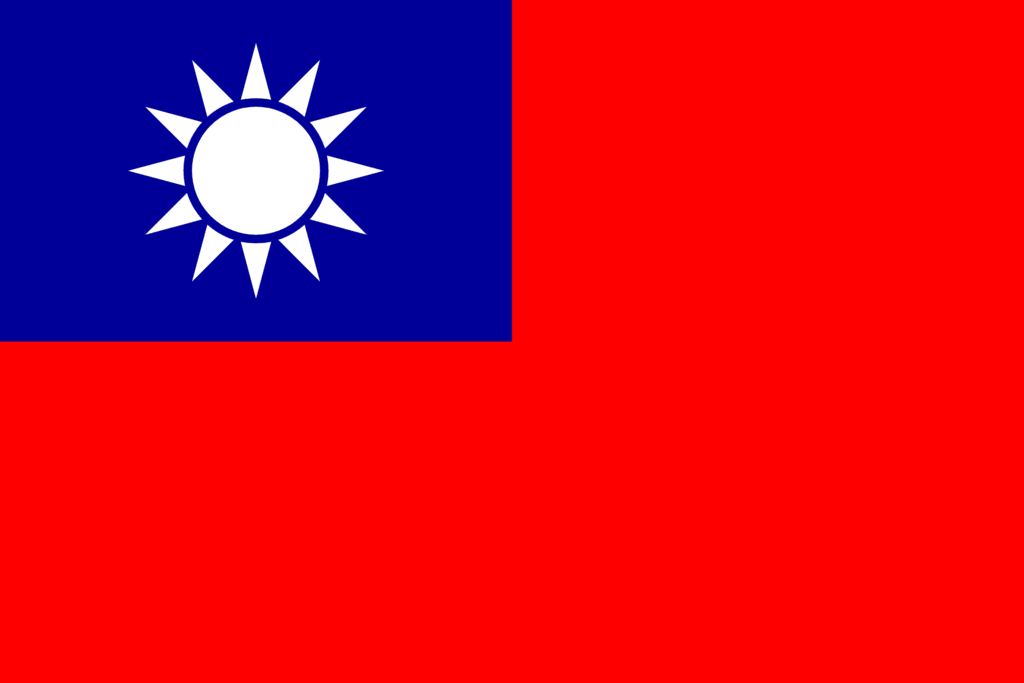
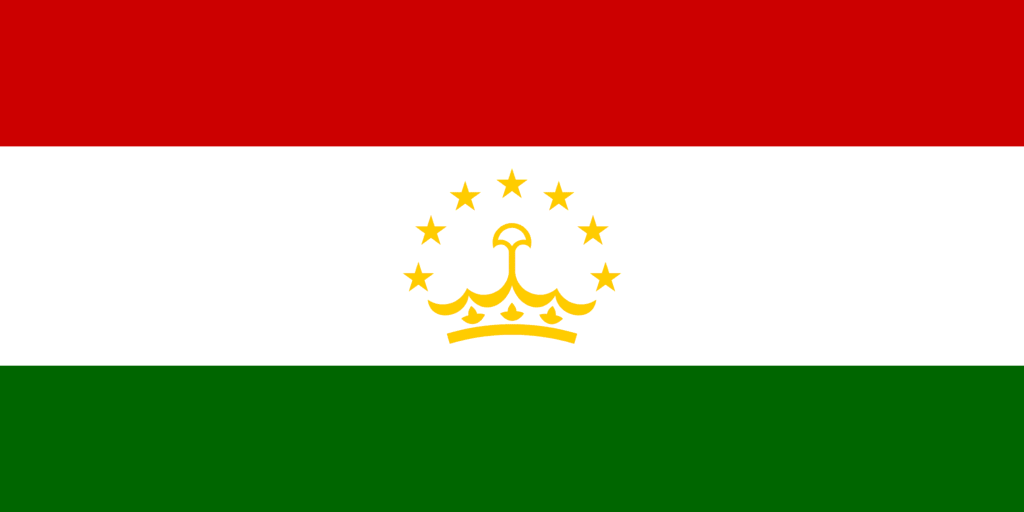
Realted Flags
Flag flying days
| Date | Flag Position | Occasion or Reason |
|---|---|---|
| 1 January | Full-mast | Triumph of the Cuban Revolution |
| 26 July | Full-mast | National Rebellion Day |
| 10 October | Full-mast | Independence Day (Grito de Yara) |
| National Mourning Days | Half-mast | Official periods of remembrance or mourning |