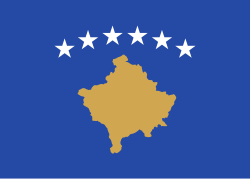
Flag of Kosovo
| Legal Name | Republic of Kosovo |
|---|---|
| Flag |
|
| Capital City |
Pristina |
| Total Area | Approximately 10,887 km² |
| Land Area | Approximately 10,887 km² |
| Water Area | Negligible |
| Population | Approximately 1.75 million |
| Major Cities | Pristina (220,000), Prizren (180,000), Peja (100,000), Gjilan (90,000), Ferizaj (110,000) |
| Currency | Euro (EUR) |
| GDP | Approximately USD 10 billion |
| GDP Per Capita | Approximately USD 5,700 (Nominal) |
About of Kosovo
Kosovo is a landlocked country located in Southeast Europe, in the central part of the Balkan Peninsula. It occupies a strategic position between Central Europe and the eastern Mediterranean region, historically serving as a crossroads for cultures, trade routes, and empires. Despite its small size, Kosovo has played a significant role in Balkan history and politics.
The country shares land borders with Serbia to the north and east, Montenegro to the northwest, Albania to the west, and North Macedonia to the south. Pristina, the capital and largest city, is the political, economic, and administrative center, while other cities such as Prizren and Peja are important cultural and historical hubs.
Kosovo’s population is predominantly young and urbanizing, with a strong diaspora presence abroad. Kosovo declared independence in 2008 and is recognized as a sovereign state by many countries worldwide, though its status remains disputed by some states, including Serbia. Geopolitically, Kosovo is important for regional stability in the Western Balkans and for Euro-Atlantic integration efforts.
Etymology
The name “Kosovo” originates from the Serbian word “kos,” meaning “blackbird.” The term “Kosovo Polje” translates to “Field of the Blackbirds,” referring to a historic plain in central Kosovo. Over time, the shortened name “Kosovo” came to designate the broader region and eventually the modern state. The name reflects deep historical and cultural associations for multiple communities that have lived in the area.
History
Prehistoric and Ancient Periods
Archaeological evidence indicates continuous human settlement in Kosovo since prehistoric times. In antiquity, the region was inhabited by Illyrian tribes and later incorporated into the Roman Empire, becoming part of the province of Moesia.
Classical and Medieval Periods
After the division of the Roman Empire, Kosovo fell under Byzantine control. During the medieval period, it became a core territory of the Serbian medieval state, with significant religious and cultural institutions established during this era.
Ottoman Rule
In the late 14th and 15th centuries, Kosovo was incorporated into the Ottoman Empire, where it remained for nearly five centuries. During this period, Islam spread among parts of the population, and the region developed a diverse cultural and religious character.
Yugoslav Period
Following the Balkan Wars, Kosovo became part of the Kingdom of Yugoslavia and later socialist Yugoslavia. It held the status of an autonomous province within Serbia, with varying degrees of self-governance over time.
Conflict and Independence
In the late 1990s, rising ethnic tensions led to armed conflict between Serbian forces and ethnic Albanian groups, culminating in international intervention in 1999. Kosovo was placed under United Nations administration. On February 17, 2008, Kosovo declared independence, beginning a new phase of state-building and international engagement.
Modern Developments
Since independence, Kosovo has focused on strengthening institutions, expanding international recognition, and pursuing European integration. Political reforms, dialogue with Serbia, and economic development remain central to its modern trajectory.
Government and Politics
Kosovo is a parliamentary democratic republic. Its Constitution, adopted in 2008, establishes a framework based on democratic governance, the rule of law, and protection of minority rights.
Executive power is exercised by the government, led by the Prime Minister, while the President serves as head of state with largely ceremonial duties. Legislative authority resides in the unicameral Assembly of Kosovo. The judiciary is independent and includes a Constitutional Court.
Administratively, Kosovo is divided into municipalities that enjoy a degree of local self-government. Kosovo maintains diplomatic relations with many countries and is a member of international institutions such as the International Monetary Fund and World Bank. Its security sector includes the Kosovo Security Force, focused on civil protection and defense-related duties.
Economy
Kosovo is classified as an emerging economy. It has made progress toward a market-oriented system, though challenges remain. The economy is driven primarily by services, remittances from the diaspora, construction, and trade.
Agriculture employs a significant portion of the population, focusing on crops such as wheat, corn, and fruits. Manufacturing remains limited but includes food processing and light industry. Kosovo possesses notable mineral resources, particularly lignite coal, lead, and zinc.
Major trade partners include countries of the European Union and neighboring Balkan states. Key challenges include unemployment, especially among youth, energy infrastructure limitations, and reliance on imports. Future prospects depend on structural reforms, foreign investment, and regional integration.
Demographics
Kosovo has a predominantly ethnic Albanian population, alongside minority communities including Serbs, Bosniaks, Turks, Roma, Ashkali, and Egyptians. Albanian and Serbian are the official languages, with Turkish, Bosnian, and Romani also recognized at the local level.
Islam is the majority religion, followed by Eastern Orthodoxy and Roman Catholicism. Kosovo is highly urbanized, with most people living in cities and towns. Population growth has slowed in recent years due to migration and declining birth rates.
Culture and Society
Kosovar culture reflects a blend of Balkan, Albanian, and Ottoman influences. Strong family ties, hospitality, and community life are central social values. Traditional music, folk dances, and oral poetry remain important cultural expressions.
The arts scene is growing, particularly in contemporary music, film, and visual arts. Cuisine features grilled meats, pastries, dairy products, and seasonal vegetables. National holidays include Independence Day and major religious observances. Football is the most popular sport, alongside basketball and traditional outdoor activities.
Education and Healthcare
Education in Kosovo follows a structured system of primary, secondary, and higher education, with public and private institutions. Literacy rates are high, particularly among younger generations. The University of Pristina is the country’s largest higher education institution.
Healthcare is publicly funded, supplemented by private services. While access to basic healthcare is widespread, challenges include funding constraints and workforce shortages. Public health efforts focus on improving maternal care, vaccination coverage, and chronic disease prevention.
Geography and Climate
Kosovo’s landscape is characterized by plains surrounded by mountain ranges, including the Accursed Mountains and the Šar Mountains. Several rivers originate in Kosovo, flowing toward the Adriatic, Aegean, and Black Seas.
The climate is continental, with warm summers and cold winters. Natural hazards include floods, landslides, and occasional earthquakes. Environmental concerns include air pollution, deforestation, and waste management.
Flora and Fauna
Kosovo hosts a diverse range of plant and animal life due to its varied terrain. Forests cover a significant portion of the country, featuring beech and oak species. Wildlife includes bears, wolves, deer, and numerous bird species.
National parks and protected areas aim to conserve biodiversity and promote sustainable tourism, particularly in mountainous regions.
Map of Kosovo
Kosovo’s national symbols emphasize inclusivity and unity. The flag and coat of arms represent the country’s territory and diverse communities. The national anthem, instrumental in nature, symbolizes sovereignty without privileging a single ethnic group.
National Flag (Detailed Section)
The national flag of Kosovo features a blue background symbolizing Europe, with a gold silhouette of the country at the center. Above the map are six white stars arranged in a curved line, representing the major ethnic communities living in Kosovo. Adopted in 2008, the flag reflects Kosovo’s aspiration for unity, peace, and European integration. It is used on official buildings, during state ceremonies, and on national holidays in accordance with flag protocol
Realted Flags
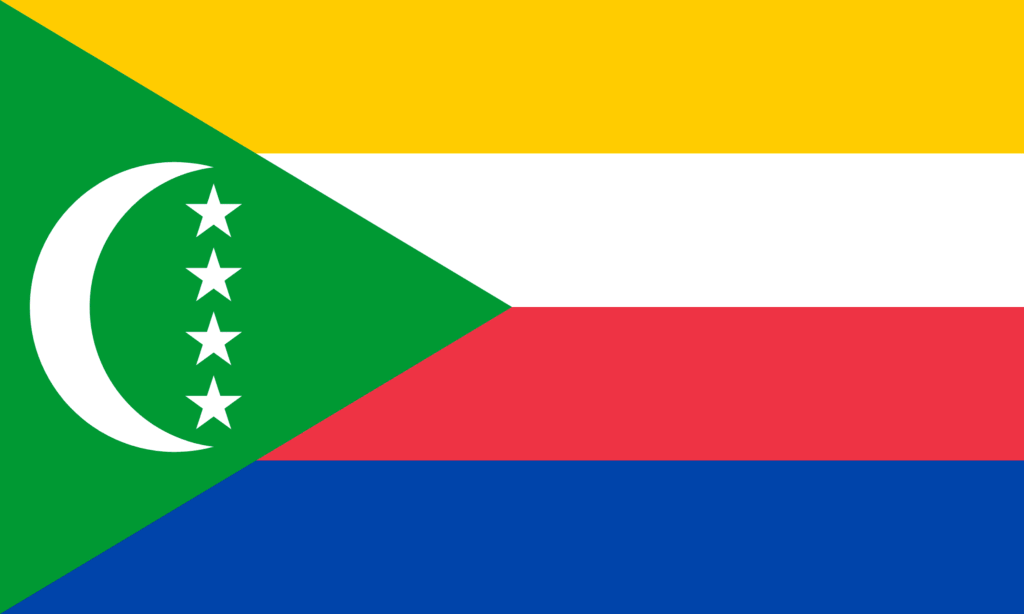
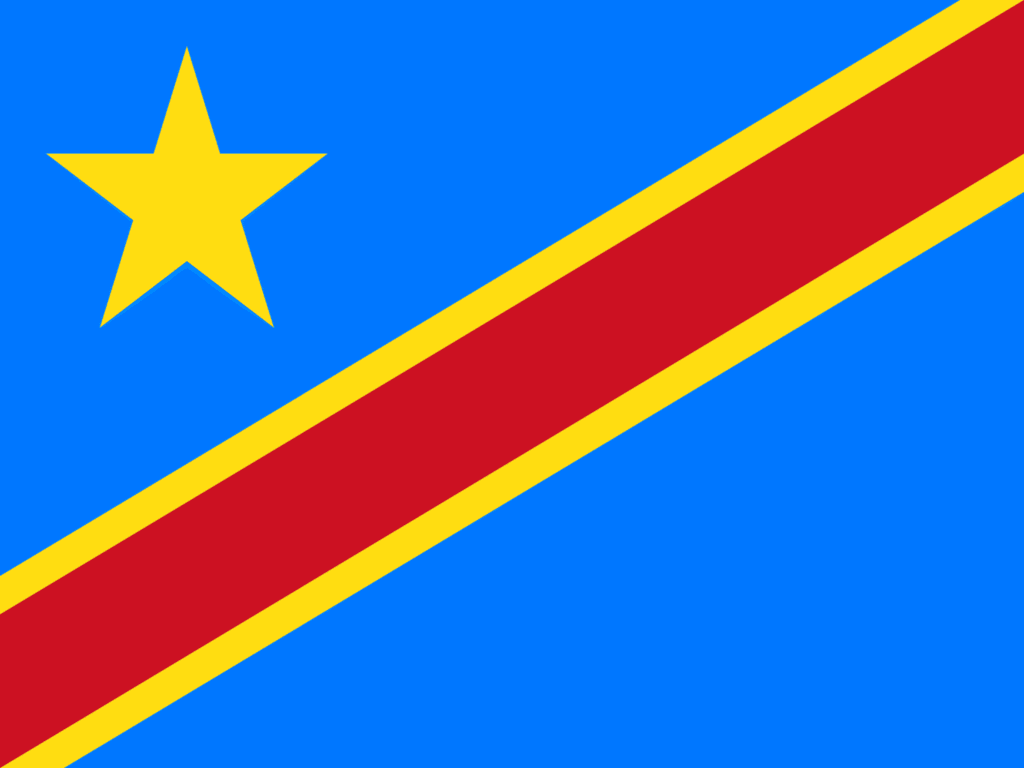
Flag flying days
| Date | Flag Position | Occasion or Reason |
|---|---|---|
| February 17 | Full-mast | Independence Day |
| April 9 | Full-mast | Constitution Day |
| Official state events | Full-mast | National and governmental ceremonies |
| Periods of official mourning | Half-mast | State-declared mourning |