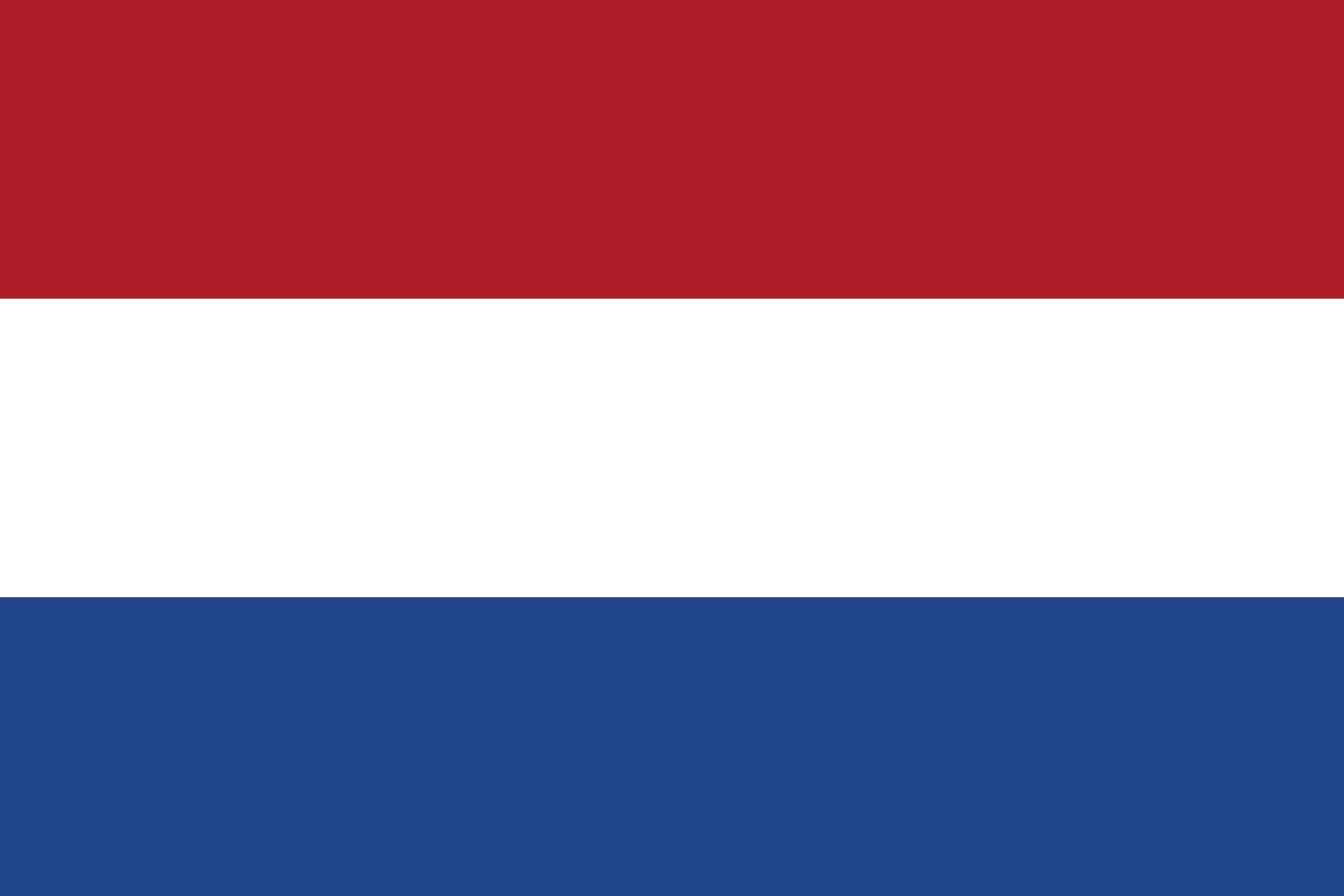
Flag of Netherlands
| Legal Name | Kingdom of the Netherlands |
|---|---|
| Flag |
|
| Capital City |
Amsterdam |
| Total Area | Approximately 41,850 km² |
| Land Area | Approximately 33,700 km² |
| Water Area | Approximately 8,150 km² |
| Population | About 17.9 million |
| Major Cities | Amsterdam (900K), Rotterdam (650K), The Hague (550K), Utrecht (360K), Eindhoven (235K) |
| Currency | Euro (EUR) |
| GDP | Approximately USD 1 trillion |
| GDP Per Capita | Approximately USD 59,000 (nominal) |
About of Netherlands
The Netherlands is a highly developed country located in Western Europe, along the North Sea coast. It is part of the Benelux Union, sharing land borders with Germany to the east and Belgium to the south, and connected to the North Sea in the west and north. Its strategic location at the mouth of major European rivers, including the Rhine, Meuse, and Scheldt, has historically made it a hub for trade, transport, and commerce.
Amsterdam serves as the nation’s capital and cultural center, while The Hague is the seat of government, hosting the parliament, supreme court, and royal family’s residence. Rotterdam hosts one of the largest ports in the world, making it a global logistics and shipping hub. The population is highly urbanized, with significant concentrations in the Randstad metropolitan area, including Amsterdam, Rotterdam, The Hague, and Utrecht.
Internationally, the Netherlands is recognized for its commitment to diplomacy, human rights, international law, and economic liberalism. It is home to major international institutions such as the International Court of Justice and the International Criminal Court in The Hague. Its strategic significance stems from maritime access, trade networks, and leadership in renewable energy, water management, and sustainable agriculture.
Etymology
The term “Netherlands” derives from the Dutch word “Nederland”, meaning “low-lying country”, reflecting the country’s topography, with much of its land below sea level. Historically, it was known as part of the Low Countries, alongside Belgium and Luxembourg. The linguistic roots highlight its historic relationship with water management, dikes, and reclamation, which remain central to national identity.
History
Prehistoric and Ancient Settlements
The region was inhabited by Celtic and Germanic tribes before Roman conquest. Archaeological evidence shows trade, agriculture, and settlement patterns dating back thousands of years.
Medieval Period
During the Middle Ages, the Low Countries were part of the Holy Roman Empire, fragmented into fiefdoms, duchies, and counties. Urban centers flourished through trade, particularly in textiles, shipping, and banking.
Dutch Golden Age
In the 16th–17th centuries, the Netherlands became a major maritime and commercial power. The Dutch East India Company and Dutch West India Company established global trade networks, colonies, and naval dominance. Art, science, and philosophy thrived during this era.
Colonial Rule
The Netherlands established colonies in the Americas, Africa, and Asia, including modern-day Indonesia, Suriname, and the Caribbean islands. The country remained under Spanish and later French influence before regaining independence in the early 19th century.
Modern Era
The Kingdom of the Netherlands was formally established in 1815. The 20th century witnessed German occupation during World War II, followed by reconstruction and emergence as a democratic, industrialized, and internationally active nation.
Government and Politics
The Netherlands is a constitutional monarchy with a parliamentary democracy. The monarch, currently King Willem-Alexander, serves as head of state, while the Prime Minister leads the government.
Executive Branch: King and Cabinet, responsible for national administration.
Legislative Branch: Bicameral States General, including the House of Representatives and Senate.
Judiciary: Independent courts, including the Supreme Court and Council of State.
The country is divided into 12 provinces, each with its own administrative responsibilities. The Netherlands is active in international organizations such as the EU, UN, NATO, and WTO, and maintains a professional, technologically advanced military focused on defense, peacekeeping, and humanitarian missions.
Economy
The Netherlands is a highly developed economy with a diverse industrial base:
Agriculture: Major exporter of dairy, flowers, and horticulture products.
Manufacturing: Electronics, machinery, chemicals, and petroleum refining.
Services: Financial services, trade, transport, and logistics dominate urban centers.
Natural resources include natural gas, peat, and fertile agricultural land. Trade partners include Germany, Belgium, the UK, France, and the United States. Economic challenges include housing affordability, energy transition, and climate change, while future outlook is tied to innovation, green energy, and sustainable agriculture.
Demographics
Population composition includes:
Ethnic Groups: Predominantly Dutch (~80%), with Indonesian, Turkish, Surinamese, and Moroccan minorities.
Languages: Dutch (official), Frisian in Friesland, English widely spoken.
Religions: Christianity (primarily Catholic and Protestant), Islam, secular/other.
Urbanization: Over 90% live in urban areas; population growth is moderate.
Culture and Society
Dutch culture combines historic European traditions with multicultural influences. National identity emphasizes tolerance, civic responsibility, and human rights. Arts flourish with Dutch masters (Rembrandt, Vermeer) and contemporary design. Cuisine features cheese, seafood, and baked goods. Festivals like King’s Day, Sinterklaas, and Carnival reflect both tradition and community spirit. Sports such as football, speed skating, and cycling are widely followed.
Education and Healthcare
The education system includes primary, secondary, and tertiary institutions, with high literacy rates (~99%) and world-class universities. Healthcare is publicly funded with private supplementation, offering high-quality services and preventive care. Public health challenges include aging population and lifestyle-related diseases, with strong achievements in vaccination, maternal care, and life expectancy.
Geography and Climate
The Netherlands is low-lying, with extensive polders, dikes, and canals. Key rivers include the Rhine, Meuse, and Scheldt. The country has a temperate maritime climate, mild summers, cool winters, and frequent precipitation. Natural hazards include flooding, with sophisticated water management infrastructure. Environmental concerns focus on climate adaptation, biodiversity, and pollution control.
Flora and Fauna
Biodiversity: Limited terrestrial biodiversity due to human settlement, with significant wetlands and coastal ecosystems.
Native Plants: Heath, dunes, and wetland flora.
Wildlife: Birds such as storks, waterfowl, and foxes.
Conservation: National parks like De Hoge Veluwe and Biesbosch protect natural habitats and species.
Map of Netherlands
Flag: Red, white, and blue horizontal tricolor.
Coat of Arms: Lion holding sword and arrows, symbolizing strength and unity.
National Anthem: Wilhelmus
National Animals / Plants: Lion (heraldic), tulip (flower), Dutch windmills and clogs (cultural symbols).
National Flag (Detailed Section)
The Dutch flag consists of three horizontal bands of red, white, and blue. Its design evolved from the 16th-century orange-white-blue flag of the Prince of Orange. Red replaced orange for visibility and practicality. The flag symbolizes freedom, unity, and national pride and is displayed on official buildings, during national celebrations, and international events.
Flag flying days
| Date | Flag Position | Occasion / Reason |
|---|---|---|
| April 27 | Full-mast | King’s Day (Birthday of the King) |
| May 4 | Half-mast | Remembrance Day (WWII victims) |
| December 5 | Full-mast | Sinterklaas celebrations (cultural) |
| National Mourning | Half-mast | Death of notable figures or national tragedies |