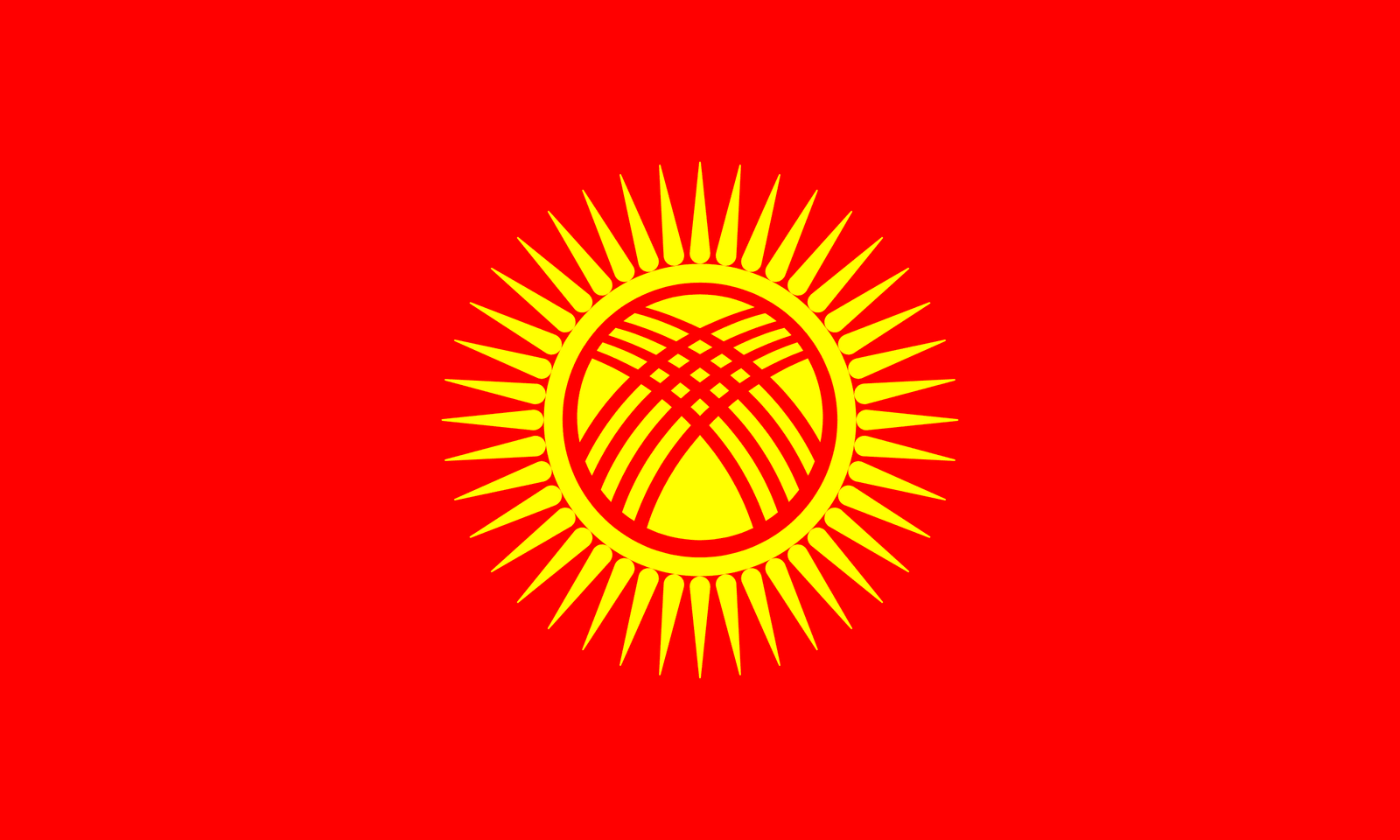
Flag of Kyrgyzstan
| Legal Name | Kyrgyz Republic |
|---|---|
| Flag |
|
| Capital City |
Bishkek |
| Total Area | Approximately 199,951 km² |
| Land Area | Approximately 191,801 km² |
| Water Area | Approximately 8,150 km² |
| Population | Approximately 7.1 million |
| Major Cities | Bishkek (1.1 million), Osh (350,000), Jalal-Abad (120,000), Karakol (85,000), Tokmok (75,000) |
| Currency | Kyrgyzstani Som (KGS) |
| GDP | Approximately USD 14 billion |
| GDP Per Capita | Approximately USD 2,000 (Nominal) |
About of Kyrgyzstan
Kyrgyzstan is a landlocked country located in Central Asia, characterized by rugged mountain landscapes and deep valleys. Often referred to as the “Switzerland of Central Asia,” it is dominated by the Tien Shan mountain range, which covers a significant portion of its territory. Its geography has historically shaped nomadic lifestyles and limited large-scale urban development.
The country shares land borders with Kazakhstan to the north, Uzbekistan to the west, Tajikistan to the southwest, and China to the east. As a landlocked nation, Kyrgyzstan has no maritime borders. Bishkek, the capital and largest city, serves as the political, economic, and cultural center, while Osh functions as a key historical and commercial hub in the south.
With a relatively small but growing population, Kyrgyzstan is internationally recognized as a sovereign state and a member of the United Nations, the Commonwealth of Independent States, and several regional organizations. Its strategic location along historic Silk Road routes and proximity to major powers gives it geopolitical importance in Central Asia.
Etymology
The name “Kyrgyzstan” derives from the Turkic word “Kyrgyz,” traditionally interpreted as “forty tribes,” referencing a legendary unification of forty clans. The suffix “-stan” is of Persian origin, meaning “land” or “place.” Together, the name means “Land of the Kyrgyz.” Over time, the term evolved from a tribal identifier to the official name of the modern nation-state.
History
Prehistoric and Ancient Civilizations
Archaeological evidence indicates human habitation in the region dating back thousands of years. Early inhabitants practiced hunting, herding, and later pastoral nomadism, adapting to mountainous terrain.
Classical and Medieval Periods
Kyrgyz tribes are mentioned in Chinese chronicles as early as the 2nd century BCE. The region was influenced by Turkic khanates and later became part of the Silk Road network, facilitating trade and cultural exchange. Buddhism, Nestorian Christianity, and later Islam influenced local societies.
Empires and Dynasties
During the medieval period, the area came under the control of various empires, including the Mongol Empire in the 13th century. Following Mongol fragmentation, regional khanates governed the territory.
Russian and Soviet Rule
In the 19th century, Kyrgyz lands were incorporated into the Russian Empire. Following the Russian Revolution, the region became part of the Soviet Union as the Kyrgyz Soviet Socialist Republic. Soviet rule introduced industrialization, education, and centralized governance, while also reshaping traditional lifestyles.
Independence and Modern Era
Kyrgyzstan declared independence in 1991 following the dissolution of the Soviet Union. The post-independence period saw political instability, including revolutions in 2005 and 2010. Since then, the country has pursued constitutional reforms and experienced shifts between parliamentary and presidential governance models.
Government and Politics
Kyrgyzstan is a republic with a strong presidential system. Its constitution establishes the framework for governance, defining the separation of powers among the executive, legislative, and judicial branches. The President serves as head of state and government, while legislative authority rests with the unicameral Supreme Council.
The judiciary is independent, with the Supreme Court as the highest judicial authority. Administratively, Kyrgyzstan is divided into seven regions and two cities of national significance. In foreign relations, the country maintains ties with neighboring states, Russia, China, and Western partners. It is a member of organizations such as the United Nations, the Eurasian Economic Union, and the Shanghai Cooperation Organisation. The armed forces are relatively small and focused on national defense and border security.
Economy
Kyrgyzstan is classified as a developing and emerging economy. Agriculture, mining, remittances, and services form the backbone of economic activity. Key agricultural products include livestock, wheat, potatoes, and cotton. Gold mining, particularly from the Kumtor mine, plays a vital role in exports and government revenue.
The services sector, including trade and tourism, has grown steadily, supported by the country’s natural landscapes. Kyrgyzstan has limited natural resources beyond minerals and hydropower potential. Major trade partners include Russia, China, Kazakhstan, and Uzbekistan. Economic challenges include reliance on remittances, infrastructure limitations, and vulnerability to external shocks. Future growth prospects lie in renewable energy, tourism, and regional trade integration.
Demographics
Kyrgyzstan’s population is ethnically diverse. Ethnic Kyrgyz form the majority, followed by Uzbeks, Russians, and smaller minority groups. Kyrgyz and Russian are official languages, with Russian widely used in administration and business. Islam is the predominant religion, practiced mainly in its Sunni form, alongside Orthodox Christianity and other faiths.
Approximately two-thirds of the population lives in rural areas, though urbanization is gradually increasing. Population growth is moderate, driven by relatively high birth rates compared to other Central Asian states.
Culture and Society
Kyrgyz culture is deeply rooted in nomadic traditions, emphasizing hospitality, respect for elders, and strong family ties. The epic poem Manas, one of the longest oral epics in the world, is central to national identity. Traditional music, felt crafts, and yurt construction remain culturally significant.
Cuisine features meat, dairy products, and bread, reflecting pastoral lifestyles. Social customs value community cooperation and seasonal celebrations. Public holidays include Independence Day, Nooruz (Persian New Year), and other national observances. Sports such as horseback games, wrestling, and football are popular.
Education and Healthcare
Education in Kyrgyzstan is compulsory through secondary level, with a literacy rate exceeding 99%. Higher education institutions are concentrated in Bishkek and Osh, offering programs in sciences, humanities, and technical fields.
Healthcare is provided through a mix of public and private services. While basic healthcare access is widespread, challenges include funding constraints, rural access disparities, and modernization needs. Public health initiatives focus on maternal care, infectious disease control, and health system reform.
Geography and Climate
Kyrgyzstan is predominantly mountainous, with the Tien Shan range covering much of the territory. The country features high peaks, alpine meadows, glaciers, and fertile valleys. Issyk-Kul Lake, one of the world’s largest alpine lakes, is a major geographic landmark.
The climate is continental, with cold winters and warm summers. Natural hazards include earthquakes, landslides, and floods. Environmental concerns involve glacier retreat, water resource management, and land degradation.
Flora and Fauna
Kyrgyzstan hosts diverse ecosystems, from alpine forests to steppe grasslands. Native plant species include juniper, walnut, and wild fruit trees. Wildlife features snow leopards, ibex, wolves, and various bird species. National parks and reserves aim to protect biodiversity and fragile mountain environments.
Map of Kyrgyzstan
National symbols reflect Kyrgyz heritage and unity. The national flag, coat of arms, and anthem emphasize historical continuity and natural beauty. Landmarks such as Issyk-Kul Lake and the Tien Shan mountains are emblematic of the nation.
National Flag (Detailed Section)
The national flag of Kyrgyzstan consists of a red field symbolizing bravery and valor. At its center is a yellow sun with forty rays, representing the forty tribes of Kyrgyz legend. Inside the sun is a stylized tunduk, the circular crown of a yurt, symbolizing home, unity, and the universe. The flag was adopted in 1992 following independence and is used in accordance with national flag protocols
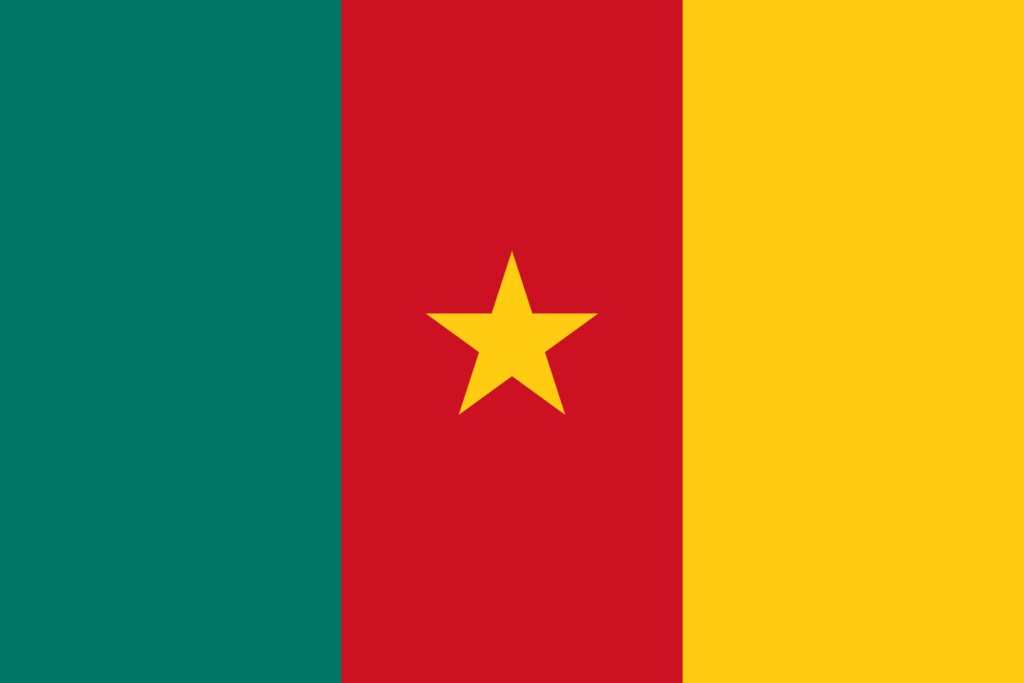
Realted Flags


Flag flying days
| Date | Flag Position | Occasion or Reason |
|---|---|---|
| August 31 | Full-mast | Independence Day |
| March 21 | Full-mast | Nooruz (Spring Festival) |
| Official state events | Full-mast | National celebrations and ceremonies |
| National mourning days | Half-mast | Death of prominent national figures or official mourning |