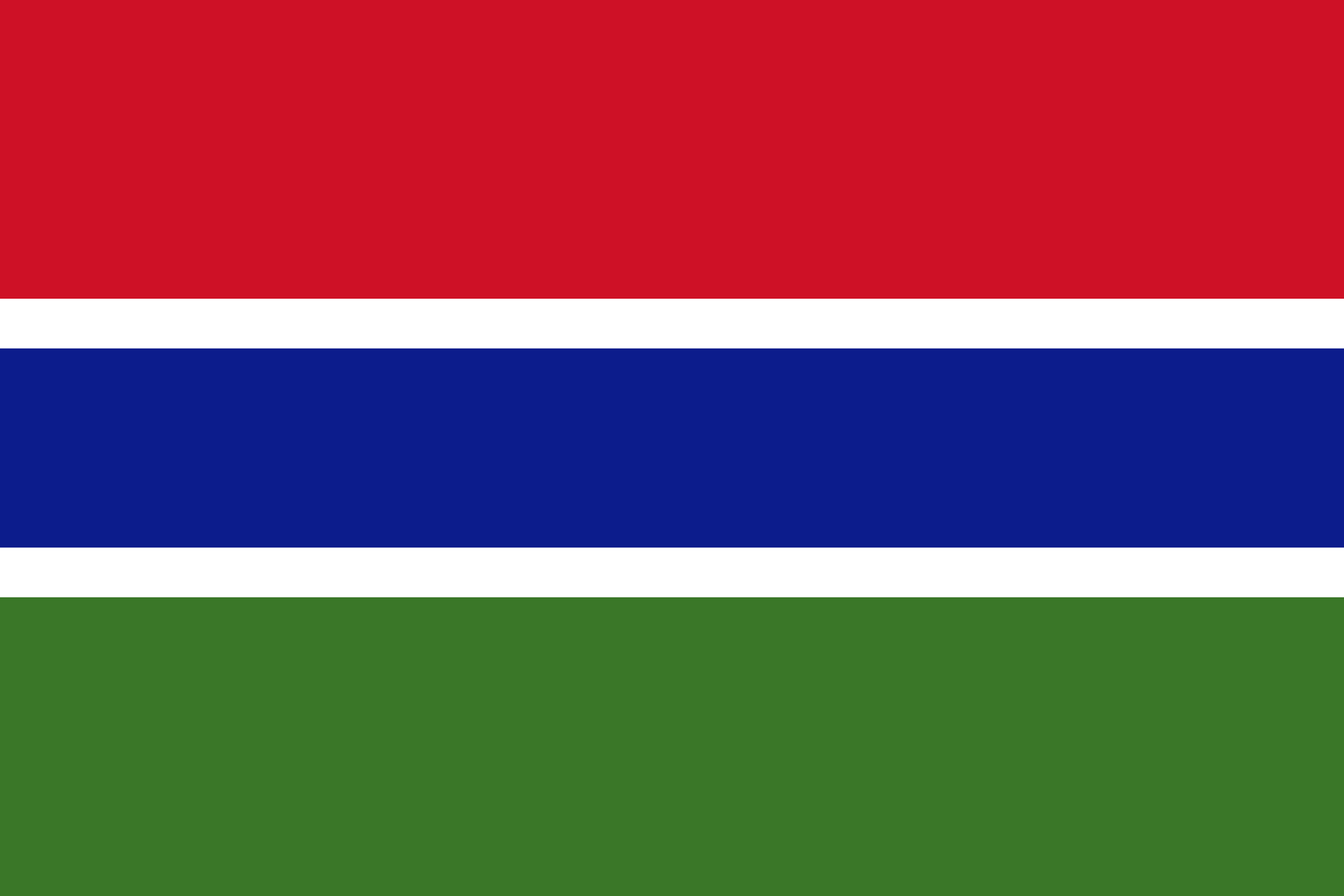
Flag of Gambia
| Legal Name | Republic of The Gambia |
|---|---|
| Flag |
|
| Capital City |
Banjul |
| Total Area | 11,300 |
| Land Area | 10,000 |
| Water Area | 1,300 |
| Population | ~2.6 million |
| Major Cities | Serekunda (~340,000), Banjul (~31,000), Brikama (~150,000), Bakau (~43,000) |
| Currency | Serekunda (~340,000), Banjul (~31,000), Brikama (~150,000), Bakau (~43,000) |
| GDP | ~USD 3.0 billion |
| GDP Per Capita | ~USD 2,900 (PPP) |
About of Gambia
The Gambia is a narrow West African country, stretching along the Gambia River and surrounded almost entirely by Senegal, except for a short Atlantic coastline to the west. Its geographical position along the river has historically made it a key trade corridor and cultural crossroads. The nation’s terrain is largely low-lying and characterized by savannah, riverine forests, and floodplains.
Banjul, the capital, sits on an island at the mouth of the Gambia River, serving as the administrative and political center, while Serekunda is the largest urban and commercial hub. Gambia’s population is predominantly rural, yet urban areas are growing rapidly due to migration for employment and education. The country maintains recognition as a sovereign state and is an active participant in regional organizations such as the Economic Community of West African States (ECOWAS) and the African Union.
Strategically, the Gambia’s location along the river and Atlantic coast has influenced trade, transportation, and historical European engagement, making it significant in regional maritime and riverine networks.
Etymology
The country’s name derives from the Gambia River, which runs the length of the nation. The river itself may have been named by early European explorers or traders in the 15th century, with potential roots in Portuguese or Mandinka language references. Over time, the name “The Gambia” became standardized internationally, distinguishing the nation from the surrounding Senegalese territory.
History
Prehistoric and Ancient Civilizations
Archaeological evidence indicates human habitation in the region dating back thousands of years, with early communities engaged in agriculture, fishing, and river-based trade. Iron smelting and pottery are documented from ancient settlements along the riverbanks.
Classical and Medieval Periods
The Gambia region became part of various West African trade networks, including the Mali and Songhai empires. Local ethnic groups, such as the Mandinka and Wolof, developed political and social structures centered on trade and agriculture.
Major Empires and Kingdoms
The area was influenced by neighboring kingdoms and empires, including the Kaabu Empire, which controlled much of the river region and facilitated trade in gold, ivory, and slaves.
Colonial or Imperial Rule
In the 15th century, Portuguese explorers arrived, followed by the British and French in the 17th and 18th centuries. Britain established a formal colony in 1889, creating the narrow strip along the Gambia River. The Gambia became part of British West Africa, with administrative and commercial focus on the river and trade posts.
Independence Movement
Following World War II, nationalist movements gained momentum. The Gambia achieved full independence from Britain on February 18, 1965, under Prime Minister Dawda Jawara.
Key Post-Independence Events
The Gambia experienced political stability under Jawara until a military coup in 1994 led by Yahya Jammeh. Jammeh’s rule lasted until 2017, characterized by authoritarian governance. The peaceful election of Adama Barrow in 2016 restored democratic governance.
Modern Political Developments
Today, The Gambia is a multiparty republic with ongoing reforms to strengthen democratic institutions, improve governance, and address human rights and economic challenges.
Government and Politics
The Gambia is a presidential republic with a multi-party system. The constitution defines the executive, legislative, and judicial branches. The president serves as both head of state and government, while the National Assembly legislates on national policies. The judiciary is independent, interpreting and applying laws.
The country is divided into five administrative regions, plus the Banjul Capital Area. The Gambia engages actively with ECOWAS, the African Union, and the United Nations, and maintains cooperative security and development agreements. The Gambia Armed Forces provide defense, primarily focusing on territorial security and internal stability.
Economy
The Gambia has a developing, agriculture-based economy transitioning toward services and tourism. Agriculture dominates, employing a majority of the workforce, with groundnuts (peanuts) as the primary export. Other sectors include fishing, tourism, and small-scale manufacturing. The country has limited mineral resources but leverages the river and coastal location for trade and tourism.
Key trading partners include the European Union, Senegal, and the United States. Economic challenges include limited diversification, infrastructure deficits, and vulnerability to climate change. Development programs aim to enhance tourism, energy, and agribusiness to improve growth prospects.
Demographics
The population is composed predominantly of Mandinka, Fula, Wolof, Jola, and Serahule ethnic groups. English is the official language, while indigenous languages and dialects such as Mandinka, Wolof, and Fula are widely spoken. Islam is the predominant religion, with small Christian minorities. Roughly 60% of the population resides in rural areas, although urban centers are growing. Population growth remains moderate, with youth constituting a significant portion of the demographic profile.
Culture and Society
Gambian culture blends West African traditions with Islamic and colonial influences. Music, dance, and storytelling are central to cultural life. The kora (a stringed instrument) and griot traditions preserve historical narratives. Cuisine features rice, millet, fish, and peanut-based dishes. Social norms emphasize community cohesion, respect for elders, and hospitality. Key festivals include Eid al-Fitr, Eid al-Adha, and national Independence Day. Football is the most popular sport, followed by wrestling and traditional games.
Education and Healthcare
The education system includes primary, secondary, and tertiary institutions, with literacy rates improving gradually. Higher education is offered through the University of The Gambia and regional institutions. Healthcare is delivered via public hospitals, clinics, and private facilities, with ongoing challenges in rural access and public health infrastructure. Key public health concerns include malaria, infectious diseases, and maternal-child health.
Geography and Climate
The Gambia is predominantly flat, with the central Gambia River shaping much of its landscape. The country has savannah, wetlands, and floodplains, with a short Atlantic coastline. Climate is tropical, with a rainy season (June–October) and dry season (November–May). The Gambia faces natural hazards including flooding, drought, and coastal erosion. Environmental concerns focus on deforestation, wetland preservation, and sustainable water management.
Flora and Fauna
Gambia’s ecosystems include riverine forests, savannah, and wetlands supporting diverse wildlife. Native plant species include mahogany, oil palm, and baobab. Wildlife includes monkeys, antelopes, crocodiles, hippos, and numerous bird species. Protected areas such as Kiang West National Park and River Gambia National Park conserve habitats and promote ecotourism
Map of Gambia
The national flag consists of horizontal red, blue, and green stripes separated by thin white bands, with the blue stripe symbolizing the Gambia River. The coat of arms features lions, a shield, and palm trees. The national anthem, For The Gambia Our Homeland, reflects patriotism and national unity. Other symbols include the African fish eagle and the baobab tree.
National Flag (Detailed Section)
The Gambia’s flag, adopted in 1965, features a red stripe representing the sun and savannah, blue symbolizing the Gambia River, and green denoting agriculture and forests. White stripes signify peace and unity. The flag is used on national holidays, government buildings, and international representations, with proper half-mast protocol during periods of mourning or national grief
Flag flying days
| Date | Flag Position | Occasion or Reason |
|---|---|---|
| February 18 | Full-mast | Independence Day |
| August 18 | Full-mast | Republic Day (establishment of the republic) |
| National Mourning Days | Half-mast | Death of prominent leaders or national tragedies |
| Islamic Holidays | Full-mast | Eid al-Fitr and Eid al-Adha celebration |