
Flag of Burundi
| Legal Name | Islamic Republic of Pakistan |
|---|---|
| Flag |
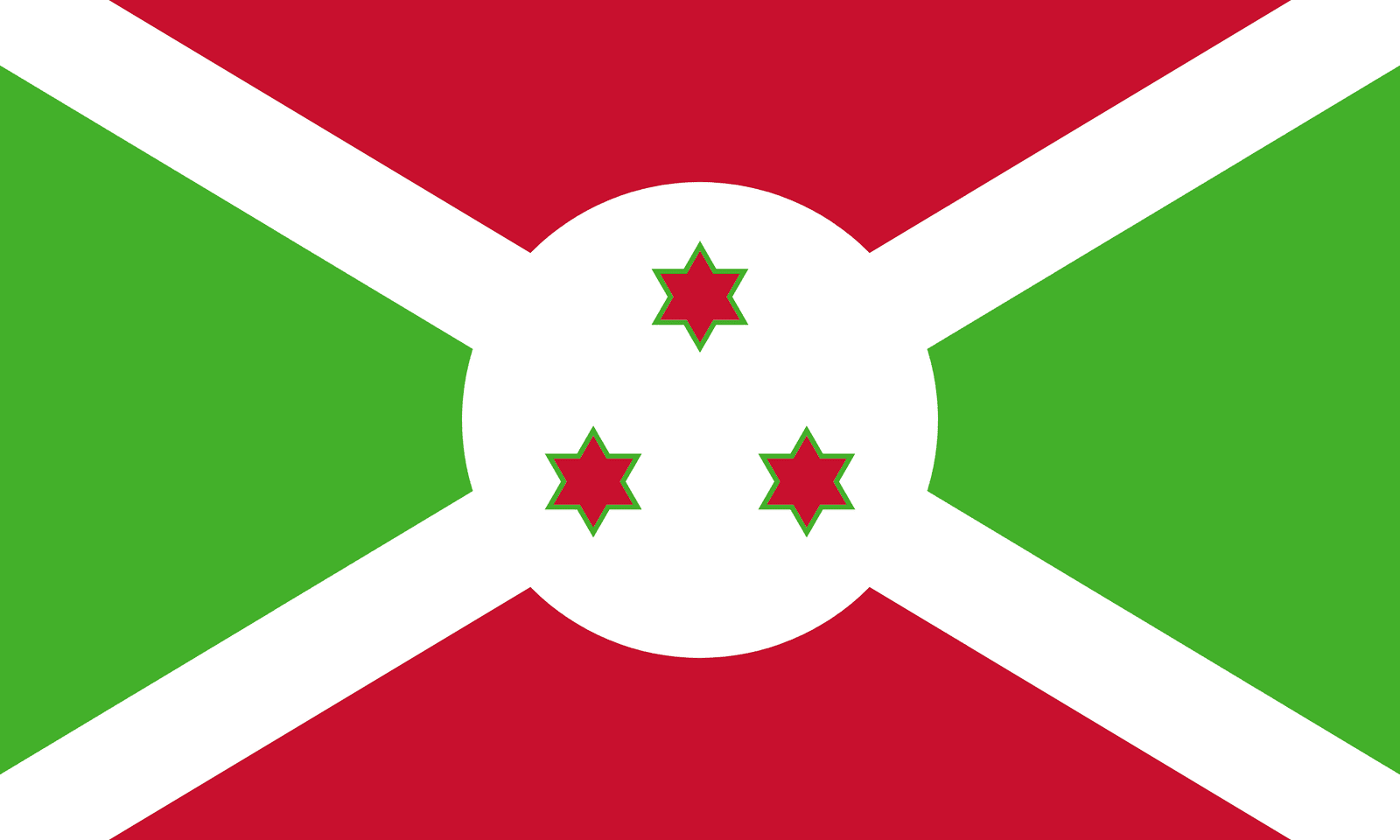
|
| Capital City |
Islamabad |
| Total Area | 796,095.00 km2 |
| Land Area | 770,875.00 km2 |
| Water Area | 25,220.00 km2 |
| Population | 216,565,318 |
| Major Cities |
Karachi (17,236,230) Lahore (13,979,390) Faisalabad (3,710,845) Gujranwala (2,415,416) Peshawar (2,411,785) Rawalpindi (2,377,325) Multan (2,154,600) Hyderabad (1,967,684) Islamabad (1,232,447) Quetta (1,190,348) |
| Currency | Pakistani Rupee (PKR) |
| GDP | $278.22 Billion |
| GDP Per Capita | $1,284.70 |
About of Burundi
Pakistan,[f] officially the Islamic Republic of Pakistan,[g] is a country in South Asia. It is the fifth-most populous country, with a population of over 241.5 million,[d] having the second-largest Muslim population as of 2023. Islamabad is the nation’s capital, while Karachi is its largest city and financial centre. Pakistan is the 33rd-largest country by area. Bounded by the Arabian Sea on the south, the Gulf of Oman on the southwest, and the Sir Creek on the southeast, it shares land borders with India to the east; Afghanistan to the west; Iran to the southwest; and China to the northeast. It shares a maritime border with Oman in the Gulf of Oman, and is separated from Tajikistan in the northwest by Afghanistan’s narrow Wakhan Corridor.
Pakistan is the site of several ancient cultures, including the 8,500-year-old Neolithic site of Mehrgarh in Balochistan, the Indus Valley Civilisation of the Bronze Age,[8] and the ancient Gandhara civilisation.[9] The regions that compose the modern state of Pakistan were the realm of multiple empires and dynasties, including the Achaemenid, the Maurya, the Kushan, the Gupta;[10] the Umayyad Caliphate in its southern regions, the Hindu Shahis, the Ghaznavids, the Delhi Sultanate, the Samma, the Shah Miris, the Mughals,[11] and finally, the British Raj from 1858 to 1947.
Spurred by the Pakistan Movement, which sought a homeland for the Muslims of British India, and election victories in 1946 by the All-India Muslim League, Pakistan gained independence in 1947 after the partition of British India, which awarded separate statehood to its Muslim-majority regions and was accompanied by an unparalleled mass migration and loss of life.[12][13] Initially a dominion of the British Commonwealth, Pakistan adopted a republican constitution in 1956 and became an Islamic republic with two geographically separate provinces, East Pakistan and West Pakistan. East Pakistan seceded as the new country of Bangladesh in 1971 after a nine-month-long civil war. In the following four decades, Pakistan has been ruled by governments that alternated between civilian and military, democratic and authoritarian, relatively secular and Islamist.[14]
Pakistan is considered a middle power nation, with the world’s seventh-largest standing armed forces. It is a declared nuclear-weapons state, and is ranked amongst the emerging and growth-leading economies,[15] with a large and rapidly growing middle class.[16][17] Pakistan’s political history since independence has been characterized by periods of significant economic and military growth as well as those of political and economic instability. It is an ethnically and linguistically diverse country, with similarly diverse geography and wildlife. The country continues to face poverty, illiteracy, corruption, and terrorism.[18][19][20] Pakistan is a member of the United Nations, the Shanghai Cooperation Organisation, the Organisation of Islamic Cooperation, the Commonwealth of Nations, the South Asian Association for Regional Cooperation, and the Islamic Military Counter-Terrorism Coalition, and is designated as a major non-NATO ally by the United States.
Map of Burundi
In 1942, the Pakistan National Movement published a pamphlet, “The Millat of Islam and the menace of ‘Indianism'”, by the founder of the Pakistan Movement, Choudhry Rahmat Ali, depicting on its cover a flag of a proposed Pakistan with a thin white crescent and five white stars on a green field.[5] A graphic illustration of Ali’s flag in a critical work from 1946 more clearly portrays the stars in a pentagonal arrangement.[6] Each star apparently represented a constituent nation of the proposed state: Punjab, Afghania (NWF), Kashmir, Sindh, and Balochistan.[5] Ali also apparently designed a flag for an envisioned association of independent Muslim states distributed across South Asia, a ‘Pak Commonwealth of Nations’. This flag featured a smaller crescent and ten stars.[7]
The design eventually adopted as the Flag of Pakistan was based on the flag of the Muslim League. In 1937, the Muslim League began using a solid green banner charged with white descending crescent and star. In the early 1920s, during the era of the Khilafat Movement, Muslims had begun using a green banner with crescent and star, but as a religious rather than national symbol.[8] By the 1930s, Muslims in India had become leery of the acceptance of the tricolor flag of the Congress Party as the national flag of India, in significant part because the discourses and rituals of hoisting the flag invoked explicitly Hindu religious themes.[9] In 1940, Muhammad Ali Jinnah, leader of the Muslim League and future founder of the state of Pakistan, declared the League’s flag the ‘national flag of Muslim India’.[10] By 1944, Muhammad Ali Jinnah was publicly declaring that they intended it to be the flag of Pakistan.[11] This would become the flag of Pakistan, albeit charged with a white heraldic side or flank at the hoist. The resulting flag bears a striking resemblance to the various iterations of the Saudi flag from 1744 to 1937 which featured a white heraldic side or flank at the hoist and a green field charged with white calligraphic text (the Shahada).
Flag flying days
| Date | Position | Reason[18] |
|---|---|---|
| 23 March | Full-mast | Pakistan Day: Adoption of the Lahore Resolution (1940) and declaration of the Islamic Republic (1956) |
| 21 April | Half-mast | Death Anniversary of the National Poet, Muhammad Iqbal (1938) |
| 14 August | Full-mast | Independence Day (1947) |
| 11 September | Half-mast | Death Anniversary of the Father of the Nation, Muhammad Ali Jinnah (1948) |
| 9 November | Full-mast | Birthday of Muhammad Iqbal |
| 25 December | Full-mast | Birthday of Muhammad Ali Jinnah |