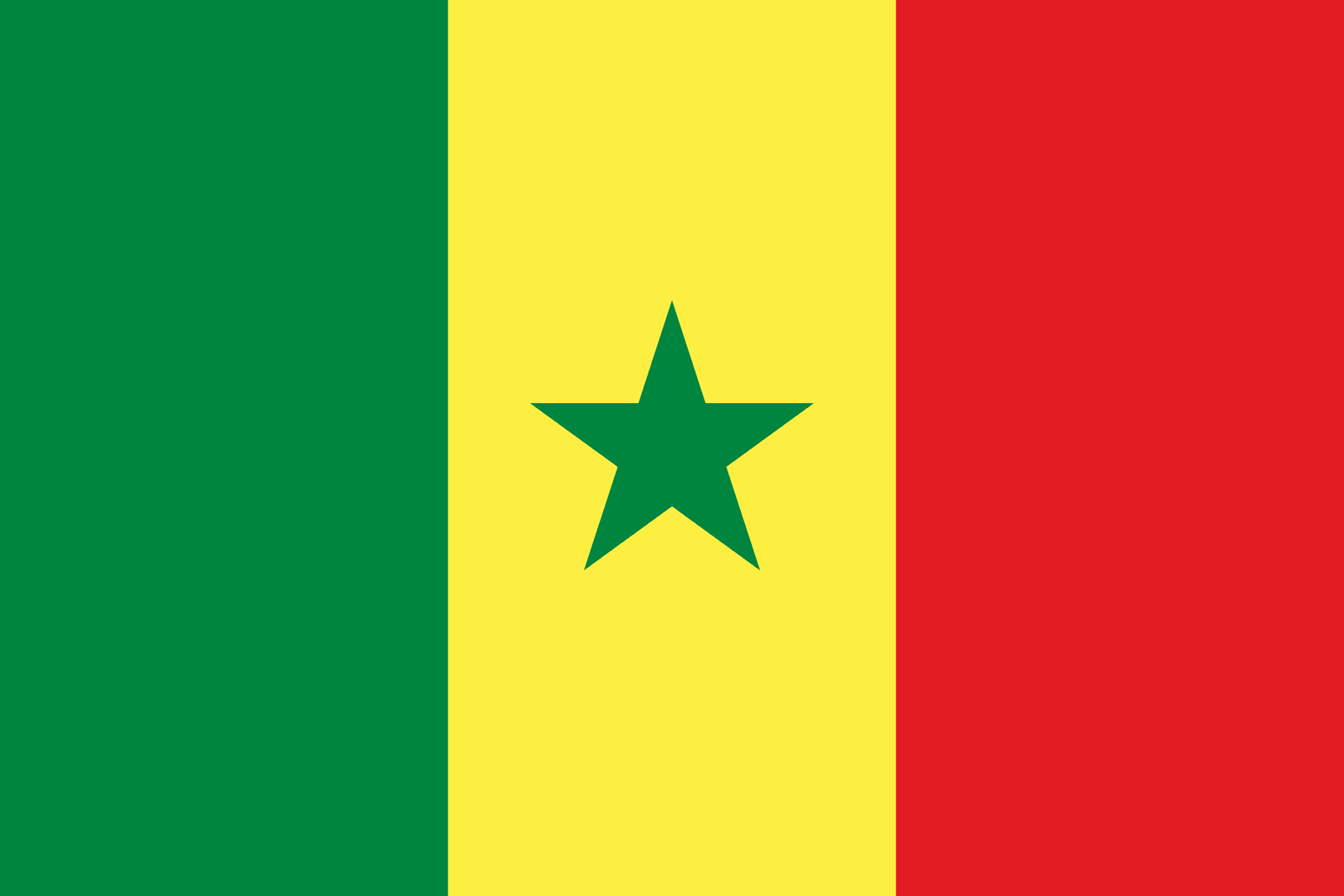
Flag of Senegal
| Legal Name | Republic of Senegal |
|---|---|
| Flag |
|
| Capital City |
Dakar |
| Total Area | Approximately 196,722 km² |
| Land Area | Approximately 192,530 km² |
| Water Area | Approximately 4,190 km² |
| Population | About 18 million |
| Major Cities | Dakar (3.8 million metro), Thiès (400,000), Touba (500,000), Kaolack (300,000), Saint-Louis (250,000) |
| Currency | West African CFA Franc (XOF) |
| GDP | Approximately USD 32 billion |
| GDP Per Capita | USD 1,800 (nominal, approx.) |
About of Senegal
Senegal is a coastal country located in West Africa, occupying a strategic position along the Atlantic Ocean. It is bordered by Mauritania to the north, Mali to the east, Guinea to the southeast, and Guinea-Bissau to the southwest. The Gambia forms a narrow enclave almost entirely surrounded by Senegal, extending inland along the Gambia River. Senegal’s western coastline has historically made it a major gateway between Africa, Europe, and the Americas.
Dakar, the capital and largest city, sits on the Cape Verde Peninsula, the westernmost point of mainland Africa. It functions as the political, economic, and cultural hub of the country. Other important urban centers include Thiès, Touba, Kaolack, and Saint-Louis, each serving as regional trade, religious, or administrative centers.
Senegal’s population is ethnically diverse but socially cohesive, with a strong tradition of religious tolerance and civic stability. The country is widely recognized for its democratic continuity and peaceful political transitions, making it one of the most stable states in West Africa. Its geopolitical importance stems from its Atlantic access, diplomatic engagement, and role as a regional leader in West African and international affairs.
Etymology
The name “Senegal” is most commonly believed to derive from the Senegal River, which forms part of the country’s northern boundary. The river’s name may originate from the Berber term Zenaga, referring to a historical Amazigh group in the region.
Another interpretation links the name to a Wolof phrase often translated as “our boat,” reflecting early interactions between European explorers and local communities. Over time, European cartographers and colonial administrators standardized the name as “Senegal,” which was retained after independence as a marker of national identity.
History
Archaeological evidence shows that Senegal has been inhabited since prehistoric times, with early communities practicing hunting, fishing, and agriculture. By the first millennium, the region was integrated into trans-Saharan trade networks that connected West Africa to North Africa and the Mediterranean world.
During the medieval period, much of present-day Senegal was part of powerful West African empires, including the Ghana Empire, the Mali Empire, and later the Jolof Empire. These states controlled trade in gold, salt, and agricultural products and facilitated the spread of Islam, which became deeply rooted in Senegalese society.
From the 15th century onward, European powers established coastal trading posts, and Senegal became a focal point of Atlantic trade. France gradually expanded control inland, incorporating Senegal into French West Africa. Dakar emerged as a key colonial administrative center.
Senegal achieved independence from France in 1960. Under its first president, Léopold Sédar Senghor, the country pursued political stability, cultural renaissance, and international diplomacy. In the decades following independence, Senegal experienced peaceful political transitions, economic reforms, and growing regional influence. In the 21st century, democratic consolidation, infrastructure development, and energy exploration have shaped modern political developments.
Government and Politics
Senegal is a republic with a strong presidential system governed by a constitution that establishes democratic principles, separation of powers, and the rule of law. The President serves as both head of state and government and is elected by popular vote.
Legislative authority is vested in a unicameral National Assembly, whose members are elected through a mixed electoral system. The judiciary operates independently, with the Constitutional Council and Supreme Court playing key roles in legal oversight.
Administratively, Senegal is divided into regions, departments, and communes. The country maintains active diplomatic relations and is a member of the United Nations, African Union, ECOWAS, and other international organizations. Senegal’s armed forces are professional and primarily focused on territorial defense, regional security cooperation, and peacekeeping missions.
Economy
Senegal is classified as a developing economy with emerging market characteristics. Economic growth has been driven by services, infrastructure investment, agriculture, and energy development.
Agriculture employs a significant portion of the population, with key products including peanuts, millet, rice, and fisheries. The services sector, particularly telecommunications, transport, tourism, and finance, contributes the largest share of GDP. Manufacturing remains modest but includes food processing, cement, and chemicals.
Natural resources include phosphates, gold, limestone, and recently discovered offshore oil and natural gas reserves. Senegal’s main trading partners include the European Union, China, and neighboring West African countries. Economic challenges include unemployment, poverty reduction, and climate vulnerability, while future prospects are tied to energy production, industrial diversification, and regional integration.
Demographics
Senegal’s population is ethnically diverse, with major groups including Wolof, Pulaar (Fulani), Serer, Mandinka, and Diola. Wolof functions as the most widely spoken language, while French is the official language used in administration and education.
Islam is the dominant religion, practiced by the vast majority of the population, primarily within Sufi brotherhoods. Christianity and indigenous beliefs are also present. Senegal has a relatively young population with high population growth, and urbanization continues to increase, especially around Dakar.
Culture and Society
Senegalese culture is known for its strong sense of community, hospitality, and social harmony. National identity is shaped by shared history, religious tolerance, and cultural pride. Music and dance play a central role, with genres such as mbalax gaining international recognition.
Literature, visual arts, and oral traditions are deeply embedded in society, while Senegalese cuisine features rice-based dishes, fish, vegetables, and flavorful sauces. Festivals, religious celebrations, and public holidays bring communities together, and sports—especially football—are a major source of national unity and global visibility.
Education and Healthcare
Education in Senegal follows a structured system of primary, secondary, and higher education, with gradual expansion of access in recent decades. Literacy rates have improved, and universities in Dakar and other cities serve as key academic institutions.
Healthcare is delivered through a mix of public and private providers. Senegal has made notable progress in public health initiatives, including maternal and child health, but continues to face challenges related to healthcare access in rural areas and resource constraints.
Geography and Climate
Senegal’s landscape consists mainly of low-lying plains, rolling savannas, and coastal areas. Major rivers include the Senegal, Gambia, and Casamance Rivers. The country has no mountains or deserts but transitions from Sahelian zones in the north to more humid regions in the south.
The climate is tropical, characterized by a dry season and a rainy season influenced by the West African monsoon. Natural hazards include droughts, flooding, and coastal erosion. Environmental concerns focus on desertification, deforestation, and marine ecosystem protection.
Flora and Fauna
Senegal hosts diverse ecosystems ranging from savannas and wetlands to mangroves and forests. Native plant species include baobab, acacia, and palm trees.
Wildlife includes antelopes, monkeys, crocodiles, and numerous bird species. National parks and reserves, such as those protecting wetlands and savannas, play an important role in biodiversity conservation and eco-tourism.
Map of Senegal
Senegal’s national symbols reflect unity, independence, and Pan-African ideals. The flag, coat of arms, and national anthem emphasize freedom, progress, and collective strength. The baobab tree is widely regarded as a national symbol due to its cultural and ecological importance.
National Flag (Detailed Section)
The national flag of Senegal features three vertical stripes of green, yellow, and red, with a green five-pointed star centered in the yellow band. Adopted at independence in 1960, the design reflects Pan-African colors.
Green symbolizes agriculture, hope, and Islam; yellow represents wealth, progress, and culture; red signifies sacrifice and determination. The central star represents unity and national aspiration. The flag is flown on government buildings, schools, and during national celebrations in accordance with official protocol.
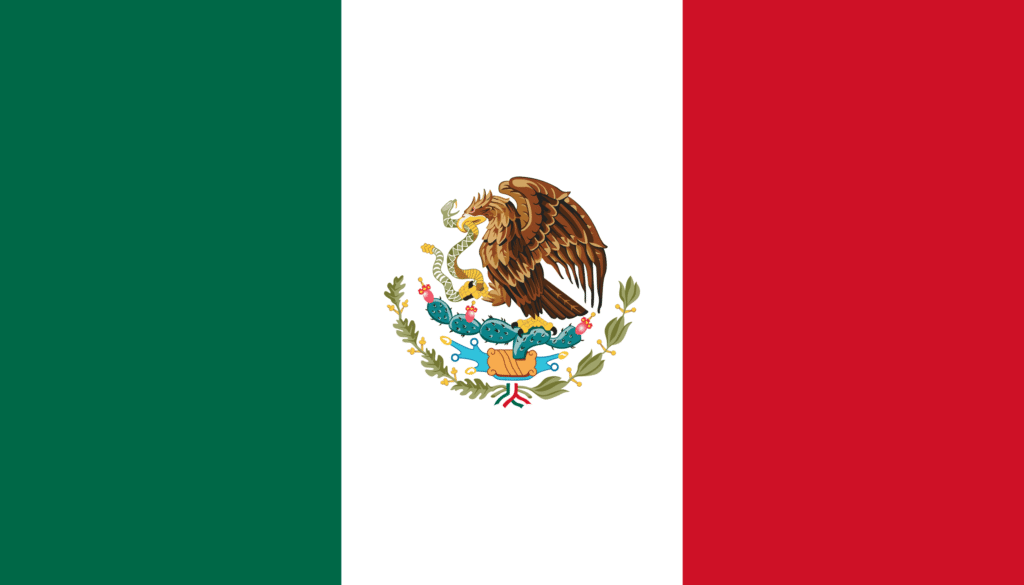
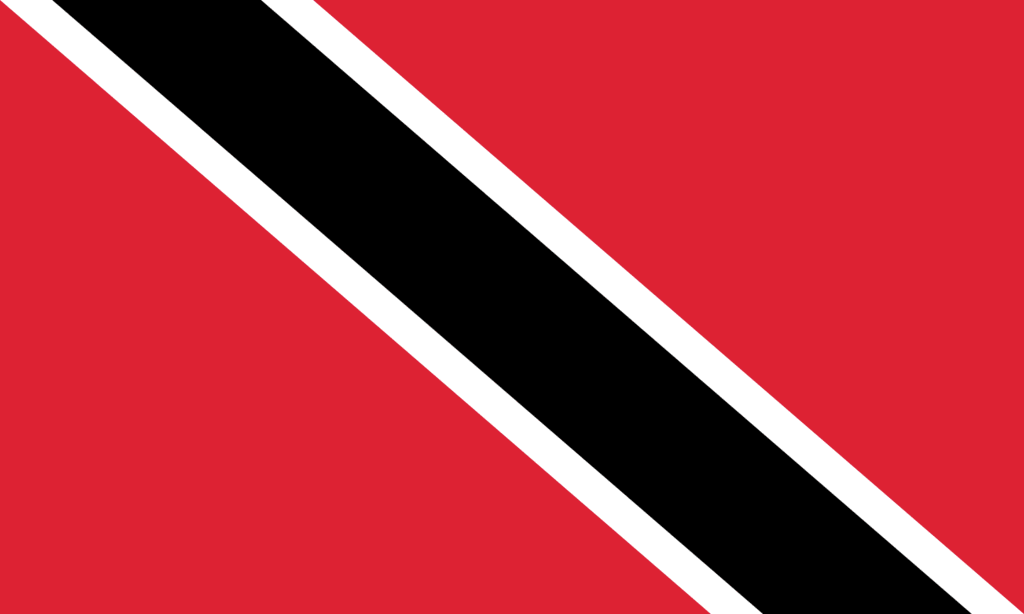
Realted Flags
Flag flying days
| Date | Flag Position | Occasion or Reason |
|---|
| April 4 | Full-mast | Independence Day |
| April 12 | Full-mast | National Youth Day |
| May 1 | Full-mast | Labor Day |
| August 15 | Full-mast | Assumption Day |
| Days of national mourning | Half-mast | Official state mourning periods |