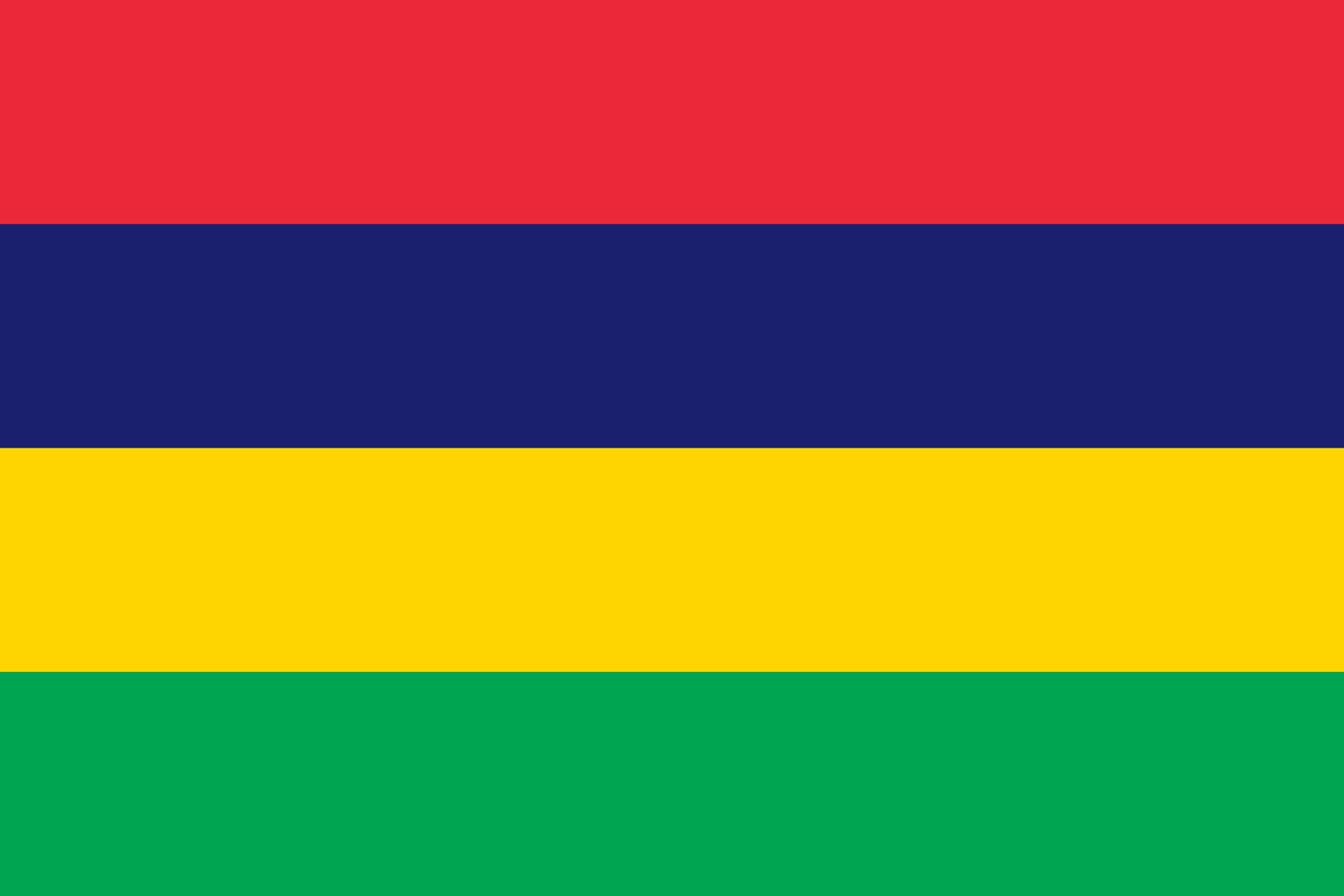
Flag of Mauritius
| Legal Name | Republic of Mauritius |
|---|---|
| Flag |
|
| Capital City |
Port Louis |
| Total Area | 2,040 km² |
| Land Area | Approximately 2,030 km² |
| Water Area | Approximately 10 km² (lagoons and inland water bodies) |
| Population | Approximately 1.27 million |
| Major Cities | Port Louis (150,000), Beau Bassin–Rose Hill (110,000), Vacoas–Phoenix (100,000), Curepipe (85,000), Quatre Bornes (80,000) |
| Currency | Mauritian Rupee (MUR) |
| GDP | Approximately USD 14–15 billion |
| GDP Per Capita | Approximately USD 11,000–12,000 (nominal) |
About of Mauritius
Mauritius is an island nation located in the southwestern Indian Ocean, approximately 2,000 kilometers east of the southeastern coast of Africa. It forms part of the Mascarene Islands, along with Réunion and Rodrigues. Despite its small size, Mauritius occupies a strategically significant maritime position along major Indian Ocean shipping routes.
The country has no land borders and is surrounded entirely by the Indian Ocean. Its maritime boundaries extend across a vast exclusive economic zone, providing access to rich marine resources. Port Louis, the capital and largest city, is the political, economic, and cultural heart of the nation, while other major urban centers such as Beau Bassin–Rose Hill and Vacoas–Phoenix serve as important residential and commercial hubs.
Mauritius is known for its multicultural population, shaped by centuries of migration from Africa, Asia, and Europe. It is internationally recognized as a stable democracy and a sovereign republic, widely respected for good governance, rule of law, and economic resilience. Strategically, Mauritius plays an important role as a financial, trade, and diplomatic bridge between Africa and Asia.
Etymology
The name “Mauritius” originates from Prince Maurice of Nassau, a Dutch stadtholder, after whom the island was named in 1598 during early Dutch exploration. Prior to this, Arab sailors referred to the island as Dina Arobi, while the Portuguese named it Ilha do Cirne. The Dutch name persisted, even through later French and British colonial periods, eventually becoming the official name of the independent republic.
History
Prehistoric and Ancient Civilizations
Mauritius had no indigenous population before the arrival of humans. The island remained uninhabited until the late Middle Ages, when Arab and Malay sailors are believed to have visited it during Indian Ocean trade voyages.
Classical and Medieval Periods
Although known to Arab navigators, Mauritius did not develop permanent settlements during medieval times due to its isolation and lack of natural harbors suitable for sustained habitation.
Major Empires, Kingdoms, or Dynasties
Mauritius was not part of any ancient empire prior to European colonization. Its history is defined largely by successive colonial administrations rather than indigenous dynasties.
Colonial or Imperial Rule
The Portuguese were the first Europeans to visit Mauritius in the early 16th century but did not settle it. The Dutch established the first permanent settlement in the 17th century, followed by the French, who developed sugar plantations and introduced enslaved Africans. Britain captured the island in 1810 and ruled it until independence, maintaining French civil law while introducing British political institutions.
Independence Movement
Mauritius gained independence from the United Kingdom on March 12, 1968, following a peaceful constitutional process. It became a republic in 1992, replacing the British monarch with a ceremonial president.
Key Post-Independence Events
Post-independence, Mauritius transitioned from a mono-crop sugar economy to a diversified economic model. Social reforms, political stability, and investment in education contributed to sustained growth.
Modern Political Developments
Mauritius remains a stable parliamentary democracy with regular elections, peaceful transfers of power, and strong democratic institutions.
Government and Politics
Mauritius operates as a parliamentary republic. The President is the ceremonial head of state, while executive power is vested in the Prime Minister and the Council of Ministers. The Constitution, adopted in 1968, forms the foundation of the legal and political system.
The unicameral National Assembly exercises legislative authority. The judiciary is independent, with the Supreme Court as the highest judicial body. Administratively, the country is divided into nine districts and several dependencies, including Rodrigues, Agaléga, and Saint Brandon.
Mauritius maintains active foreign relations and is a member of the United Nations, African Union, Commonwealth of Nations, Francophonie, and Indian Ocean Commission. The country does not maintain a standing army; defense and internal security are handled by the police force and specialized units.
Economy
Mauritius is classified as an upper-middle-income and emerging economy. It is widely regarded as one of Africa’s most successful economic transformation stories. Key sectors include financial services, tourism, manufacturing, information technology, and real estate.
Agriculture, particularly sugar production, remains important but contributes a smaller share of GDP than in the past. Manufacturing includes textiles, apparel, and light industrial goods, while services dominate the economy. The country has limited natural resources, relying instead on human capital and strategic location.
Major exports include sugar, textiles, seafood, and financial services. Key trade partners include the European Union, India, China, and regional African markets. Economic challenges include exposure to global market shocks, climate change, and the need for continued innovation and diversification.
Demographics
Mauritius has a diverse population composed primarily of people of Indian descent, along with Creoles of African origin, Sino-Mauritians, and Franco-Mauritians. This diversity is a defining feature of national identity.
English is the official language of government, while French and Mauritian Creole are widely spoken in daily life. Hinduism is the largest religion, followed by Christianity, Islam, and Buddhism. The population is predominantly urban, with moderate population growth and a relatively high life expectancy.
Culture and Society
Mauritian culture is a rich blend of Indian, African, European, and Chinese influences. Traditional music styles such as sega reflect African roots, while cuisine combines flavors from multiple continents.
National identity emphasizes harmony, multiculturalism, and social cohesion. Public holidays reflect religious diversity, with Hindu, Christian, Muslim, and Chinese festivals officially recognized. Football, athletics, and water sports are popular recreational activities.
Education and Healthcare
Education in Mauritius is free and compulsory at the primary and secondary levels. The country boasts a high literacy rate and well-developed tertiary education institutions. Government investment in education has been central to national development.
Healthcare is provided through a universal public health system, supplemented by private facilities. Mauritius has achieved notable success in controlling communicable diseases and improving maternal and child health, though challenges such as non-communicable diseases persist.
Geography and Climate
Mauritius is of volcanic origin, featuring a central plateau surrounded by mountain ranges, plains, and coral reefs. The coastline includes lagoons and sandy beaches, while rivers are short and seasonal.
The climate is tropical, with a warm, humid summer and a cooler, drier winter. Natural hazards include cyclones, flooding, and coastal erosion. Environmental concerns focus on reef protection, biodiversity conservation, and climate resilience.
Flora and Fauna
Mauritius is renowned for its unique biodiversity, though much has been lost due to deforestation and invasive species. The island was once home to the extinct dodo, a symbol of conservation awareness.
Native flora includes ebony trees and endemic orchids. Wildlife consists mainly of birds, reptiles, and marine species. Conservation efforts are concentrated in national parks, nature reserves, and marine protected areas.
Map of Mauritius
National Flag: Four horizontal stripes symbolizing struggle, peace, sunlight, and agriculture
Coat of Arms: Features a dodo and a sambar deer supporting a shield
National Anthem: Motherland
National Symbols: Dodo (extinct), sugarcane, and the island’s coral reefs
National Flag (Detailed Section)
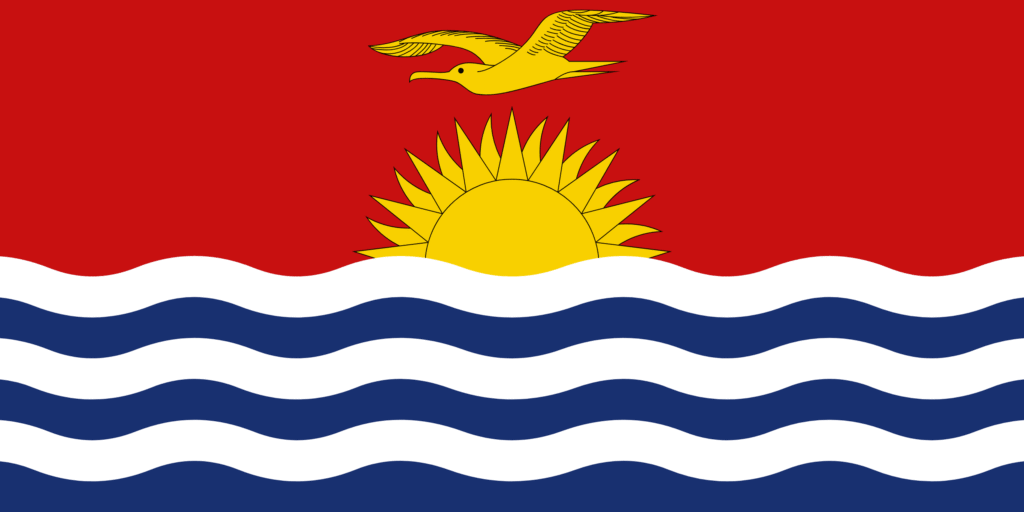
The flag of Mauritius consists of four equal horizontal bands: red, blue, yellow, and green. Adopted at independence in 1968, it reflects the nation’s journey and aspirations. Red symbolizes the struggle for freedom, blue represents the Indian Ocean, yellow signifies a bright future, and green reflects the island’s agriculture and natural beauty. The flag is flown on government buildings, schools, and during national celebrations, following established protocols.
Flag flying days
| Date | Flag Position | Occasion or Reason |
|---|---|---|
| March 12 | Full-mast | Independence and Republic Day |
| January 1 | Full-mast | New Year’s Day |
| May 1 | Full-mast | Labour Day |
| National Mourning Periods | Half-mast | Death of national leaders or national tragedies |