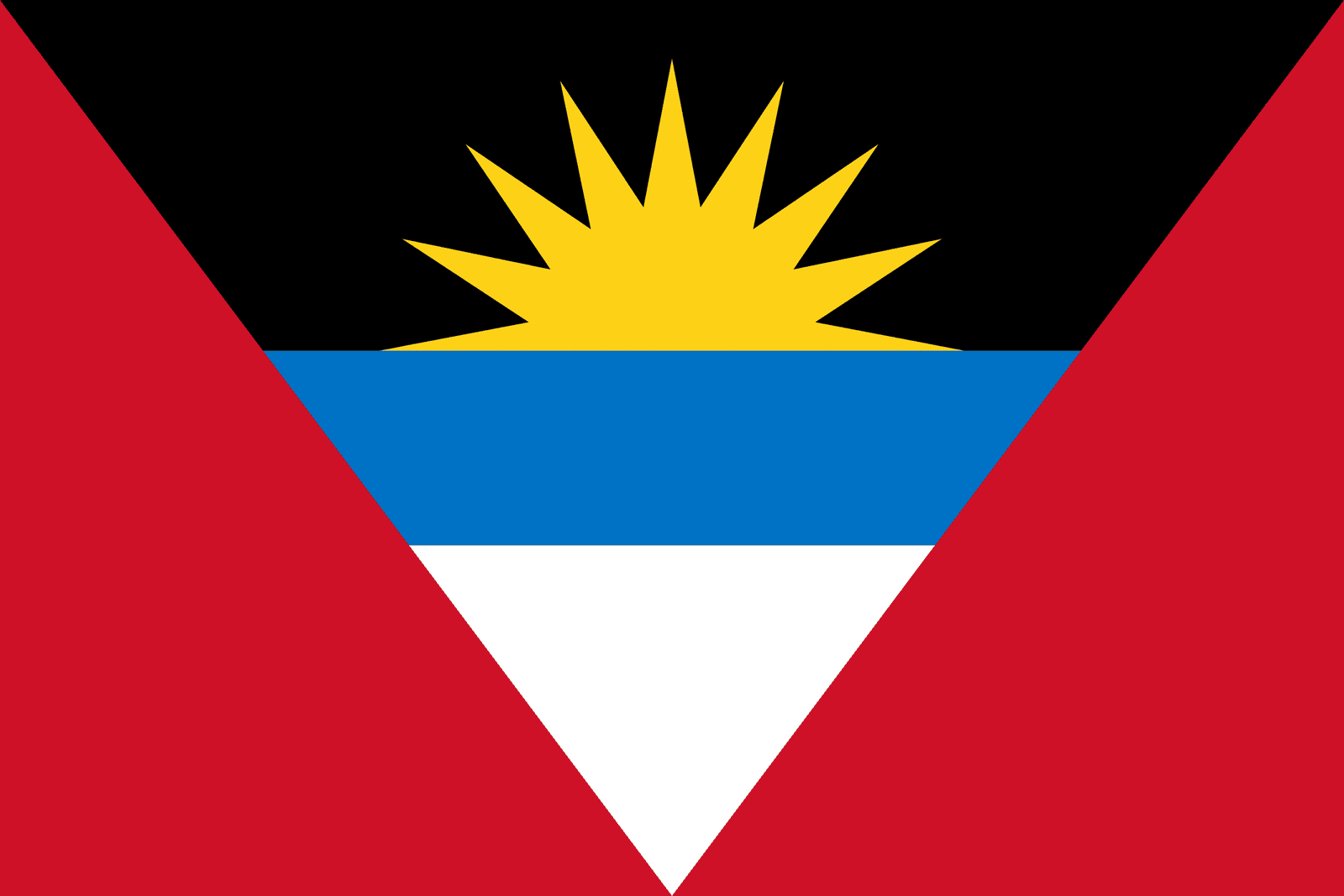
Flag of Antigua and Barbuda
| Legal Name | Antigua and Barbuda |
|---|---|
| Flag |
|
| Capital City |
St. John’s |
| Total Area | 442 km² |
| Land Area | 442 km² |
| Water Area | Negligible (<1 km²) |
| Population | ~100,000 |
| Major Cities | St. John’s (~22,000), All Saints (~3,000), Liberta (~2,000), Potters Village (~1,800), Parham (~1,600) |
| Currency | East Caribbean Dollar (XCD) |
| GDP | ~US$1.7 billion |
| GDP Per Capita | ~US$17,000 |
About of Antigua and Barbuda
Antigua and Barbuda is a small island nation in the Eastern Caribbean, forming part of the Leeward Islands chain in the Lesser Antilles. The country comprises three main islands—Antigua, Barbuda, and Redonda—along with several smaller islets, stretching across a total area of 442 km². Its position along historic maritime routes has shaped both its cultural identity and economic development.
The nation is landlocked only by the surrounding Caribbean Sea, with no land borders. The capital and largest city, St. John’s, serves as the political, commercial, and cultural center, hosting government institutions, ports, and tourism infrastructure. Other notable settlements include All Saints, Liberta, and Parham.
Internationally, Antigua and Barbuda is recognized as a sovereign constitutional monarchy within the Commonwealth, with strong ties to the United Kingdom and membership in organizations such as the United Nations, Caribbean Community (CARICOM), Organisation of Eastern Caribbean States (OECS), and the Commonwealth of Nations. Strategically, the country plays a significant role in Caribbean maritime security, tourism, and regional trade.
2. Etymology
The name “Antigua” was given by Christopher Columbus in 1493, in honor of the church of Santa Maria La Antigua in Seville, Spain. “Barbuda” derives from the Spanish word for “bearded,” likely referring to the island’s dense mangrove and tree-lined coastline. The combination of these names reflects European exploration and the islands’ early colonial history.
3. History
Pre-Columbian inhabitants of the islands included the Ciboney, Arawak, and Carib peoples, who engaged in fishing, farming, and inter-island trade. Columbus claimed Antigua for Spain in 1493, though the islands remained largely uncolonized until the 17th century.
The British established permanent settlements on Antigua in 1632, introducing sugar plantations worked by enslaved Africans. Barbuda was developed later, primarily as a source of food and resources for Antigua. The islands were occupied briefly by the French, but ultimately remained under British control until independence.
Antigua and Barbuda gained full independence on November 1, 1981, establishing a constitutional monarchy under Queen Elizabeth II (now King Charles III). Post-independence developments have focused on tourism, infrastructure, and economic diversification, while maintaining political stability within a parliamentary system.
4. Government and Politics
Antigua and Barbuda is a constitutional monarchy with a parliamentary system. The monarch serves as head of state, represented locally by a Governor-General. Executive authority is exercised by the Prime Minister and Cabinet, while legislative power resides in a bicameral Parliament composed of the House of Representatives and the Senate.
The judiciary is independent, with the Eastern Caribbean Supreme Court overseeing legal matters. The country is divided into six parishes on Antigua and one dependency, Barbuda, which maintains a local council. Antigua and Barbuda actively participates in international organizations and regional initiatives, including maritime security, trade, and climate change adaptation.
5. Economy
Antigua and Barbuda has a high-income, service-based economy, heavily reliant on tourism, offshore banking, and financial services. Tourism accounts for a significant share of GDP, drawing visitors for its beaches, resorts, and cruise ship ports.
Agriculture is limited, focusing on citrus fruits, vegetables, and livestock, while light manufacturing and craft industries serve domestic and export markets. The nation relies on imports for most goods and maintains trade links with the United States, Canada, the United Kingdom, and Caribbean neighbors.
Economic challenges include vulnerability to natural disasters, global economic fluctuations, and limited domestic production, while the outlook emphasizes tourism development, renewable energy, and financial sector growth.
6. Demographics
The population is predominantly of African descent, with small communities of European, mixed, and East Indian ancestry. English is the official language, with Antiguan Creole widely spoken in daily life. Christianity, primarily Anglican, Methodist, and Catholic, dominates religious practice.
Most residents live on Antigua, with Barbuda sparsely populated. Population growth is modest, influenced by migration, urbanization, and economic opportunities in tourism and services.
7. Culture and Society
Antigua and Barbuda’s culture reflects African, European, and Caribbean influences, evident in music, dance, and festivals. Calypso, reggae, and soca are popular, and Carnival is a major annual celebration. Cuisine emphasizes seafood, tropical fruits, rice, and local spices.
Social norms value family, community cohesion, and hospitality, while sports such as cricket, football, and sailing play a prominent role in national life.
8. Education and Healthcare
Education is free and compulsory for children aged 5–16, with primary, secondary, and tertiary institutions available. Literacy rates are high, and higher education is supported by regional and international partnerships.
Healthcare is provided through public hospitals, clinics, and private facilities, with programs targeting vaccination, maternal care, and disease prevention. Public health challenges include non-communicable diseases, hurricane response, and rural access, while achievements include expanded primary care coverage and improved health infrastructure.
9. Geography and Climate
The islands are characterized by coastal plains, low hills, and volcanic formations, with coral reefs and lagoons. Antigua is larger and more developed, while Barbuda is flat and sparsely populated. The climate is tropical maritime, with a wet season (June–November) and dry season (December–May).
Natural hazards include hurricanes, tropical storms, and coastal erosion. Environmental concerns focus on coral reef preservation, deforestation, and sustainable tourism.
10. Flora and Fauna
Antigua and Barbuda host diverse coastal and island ecosystems, including mangroves, dry forests, and coral reefs. Native plants include sea grapes, coconut palms, and acacia, while wildlife includes sea turtles, iguanas, and numerous bird species. National parks and marine reserves protect biodiversity and promote eco-tourism.
Map of Antigua and Barbuda
Key national symbols include the flag, coat of arms, national anthem, and endemic species. These reflect sovereignty, independence, and cultural heritage, celebrating the nation’s history and Caribbean identity.
National Flag (Detailed Section)
The flag features a rising golden sun over a blue and white sea, symbolizing dawn, hope, and maritime heritage, with black representing the African heritage and red symbolizing energy and struggle. It was adopted at independence in 1981, following consultation with national leaders. Flag protocol emphasizes display during national holidays, government functions, and international events.
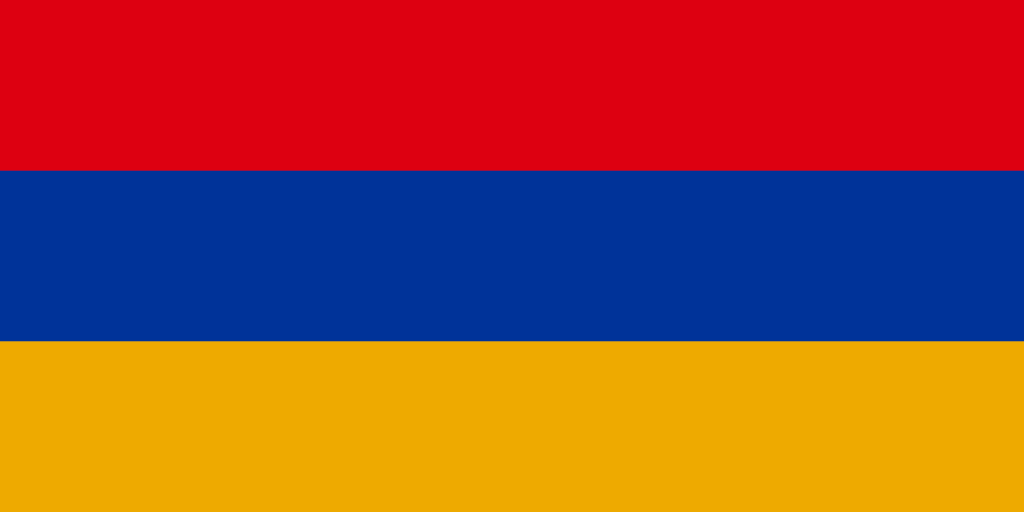
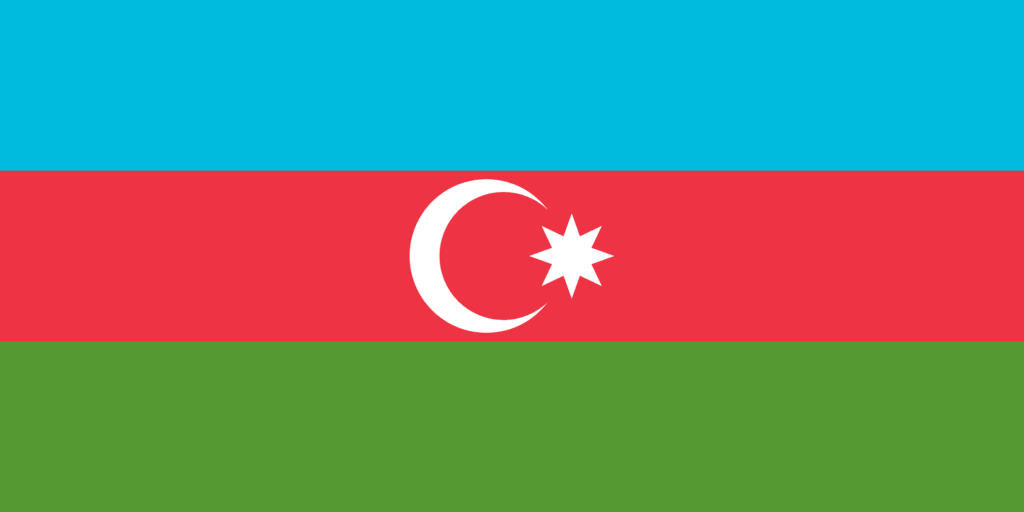
Realted Flags
Flag flying days
| Date | Position | Reason[18] |
|---|---|---|
| 23 March | Full-mast | Pakistan Day: Adoption of the Lahore Resolution (1940) and declaration of the Islamic Republic (1956) |
| 21 April | Half-mast | Death Anniversary of the National Poet, Muhammad Iqbal (1938) |
| 14 August | Full-mast | Independence Day (1947) |
| 11 September | Half-mast | Death Anniversary of the Father of the Nation, Muhammad Ali Jinnah (1948) |
| 9 November | Full-mast | Birthday of Muhammad Iqbal |
| 25 December | Full-mast | Birthday of Muhammad Ali Jinnah |