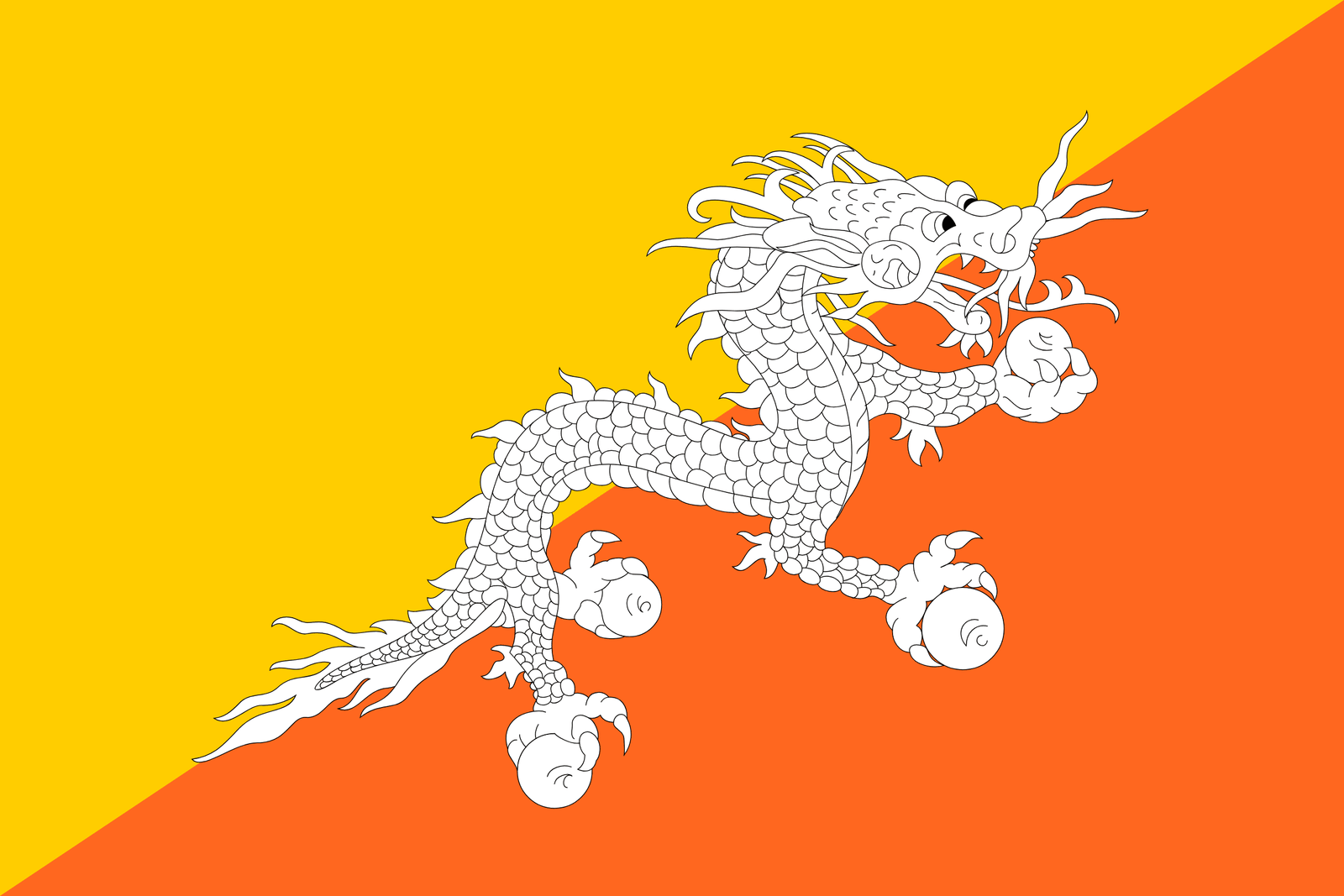
Flag of Bhutan
| Legal Name | Kingdom of Bhutan |
|---|---|
| Flag |
|
| Capital City |
Thimphu |
| Total Area | 38,394 km² |
| Land Area | 38,394 km² |
| Water Area | Negligible (~0 km²) |
| Population | ~800,000 |
| Major Cities | Thimphu (~115,000), Phuntsholing (~27,000), Paro (~20,000), Gelephu (~15,000) |
| Currency | Bhutanese Ngultrum (BTN), Indian Rupee (INR) also widely accepted |
| GDP | ~US$2.8 billion |
| GDP Per Capita | ~US$3,500 (PPP ~US$10,000) |
About of Bhutan
Bhutan is a landlocked kingdom in the eastern Himalayas of South Asia, strategically situated between China (Tibet Autonomous Region) to the north and India to the south, east, and west. Despite its small size, Bhutan is renowned for its stunning mountainous landscapes, ranging from subtropical plains in the south to alpine peaks in the north.
The capital and largest city, Thimphu, serves as the administrative, political, and cultural hub, hosting government offices, universities, and religious institutions. Bhutan maintains a largely rural population, with small urban centers spread across valleys and river basins.
Internationally, Bhutan is recognized for its sovereignty, unique development philosophy, and cautious approach to globalization. The country emphasizes Gross National Happiness over conventional economic metrics, blending traditional governance with measured modernization. Geopolitically, Bhutan occupies a key position in the Himalayas, balancing relations with two major powers—India and China—while maintaining strict control over foreign influence.
3. Etymology
The name “Bhutan” is believed to derive from “Bhotanta”, meaning “the end of Tibet” in Sanskrit, reflecting its geographic proximity to Tibet. Locally, the country is known as Druk Yul, meaning “Land of the Thunder Dragon,” referencing the Drukpa Lineage of Tibetan Buddhism that dominates the nation. The dragon motif is deeply embedded in Bhutanese mythology and national identity, symbolizing strength, protection, and the spiritual heritage of the kingdom.
4. History
Bhutan’s history spans ancient, medieval, and modern periods, heavily influenced by Tibetan Buddhism. Archaeological evidence indicates settlement by Tibeto-Burman groups and other Himalayan communities for thousands of years. By the 7th century, Buddhist missionaries began establishing religious centers, laying the foundations of Bhutanese spiritual life.
During the medieval period, regional lords called penlops ruled local territories, while the Drukpa Kagyu sect consolidated power religiously and politically. In 1907, Bhutan unified under Ugyen Wangchuck, establishing the monarchy that continues today.
Bhutan maintained relative isolation, limiting contact with colonial powers, though treaties with Britain in the 19th century and India in 1949 ensured sovereignty. The post-independence era emphasized cautious modernization, infrastructure development, and education, culminating in the 2008 transition to a constitutional monarchy, blending democracy with traditional governance.
5. Government and Politics
Bhutan is a constitutional monarchy with the King of Bhutan (Druk Gyalpo) as head of state. The Prime Minister serves as head of government, leading a bicameral Parliament: the National Council (upper house) and the National Assembly (lower house). The judiciary is independent, with the Supreme Court at its apex.
Bhutan is divided into 20 dzongkhags (districts), each with administrative autonomy and local councils. Foreign relations focus primarily on India, China, and multilateral cooperation through the UN and SAARC. Bhutan maintains a small, strategically oriented military responsible for border security and disaster response.
6. Economy
Bhutan’s economy is emerging and service-oriented, with significant contributions from hydropower, agriculture, tourism, and forestry. Hydroelectric power exports to India generate major revenue streams. Agriculture provides subsistence and commercial crops, including rice, maize, potatoes, and citrus. Cottage industries and handicrafts also contribute to GDP.
Tourism is highly regulated to maintain cultural integrity and environmental sustainability, employing a high-value, low-volume model. Challenges include geographic constraints, reliance on Indian aid, and limited industrial diversification, though hydropower expansion and responsible tourism provide optimistic prospects.
7. Demographics
Bhutan’s population is largely ethnically diverse, including Ngalop, Sharchop, Lhotshampa (Nepali origin), and various indigenous groups. Dzongkha is the official language, though other languages are widely spoken regionally.
The dominant religion is Vajrayana Buddhism, with Hinduism practiced among Lhotshampa communities. Approximately two-thirds of the population live in rural areas, primarily in valleys and highland settlements. Population growth is moderate, supported by government healthcare and education programs.
8. Culture and Society
Bhutanese culture emphasizes religion, community, and preservation of heritage. Traditional dress (gho for men, kira for women) is worn daily in public spaces. Monastic life, festivals (tshechus), and local rituals are central to social identity.
Arts include thangka painting, wood carving, and sacred music, while cuisine focuses on red rice, chili, and dairy products. National identity is strongly tied to the concept of Gross National Happiness, integrating spiritual, social, and economic well-being. Sports include archery (national sport), football, and traditional games.
9. Education and Healthcare
Bhutan offers free education from primary to tertiary levels, with literacy improving steadily. Schools combine modern curricula with cultural and environmental education. Higher education is provided at institutions like the Royal University of Bhutan.
Healthcare is universal and publicly funded, emphasizing primary care, maternal and child health, and disease prevention. Traditional medicine is integrated with modern healthcare services. Challenges include geographic barriers and limited medical infrastructure in remote areas.
10. Geography and Climate
Bhutan’s terrain is entirely mountainous, spanning subtropical southern plains to alpine northern peaks over 7,000 meters. Major rivers include the Wang Chhu, Drangme Chhu, and Puna Tsang Chhu, supporting agriculture and hydropower.
Climate varies by altitude: subtropical in lowlands, temperate in valleys, and alpine in the north. Monsoon rains dominate summer, while winters are dry. Natural hazards include landslides, flash floods, and glacial lake outburst floods. Environmental policies focus on forest conservation and sustainable resource use.
11. Flora and Fauna
Bhutan is rich in biodiversity, with extensive forests, alpine meadows, and riverine ecosystems. Native flora includes rhododendrons, orchids, pine, and juniper. Wildlife includes tigers, snow leopards, red pandas, Himalayan black bears, and various bird species.
Protected areas, including over 50% of the country, form a network of national parks and biological corridors, reflecting Bhutan’s commitment to conservation and ecological preservation.
Map of Bhutan
National Flag: Diagonal yellow and orange with a white dragon.
Coat of Arms: Features a double diamond-thunderbolt, lotus, jewels, and dragon, symbolizing purity, spiritual wealth, and protection.
National Anthem: “Druk Tsendhen” (The Thunder Dragon Kingdom).
National Animal: Takin (Capricorn goat-antelope).
National Plant: Blue poppy.
National Monuments: Dzongs, such as Punakha Dzong and Tashichho Dzong.
National Flag (Detailed Section)
The Bhutanese flag is divided diagonally from the lower hoist-side corner:
Upper triangle (yellow): Represents civil tradition and secular authority of the king.
Lower triangle (orange): Symbolizes Buddhist spiritual practice and Drukpa Kagyu lineage.
White dragon (Druk): Stretches across the flag, clutching jewels representing wealth, purity, and protection of the nation.
The flag was officially adopted in 1969, modernizing earlier traditional versions. It is prominently displayed during national festivals, government events, and international representation.
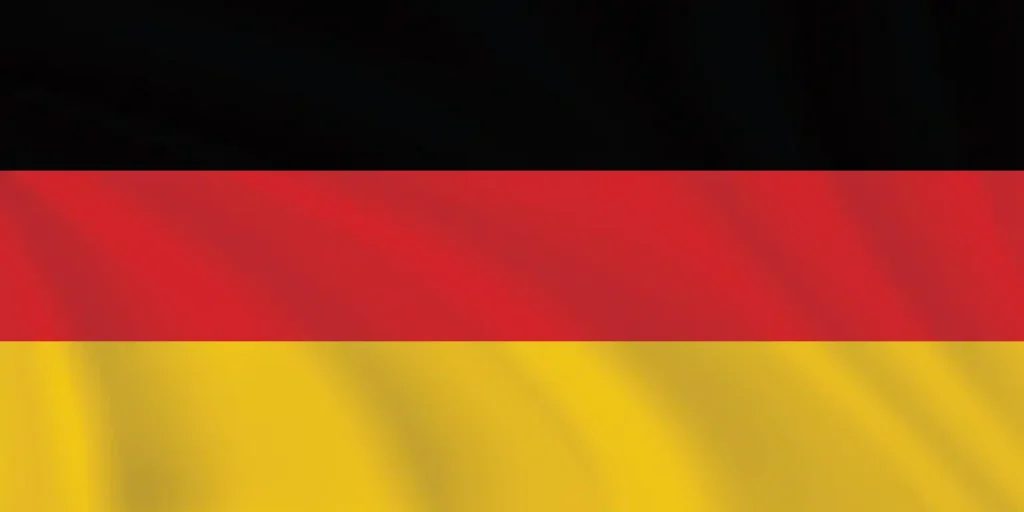
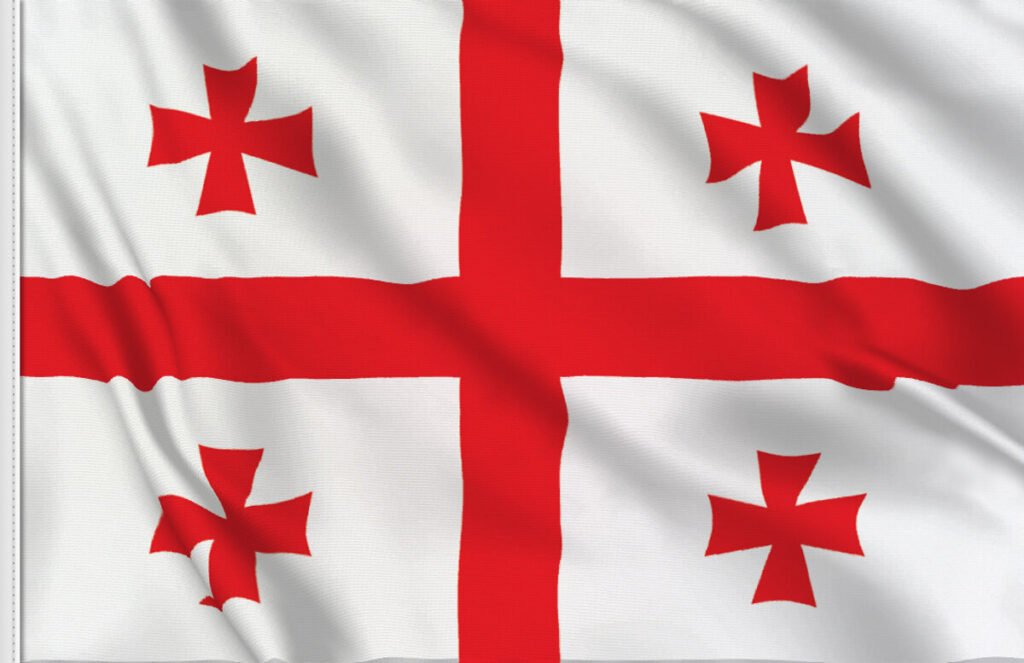
Realted Flags
Flag flying days
| Date | Flag Position | Occasion |
|---|---|---|
| 17 December | Full-mast | National Day (Coronation of King Ugyen Wangchuck) |
| 2 June | Full-mast | King’s Birthday |
| State mourning | Half-mast | National mourning or death of a dignitary |
| 13 July | Full-mast | Constitution Day |