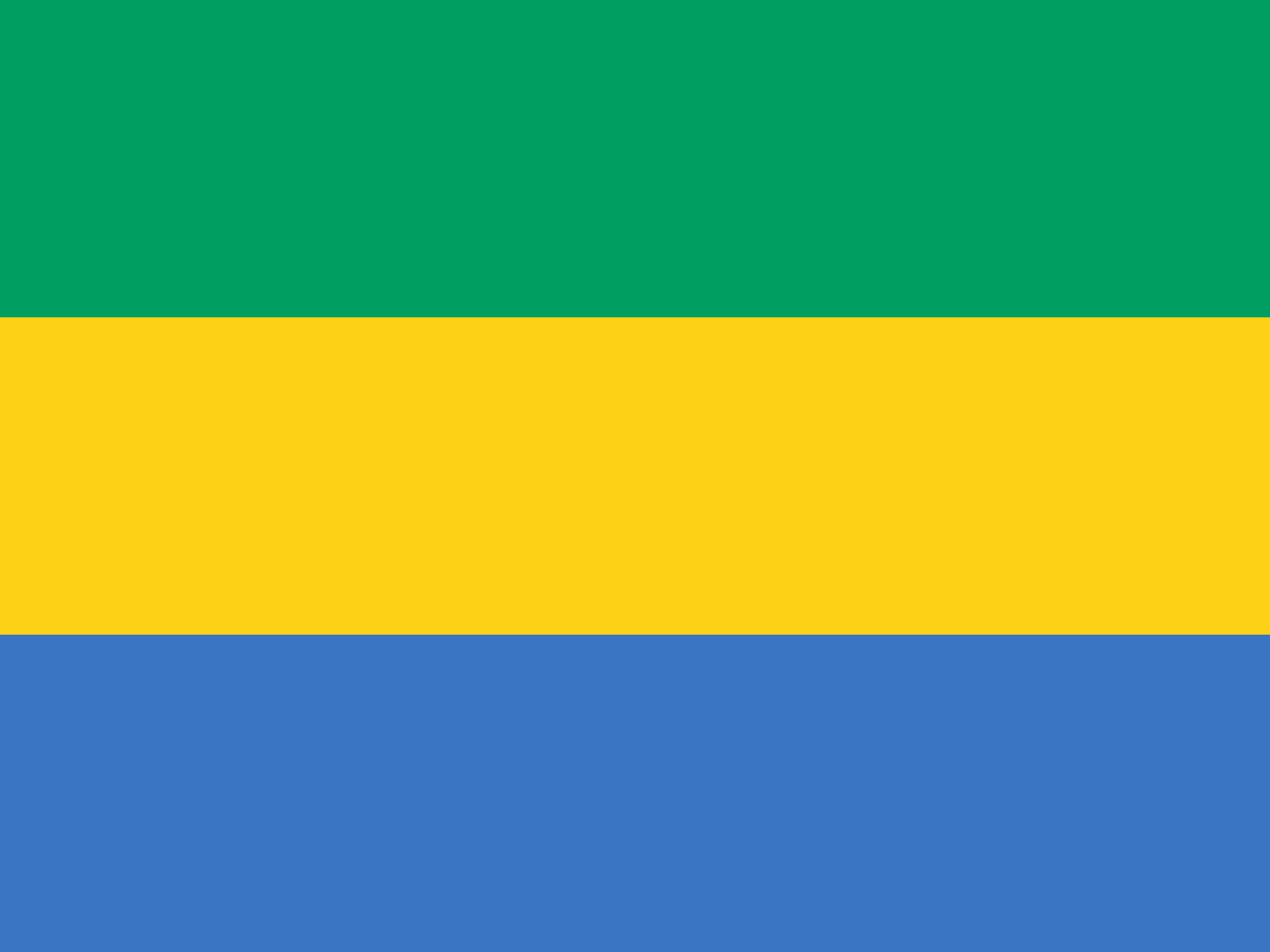
Flag of Gabon
| Legal Name | Gabonese Republic |
|---|---|
| Flag |
|
| Capital City |
Libreville |
| Total Area | 267,668 |
| Land Area | 257,667 |
| Water Area | 10,001 |
| Population | ~2.3 million |
| Major Cities | Libreville (~797,000), Port-Gentil (~147,000), Franceville (~110,000), Oyem (~60,000) |
| Currency | Central African CFA franc (XAF) |
| GDP | ~USD 18 billion |
| GDP Per Capita | ~USD 19,000 (PPP) |
About of Gabon
Gabon is a Central African country located along the Atlantic coast, bordered by Equatorial Guinea to the northwest, Cameroon to the north, and the Republic of the Congo to the east and south. Its maritime boundary lies along the Gulf of Guinea. With vast equatorial rainforests, the country is among the most biodiverse in Africa, encompassing dense tropical forests, savannahs, and river systems, most notably the Ogooué River, which dominates the interior landscape.
Libreville, the capital, serves as the political, economic, and cultural hub, while Port-Gentil, the second-largest city, functions as the main center for the oil industry and industrial activities. Gabon has a relatively small but urbanizing population, concentrated along the coast, with substantial rural communities in the interior rainforest regions. Internationally recognized as a stable and resource-rich nation, Gabon is a member of the African Union, the United Nations, the Economic Community of Central African States (ECCAS), and the Central African Economic and Monetary Community (CEMAC).
Strategically, Gabon’s significant oil reserves, dense forests, and mineral resources position it as a geopolitically important country in Central Africa, attracting foreign investment while maintaining regional influence through trade and diplomacy.
Etymology
The name “Gabon” is derived from the Portuguese word gabão, meaning “cloak,” referring to the shape of the estuary of the Komo River, which early Portuguese explorers likened to a cloak. Over centuries, the term was adopted by European mapmakers and eventually became the official designation of the territory and independent nation.
History
Prehistoric and Ancient Civilizations
Gabon has evidence of human settlement dating back thousands of years, with archaeological finds indicating hunter-gatherer communities and early use of iron tools. The forested interior fostered small, localized communities practicing subsistence farming, hunting, and fishing.
Classical and Medieval Periods
The Fang, Punu, Myene, and other Bantu-speaking groups migrated into the region over several centuries, establishing clan-based societies with structured social hierarchies. Trade networks developed along rivers, facilitating exchange of ivory, copper, and other goods with coastal traders.
Colonial or Imperial Rule
European contact began in the 15th century, primarily with Portuguese and later French explorers. By the mid-19th century, France established control over Gabon, incorporating it into French Equatorial Africa in 1910. Gabon remained under colonial administration with economic exploitation of timber, rubber, and mineral resources.
Independence Movement
Nationalist movements gained momentum after World War II. Gabon achieved full independence from France on August 17, 1960, with Léon M’ba becoming its first president. A one-party state dominated early post-independence politics, emphasizing political stability and resource management.
Key Post-Independence Events
Omar Bongo’s long presidency (1967–2009) brought continuity, economic development via oil exploitation, and modernization, albeit with criticism for authoritarian tendencies. His son, Ali Bongo Ondimba, succeeded him, continuing oil-centric policies while facing political opposition and calls for reform.
Modern Political Developments
Gabon remains a presidential republic with multiparty elections. Recent political developments include efforts to diversify the economy, strengthen democratic institutions, and address environmental and social challenges, balancing oil wealth with sustainable development.
Government and Politics
Gabon is a presidential republic where the president serves as both head of state and government. The executive branch includes the president and a prime minister appointed by the president. The legislative branch is bicameral, consisting of the National Assembly and Senate. The judiciary is independent, operating under civil law influenced by French legal traditions.
Administratively, Gabon is divided into nine provinces: Estuaire, Haut-Ogooué, Moyen-Ogooué, Ngounié, Nyanga, Ogooué-Ivindo, Ogooué-Lolo, Ogooué-Maritime, and Woleu-Ntem. The country maintains active foreign relations through the African Union, United Nations, CEMAC, and other regional organizations. The Gabonese Armed Forces focus on territorial defense, internal security, and peacekeeping roles in Africa.
Economy
Gabon is classified as an upper-middle-income developing country with an economy heavily reliant on oil and mineral resources. Petroleum production contributes roughly 80% of government revenue. Other significant sectors include manganese mining, timber, and forestry. Agriculture provides employment for rural populations but contributes a smaller share to GDP, with cocoa, coffee, and palm oil as notable crops.
Gabon’s trade partners include China, the United States, France, and regional African nations. Economic challenges involve dependency on oil, vulnerability to global price fluctuations, and high unemployment rates. Future prospects focus on economic diversification, ecotourism, and sustainable exploitation of natural resources.
Demographics
The population is predominantly Bantu ethnic groups, including Fang, Punu, Nzebi, and Myene. French is the official language, with indigenous languages widely spoken in rural areas. Christianity, especially Roman Catholicism, predominates, with small Muslim and traditional animist communities. Approximately 90% of the population resides in urban centers, reflecting high urbanization trends in Libreville and Port-Gentil. Population growth is moderate, with increasing life expectancy and declining fertility rates.
Culture and Society
Gabonese culture blends Bantu traditions with French colonial influence. Music, dance, and storytelling are central, with traditional instruments such as the ngombi harp. Gabonese cuisine includes cassava, plantains, fish, and palm oil-based dishes. Social norms emphasize respect for elders, extended family networks, and community solidarity. Major festivals include Independence Day, La Fête de la Jeunesse, and traditional ceremonies. Football and basketball are popular sports, alongside traditional wrestling and cultural competitions.
Education and Healthcare
Education follows a French-style system with primary, secondary, and tertiary levels. Literacy rates are improving, with higher education available through the University of Gabon and other institutions. Healthcare is delivered via public hospitals, clinics, and private facilities, with ongoing efforts to improve access in rural areas. Public health challenges include malaria, infectious diseases, and maternal-child health, while achievements include vaccination programs and improved life expectancy.
Geography and Climate
Gabon is largely equatorial, with extensive rainforests, savannahs, and wetlands. Major rivers include the Ogooué, Komo, and Nyanga. Coastal plains rise to hilly and mountainous regions in the east and southeast. Climate is equatorial and humid, with four seasons: long rainy (February–May), short dry (June–August), short rainy (September–November), and long dry (December–January). Natural hazards include floods, coastal erosion, and occasional droughts. Environmental concerns focus on deforestation, habitat loss, and sustainable management of forests and wildlife.
Flora and Fauna
Gabon is one of Africa’s most biodiverse countries, with rainforests, mangroves, and savannahs hosting diverse species. Native plants include mahogany, okoumé, and iroko. Wildlife comprises gorillas, chimpanzees, forest elephants, mandrills, and abundant bird species. National parks, including Lope, Minkébé, and Ivindo, protect ecosystems and promote ecotourism while conserving biodiversity.
Map of Gabon
Gabon’s flag features three horizontal stripes: green (forests), yellow (equator and sun), and blue (Atlantic Ocean). The coat of arms includes two black panthers, a shield, and a ship representing exploration and trade. The national anthem, La Concorde, celebrates national unity. Other national symbols include the black panther, okoumé tree, and notable monuments like the Presidential Palace in Libreville.
National Flag (Detailed Section)
The Gabonese flag, adopted on August 9, 1960, features green, yellow, and blue horizontal bands. Green represents the forests, yellow symbolizes the sun and equator, and blue reflects the Atlantic Ocean. The flag is used at government buildings, public institutions, and during national holidays. Protocol dictates full-mast display on Independence Day and other national celebrations, with half-mast during periods of mourning.
Flag flying days
| Date | Flag Position | Occasion or Reason |
|---|---|---|
| August 17 | Full-mast | Independence Day |
| December 12 | Full-mast | National Day of Unity |
| National Mourning Days | Half-mast | Death of leaders or national tragedies |
| Public Holidays | Full-mast | Civic and cultural celebrations |