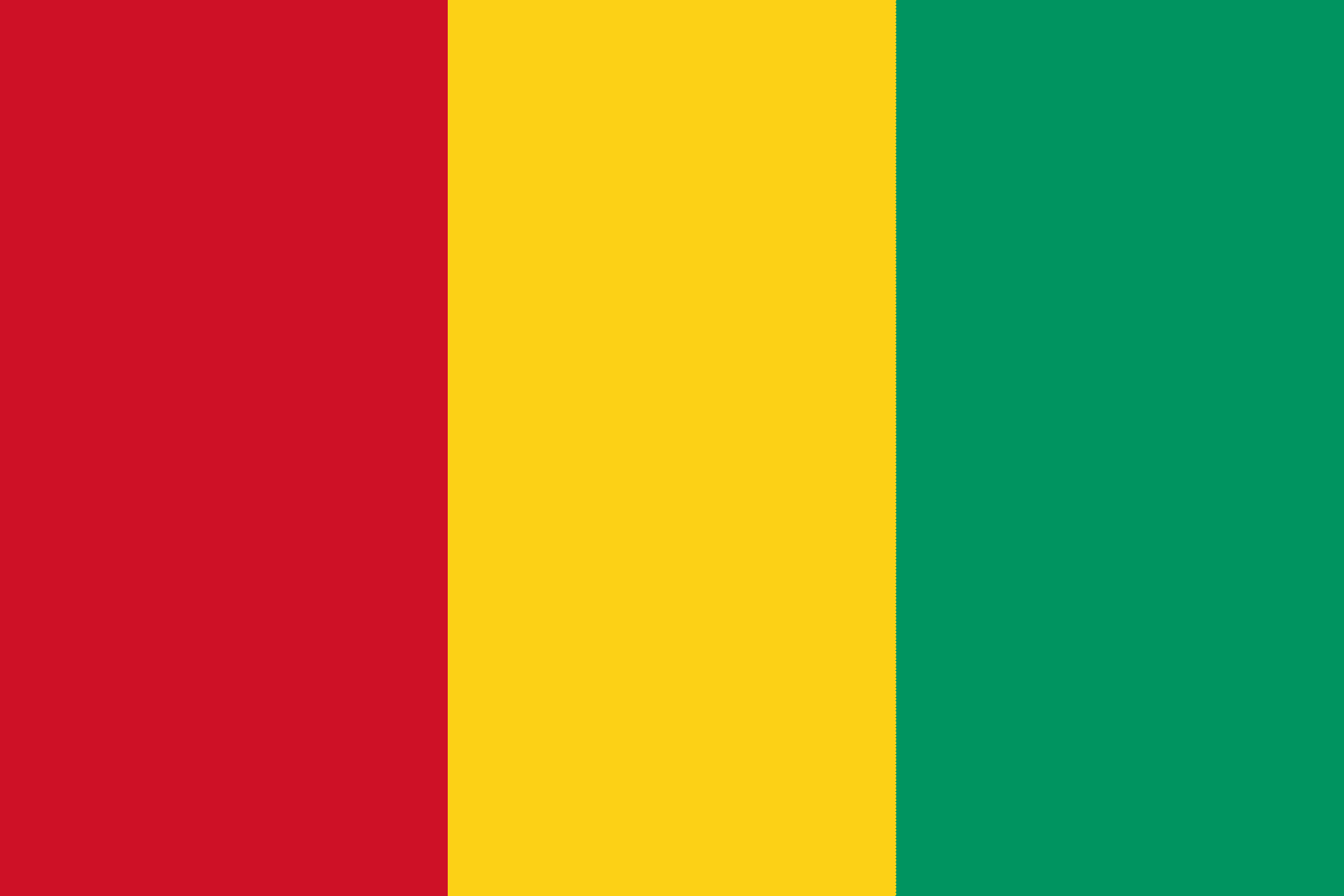
Flag of Guinea
| Legal Name | Republic of Guinea |
|---|---|
| Flag |
|
| Capital City |
Conakry |
| Total Area | Approximately 245,857 km² |
| Land Area | Approximately 245,720 km² |
| Water Area | Approximately 137 km² |
| Population | Approximately 14.2 million |
| Major Cities | Conakry (~2.3 million), Nzérékoré (~300,000), Kankan (~250,000), Kindia (~200,000), Labé (~150,000) |
| Currency | Guinean franc (GNF) |
| GDP | Approximately USD 16–17 billion |
| GDP Per Capita | Approximately USD 1,200 (nominal) |
About of Guinea
Guinea is a West African nation located along the Atlantic coast, known for its diverse geography and rich natural resources. It occupies a strategic position in the western part of the African continent, serving as a transition zone between coastal West Africa and the inland Sahelian regions.
The country is bordered by Guinea-Bissau to the northwest, Senegal to the north, Mali to the northeast, Côte d’Ivoire to the southeast, Liberia to the south, and Sierra Leone to the southwest. Its western boundary is formed by the Atlantic Ocean, providing Guinea with important maritime access. Conakry, the capital and largest city, is situated on the Kaloum Peninsula and serves as the country’s main port and economic hub.
Guinea’s population is young and ethnically diverse, with strong regional identities shaped by geography, language, and history. Internationally, Guinea is recognized as a sovereign republic and plays an important role in regional West African affairs. Its vast mineral wealth, particularly bauxite, gives it strategic economic importance both regionally and globally.
Etymology
The name “Guinea” has ancient roots in European and Arabic geographical terminology used to describe the western coast of Africa south of the Sahara. The term is believed to derive from Berber or Arabic words referring to the land of black Africans or the region beyond the desert.
Over time, “Guinea” became associated with several territories along the West African coast. The modern Republic of Guinea adopted the name at independence, distinguishing itself politically and culturally from neighboring states with similar historical naming conventions.
History
Archaeological evidence indicates that Guinea has been inhabited since prehistoric times, with early communities practicing agriculture, hunting, and fishing. These societies developed complex social structures long before written history.
During the medieval period, much of present-day Guinea was integrated into powerful West African empires, including the Ghana Empire, the Mali Empire, and later the Songhai Empire. These empires facilitated trade in gold, salt, and other commodities and contributed to the spread of Islam, particularly in the northern regions.
From the 15th century onward, European traders arrived along the coast, and Guinea became involved in Atlantic trade networks. France gradually established colonial control in the late 19th century, incorporating Guinea into French West Africa.
Guinea achieved independence in 1958 following a historic referendum in which it rejected continued association with France. This decision marked a turning point in African decolonization. Post-independence history included periods of authoritarian rule, military governance, and political repression, followed by gradual moves toward multiparty politics.
In recent decades, Guinea has experienced political reforms, contested elections, and efforts to strengthen democratic institutions, although political tensions and governance challenges continue to shape the modern state.
Government and Politics
Guinea is a republic with a presidential system of government. The Constitution provides the legal framework for governance, defining the separation of powers and the rights of citizens.
Executive authority is vested in the President, who serves as both head of state and head of government. Legislative power rests with a unicameral National Assembly, while the judiciary operates independently through a hierarchy of courts, including a Constitutional Court.
Administratively, Guinea is divided into regions and prefectures, with Conakry holding special status as the capital district. The country maintains diplomatic relations worldwide and is a member of major international organizations such as the United Nations, African Union, ECOWAS, and the Organization of Islamic Cooperation.
The Guinean armed forces are responsible for national defense and internal security. While relatively modest in size, the military has historically played a significant role in political affairs.
Economy
Guinea is classified as a developing economy with significant growth potential due to its abundant natural resources. It possesses some of the world’s largest reserves of bauxite, a key raw material for aluminum production.
Mining dominates the economy, alongside agriculture, which employs a large portion of the population. Key agricultural products include rice, cassava, coffee, cocoa, and fruits. Manufacturing remains limited, while the services sector is expanding, particularly in urban areas.
Guinea’s main exports are bauxite, alumina, gold, and agricultural products. Major trading partners include countries in Asia, Europe, and neighboring West African states. Despite resource wealth, economic development is constrained by infrastructure gaps, energy shortages, and governance challenges.
Future economic prospects depend on diversification, improved infrastructure, responsible resource management, and continued reforms to attract investment.
Demographics
Guinea’s population is ethnically diverse, with major groups including the Fulani (Peul), Malinké, Susu, and several forest-region communities. This diversity is reflected in cultural practices, languages, and regional traditions.
French is the official language, while indigenous languages are widely spoken in daily life. Islam is the predominant religion, practiced by the majority of the population, with Christianity and traditional beliefs also present.
Urbanization is increasing, particularly around Conakry, though a significant portion of the population still lives in rural areas. Guinea has a high population growth rate and a youthful demographic profile.
Culture and Society
Guinean culture is deeply influenced by music, oral tradition, and communal life. Traditional music and dance, especially those rooted in Mandé heritage, are internationally recognized and form a core part of national identity.
Cuisine centers on rice, sauces, fish, and vegetables, often flavored with local spices and palm oil. Social customs emphasize hospitality, respect for elders, and strong family ties.
National holidays include Independence Day and religious festivals. Football is the most popular sport, followed by athletics and traditional wrestling.
Education and Healthcare
The education system includes primary, secondary, and higher education institutions, though access and quality vary by region. Literacy rates have improved but remain a challenge, particularly in rural areas.
Healthcare services are provided through public and private facilities, with ongoing efforts to improve access and outcomes. Key public health issues include infectious diseases, maternal health, and nutrition, alongside progress in vaccination and disease prevention programs.
Geography and Climate
Guinea’s geography is highly varied, ranging from coastal plains and mangroves to mountainous regions and forested highlands. The Fouta Djallon highlands are particularly important as the source of major West African rivers, including the Niger and Senegal.
The climate is generally tropical, with a rainy season and a dry season. Rainfall varies significantly by region. Natural hazards include flooding and soil erosion, while environmental challenges include deforestation and mining-related impacts.
Flora and Fauna
Guinea is rich in biodiversity, with ecosystems that include forests, savannahs, wetlands, and coastal zones. Native plant species support agriculture, medicine, and traditional livelihoods.
Wildlife includes primates, antelope, reptiles, and diverse bird species. Protected areas and national parks aim to conserve habitats and endangered species, though enforcement remains a challenge
Map of Guinea
The national flag, coat of arms, and anthem reflect Guinea’s struggle for independence and Pan-African ideals. National monuments commemorate independence leaders and cultural heritage.
National Flag (Detailed Section)
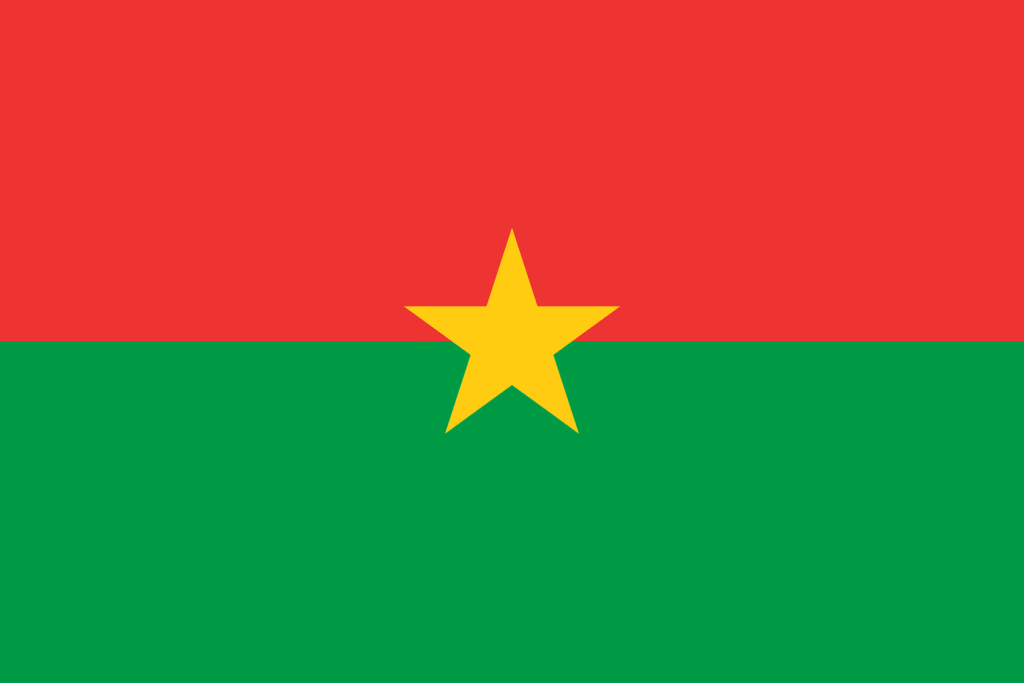
Guinea’s national flag consists of three vertical stripes of red, yellow, and green. Adopted at independence in 1958, it reflects Pan-African symbolism.
Red represents sacrifice and the blood shed for freedom, yellow symbolizes the country’s mineral wealth and the sun, and green stands for agriculture, forests, and hope. The flag is displayed on government buildings and during national celebrations in accordance with official protocol.
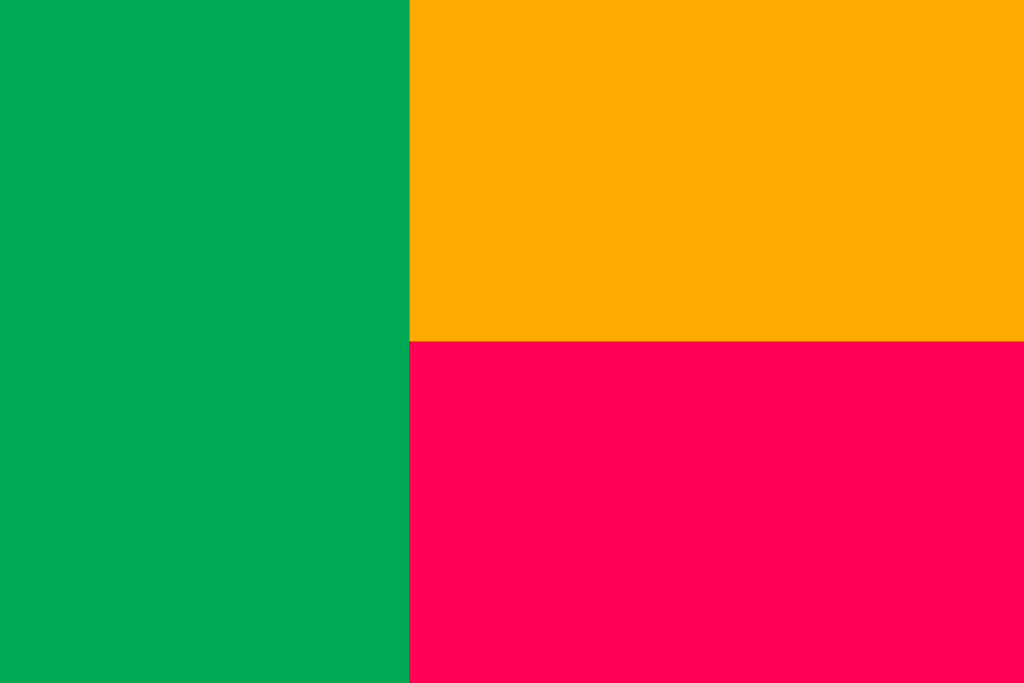
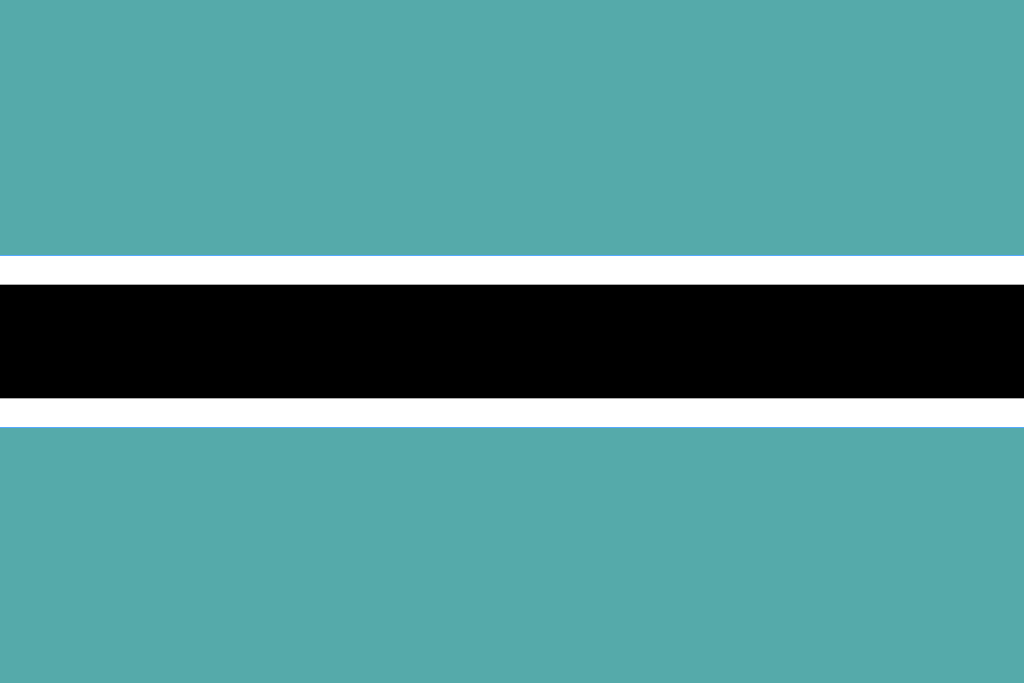
Realted Flags
Flag flying days
| Date | Flag Position | Occasion or Reason |
|---|---|---|
| January 1 | Full-mast | New Year’s Day |
| April 3 | Full-mast | Anniversary of Independence Referendum |
| October 2 | Full-mast | Independence Day |
| National Mourning Periods | Half-mast | Official days of mourning |