Flag of Guinea-Bissau
| Legal Name | Republic of Guinea-Bissau |
|---|---|
| Flag |
|
| Capital City |
Bissau |
| Total Area | Approximately 36,125 km² |
| Land Area | Approximately 28,120 km² |
| Water Area | Approximately 8,005 km² |
| Population | Approximately 2.1 million |
| Major Cities | Bissau (~500,000), Bafatá (~70,000), Gabú (~45,000), Cacheu (~30,000) |
| Currency | West African CFA franc (XOF) |
| GDP | Approximately USD 1.8 billion |
| GDP Per Capita | Approximately USD 850 (nominal) |
About of Guinea-Bissau
Guinea-Bissau is a small West African nation located along the Atlantic coast, characterized by a low-lying mainland and an extensive archipelago of islands. It forms part of the coastal region of Upper Guinea and plays a historical role in Atlantic trade routes linking Africa, Europe, and the Americas.
The country shares land borders with Senegal to the north and Guinea to the south and east, while its western boundary opens to the Atlantic Ocean. Maritime zones include rich coastal waters and the Bijagós Archipelago, a group of ecologically significant islands. Bissau, the capital and largest city, serves as the political, economic, and cultural center of the country.
Guinea-Bissau’s population is ethnically diverse, composed of several indigenous groups with distinct languages and traditions. Internationally, the country is recognized as a sovereign state and is a member of the United Nations, African Union, and the Economic Community of West African States (ECOWAS).
Despite its small size, Guinea-Bissau holds strategic importance due to its Atlantic coastline, biodiversity-rich marine zones, and position within West Africa. However, political instability and limited institutional capacity have affected its regional influence.
Etymology
The name “Guinea” has roots in medieval European usage, referring broadly to the western coast of Africa. The term likely derives from Berber or Arabic words describing the region south of the Sahara.
“Bissau” was added to the country’s name after independence to distinguish it from neighboring Guinea. The name Bissau originates from the local ethnic and linguistic heritage associated with the capital region.
Together, “Guinea-Bissau” reflects both the country’s geographic identity within West Africa and its political distinction as an independent nation.
History
Archaeological evidence suggests that the region now known as Guinea-Bissau has been inhabited for thousands of years by agricultural and fishing communities. Early societies were organized around kinship systems and local chieftaincies.
During the medieval period, the area became integrated into regional trade networks associated with the Mali Empire, which influenced commerce, culture, and Islamization in parts of the region. Coastal communities also maintained strong local autonomy.
Portuguese explorers arrived in the 15th century, establishing trading posts and gradually asserting colonial control. Guinea-Bissau became a key hub in the transatlantic slave trade, profoundly shaping its demographic and social structure.
The struggle for independence intensified in the mid-20th century under the leadership of the African Party for the Independence of Guinea and Cape Verde (PAIGC). Following a prolonged armed liberation war, Guinea-Bissau declared independence in 1973, which was internationally recognized in 1974.
Post-independence history has been marked by political instability, military coups, and periods of civil conflict. In recent decades, efforts have focused on democratic governance, reconciliation, and institutional reform, though challenges remain.
Government and Politics
Guinea-Bissau operates as a republic with a semi-presidential political system. The Constitution establishes a framework for democratic governance, although its implementation has often been disrupted by political instability.
The executive branch is shared between the President, who serves as head of state, and the Prime Minister, who heads the government. Legislative authority resides in a unicameral National People’s Assembly. The judiciary is formally independent but faces capacity and resource limitations.
Administratively, the country is divided into regions and autonomous sectors, including the Bijagós Islands. Guinea-Bissau maintains diplomatic relations worldwide and is an active member of ECOWAS, the African Union, the United Nations, and the Community of Portuguese Language Countries.
The armed forces play a significant role in national politics. While relatively small, the military has historically exerted strong influence over political outcomes.
Economy
Guinea-Bissau is classified as a low-income, developing economy with a narrow production base. Economic activity is heavily dependent on agriculture and primary commodities.
Cashew nuts dominate exports and account for the majority of foreign exchange earnings. Other sectors include fishing, small-scale manufacturing, and services concentrated in urban areas. Industrial development remains limited.
Natural resources include fertile agricultural land, fisheries, and potential offshore oil and gas reserves that are largely undeveloped. The country’s main trading partners include regional West African states, Europe, and parts of Asia.
Key economic challenges include political instability, weak infrastructure, limited diversification, and vulnerability to external shocks. Long-term prospects depend on governance reforms, investment in human capital, and sustainable use of natural resources.
Demographics
The population of Guinea-Bissau is composed of numerous ethnic groups, including the Balanta, Fula, Mandinka, Manjaco, and Papel peoples. This diversity contributes to a rich cultural mosaic.
Portuguese is the official language, while Guinea-Bissau Creole is widely spoken as a lingua franca. Several indigenous languages are used in daily life. Islam and Christianity are the major religions, alongside traditional African belief systems.
The population is predominantly rural, though urbanization is gradually increasing. Population growth remains relatively high, with a youthful demographic structure.
Culture and Society
Cultural life in Guinea-Bissau is deeply rooted in communal traditions, music, dance, and oral storytelling. National identity reflects both African heritage and Lusophone influences from Portuguese colonial history.
Music plays a central role in social life, with traditional rhythms and modern Afro-fusion styles gaining popularity. Cuisine is based on rice, fish, peanuts, palm oil, and locally grown vegetables.
Social norms emphasize respect for elders, extended family networks, and community solidarity. National holidays include Independence Day and cultural festivals linked to ethnic traditions. Football is the most popular sport, followed by athletics and traditional games.
Education and Healthcare
The education system consists of primary, secondary, and limited higher education institutions. Literacy rates remain relatively low, and access to quality education varies widely between urban and rural areas.
Healthcare services are under-resourced, with public facilities providing basic care. Common public health challenges include infectious diseases, maternal and child health issues, and limited access to clean water. International partnerships have contributed to gradual improvements.
Geography and Climate
Guinea-Bissau features a flat coastal plain, mangrove swamps, rivers, and estuaries, transitioning inland to savannah and forested areas. The Bijagós Archipelago is a defining geographic feature.
The climate is tropical, with a distinct rainy season and dry season. Heavy rainfall can cause flooding, while coastal erosion and rising sea levels pose long-term risks.
Environmental concerns include deforestation, overfishing, and habitat degradation, particularly in coastal and mangrove ecosystems.
Flora and Fauna
The country hosts rich biodiversity, especially in wetlands, forests, and marine environments. Mangroves support diverse plant species and serve as critical breeding grounds for fish.
Wildlife includes monkeys, antelope, crocodiles, sea turtles, and numerous bird species. The Bijagós Archipelago is recognized for its ecological significance, with protected areas aimed at conserving marine and terrestrial habitats.
Map of Guinea-Bissau
The national flag features Pan-African colors, symbolizing unity, sacrifice, and hope. The coat of arms reflects national sovereignty and revolutionary heritage, while the national anthem celebrates independence and collective struggle.
Monuments related to the liberation movement and cultural heritage sites reinforce national identity and historical memory.
National Flag (Detailed Section)
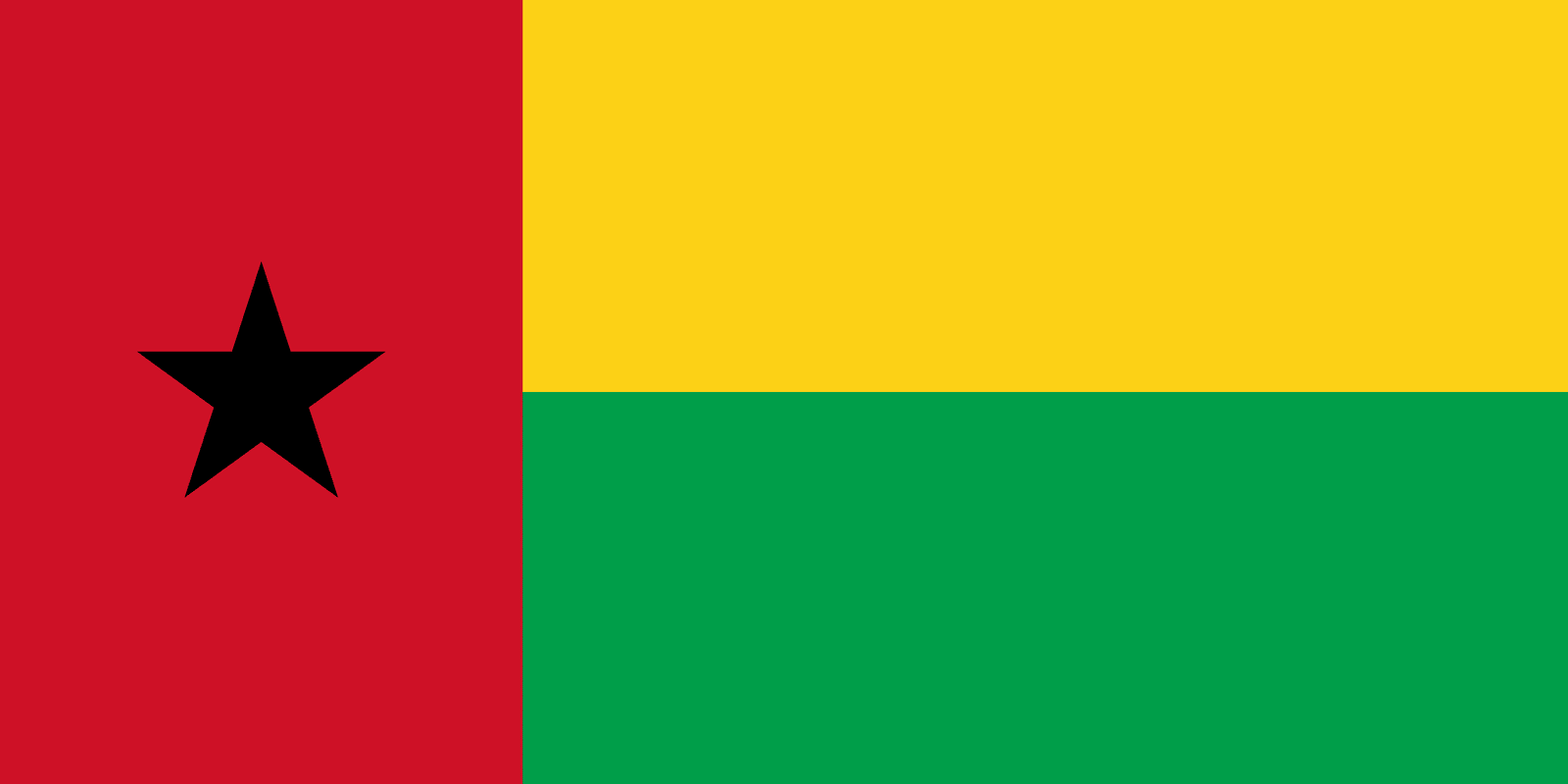
The flag of Guinea-Bissau consists of a vertical red band on the hoist side bearing a black star, alongside two horizontal stripes of yellow and green. It was adopted at independence.
Red symbolizes the blood shed during the liberation struggle, yellow represents wealth and justice, and green signifies hope and the land. The black star reflects African unity and freedom.
Flag usage follows national protocol, particularly during official events and public holidays.
Realted Flags
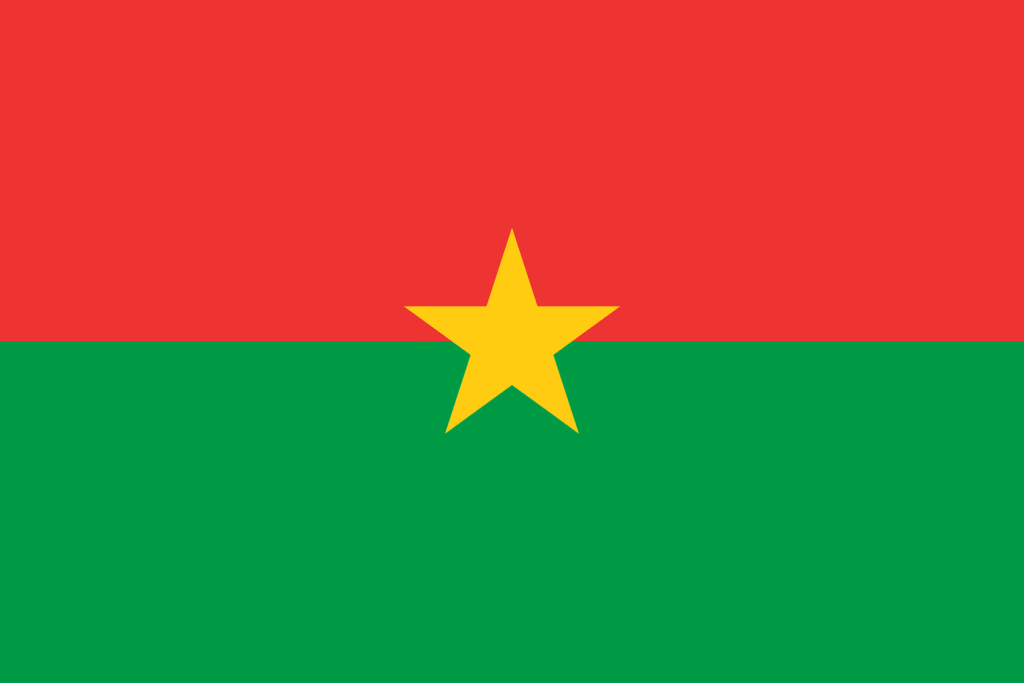
Flag flying days
| Date | Flag Position | Occasion or Reason |
|---|
| January 20 | Full-mast | Heroes’ Day |
| September 24 | Full-mast | Independence Day |
| March 8 | Full-mast | International Women’s Day |
| National Mourning Days | Half-mast | Official periods of mourning |