
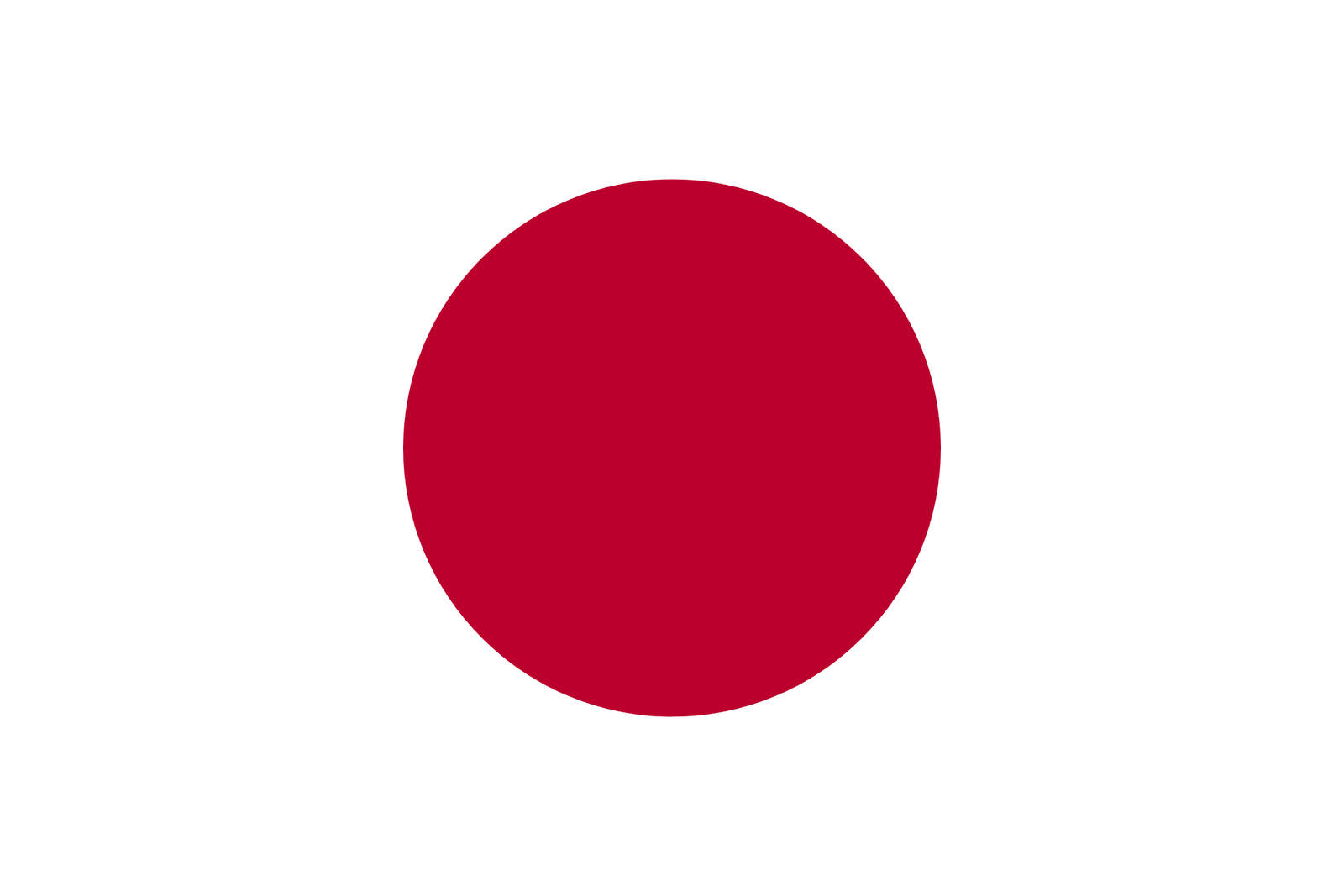
Flag of Japan
| Legal Name | Japan |
|---|---|
| Flag |
|
| Capital City |
Tokyo |
| Total Area | 377,975 km² |
| Land Area | Approximately 364,555 km² |
| Water Area | Approximately 13,420 km²td> |
| Population | ~124.5 million |
| Major Cities | Tokyo (~14m city / ~37m metro), Yokohama (~3.8m), Osaka (~2.7m), Nagoya (~2.3m), Sapporo (~1.9m), Fukuoka (~1.6m), Kobe (~1.5m) |
| Currency | Japanese Yen (JPY) |
| GDP | Approximately USD 4.2 trillion |
| GDP Per Capita | Approximately USD 34,000 (nominal) / USD 46,000 (PPP) |
About of Japan
Japan is an island nation located in East Asia, stretching along the western edge of the Pacific Ocean. It lies east of the Korean Peninsula and China and faces Russia across the Sea of Japan, while the Pacific Ocean borders its eastern coastline. The country consists of an archipelago of thousands of islands, dominated by four main islands: Honshu, Hokkaido, Kyushu, and Shikoku.
Japan has no land borders but extensive maritime boundaries with neighboring states. Tokyo, the capital, is one of the world’s most influential global cities and the core of Japan’s political, financial, and cultural life. Other major urban centers such as Osaka, Nagoya, and Yokohama form powerful economic corridors.
The population is highly urbanized and ethnically homogeneous, with one of the world’s highest life expectancies. Japan is internationally recognized as a major economic power, a leader in technology and innovation, and a key participant in global governance.
Strategically, Japan occupies a crucial position in the Indo-Pacific region, serving as a major hub for trade, maritime security, and diplomatic engagement. Its alliance networks and advanced economy make it a central player in regional and global affairs.
Etymology
The name Japan derives from the Chinese term Rìběn (日本), meaning “origin of the sun.” This reflects Japan’s location east of the Asian mainland, where the sun appears to rise. The Japanese pronunciation, Nihon or Nippon, carries the same meaning.
European languages adopted variations of the name through early trade contacts, particularly via Portuguese merchants in the 16th century, leading to the modern English form “Japan.”
History
Japan’s earliest inhabitants date back to prehistoric times, with the Jōmon culture known for early pottery and hunter-gatherer lifestyles. The subsequent Yayoi period introduced rice cultivation, metallurgy, and more complex social structures.
Classical Japan saw the emergence of centralized imperial authority, influenced by Chinese political and cultural models. The imperial court flourished during the Heian period, producing enduring literary and artistic traditions.
From the medieval era onward, political power shifted to warrior elites, culminating in centuries of samurai rule under shogunates. The Tokugawa shogunate established prolonged internal stability but limited foreign contact.
In the late 19th century, the Meiji Restoration transformed Japan into a modern industrial state. The early 20th century brought imperial expansion, followed by defeat in World War II. Postwar Japan rebuilt rapidly under a new constitution, becoming a leading economic power and maintaining a pacifist orientation while adapting to modern political realities.
Government and Politics
Japan is a constitutional monarchy with a parliamentary system. The Emperor serves as a symbolic head of state, while political authority rests with elected officials.
The constitution establishes a democratic framework with separation of powers among the executive, legislative, and judicial branches. The Prime Minister leads the government, supported by a bicameral National Diet. An independent judiciary ensures constitutional oversight.
Administratively, Japan is divided into 47 prefectures, each with locally elected governments. The country maintains extensive diplomatic relations and is an active member of major international organizations. Japan’s Self-Defense Forces focus on national defense and regional stability within constitutional limits.
Economy
Japan is a highly developed, advanced economy and one of the world’s largest by output. Its economy is driven by manufacturing, services, and advanced technology.
Major industries include automobiles, electronics, machinery, robotics, chemicals, and precision instruments. The services sector—finance, retail, transportation, and tourism—accounts for the majority of economic activity. Agriculture is limited by geography but highly efficient.
Japan lacks abundant natural resources and relies heavily on imports of energy and raw materials. Key trade partners include the United States, China, and regional Asian economies. Economic challenges include population aging, public debt, and productivity growth, while innovation, digitalization, and sustainability shape future prospects.
Demographics
Japan’s population is predominantly ethnic Japanese, with small minority communities. Japanese is the official and primary language.
Religious life is characterized by a blend of Shinto and Buddhism, with many people observing both traditions alongside secular practices. The population is highly urbanized, with most residents living in metropolitan regions.
Population trends show declining birth rates and an aging society, making demographic change one of the country’s most significant long-term issues.
Culture and Society
Japanese culture combines deep-rooted traditions with modern creativity. Values such as harmony, respect, and discipline shape social behavior.
The arts include classical theater, calligraphy, architecture, and contemporary media. Japanese cuisine, known for its emphasis on seasonal ingredients and presentation, has global influence. Social customs emphasize politeness, group responsibility, and attention to detail.
Festivals, both traditional and modern, punctuate the calendar, while sports such as baseball, football, martial arts, and sumo are widely followed.
Education and Healthcare
Japan has a comprehensive education system with near-universal literacy and strong performance in science and technology. Higher education institutions contribute significantly to research and innovation.
Healthcare is provided through a universal system combining public insurance and private services. Japan enjoys excellent health outcomes, including long life expectancy, though managing healthcare for an aging population remains a challenge.
Geography and Climate
Japan’s terrain is largely mountainous, with narrow coastal plains and extensive coastlines. Volcanic activity has shaped its landscapes, including iconic peaks such as Mount Fuji.
The climate ranges from cool temperate in the north to subtropical in the south, with distinct seasons. Natural hazards include earthquakes, tsunamis, typhoons, and volcanic eruptions. Environmental policy focuses on disaster resilience, conservation, and climate adaptation.
Flora and Fauna
Japan’s varied climate supports rich biodiversity. Forests cover much of the land, with native species such as cherry trees, maples, and evergreens.
Wildlife includes deer, bears, foxes, and numerous bird species. National parks and protected areas preserve ecosystems while supporting sustainable tourism.
Map of Japan
Japan’s national symbols emphasize continuity, nature, and identity. These include the national flag, the Imperial Seal, the national anthem, and cultural landmarks such as Mount Fuji and cherry blossoms.
National Flag (Detailed Section)
The Hinomaru, or “sun circle,” features a red disc centered on a white background. The design reflects Japan’s association with the rising sun and has been used in various forms for centuries.
Officially standardized in the modern era, the flag symbolizes purity, vitality, and national unity. Flag display is governed by law and custom, particularly during national holidays and official ceremonies.
Flag flying days
| Date | Flag Position | Occasion or Reason |
|---|---|---|
| February 11 | Full-mast | National Foundation Day |
| February 23 | Full-mast | Emperor’s Birthday |
| April 29 | Full-mast | Shōwa Day |
| May 3 | Full-mast | Constitution Memorial Day |
| August 15 | Half-mast (when designated) | National mourning observances |
| Official Mourning Days | Half-mast | State or national mourning |