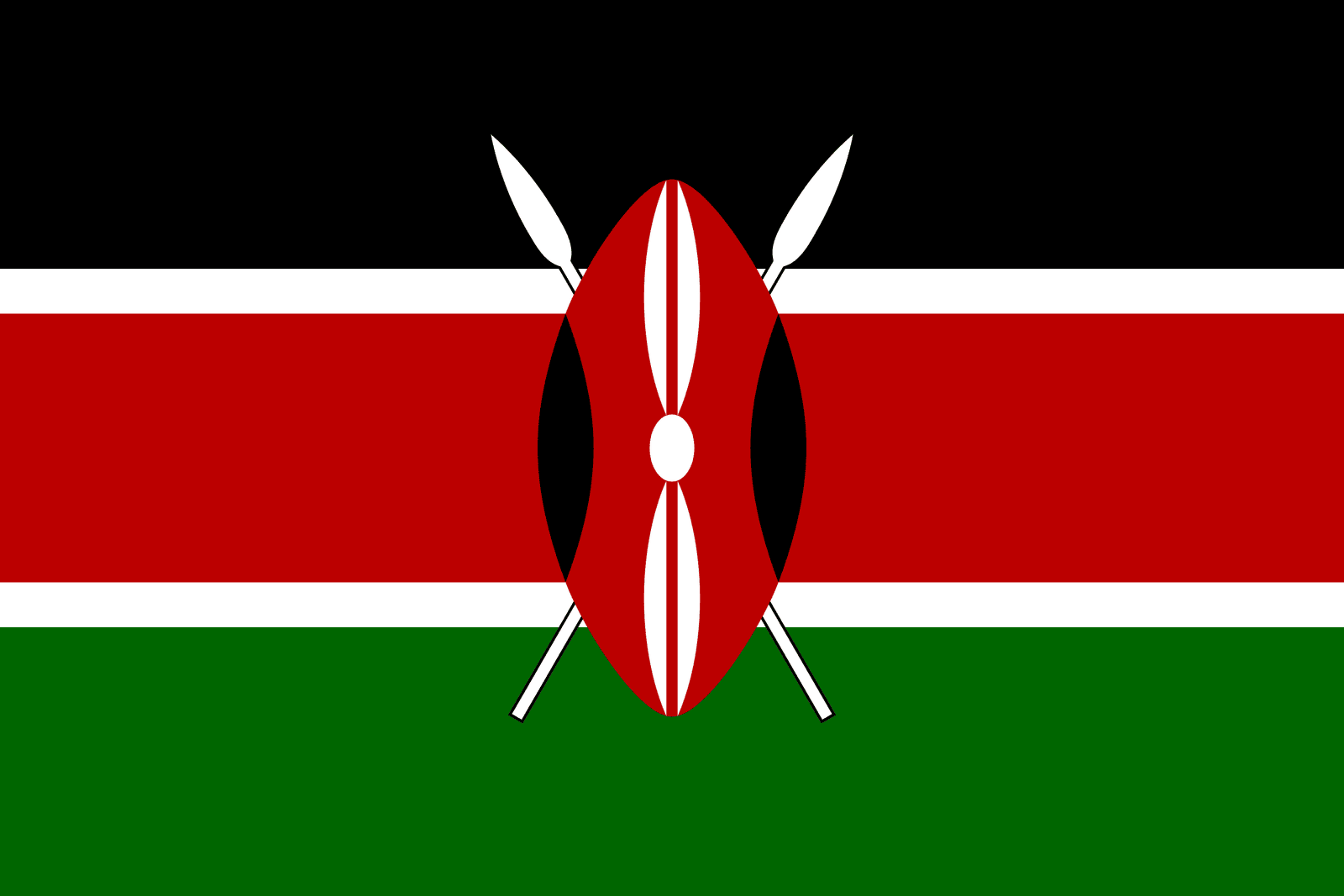
Flag of Kenya
| Legal Name | Republic of Kenya |
|---|---|
| Flag |
|
| Capital City |
Nairobi |
| Total Area | 580,367 km² |
| Land Area | Approximately 569,140 km² |
| Water Area | Approximately 11,227 km² |
| Population | ~55 million |
| Major Cities | Nairobi (~5m metro), Mombasa (~1.3m), Kisumu (~600k), Nakuru (~500k), Eldoret (~450k) |
| Currency | Kenyan Shilling (KES) |
| GDP | Approximately USD 110 billion |
| GDP Per Capita | Approximately USD 2,000 (nominal) / USD 6,300 (PPP) |
About of Kenya
Kenya is an East African country strategically located along the equator and the western edge of the Indian Ocean. It serves as a geographical and economic bridge between the African interior and global maritime trade routes, giving it long-standing regional importance.
The country shares land borders with Uganda, Tanzania, South Sudan, Ethiopia, and Somalia, and has a coastline along the Indian Ocean. Nairobi, the capital and largest city, is a major diplomatic, financial, and transportation hub in Africa, hosting numerous international organizations and regional headquarters.
Kenya has a diverse population composed of dozens of ethnic communities, contributing to a rich cultural mosaic. Urban centers such as Mombasa, Kisumu, Nakuru, and Eldoret support commerce, tourism, industry, and education, while rural areas remain central to agriculture and traditional livelihoods.
Internationally, Kenya is a fully sovereign state with strong diplomatic engagement. It plays a critical geopolitical role in East Africa, acting as a regional anchor for trade, peacekeeping, counterterrorism efforts, and humanitarian operations.
Etymology
The name Kenya is derived from Mount Kenya, the country’s highest peak. The mountain’s name is believed to originate from the Kikuyu, Embu, or Kamba words referring to brightness or whiteness, likely describing its snow-capped summit.
European explorers adopted variations of the local pronunciation, eventually standardizing it as “Kenya.” Over time, the name came to represent not only the mountain but the entire country and its national identity.
History
Kenya is considered a key cradle of humanity, with archaeological evidence of early human ancestors dating back millions of years. Prehistoric hunter-gatherer communities were later joined by pastoralist and agricultural societies.
By the medieval period, coastal Kenya became part of the Swahili civilization, deeply connected to Indian Ocean trade networks linking Africa, Arabia, Persia, and Asia. Inland regions were home to powerful ethnic kingdoms and chiefdoms.
European involvement intensified in the late 19th century when Kenya became a British colony. Colonial rule reshaped land ownership, infrastructure, and governance but also sparked resistance, most notably the Mau Mau uprising.
Kenya achieved independence in 1963 and became a republic in 1964. Post-independence history includes periods of single-party rule, economic reform, political liberalization, and constitutional transformation. The adoption of the 2010 Constitution marked a significant step toward decentralization, democratic governance, and expanded civil rights.
Government and Politics
Kenya operates as a presidential democratic republic under the Constitution of 2010. The constitution establishes a clear separation of powers and a strong bill of rights.
Executive authority is held by the President, who serves as both head of state and government. Legislative power rests with a bicameral Parliament consisting of the National Assembly and the Senate. The judiciary is independent, led by the Supreme Court.
Administratively, Kenya is divided into 47 counties, each with elected governments responsible for local development. Kenya maintains active foreign relations and is a member of the United Nations, African Union, East African Community, and Commonwealth. Its defense forces play a key role in national security and regional peacekeeping missions.
Economy
Kenya is classified as a developing and emerging economy and is one of East Africa’s largest and most diversified economies.
Agriculture remains central, employing a large share of the population and producing tea, coffee, flowers, and horticultural products for export. Manufacturing includes food processing, cement, textiles, and consumer goods, while the services sector—finance, tourism, logistics, and information technology—drives growth.
The country has natural resources such as soda ash, limestone, geothermal energy, and emerging oil and mineral reserves. Major trade partners include regional neighbors, Europe, Asia, and the United States. Key challenges include unemployment, public debt, and climate vulnerability, while future prospects focus on infrastructure expansion, digital innovation, and renewable energy.
Demographics
Kenya’s population is ethnically diverse, comprising more than 40 recognized communities. Major groups include the Kikuyu, Luhya, Luo, Kalenjin, Kamba, and Somali.
The official languages are Swahili and English, with numerous indigenous languages spoken across the country. Christianity is the dominant religion, followed by Islam and traditional beliefs.
Urbanization is accelerating, though a significant portion of the population still resides in rural areas. Kenya’s population continues to grow steadily, shaping policies on education, employment, and social services.
Culture and Society
Kenyan culture reflects a blend of indigenous traditions, Swahili coastal heritage, and modern influences. National identity is shaped by shared historical struggles, cultural diversity, and post-independence aspirations.
Music, dance, storytelling, and visual arts play an important role in social life. Kenyan cuisine varies by region, commonly featuring maize, beans, vegetables, meat, and coastal seafood dishes. Social norms emphasize community, respect for elders, and hospitality.
Public holidays and festivals commemorate national independence, religious events, and cultural traditions. Sports are highly popular, particularly athletics, football, rugby, and cricket, with Kenya globally renowned for long-distance running.
Education and Healthcare
Kenya has a structured education system covering primary, secondary, and tertiary levels, supported by both public and private institutions. Literacy rates have improved significantly, and universities and technical colleges play a growing role in workforce development.
Healthcare is provided through a mix of public and private facilities. While major cities offer advanced medical services, rural areas face access challenges. Key public health priorities include maternal health, infectious disease control, and expanding universal health coverage.
Geography and Climate
Kenya’s geography is highly varied, ranging from the Great Rift Valley and fertile highlands to arid deserts and a tropical coastline. Mount Kenya dominates the central highlands, while Lake Victoria lies to the west.
The country experiences diverse climate zones, including tropical, arid, and temperate conditions. Rainfall occurs in two main seasons, with variability affecting agriculture. Natural hazards include droughts, floods, and occasional landslides. Environmental concerns focus on deforestation, wildlife conservation, and climate change impacts.
Flora and Fauna
Kenya is world-renowned for its biodiversity and wildlife. Its ecosystems support savannahs, forests, wetlands, and coral reefs.
The country is home to iconic species such as elephants, lions, rhinoceroses, leopards, and giraffes, as well as rich birdlife. National parks and reserves—including Maasai Mara, Amboseli, Tsavo, and Lake Nakuru—are central to conservation and tourism efforts.
Map of Kenya
National Symbols
Kenya’s national symbols reflect unity, struggle, and natural heritage. These include the national flag, coat of arms, national anthem, and iconic wildlife species that symbolize strength and freedom.
National Flag (Detailed Section)
The Kenyan national flag consists of horizontal black, red, and green stripes separated by thin white lines. At the center is a traditional Maasai shield with crossed spears.
The flag was adopted at independence in 1963. Black represents the people of Kenya, red symbolizes the struggle for freedom, green reflects the land and natural wealth, and white stands for peace and unity. The shield and spears signify defense of liberty and sovereignty. Flag usage is governed by official protocol to ensure respect.
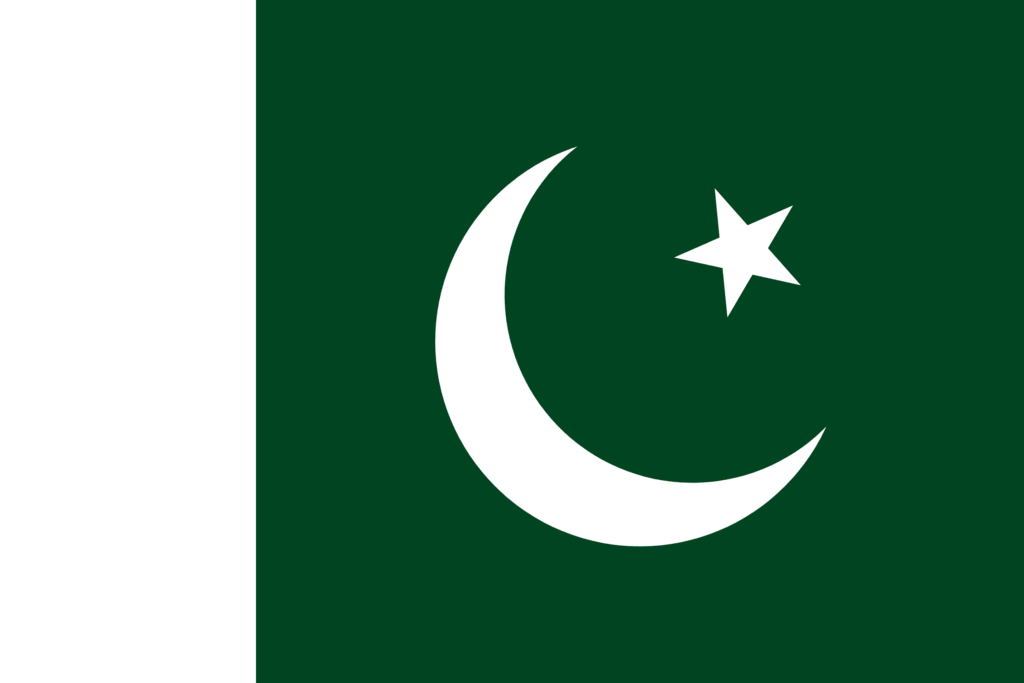
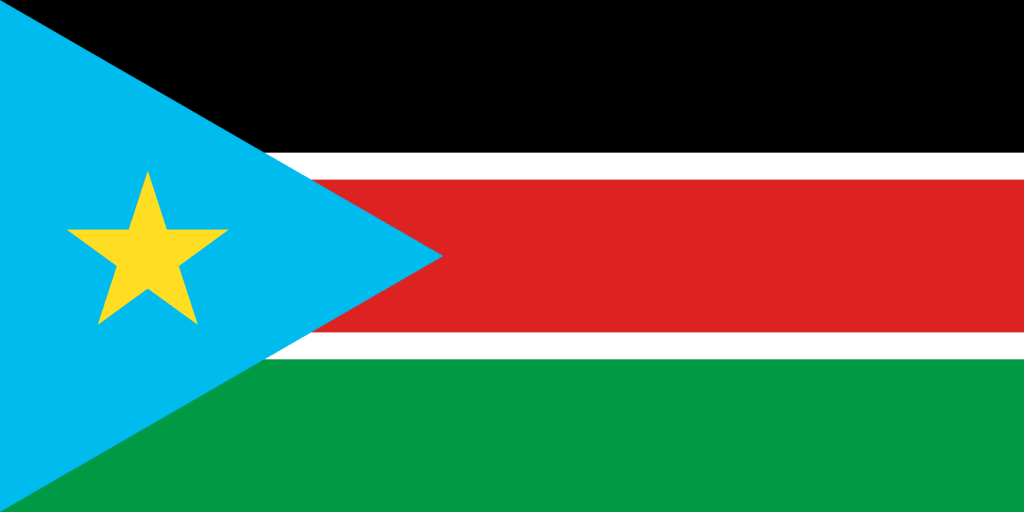
Realted Flags
Flag flying days
| Date | Flag Position | Occasion or Reason |
|---|---|---|
| June 1 | Full-mast | Madaraka Day |
| October 20 | Full-mast | Mashujaa (Heroes) Day |
| December 12 | Full-mast | Jamhuri (Independence) Day |
| National Mourning Days | Half-mast | Official state mourning |