Flag of Kuwait
| Legal Name | State of Kuwait |
|---|---|
| Flag |
|
| Capital City |
Kuwait City |
| Total Area | Approximately 17,818 km² |
| Land Area | Approximately 17,818 km² |
| Water Area | Negligible (territorial waters not included in land area) |
| Population | Approximately 4.4 million |
| Major Cities | Kuwait City (3.0 million metro), Al Ahmadi (600,000), Hawalli (250,000), Farwaniya (300,000), Jahra (450,000) |
| Currency | Kuwaiti Dinar (KWD) |
| GDP | Approximately USD 165 billion |
| GDP Per Capita | Approximately USD 37,000 (Nominal) |
About of Kuwait
Kuwait is a small but strategically significant country located in the northeastern corner of the Arabian Peninsula in Western Asia. It lies at the head of the Persian Gulf, giving it a vital maritime position that has historically supported trade, pearling, and regional commerce. Despite its modest size, Kuwait plays an outsized role in global energy markets.
The country shares land borders with Iraq to the north and Saudi Arabia to the south, while its eastern boundary opens to the Persian Gulf. Kuwait City, the capital and largest urban center, dominates the country’s political, economic, and cultural life. Most of the population resides in and around the العاصمة metropolitan area, making Kuwait one of the most urbanized countries in the world.
Kuwait is a fully sovereign state and an internationally recognized member of the United Nations, the Gulf Cooperation Council, and the Arab League. Its geopolitical importance stems from its vast oil reserves, strategic Gulf location, and long-standing partnerships with Western and regional powers.
Etymology
The name “Kuwait” is derived from the Arabic word “kut,” meaning a small fortress or fortified house. The diminutive form “Kuwait” translates roughly to “little fortress,” referring to a defensive structure built near the coast in the 18th century. Over time, the name came to represent both the settlement and the territory that developed around it, eventually becoming the name of the modern state.
History
Prehistoric and Ancient Periods
Archaeological findings indicate human presence in the region dating back to prehistoric times. Due to its coastal position, the area was involved in early trade networks linking Mesopotamia with the Indus Valley.
Classical and Medieval Periods
In antiquity, parts of present-day Kuwait were associated with the Dilmun civilization and later influenced by Mesopotamian empires. During the Islamic Golden Age, the region formed part of broader trade routes across the Arabian Peninsula.
Ottoman Era
From the 16th century, Kuwait fell under nominal Ottoman influence while enjoying significant local autonomy. The Al Sabah family emerged as the ruling dynasty in the mid-18th century, establishing political continuity that continues today.
British Protection and Independence
In 1899, Kuwait became a British-protected state to safeguard its autonomy from regional powers. The discovery of oil in 1938 transformed Kuwait’s economy and global importance. Kuwait gained full independence in 1961, ending British protection.
Modern Developments
A defining moment in modern history was the 1990 invasion by Iraq, followed by liberation in 1991 through a US-led international coalition. Since then, Kuwait has focused on reconstruction, political development, and economic modernization while maintaining regional stability.
Government and Politics
Kuwait is a constitutional hereditary emirate. The Emir serves as head of state, while executive authority is exercised by the Council of Ministers, led by the Prime Minister. The Constitution of 1962 establishes the legal framework and guarantees certain civil liberties.
Legislative power resides in the National Assembly, a unicameral body with elected and appointed members. Kuwait’s judiciary is independent and based on civil law principles influenced by Islamic law. Administratively, the country is divided into six governorates.
Kuwait maintains active diplomatic relations worldwide and is a key member of international and regional organizations. Its defense forces are well-equipped and focused on territorial defense, supported by strategic security partnerships.
Economy
Kuwait is classified as a high-income, oil-dependent economy. Petroleum accounts for the majority of government revenue, exports, and GDP. The country possesses one of the world’s largest proven oil reserves, making it a critical player in global energy markets.
Beyond oil, Kuwait is developing sectors such as finance, logistics, real estate, and services. Agriculture is limited due to arid conditions, while manufacturing focuses mainly on petroleum refining and petrochemicals. Major trade partners include China, India, Japan, South Korea, and the United States.
Economic challenges include diversification away from oil dependence, public sector dominance, and employment of nationals in the private sector. Long-term strategies emphasize economic reform, foreign investment, and sustainable development.
Demographics
Kuwait’s population is notable for its demographic structure, with expatriates comprising a significant majority. Kuwaiti nationals represent roughly one-third of the population, while the remainder consists of residents from other Arab countries, South Asia, Southeast Asia, and Western nations.
Arabic is the official language, and English is widely used in business and education. Islam is the state religion, practiced predominantly in Sunni and Shia traditions, alongside small Christian and other religious communities. Nearly the entire population lives in urban areas, and population growth is driven largely by migration.
Culture and Society
Kuwaiti culture blends traditional Arab and Islamic values with modern, cosmopolitan influences. Hospitality, family ties, and respect for tradition are central social values. Diwaniya gatherings, where people meet to discuss social and political issues, are a distinctive cultural feature.
The arts scene includes theater, poetry, visual arts, and music, with Kuwait historically recognized as a cultural hub of the Gulf. Cuisine features rice, seafood, lamb, and spices, reflecting both desert and maritime heritage. Public holidays include National Day, Liberation Day, and major Islamic festivals.
Education and Healthcare
Education is compulsory and free for Kuwaiti citizens through secondary level, with strong government investment in higher education. Kuwait University and several private institutions serve domestic and international students. Literacy rates are high across all age groups.
Healthcare in Kuwait is publicly funded and widely accessible, offering modern hospitals and clinics. The country has achieved strong outcomes in life expectancy and disease control, though challenges include lifestyle-related health conditions such as diabetes and heart disease.
Geography and Climate
Kuwait is characterized by flat desert plains with minimal elevation changes. There are no permanent rivers, and freshwater resources are scarce, making desalination essential. The coastline along the Persian Gulf supports ports and maritime activity.
The climate is arid and extreme, with very hot summers and mild winters. Natural hazards include dust storms and occasional flooding from rare heavy rains. Environmental concerns center on water scarcity, desertification, and pollution related to oil production.
Flora and Fauna
Biodiversity in Kuwait is limited due to harsh climatic conditions. Native vegetation includes desert grasses and shrubs adapted to arid environments. Wildlife consists mainly of small mammals, reptiles, and migratory birds. Conservation efforts focus on protecting coastal ecosystems and wildlife reserves.
Map of Kuwait
Kuwait’s national symbols reflect its Arab identity and modern statehood. These include the national flag, coat of arms featuring a dhow sailing ship, and the national anthem celebrating unity and sovereignty. The dhow symbolizes maritime heritage and trade.
National Flag (Detailed Section)
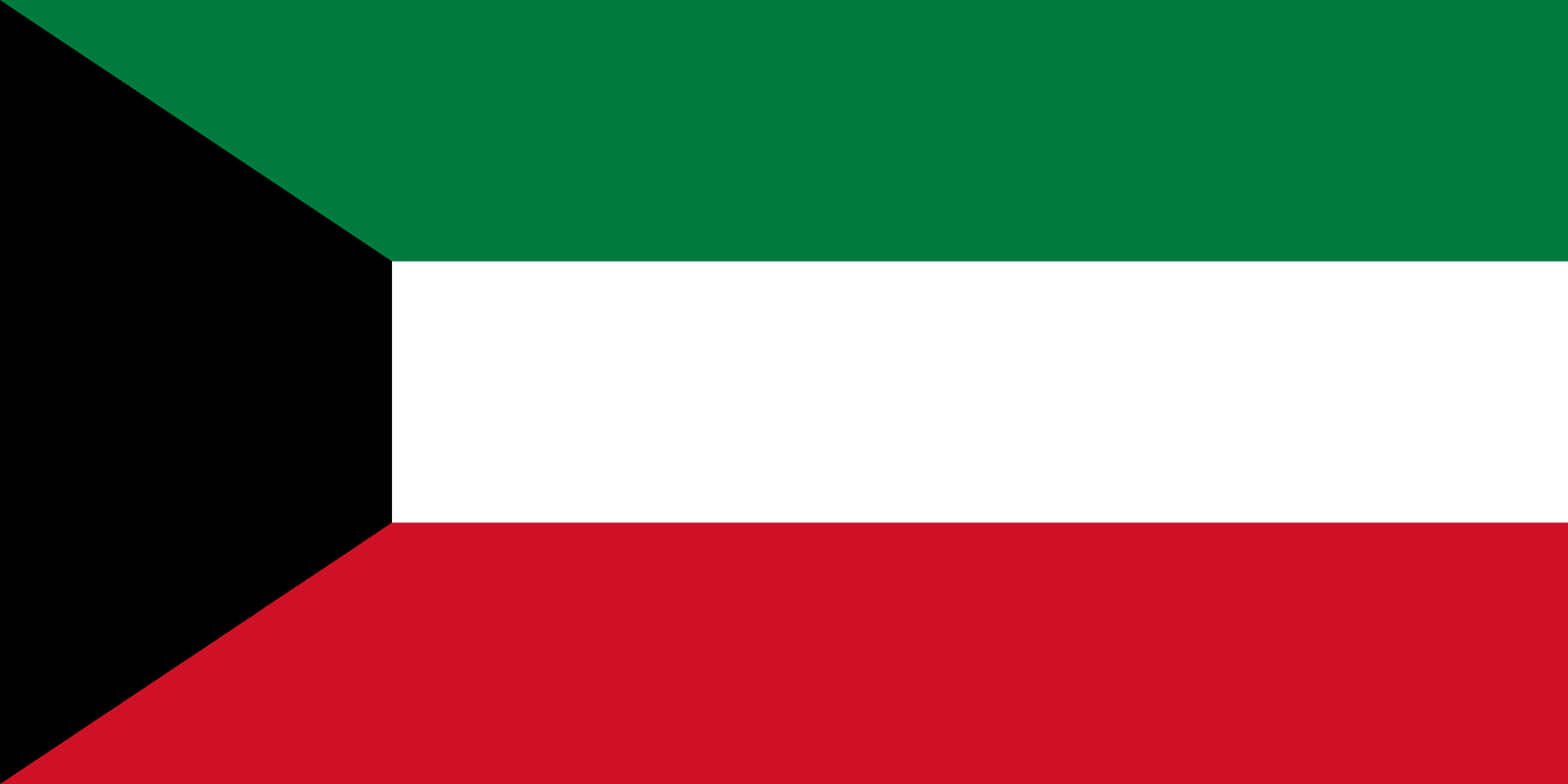
The flag of Kuwait consists of three horizontal stripes of green, white, and red, with a black trapezoid on the hoist side. Adopted in 1961, the design reflects Pan-Arab colors. Green represents fertile land, white symbolizes peace, red stands for courage and sacrifice, and black signifies historical struggles. The flag is flown on government buildings, national celebrations, and international occasions in accordance with established protocols.
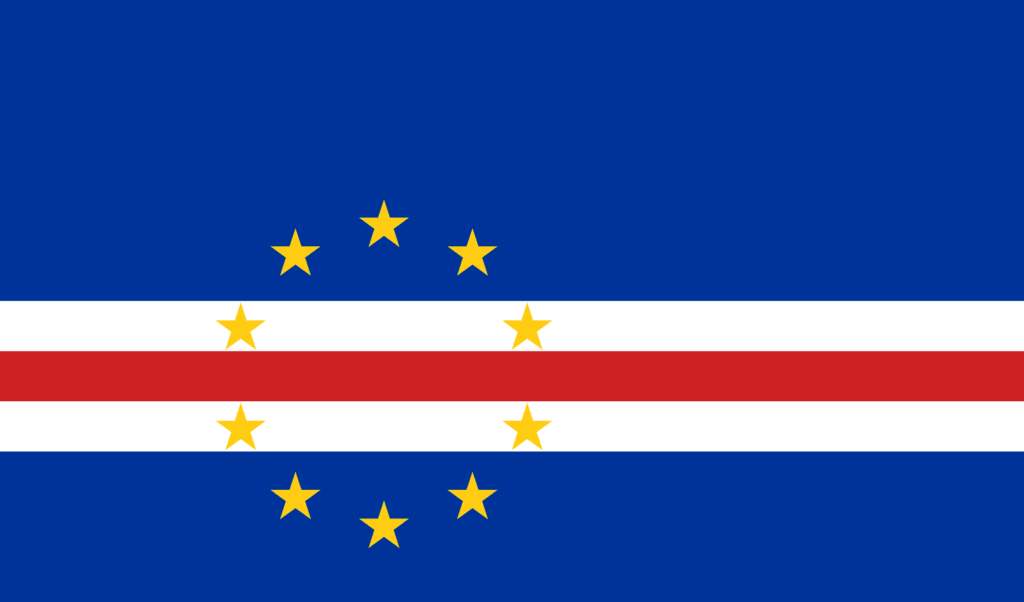
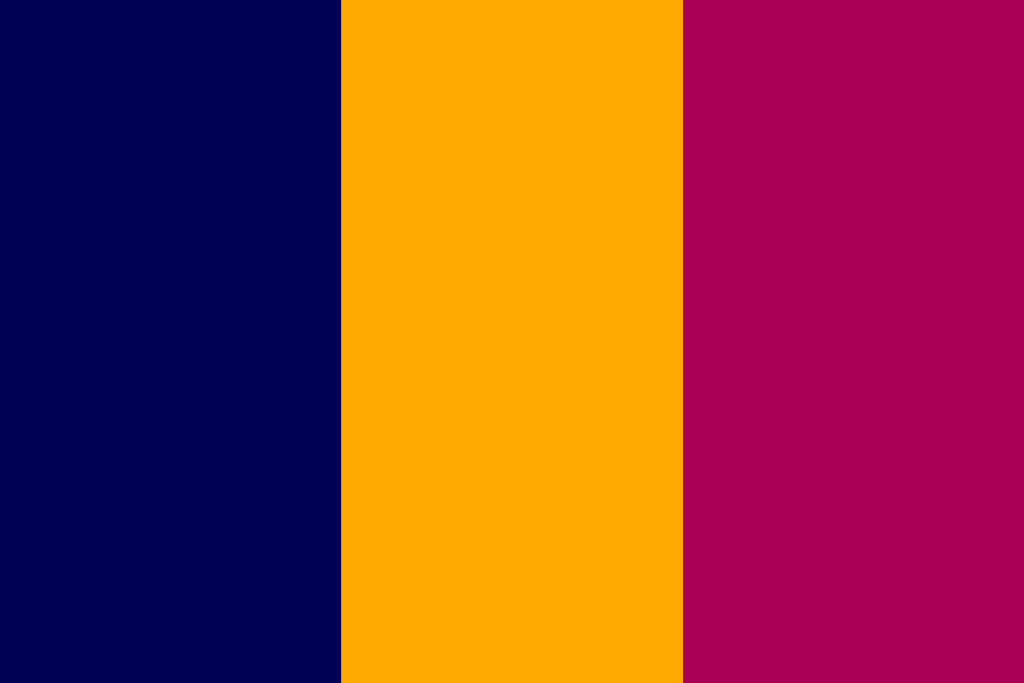
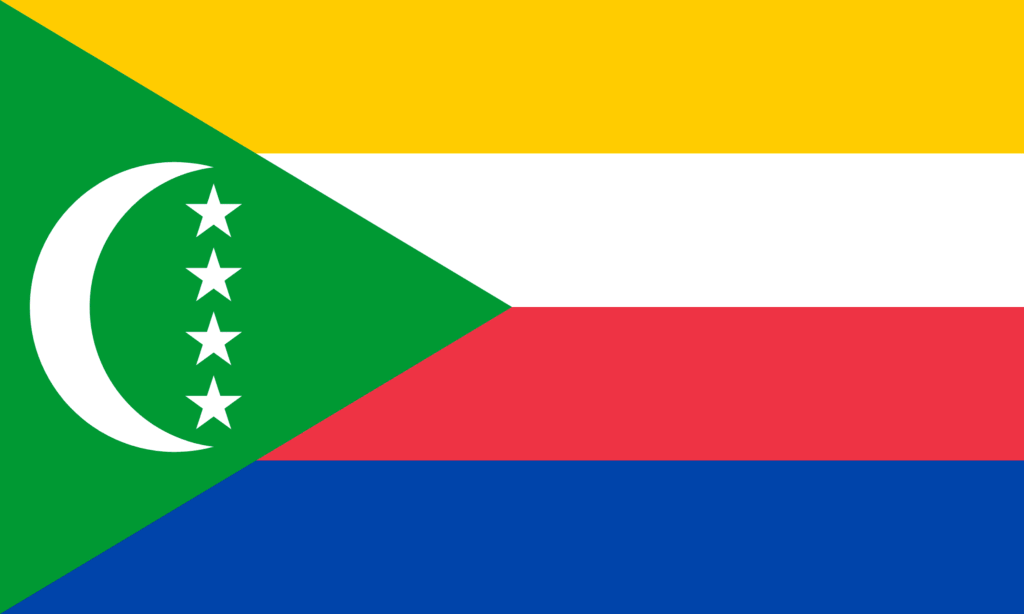
Realted Flags
Flag flying days
| Date | Flag Position | Occasion or Reason |
|---|---|---|
| February 25 | Full-mast | National Day |
| February 26 | Full-mast | Liberation Day |
| Official state events | Full-mast | National and governmental ceremonies |
| National mourning periods | Half-mast | Official mourning declared by the state |