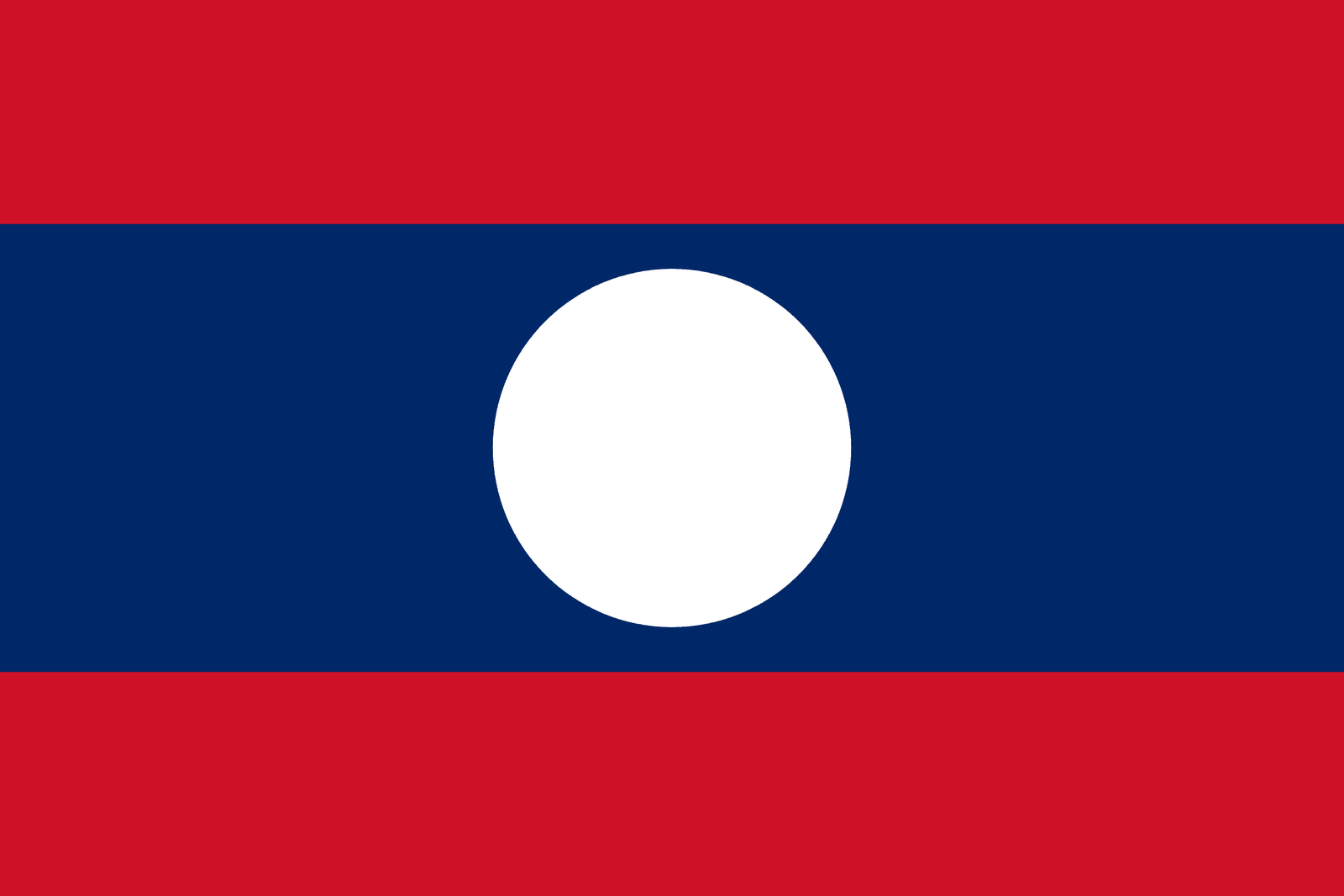
Flag of Laos
| Legal Name | Lao People’s Democratic Republic |
|---|---|
| Flag |
|
| Capital City |
Vientiane |
| Total Area | 236,800 km² |
| Land Area | Approximately 230,800 km² |
| Water Area | Approximately 6,000 km² |
| Population | Approximately 7.6–7.8 million |
| Major Cities | Vientiane (900,000 metro), Savannakhet (130,000), Pakse (120,000), Luang Prabang (90,000), Thakhek (85,000) |
| Currency | Lao Kip (LAK) |
| GDP | Approximately USD 15–18 billion |
| GDP Per Capita | Approximately USD 2,200–2,500 (Nominal) |
About of Laos
Laos is a landlocked country in Southeast Asia, situated at the heart of the Indochinese Peninsula. It lies between China to the north, Vietnam to the east, Cambodia to the south, Thailand to the west, and Myanmar to the northwest. The Mekong River forms a natural boundary with Thailand for much of its western border and plays a central role in the country’s geography, economy, and culture.
The capital and largest city, Vientiane, is located along the Mekong River and serves as the political, economic, and cultural center of the nation. Other major urban centers such as Savannakhet, Pakse, and Luang Prabang function as regional hubs, though Laos remains one of the least urbanized countries in Southeast Asia.
Laos has a diverse population composed of multiple ethnic groups, many of whom maintain traditional lifestyles in rural and mountainous areas. Internationally, Laos is a fully recognized sovereign state and a member of the United Nations and the Association of Southeast Asian Nations (ASEAN). Its strategic importance lies in its location between major regional economies, making it a key transit country for regional connectivity, hydropower development, and infrastructure corridors linking China with mainland Southeast Asia.
Etymology
The name “Laos” originates from the Lao people, the dominant ethnic group in the country. The term is derived from “Lao,” referring to the Tai-speaking peoples who migrated into the region centuries ago. In the Lao language, the country is known as Muang Lao or Pathet Lao, meaning “Land of the Lao.” Over time, the pluralized form “Laos” became common in Western usage, while the official state name emphasizes the political identity of the Lao people.
History
Prehistoric and Ancient Periods
Archaeological evidence indicates human habitation in Laos dating back tens of thousands of years. The Plain of Jars suggests a complex prehistoric culture whose origins remain partly unknown. Early communities practiced agriculture, metalworking, and river-based trade.
Classical and Medieval Periods
From the first millennium onward, the region came under the cultural influence of Indianized kingdoms such as Funan and Chenla. Theravada Buddhism spread gradually, shaping social and political institutions.
Kingdom of Lan Xang
In the 14th century, the Kingdom of Lan Xang (“Land of a Million Elephants”) was founded, becoming one of Southeast Asia’s most powerful states. It controlled much of present-day Laos and parts of neighboring countries, flourishing culturally and religiously.
Fragmentation and Foreign Influence
By the 18th century, Lan Xang fragmented into smaller kingdoms and fell under Siamese (Thai) influence. The region later became part of French Indochina in the late 19th century.
Colonial Period and Independence
Under French colonial rule, Laos was administratively unified but economically underdeveloped. During World War II and its aftermath, nationalist movements emerged. Laos gained full independence in 1953, though political instability soon followed.
Modern Political Developments
After years of conflict linked to the wider Indochina wars, the Lao People’s Revolutionary Party took power in 1975, establishing the Lao People’s Democratic Republic. Since then, Laos has remained a one-party socialist state, gradually introducing economic reforms while maintaining centralized political control.
Government and Politics
Laos is a socialist republic governed by a single political party, the Lao People’s Revolutionary Party. The Constitution defines the party’s leading role in state and society while outlining the structure of government.
Executive authority is held by the President and the Council of Ministers, led by the Prime Minister. Legislative power resides in the unicameral National Assembly, whose members are elected but operate within the one-party framework. The judiciary functions under the authority of the state, with the People’s Supreme Court as the highest judicial body.
Administratively, Laos is divided into provinces, a prefecture (Vientiane Capital), and districts. The country maintains diplomatic relations worldwide and is an active ASEAN member. The Lao People’s Armed Forces are responsible for national defense and internal security, focusing primarily on territorial integrity rather than external military engagement.
Economy
Laos is classified as a developing economy, with steady growth driven largely by natural resources and regional integration. The government has pursued market-oriented reforms since the late 1980s, transitioning from a centrally planned system to a mixed economy.
Major sectors include agriculture, hydropower, mining, manufacturing, and services. Agriculture employs a significant portion of the population, producing rice, coffee, rubber, and livestock. Hydropower is a cornerstone of the economy, with Laos positioning itself as a regional energy exporter.
Natural resources include water resources, timber, copper, gold, and other minerals. Key trade partners include neighboring ASEAN countries and China, with exports focused on electricity, minerals, agricultural products, and manufactured goods. Economic challenges include debt sustainability, infrastructure gaps, and vulnerability to external shocks, while future prospects depend on sustainable development, diversification, and human capital investment.
Demographics
Laos has a young and ethnically diverse population. The Lao Loum (lowland Lao) form the majority, alongside numerous ethnic minorities such as the Hmong, Khmu, and other upland groups.
Lao is the official language and is widely spoken, while minority languages remain important in rural communities. Theravada Buddhism is the dominant religion, deeply influencing daily life and cultural practices, alongside animist traditions and smaller Christian communities. Most of the population lives in rural areas, though urbanization is gradually increasing. Population growth remains moderate but is slowing as education and healthcare improve.
Culture and Society
Lao culture emphasizes community, respect for elders, and harmony with nature. Buddhism shapes moral values, festivals, and social norms, while traditional music, dance, and handicrafts remain central to cultural expression.
National identity is closely tied to history, language, and shared religious traditions. Lao cuisine is characterized by sticky rice, fresh herbs, fermented flavors, and dishes such as larb. Major festivals include Lao New Year (Pi Mai), Buddhist holy days, and harvest celebrations. Popular sports and recreation include football, traditional boat racing, and martial arts.
Education and Healthcare
The education system includes primary, secondary, and tertiary levels, with ongoing efforts to improve access and quality, particularly in rural areas. Literacy rates have improved significantly over recent decades, though disparities remain.
Healthcare in Laos is provided through a combination of public and private services. While basic healthcare access has expanded, challenges include limited resources, workforce shortages, and rural accessibility. Public health priorities focus on maternal health, infectious disease control, and nutrition.
Geography and Climate
Laos is characterized by mountainous terrain, dense forests, river valleys, and plateaus. The Mekong River is the country’s most important geographic feature, supporting agriculture, transportation, and livelihoods.
The climate is tropical monsoon, with a rainy season from May to October and a dry season from November to April. Natural hazards include flooding, landslides, and occasional droughts. Environmental concerns center on deforestation, biodiversity loss, and the ecological impact of dam construction.
Flora and Fauna
Laos is rich in biodiversity, hosting extensive forests and a wide variety of plant and animal species. Native vegetation includes tropical hardwoods, bamboo, and medicinal plants.
Wildlife includes elephants, gibbons, bears, and numerous bird species, some of which are endangered. National parks and protected areas play a crucial role in conservation, though enforcement and habitat protection remain ongoing challenges.
Map of Laos
National symbols of Laos reflect unity, peace, and the central role of the Mekong River. They emphasize socialist ideals alongside traditional cultural identity.
National Flag (Detailed Section)
The national flag of Laos features red bands symbolizing the blood shed for independence, a blue band representing prosperity and the Mekong River, and a white circle symbolizing unity and the bright future of the nation. Adopted in its current form in 1975, it replaced earlier royal symbols and reflects the country’s modern political identity. The flag is displayed on public buildings and during national events in accordance with official protocol.
Realted Flags
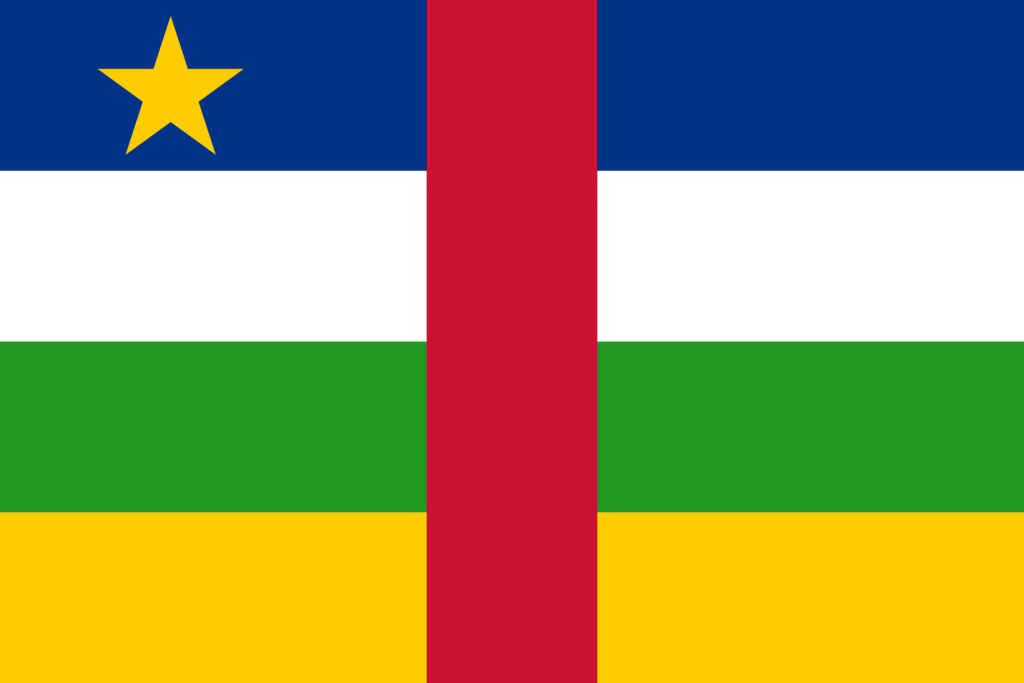
Flag flying days
| Date | Flag Position | Occasion or Reason |
|---|---|---|
| December 2 | Full-mast | National Day (Proclamation of the Republic) |
| January 20 | Full-mast | Lao People’s Revolutionary Party Day |
| National mourning days | Half-mast | Officially declared periods of remembrance |