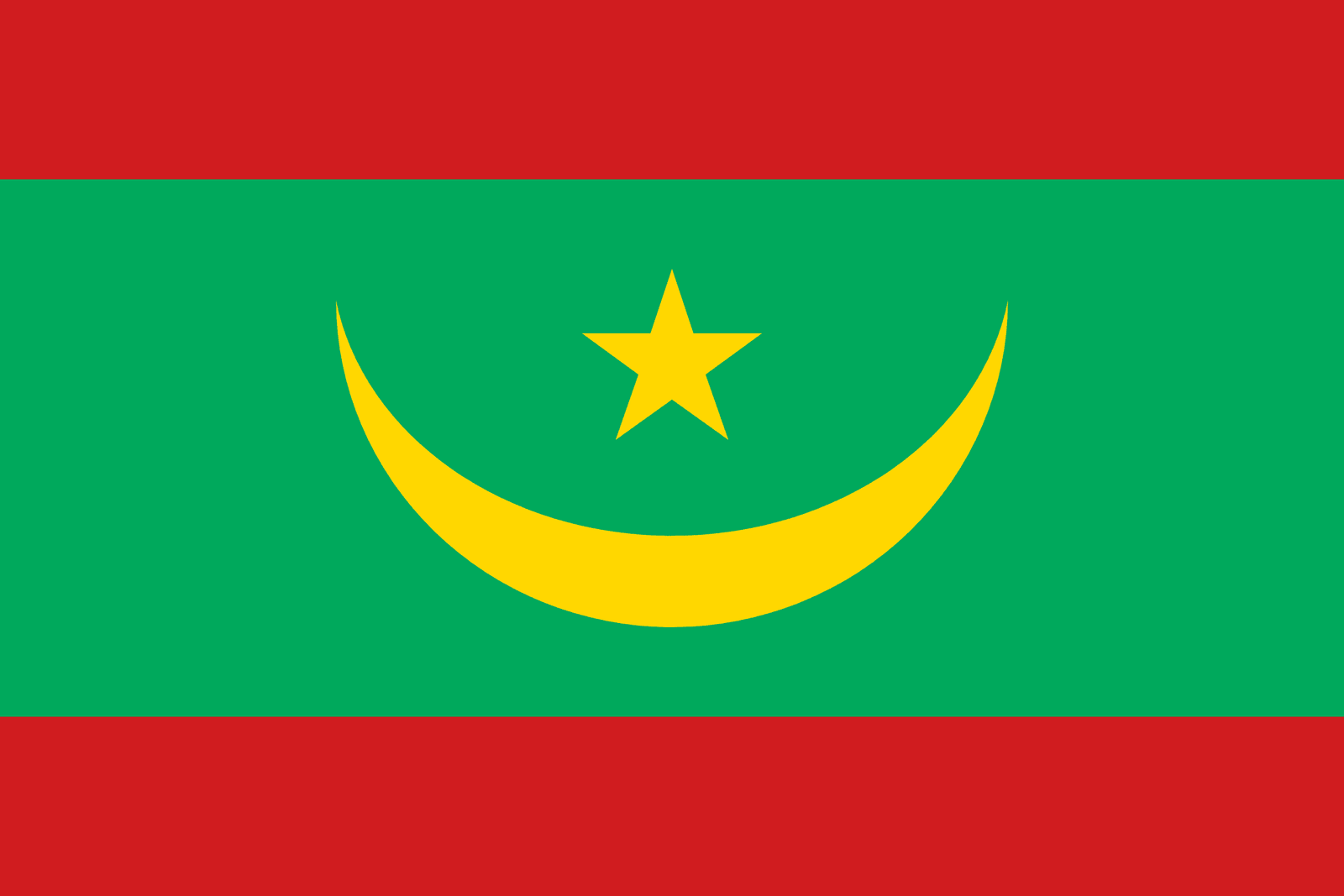
Flag of Mauritania
| Legal Name | Islamic Republic of Mauritania |
|---|---|
| Flag |
|
| Capital City |
Nouakchott |
| Total Area | 1,030,700 km² |
| Land Area | 1,030,700 km² |
| Water Area | Negligible (seasonal rivers and wetlands only) |
| Population | Approximately 4.9 million |
| Major Cities | Nouakchott (1.4 million), Nouadhibou (120,000), Kiffa (60,000), Rosso (50,000), Zouerate (45,000) |
| Currency | Mauritanian Ouguiya (MRU) |
| GDP | Approximately USD 8–9 billion |
| GDP Per Capita | Approximately USD 1,600–1,800 |
About of Mauritania
Mauritania is a large, sparsely populated country located in Northwest Africa, forming a geographical and cultural bridge between North Africa and Sub-Saharan Africa. Much of its territory lies within the Sahara Desert, while the southern regions fall within the Sahel, characterized by semi-arid grasslands. The Atlantic Ocean forms Mauritania’s western coastline, providing access to important maritime routes and fishing grounds.
Mauritania shares land borders with Western Sahara and Algeria to the north, Mali to the east and southeast, and Senegal to the southwest. The Senegal River marks much of the southern boundary and supports agriculture and human settlement. Nouakchott, the capital and largest city, serves as the administrative, economic, and political center of the country, while Nouadhibou is a major port and industrial hub.
The population is ethnically diverse, composed primarily of Arab-Berber Moors and several Sub-Saharan African ethnic groups. Mauritania is internationally recognized as a sovereign state and holds membership in major global and regional organizations, including the United Nations, African Union, Arab League, and Organisation of Islamic Cooperation. Its strategic importance stems from its Atlantic coastline, mineral resources, and position along trans-Saharan trade and migration routes.
Etymology
The name “Mauritania” derives from the ancient Berber kingdom of Mauretania, which existed in parts of present-day Morocco and Algeria during classical antiquity. The term itself is linked to the Latin word Mauri, used by Roman writers to describe Berber populations of North Africa. Although modern Mauritania is geographically distinct from the ancient kingdom, the name was adopted to reflect historical and cultural continuity with the region’s Berber and Arab heritage.
History
Prehistoric and Ancient Civilizations
Archaeological evidence indicates human habitation in Mauritania dating back tens of thousands of years. Early communities practiced hunting, fishing, and pastoralism, as evidenced by rock art and burial sites. Climatic changes gradually transformed much of the region into desert.
Classical and Medieval Periods
During antiquity and the medieval era, Mauritania was influenced by trans-Saharan trade routes connecting West Africa to North Africa and the Mediterranean world. Arab and Berber migrations introduced Islam, Arabic language, and new social structures.
Major Empires, Kingdoms, or Dynasties
The southern regions were linked to powerful West African empires such as Ghana and later Mali, while northern areas were dominated by tribal confederations. Islamic scholarship and trade flourished in desert towns and oases.
Colonial or Imperial Rule
France established colonial control over Mauritania in the late 19th and early 20th centuries, incorporating it into French West Africa. Colonial rule introduced centralized administration and new economic systems, though nomadic lifestyles largely persisted.
Independence Movement
Mauritania gained independence from France on November 28, 1960. Moktar Ould Daddah became the country’s first president and worked to unify diverse ethnic and tribal groups under a single national identity.
Key Post-Independence Events
The country experienced political instability, economic challenges, and military coups, particularly during the late 20th century. Involvement in the Western Sahara conflict and internal social tensions shaped national politics.
Modern Political Developments
Since the early 2000s, Mauritania has pursued gradual political reforms, periodic elections, and efforts to improve governance and security. Civilian governments have increasingly replaced military rule, though political challenges remain.
Government and Politics
Mauritania is a presidential republic. The President serves as both head of state and head of government and is elected by popular vote. The Constitution provides the legal framework for governance and establishes the separation of powers.
The executive branch oversees national administration, while the unicameral National Assembly exercises legislative authority. The judiciary operates independently, with constitutional and supreme courts ensuring legal oversight. Administratively, Mauritania is divided into 15 regions (wilayas), which are further subdivided into departments.
Mauritania maintains active foreign relations with African, Arab, European, and Asian countries. It participates in regional security initiatives and peacekeeping efforts. The armed forces are responsible for national defense, border protection, and internal stability.
Economy
Mauritania is classified as a developing economy, with growth driven primarily by extractive industries and natural resources. Mining is the backbone of the economy, particularly iron ore, which accounts for a significant share of exports. Gold and copper mining have expanded in recent years.
Agriculture employs a large portion of the population but contributes modestly to GDP due to arid conditions. Livestock herding is widespread, while fishing along the Atlantic coast is a major source of revenue and employment. Manufacturing remains limited, and the services sector is gradually expanding.
Key exports include iron ore, gold, fish products, and oil. Major trade partners include China, the European Union, and regional African states. Economic challenges include dependence on commodities, unemployment, infrastructure gaps, and climate vulnerability. Long-term prospects focus on diversification, renewable energy, and value-added industries.
Demographics
Mauritania’s population consists of Arab-Berber Moors (Bidan) and several Sub-Saharan African groups, including Fulani, Soninke, and Wolof. Arabic is the official language, while French is widely used in education, administration, and commerce. National languages also include Pulaar, Soninke, and Wolof.
Islam is the state religion and is practiced by the vast majority of the population. Urbanization has increased rapidly, with most citizens now living in cities, particularly Nouakchott. Population growth remains moderate, driven by high fertility rates and internal migration.
Culture and Society
Mauritanian culture reflects a blend of Arab, Berber, and African traditions. Oral poetry, storytelling, and music are central to cultural life. Traditional instruments and praise poetry play an important role in ceremonies and social gatherings.
Cuisine is based on millet, rice, meat, fish, and dates, with green tea serving as a symbol of hospitality. Social norms emphasize family ties, respect for elders, and Islamic values. Major festivals include Eid al-Fitr, Eid al-Adha, and Independence Day. Football is the most popular sport, alongside traditional wrestling and camel racing.
Education and Healthcare
The education system includes primary, secondary, and tertiary levels, with efforts underway to improve access and literacy. Higher education institutions are concentrated in Nouakchott. Literacy rates continue to improve but remain lower in rural areas.
Healthcare is provided through public hospitals, regional clinics, and health posts, supplemented by international organizations. Key public health challenges include maternal health, infectious diseases, and limited rural access. Progress has been made in vaccination coverage and disease prevention.
Geography and Climate
Mauritania’s geography is dominated by desert plains, sand dunes, and rocky plateaus. The Sahara covers most of the north, while the Sahelian zone in the south supports limited agriculture. The Senegal River is the country’s most important permanent water source.
The climate is predominantly arid, with extremely hot summers and low annual rainfall. Seasonal hazards include droughts, dust storms, and heatwaves. Environmental concerns center on desertification, water scarcity, and coastal erosion.
Flora and Fauna
Vegetation is sparse, consisting mainly of desert shrubs, acacia trees, and grasses in the south. Wildlife includes gazelles, foxes, jackals, desert reptiles, and migratory birds along the coast and river systems.
Mauritania hosts important conservation areas, most notably Banc d’Arguin National Park, a UNESCO-listed site that protects marine ecosystems and serves as a critical habitat for migratory birds.
Pakistan,[f] officially the Islamic Republic of Pakistan,[g] is a country in South Asia. It is the fifth-most populous country, with a population of over 241.5 million,[d] having the second-largest Muslim population as of 2023. Islamabad is the nation’s capital, while Karachi is its largest city and financial centre. Pakistan is the 33rd-largest country by area. Bounded by the Arabian Sea on the south, the Gulf of Oman on the southwest, and the Sir Creek on the southeast, it shares land borders with India to the east; Afghanistan to the west; Iran to the southwest; and China to the northeast. It shares a maritime border with Oman in the Gulf of Oman, and is separated from Tajikistan in the northwest by Afghanistan’s narrow Wakhan Corridor.
Pakistan is the site of several ancient cultures, including the 8,500-year-old Neolithic site of Mehrgarh in Balochistan, the Indus Valley Civilisation of the Bronze Age,[8] and the ancient Gandhara civilisation.[9] The regions that compose the modern state of Pakistan were the realm of multiple empires and dynasties, including the Achaemenid, the Maurya, the Kushan, the Gupta;[10] the Umayyad Caliphate in its southern regions, the Hindu Shahis, the Ghaznavids, the Delhi Sultanate, the Samma, the Shah Miris, the Mughals,[11] and finally, the British Raj from 1858 to 1947.
Spurred by the Pakistan Movement, which sought a homeland for the Muslims of British India, and election victories in 1946 by the All-India Muslim League, Pakistan gained independence in 1947 after the partition of British India, which awarded separate statehood to its Muslim-majority regions and was accompanied by an unparalleled mass migration and loss of life.[12][13] Initially a dominion of the British Commonwealth, Pakistan adopted a republican constitution in 1956 and became an Islamic republic with two geographically separate provinces, East Pakistan and West Pakistan. East Pakistan seceded as the new country of Bangladesh in 1971 after a nine-month-long civil war. In the following four decades, Pakistan has been ruled by governments that alternated between civilian and military, democratic and authoritarian, relatively secular and Islamist.[14]
Pakistan is considered a middle power nation, with the world’s seventh-largest standing armed forces. It is a declared nuclear-weapons state, and is ranked amongst the emerging and growth-leading economies,[15] with a large and rapidly growing middle class.[16][17] Pakistan’s political history since independence has been characterized by periods of significant economic and military growth as well as those of political and economic instability. It is an ethnically and linguistically diverse country, with similarly diverse geography and wildlife. The country continues to face poverty, illiteracy, corruption, and terrorism.[18][19][20] Pakistan is a member of the United Nations, the Shanghai Cooperation Organisation, the Organisation of Islamic Cooperation, the Commonwealth of Nations, the South Asian Association for Regional Cooperation, and the Islamic Military Counter-Terrorism Coalition, and is designated as a major non-NATO ally by the United States.
Map of Mauritania
National Flag: Green with a gold crescent and star, bordered by red stripes.
Coat of Arms: Features Islamic symbols, agricultural tools, and a palm tree.
National Anthem: Bilada-l’Ubati (“Land of the Brave”).
National Symbols: Dromedary camel, date palm, desert landscapes.
National Flag (Detailed Section)
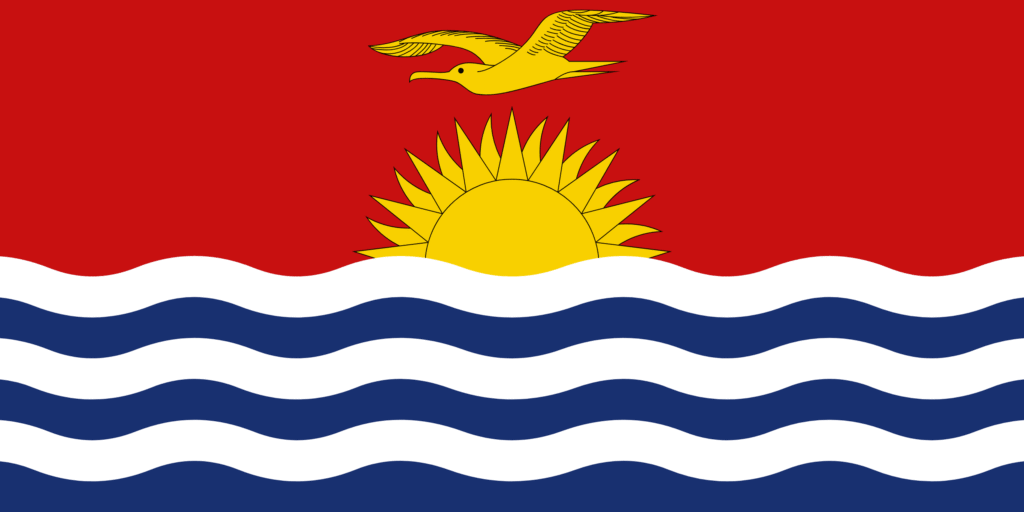
The national flag of Mauritania features a green field symbolizing Islam, with a gold crescent and star representing faith and unity. Two red horizontal stripes, added in 2017, symbolize the sacrifices made for independence and national sovereignty. The flag is flown at government buildings, schools, and during national events. Protocol dictates respectful handling, with half-mast display during periods of national mourning.
Flag flying days
| Date | Flag Position | Occasion or Reason |
|---|---|---|
| November 28 | Full-mast | Independence Day |
| Eid al-Fitr | Full-mast | End of Ramadan |
| Eid al-Adha | Full-mast | Festival of Sacrifice |
| National Mourning Periods | Half-mast | Death of national leaders or national tragedies |