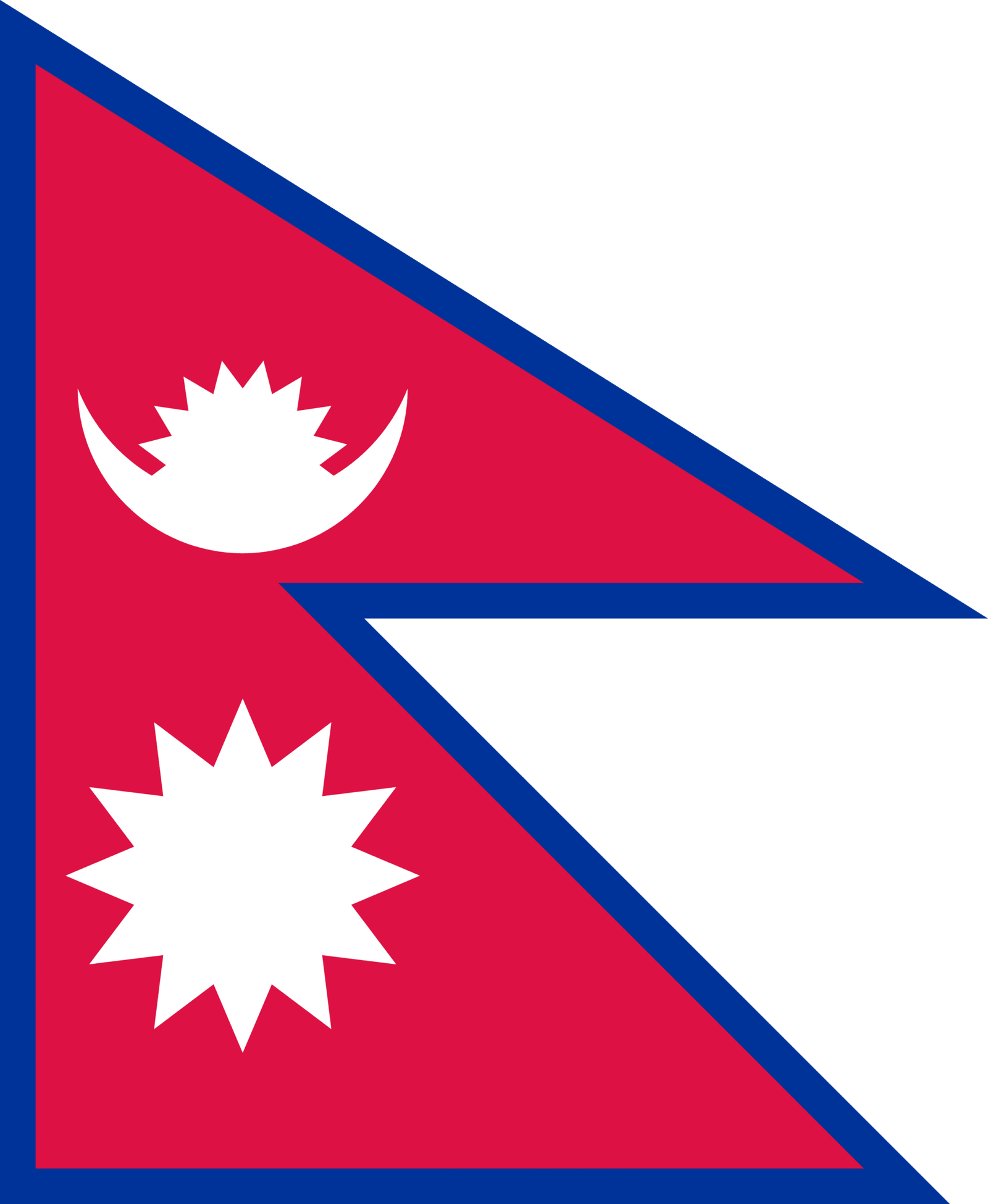
Flag of Nepal
| Legal Name | Federal Democratic Republic of Nepal |
|---|---|
| Flag |
|
| Capital City |
Kathmandu |
| Total Area | 147,516 km² |
| Land Area | 147,181 km² |
| Water Area | 335 km² |
| Population | Approximately 30 million |
| Major Cities | Kathmandu (1.4M), Pokhara (420K), Lalitpur (300K), Biratnagar (240K), Bharatpur (220K) |
| Currency | Nepalese Rupee (NPR) |
| GDP | USD 42 billion |
| USD 1,400 (nominal) | $1,284.70 |
About of Nepal
Nepal is a landlocked country located in South Asia, positioned mainly in the Himalayan region between India to the south, east, and west, and China (Tibet Autonomous Region) to the north. Its strategic placement provides a natural buffer between two of the world’s largest countries. The nation spans from the lowlands of the Terai plains to the towering peaks of the Himalayas, including Mount Everest, the world’s highest point.
Kathmandu, the capital and largest urban center, is a historic hub for culture, governance, and trade. Other significant cities such as Pokhara and Lalitpur contribute to tourism, industry, and education. Nepal’s demographic profile is diverse, with multiple ethnic, linguistic, and religious communities coexisting within a relatively small geographic area. It is internationally recognized as a sovereign state, a member of the United Nations, SAARC, and the Non-Aligned Movement. Its geopolitical importance lies in its position between India and China and its control over critical Himalayan passes and water resources.
Etymology
The name “Nepal” is believed to originate from the Sanskrit words “Nepa” or “Nipal”, historically referring to a region in the Kathmandu Valley inhabited by the Newar people. Over centuries, the term evolved to denote the entire territory under the Gorkha kingdom and later the unified state of Nepal. Linguistically, it signifies a long-standing human settlement with deep religious and cultural associations in the Himalayan region.
History
Prehistoric and Ancient Civilizations
Evidence suggests human habitation in Nepal since prehistoric times, with the development of early agrarian societies in the Terai plains and mountain valleys.
Classical and Medieval Periods
By the first millennium CE, multiple small kingdoms and city-states flourished. The Kathmandu Valley became a cultural and political center, notable for Hindu and Buddhist architecture. The Licchavi dynasty (c. 400–750 CE) was influential in art, architecture, and trade.
Major Empires and Kingdoms
From the 12th to 18th centuries, various principalities vied for control until the Gorkha Kingdom, led by Prithvi Narayan Shah, unified the modern state of Nepal in the 18th century.
Colonial Influence
Nepal maintained its independence during British colonial expansion in South Asia, signing treaties with the British East India Company and later the British Raj, particularly after the Anglo-Nepalese War (1814–1816).
Modern History
Nepal transitioned from a monarchy to a federal democratic republic in 2008, following a decade-long Maoist insurgency and subsequent political reforms. Since then, Nepal has focused on consolidating democratic institutions, economic development, and international partnerships.
Government and Politics
Nepal is a federal parliamentary republic with a written constitution (2015). It emphasizes multi-party democracy, federalism, and the protection of civil liberties.
Executive: President (head of state) and Prime Minister (head of government).
Legislative: Bicameral Federal Parliament consisting of the House of Representatives and National Assembly.
Judiciary: Independent judiciary led by the Supreme Court.
Nepal is divided into seven provinces, each with provincial assemblies. Internationally, Nepal maintains friendly relations with India, China, and other regional partners, and participates in UN peacekeeping missions. The Nepalese Army primarily handles national defense, disaster response, and border security.
Economy
Nepal is a developing economy with key sectors including:
Agriculture: Dominates employment, with rice, maize, wheat, and tea as major crops.
Tourism: Himalayan trekking, Mount Everest expeditions, and cultural tourism are major revenue sources.
Industry and Services: Includes textiles, handicrafts, hydropower, and small-scale manufacturing.
Natural resources include water for hydroelectricity, forests, and mineral deposits. Major trade partners are India, China, the US, and EU nations. Challenges include geographic constraints, reliance on remittances, infrastructure gaps, and political stability.
Demographics
Population Composition: Diverse ethnic groups including Chhetri, Brahmin, Newar, Tharu, Tamang, Magar, among others.
Languages: Nepali (official), with over 120 indigenous languages spoken nationwide.
Religions: Hinduism (~81%), Buddhism (~9%), Islam (~4%), Christianity (~1%).
Urban vs Rural: Around 20% urbanized, majority residing in villages and mountain communities.
Population Growth: Moderate growth, influenced by migration and declining fertility rates.
Culture and Society
Nepalese culture reflects Hindu-Buddhist syncretism, rich festivals, and ethnic diversity. National identity is rooted in resilience, hospitality, and devotion. Arts include classical music, Thangka painting, wood carving, and architecture. Cuisine varies regionally, featuring rice, lentils, and curries. Major festivals include Dashain, Tihar, Buddha Jayanti, and Holi. Popular sports are football, cricket, and mountaineering.
Education and Healthcare
Nepal has a primary, secondary, and tertiary education system, with literacy rates around 68% nationwide. Higher education is concentrated in Kathmandu and urban centers. Healthcare is provided by public and private institutions, with ongoing improvements in maternal care, vaccination coverage, and rural health access. Challenges include resource limitations, remote access, and emerging non-communicable diseases.
Geography and Climate
Nepal spans the Himalayas, hilly regions, and Terai plains, with elevations ranging from 60 m to 8,848 m (Mount Everest). Major rivers include Koshi, Gandaki, and Karnali. The country experiences subtropical lowlands, temperate hills, and alpine highlands, with monsoon rains between June and September. Natural hazards include earthquakes, landslides, and floods. Environmental concerns involve deforestation, glacial melting, and habitat loss.
Flora and Fauna
Nepal is biodiverse, featuring forests, alpine meadows, and tropical lowlands. Native plants include rhododendron, sal, and pine. Wildlife includes tigers, elephants, rhinos, snow leopards, and red pandas. Protected areas like Chitwan National Park and Sagarmatha National Park conserve species and ecosystems.
Map of Nepal
Flag: Crimson red with blue borders, featuring sun and moon.
Coat of Arms: Depicts Mount Everest, green hills, and national animals (cow and rhino), with the national motto.
National Anthem: Sayaun Thunga Phulka
National Animals / Plants: Cow (sacred), Bengal tiger, Himalayan monal (pheasant), rhododendron (flower).
National Flag (Detailed Section)
Nepal’s flag is the world’s only non-rectangular national flag, composed of two stacked triangles. The crimson red symbolizes bravery and victory, the blue border represents peace, and the sun and moon symbols signify permanence, harmony, and the hope for a long-lasting nation. The flag has evolved from historical royal banners, retaining unique symbolism tied to Nepalese identity. It is displayed during national celebrations, government functions, and cultural events.
Flag flying days
| Date | Flag Position | Occasion / Reason |
|---|
| January 1 | Full-mast | New Year |
| February 19 | Full-mast | Democracy Day |
| August 1 | Full-mast | National Flag Day |
| April 13 | Full-mast | Nepali New Year (Bikram Sambat) |
| National Mourning | Half-mast | Death of prominent leaders or national tragedies |