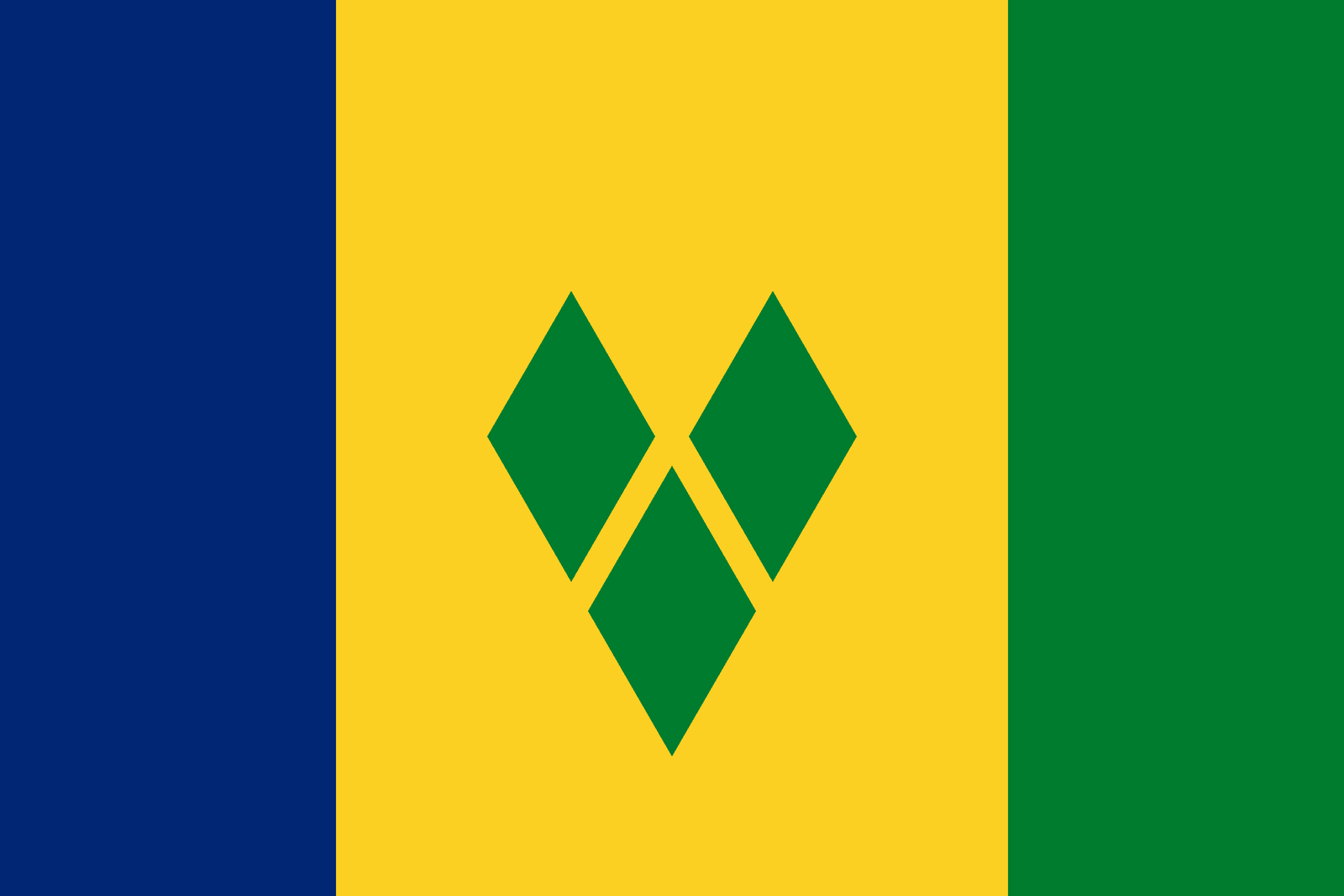
Flag of Saint Vincent
| Legal Name | Saint Vincent and the Grenadines |
|---|---|
| Flag |
|
| Capital City |
Kingstown |
| Total Area | 389 |
| Land Area | ~389 |
| Water Area | Negligible |
| Population | Approximately 110,000 |
| Major Cities | Kingstown (~25,000), Georgetown (~3,000), Barrouallie (~3,000), Chateaubelair (~2,000) |
| Currency | Eastern Caribbean Dollar (XCD) |
| GDP | ~USD 900 million |
| GDP Per Capita | ~USD 8,000 (nominal); ~USD 14,000 (PPP) |
About of Saint Vincent
Saint Vincent and the Grenadines is a small island nation located in the eastern Caribbean Sea, forming part of the Lesser Antilles island chain. It consists of the main island of Saint Vincent and a group of smaller islands known as the Grenadines, which extend southward toward Grenada. The country occupies a strategic position between the Caribbean Sea and the Atlantic Ocean.
Saint Vincent has no land borders, but its maritime boundaries are shared with Saint Lucia to the north, Barbados to the east, and Grenada to the south. The capital city, Kingstown, is situated on the southwest coast of Saint Vincent and serves as the political, economic, and cultural hub of the nation.
The population is relatively small and concentrated mainly along coastal areas. Saint Vincent and the Grenadines is a fully sovereign state, internationally recognized and an active member of the United Nations, Caribbean Community (CARICOM), Organization of Eastern Caribbean States (OECS), and the Commonwealth of Nations. Its geopolitical importance lies in regional cooperation, maritime security, disaster resilience, and climate change advocacy within the Caribbean.
Etymology
The name “Saint Vincent” was given by Christopher Columbus, who sighted the island on January 22, 1498, the feast day of Saint Vincent of Zaragoza, a Christian martyr. The name reflects the European tradition of naming newly encountered lands after religious figures or feast days.
The full state name, “Saint Vincent and the Grenadines,” recognizes both the main island and the southern chain of smaller islands. The term “Grenadines” derives from “Grenada,” indicating historical administrative and geographic association during the colonial period.
History
Prehistoric and Indigenous Era
Before European contact, Saint Vincent was inhabited by Amerindian peoples, including the Ciboney, followed by the Arawaks and later the Caribs (Kalinago). The island became a stronghold of the Caribs, who successfully resisted European settlement for centuries.
Colonial Competition
Unlike many Caribbean islands, Saint Vincent remained largely independent of European control until the 18th century. France and Britain competed for dominance, with the island changing hands multiple times. African slaves who escaped from neighboring islands integrated with the Caribs, forming the Garifuna people.
British Rule
Britain gained full control in 1763, although resistance continued, culminating in the Carib Wars. After the defeat of the Garifuna in 1797, many were forcibly deported to Central America. Saint Vincent became a British colony focused on sugar, cotton, and later banana production.
Independence Movement
Political reforms in the 20th century expanded self-governance. Saint Vincent and the Grenadines achieved full independence on October 27, 1979, while retaining ties to the British monarch as a Commonwealth realm.
Modern Developments
Since independence, the country has maintained political stability and democratic governance. In recent decades, it has faced challenges from natural disasters, volcanic eruptions, and economic vulnerability, while pursuing regional integration and sustainable development.
Government and Politics
Saint Vincent and the Grenadines operates as a constitutional monarchy and parliamentary democracy. The King of the United Kingdom is the ceremonial head of state, represented locally by a Governor-General.
Executive power is exercised by the Prime Minister and Cabinet, drawn from the elected members of Parliament. The unicameral House of Assembly serves as the legislative branch, while an independent judiciary, part of the Eastern Caribbean Supreme Court system, oversees legal matters.
Administratively, the country is divided into parishes rather than states or provinces. Foreign relations focus on Caribbean cooperation, development diplomacy, and climate advocacy. Defense is handled through the Royal Saint Vincent and the Grenadines Police Force, which includes a coast guard unit responsible for maritime security.
Economy
Saint Vincent and the Grenadines has a small, developing, service-oriented economy. Historically dependent on agriculture—particularly bananas—the economy has diversified toward tourism, construction, financial services, and light manufacturing.
Agriculture remains important for employment and food security, producing crops such as root vegetables, arrowroot, and fruits. The country has limited natural resources, relying mainly on fertile volcanic soils and marine resources.
Tourism, especially eco-tourism and yachting in the Grenadines, is a key source of foreign exchange. Major trade partners include regional Caribbean states, the United States, and the United Kingdom. Economic challenges include vulnerability to external shocks, climate change, and natural disasters, while future growth depends on sustainable tourism, renewable energy, and regional integration.
Demographics
The population of Saint Vincent and the Grenadines is predominantly of African descent, with smaller groups of mixed ancestry, East Indian, European, and indigenous heritage. The Garifuna legacy remains culturally significant.
English is the official language, while a Vincentian Creole is widely spoken in daily life. Christianity is the dominant religion, with Protestant denominations and Roman Catholicism most prevalent. The population is moderately urbanized, with steady but slow population growth influenced by emigration.
Culture and Society
Vincentian culture reflects a blend of African, European, and indigenous influences. Music and dance are central to social life, with calypso, soca, reggae, and steelpan music widely celebrated.
Traditional cuisine includes roasted breadfruit, fried jackfish, callaloo soup, and seafood-based dishes. Social customs emphasize community bonds, hospitality, and respect for elders. Major festivals include Vincy Mas (Carnival) and Independence Day, which showcase national pride, music, and colorful parades. Cricket and football are the most popular sports.
Education and Healthcare
Education is free and compulsory at the primary and secondary levels. The country has achieved a high literacy rate, with access to technical institutes and a local campus of the University of the West Indies.
Healthcare is provided through a network of public hospitals and clinics, supplemented by private services. Public health priorities include non-communicable diseases and disaster preparedness. Overall health outcomes are relatively strong by regional standards.
Geography and Climate
Saint Vincent is volcanic and mountainous, dominated by La Soufrière volcano, the country’s highest point. The coastline features black-sand beaches, cliffs, and sheltered bays, while the Grenadines are flatter and coral-rich.
The climate is tropical, with a dry season from January to May and a rainy season from June to November. Natural hazards include hurricanes, landslides, and volcanic eruptions. Environmental concerns focus on coastal erosion, reef protection, and climate resilience.
Flora and Fauna
The islands support rich biodiversity, including tropical rainforests, mangroves, coral reefs, and seagrass beds. Native plant species include hardwood trees, orchids, and medicinal plants.
Wildlife includes tropical birds, reptiles, marine turtles, and diverse fish species. Conservation efforts focus on marine parks, forest reserves, and sustainable fisheries management.
Map of Saint Vincent
National Flag: Blue, gold, and green with three diamonds forming a “V”
Coat of Arms: Shield featuring local flora, fauna, and historical symbols
National Anthem: “Saint Vincent, Land So Beautiful”
National Bird: Saint Vincent Parrot
National Flower: Soufrière Tree Blossom
National Flag (Detailed Section)
The national flag of Saint Vincent and the Grenadines features three vertical bands: blue on the hoist side, gold in the center, and green on the fly side. In the center are three green diamonds arranged in a V-shape, symbolizing Saint Vincent.
Introduced in 1985, the flag represents sky and sea (blue), sunshine and prosperity (gold), and lush vegetation (green). The diamonds signify unity and the nickname “The Gems of the Antilles.” The flag is flown on government buildings, schools, and during national celebrations in accordance with official protocol.
Realted Flags
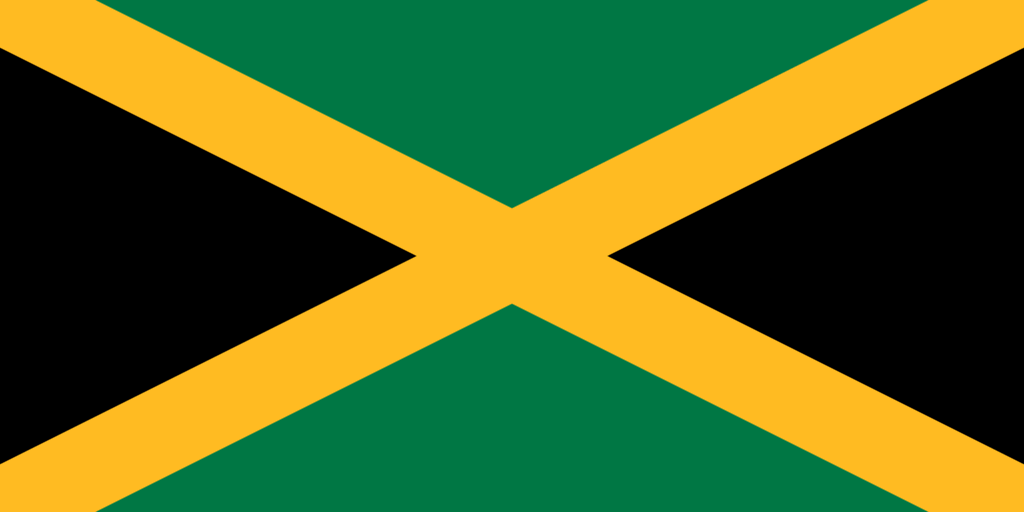
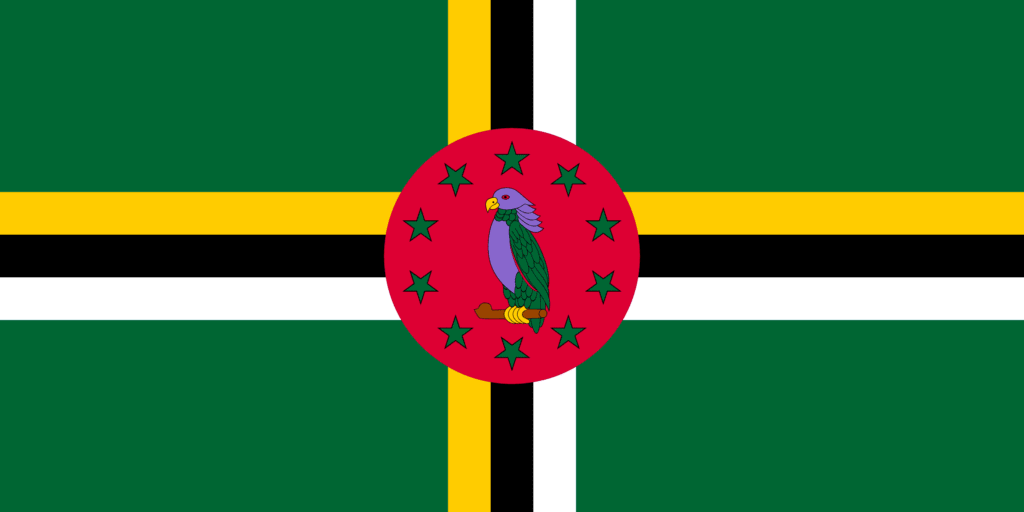
Flag flying days
| Date | Flag Position | Occasion / Reason |
|---|
| October 27 | Full-mast | Independence Day |
| June (Carnival Period) | Full-mast | Vincy Mas Celebrations |
| March 14 | Full-mast | National Heroes Day |
| National Mourning Days | Half-mast | State-declared mourning |