
Flag of Syria
| Legal Name | Syrian Arab Republic |
|---|---|
| Flag |
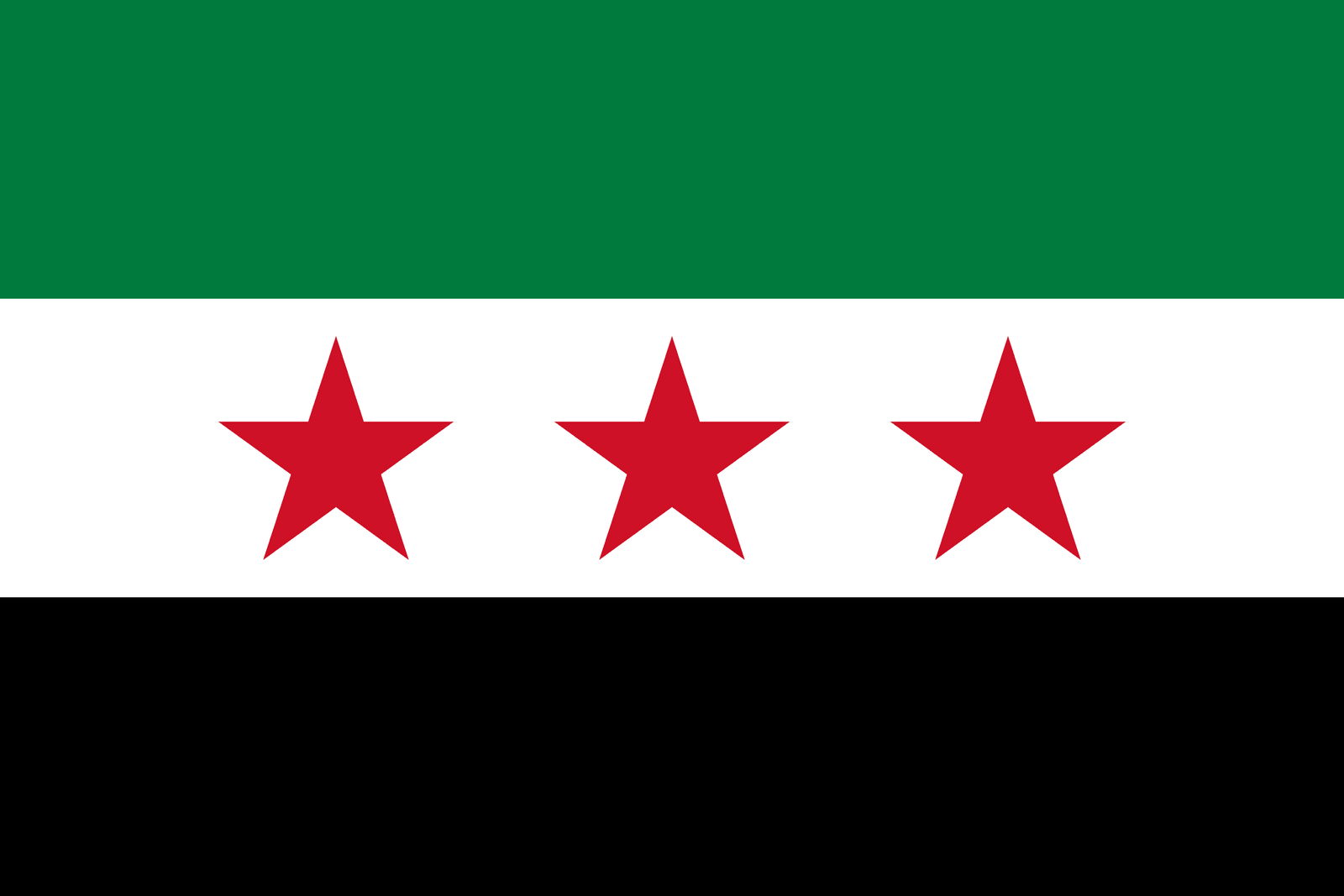
|
| Capital City |
Damascus |
| Total Area | 185,180 km² |
| Land Area | 183,630 km² |
| Water Area | 1,550 km² |
| Population | Approximately 21 million |
| Major Cities | Damascus (2.1 million), Aleppo (1.8 million), Homs (1.2 million), Latakia (1 million), Hama (0.9 million) |
| Currency | Syrian Pound (SYP) |
| GDP | USD 24.6 billion |
| GDP Per Capita | USD 1,100 (nominal) |
About of Syria
yria is a country in Western Asia, positioned at the eastern edge of the Mediterranean Sea. It is part of the Levant region and serves as a land bridge between Asia, Europe, and Africa. Its strategic location has historically made Syria a center for trade, culture, and geopolitical activity.
Syria shares borders with Turkey to the north, Iraq to the east, Jordan to the south, Israel to the southwest, and Lebanon to the west, with a coastline along the Mediterranean Sea. Damascus, the capital, is one of the oldest continuously inhabited cities in the world and a cultural and administrative center. Aleppo, the largest city, historically served as a key commercial hub.
Syria’s population is diverse, consisting of various ethnic and religious communities. International recognition of Syria is broadly established, though the country’s sovereignty has been challenged by internal conflict since 2011. Its geopolitical significance stems from its position in the Middle East, natural resource deposits, and role in regional security dynamics.
Etymology
The name “Syria” originates from the ancient Greek term Syria, which likely derived from Assyria, reflecting historical connections with the Assyrian Empire. Historically, the term encompassed a broader region, including modern-day Syria, Lebanon, Jordan, and parts of Turkey. Over time, “Syria” became the accepted designation for the modern nation-state.
History
Prehistoric and Ancient Civilizations
Evidence of human settlements in Syria dates back to the Paleolithic era, with early agricultural communities developing along the Euphrates and Orontes rivers. Ancient civilizations, including the Ebla Kingdom (c. 3000 BCE), established Syria as a center of trade and culture.
Classical and Medieval Periods
Syria came under the influence of major empires, including the Akkadian, Assyrian, Babylonian, and Persian empires. Greek and Hellenistic rule followed Alexander the Great, with the Seleucid Empire governing the region. Roman and Byzantine control further integrated Syria into Mediterranean trade networks. In the 7th century CE, Arab Muslim armies conquered Syria, establishing it as part of the Umayyad Caliphate, with Damascus as the capital.
Ottoman Rule
From 1516 to 1918, Syria was part of the Ottoman Empire, administered through several provinces. Ottoman governance influenced urban development, trade, and culture.
Colonial Era and Independence
Following World War I, Syria came under French mandate through the League of Nations. Nationalist movements grew during the mandate period, culminating in independence in 1946.
Modern Era
Post-independence Syria experienced periods of political instability, coups, and military governments. The Ba’ath Party rose to prominence in 1963, establishing long-term governance. Hafez al-Assad became president in 1971, succeeded by his son Bashar al-Assad in 2000. Since 2011, Syria has endured civil conflict involving multiple internal and international actors, resulting in significant humanitarian and infrastructural crises.
Government and Politics
Syria is officially a unitary republic with a presidential system. The Ba’ath Party dominates political life.
Executive: President serves as head of state, head of government, and commander-in-chief.
Legislature: Unicameral People’s Council enacts legislation under presidential influence.
Judiciary: Courts operate under civil and Islamic law; judiciary is formally independent but influenced by the executive.
Syria is divided administratively into 14 governorates. The nation maintains diplomatic relations with select countries and participates in regional organizations, though international engagement is constrained by conflict and sanctions. Military forces include the Syrian Arab Army, air force, and paramilitary units.
Economy
Syria has a developing, conflict-impacted economy. Major sectors include agriculture, oil production, manufacturing, and services. Agricultural output historically comprised wheat, barley, cotton, and livestock. Oil and gas reserves are significant sources of revenue. Trade partners include neighboring Middle Eastern countries, Europe, and Asia.
Economic challenges are severe due to ongoing conflict, infrastructure destruction, population displacement, and international sanctions. Reconstruction, energy sector revitalization, and diversification remain critical for long-term recovery.
Demographics
Syria’s population is ethnically and religiously diverse:
Ethnic Groups: Arab majority, with Kurdish, Turkmen, Assyrian, and Armenian minorities.
Languages: Arabic (official), Kurdish, Armenian, Aramaic dialects in certain communities.
Religions: Sunni Islam (majority), Alawite, Christian, Druze, Shia, and other minorities.
Urbanization: Approximately 56% urban population, concentrated in cities like Damascus, Aleppo, and Homs.
Population Trends: Population decline due to conflict-related displacement and emigration.
Culture and Society
Syria’s culture reflects millennia of history, combining Arab, Kurdish, Assyrian, and other influences. Damascus and Aleppo are renowned for architecture, historical markets, and craft traditions. Literature, poetry, music, and cuisine are integral to national identity. Syrian cuisine features mezze, kebabs, flatbreads, and sweets such as baklava.
Social norms emphasize family cohesion, community ties, and hospitality. Major festivals include Eid al-Fitr, Eid al-Adha, and Christian religious holidays. Traditional sports and recreational activities include soccer, wrestling, and folk dance.
Education and Healthcare
Education is state-provided, with free primary and secondary schooling. Literacy rates exceed 80%, though conflict has disrupted educational access. Higher education institutions, including the University of Damascus, serve as cultural and research hubs.
Healthcare infrastructure was historically robust but has deteriorated due to conflict. Public health challenges include displacement, malnutrition, and disease outbreaks. International aid supports basic healthcare delivery and humanitarian relief.
Geography and Climate
Syria features varied geography, including coastal plains, the Anti-Lebanon and Jabal al-Druze mountain ranges, the Euphrates River valley, and eastern deserts. The climate is Mediterranean along the coast, arid in the interior, and semi-arid in the north. Natural hazards include droughts, occasional earthquakes, and water scarcity. Environmental concerns include deforestation, desertification, and soil erosion.
Flora and Fauna
Syria hosts diverse ecosystems, from coastal forests to desert scrublands. Native flora includes pine, oak, pistachio, and juniper. Wildlife historically included wolves, hyenas, gazelles, and numerous bird species. National parks and protected areas aim to conserve biodiversity, though conflict has impacted ecosystems.
Map of Syria
Flag: Horizontal red, white, and black tricolor with two green stars.
Coat of Arms: Hawk of Quraish holding a shield with national flag colors.
National Anthem: Humat ad-Diyar (“Guardians of the Homeland”).
National Animals/Plants: Syrian brown bear (historically), Aleppo pine.
National Flag (Detailed Section)
The Syrian flag has three horizontal stripes—red (top), white (middle), and black (bottom)—with two green stars in the white stripe. The red symbolizes the struggle for independence, white represents peace and a bright future, black denotes oppression overcome, and green stars signify unity and Arab identity. The design has evolved through various historical periods and was adopted in its current form in 1980. Flag usage follows national protocol during official events, state ceremonies, and public observances.
Flag flying days
| Date | Flag Position | Occasion or Reason |
|---|
| April 17 | Full-mast | Evacuation Day / Commemoration of independence from French mandate |
| July 17 | Full-mast | Independence Day (from French mandate, 1946) |
| As Declared | Half-mast | National mourning or death of high-ranking officials |
| Religious Holidays | Full-mast | Eid al-Fitr, Eid al-Adha, and other national observances |