
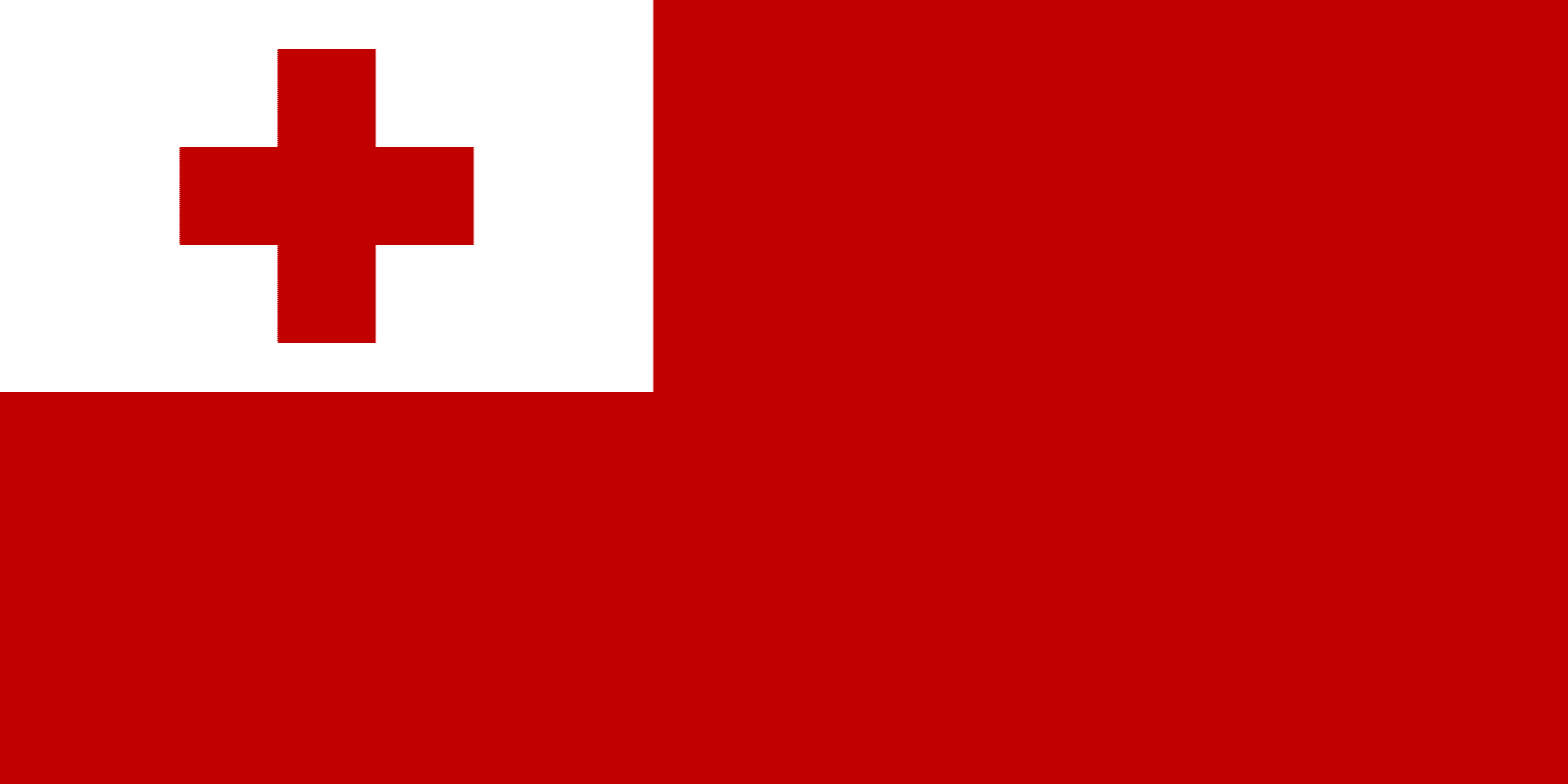
Flag of Tonga
| Legal Name | Kingdom of Tonga |
|---|---|
| Flag |
|
| Capital City |
Nukuʻalofa |
| Total Area | Approximately 747 km² |
| Land Area | Approximately 717 km² |
| Water Area | Approximately 30 km² |
| Population | Approximately 105,000 |
| Major Cities | Nukuʻalofa (25,000), Neiafu (6,000), Pangai (2,000) |
| Currency | Tongan Paʻanga (TOP) |
| GDP | Approximately USD 0.5 billion |
| GDP Per Capita | Approximately USD 4,500 (nominal) |
About of Tonga
Tonga is a Polynesian island nation located in the South Pacific Ocean, east of Australia and northeast of New Zealand. It consists of an archipelago of more than 170 islands, of which around 45 are inhabited, spread across three main island groups: Tongatapu, Haʻapai, and Vavaʻu. Its location places it within the cultural heart of Polynesia and along key Pacific maritime routes.
The country has no land borders and is surrounded by the Pacific Ocean, sharing maritime zones with Fiji, Samoa, and New Zealand. Nukuʻalofa, located on the island of Tongatapu, serves as both the capital and largest urban center, functioning as the political, economic, and cultural hub of the nation.
Tonga is internationally recognized as a sovereign state and is notable for being the only Pacific island nation never formally colonized. Its strategic importance lies in its exclusive economic zone, its role in Pacific regional diplomacy, and its strong cultural influence within the wider Polynesian world.
Etymology
The name “Tonga” originates from the Tongan language and is commonly interpreted to mean “south” or “southern,” reflecting the islands’ position at the southern edge of central Polynesia. Historically, the term was used to describe the southern lands within Polynesian navigation traditions. Over time, it became the established name for the kingdom and its people.
History
Prehistoric and Ancient Civilizations
Tonga was settled by Austronesian-speaking peoples more than 3,000 years ago. It became a major center of the Lapita culture, known for advanced navigation, pottery, and social organization. Early Tongans developed complex chiefdoms and maritime networks across the Pacific.
Classical and Medieval Periods
By the 10th century, Tonga had emerged as a powerful maritime empire, often referred to as the Tuʻi Tonga Empire. Its influence extended across much of Polynesia, including parts of Fiji, Samoa, and beyond. A highly stratified society and strong religious traditions shaped governance and culture.
European Contact and Modernization
European explorers arrived in the 17th and 18th centuries, followed by missionaries in the 19th century. Christianity was adopted widely, transforming social structures. Unlike many Pacific nations, Tonga retained its monarchy and sovereignty through diplomatic agreements rather than colonization.
Constitutional Monarchy
In 1875, Tonga adopted a written constitution, formalizing a constitutional monarchy. The country became a British-protected state in 1900 but retained internal self-rule. Full independence was reaffirmed in 1970.
Contemporary Developments
Recent decades have seen gradual political reforms, including expanded representation in Parliament and increased public participation in governance, while maintaining the monarchy as a central institution.
Government and Politics
Tonga is a constitutional monarchy with a hereditary king as head of state. The Constitution provides the legal framework for governance, balancing royal authority with parliamentary democracy. Executive power is exercised by the Prime Minister and Cabinet, while legislative authority rests with a unicameral Legislative Assembly composed of elected representatives and nobles.
The judiciary is independent and based on common law principles. Administratively, Tonga is divided into five main divisions corresponding to its island groups. The country maintains diplomatic relations worldwide and is a member of the United Nations, Commonwealth of Nations, and Pacific Islands Forum. Tonga has a small defense force primarily focused on national security, disaster response, and international peacekeeping.
Economy
Tonga is classified as a developing economy with a narrow economic base. Agriculture and fisheries are central, employing a significant portion of the population. Key products include root crops, coconuts, vanilla, squash, and fish.
Services dominate economic activity, particularly public administration, education, and tourism. Remittances from Tongans living abroad are a major source of national income. Natural resources are limited, and manufacturing is small-scale. Economic challenges include geographic isolation, vulnerability to natural disasters, reliance on imports, and youth unemployment. Future prospects focus on sustainable tourism, renewable energy, and agricultural value addition.
Demographics
Tonga’s population is predominantly ethnic Tongan, with small communities of other Pacific Islanders and expatriates. Tongan and English are the official languages. Christianity plays a central role in daily life, with the majority of the population affiliated with Methodist, Catholic, and other Christian denominations.
The population is largely rural, though urbanization around Nukuʻalofa has increased. Population growth is modest, influenced by emigration and declining fertility rates.
Culture and Society
Tongan culture is deeply rooted in family, respect, and communal responsibility. Traditional customs, known as anga faka-Tonga, emphasize hierarchy, kinship, and social harmony. Music, dance, and oral traditions remain central to cultural expression.
Cuisine features staples such as taro, yam, coconut, and seafood, often prepared in traditional earth ovens. Major festivals include Constitution Day and religious celebrations. Rugby, netball, and traditional sports are widely enjoyed, and Tonga has a strong international presence in rugby union.
Education and Healthcare
Education is compulsory at the primary level and widely accessible. Literacy rates are high, supported by strong community and church involvement in schooling. Higher education is provided by regional institutions and local colleges.
Healthcare services are delivered through public hospitals and clinics, supplemented by private and faith-based providers. Public health challenges include non-communicable diseases and access to specialized care, though immunization and primary care coverage are strong.
Geography and Climate
Tonga’s islands are a mix of coral atolls and volcanic islands, with fertile soils in many areas. The terrain is generally low-lying, with limited freshwater resources. The climate is tropical, featuring a warm season and a cooler, drier season.
Natural hazards include cyclones, earthquakes, volcanic activity, and tsunamis. Environmental concerns focus on coastal erosion, climate change impacts, and the protection of marine ecosystems.
Flora and Fauna
Biodiversity in Tonga includes tropical forests, mangroves, and coral reefs. Native plant species include pandanus, breadfruit, and coconut palms. Wildlife is primarily marine, with whales, dolphins, and diverse fish species common in surrounding waters.
Conservation efforts aim to protect reefs, fisheries, and forested areas through marine protected zones and community-based management.
Map of Tonga
National symbols reflect Tonga’s monarchy, Christian heritage, and cultural identity. The national flag, coat of arms, and anthem emphasize faith, unity, and royal authority. The royal palace in Nukuʻalofa and traditional cultural sites serve as important national landmarks.
National Flag (Detailed Section)
The flag of Tonga features a red field symbolizing the blood of Christ, with a white canton containing a red cross representing Christianity. Adopted in the 19th century and protected by the Constitution, the flag’s design is legally unchangeable. It is flown on government buildings, during national celebrations, and at international events in accordance with established protocol.
Flag flying days
| Date | Flag Position | Occasion or Reason |
|---|
| January 1 | Full-mast | New Year’s Day |
| April 25 | Full-mast | ANZAC Day |
| July 4 | Full-mast | King’s Birthday |
| November 4 | Full-mast | Constitution Day |
| December 25 | Full-mast | Christmas Day |
| As Declared | Half-mast | National mourning or remembrance |