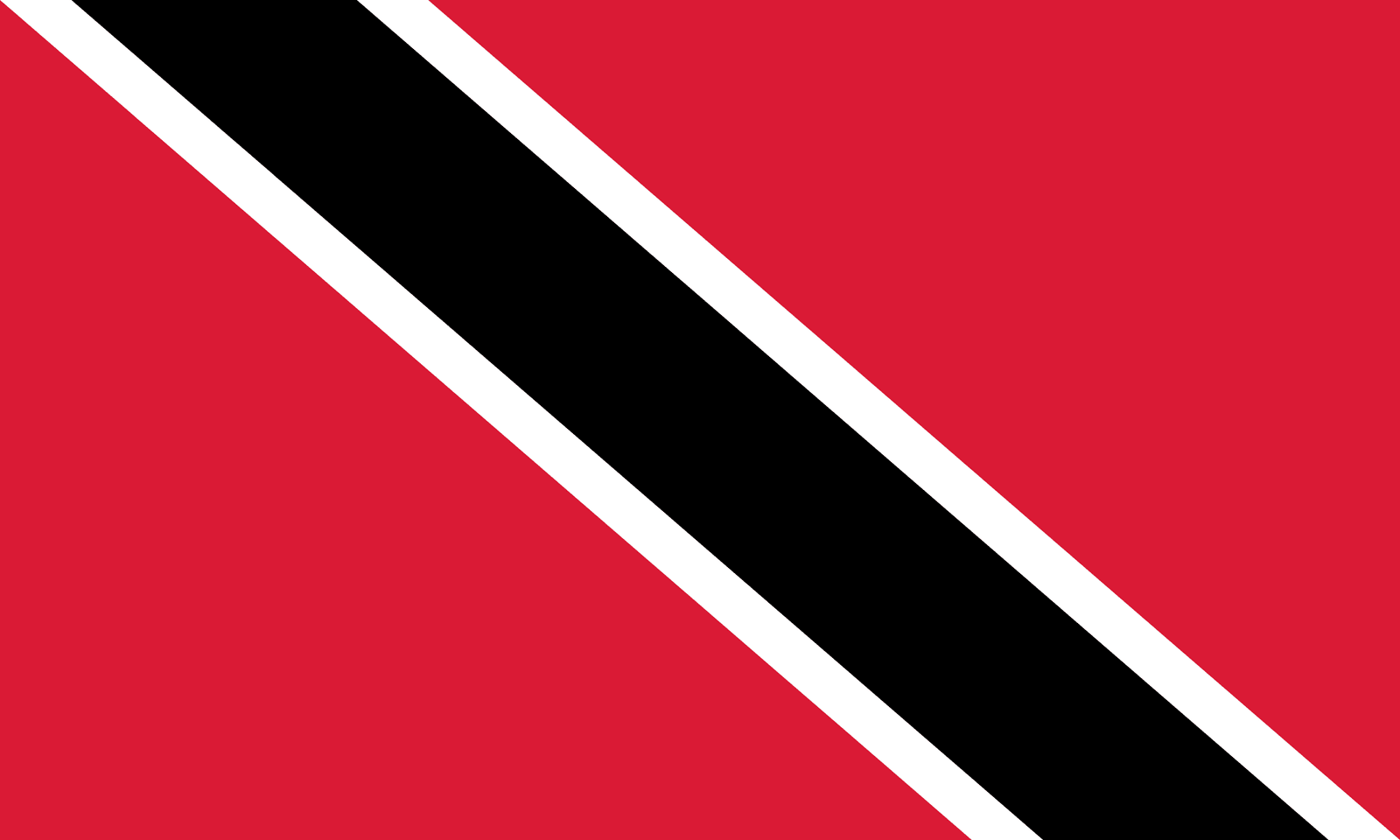
Flag of Trinidad and Tobago
| Legal Name | Republic of Trinidad and Tobago |
|---|---|
| Flag |
|
| Capital City |
Port of Spain |
| Total Area | 5,130 km² |
| Land Area | 5,128 km² |
| Water Area | 2 km² |
| Population | Approximately 1.4 million |
| Major Cities | Chaguanas (85,000), Port of Spain (50,000), San Fernando (50,000), Arima (35,000), Point Fortin (20,000) |
| Currency | Trinidad and Tobago Dollar (TTD) |
| GDP | Approximately USD 28 billion |
| GDP Per Capita | Approximately USD 20,000 (nominal) |
About of Trinidad and Tobago
Trinidad and Tobago is a twin-island nation located at the southernmost edge of the Caribbean, just off the northeastern coast of South America. It lies near Venezuela and occupies a unique geographic position that blends Caribbean and South American influences. Trinidad, the larger island, hosts most of the population and industrial activity, while Tobago is smaller, greener, and known for tourism and conservation.
The country has no land borders but shares maritime boundaries with Venezuela, Grenada, Barbados, and Guyana. Port of Spain, the capital, serves as the administrative and political center, while Chaguanas is the largest urban area and a major commercial hub. Urban development is concentrated along the western corridor of Trinidad, where infrastructure and economic activity are most dense.
Trinidad and Tobago is a fully sovereign state with broad international recognition and is a member of numerous global and regional organizations. Its strategic importance lies in its energy resources, industrial capacity, and location near major shipping routes between the Caribbean and South America, making it an economic anchor within the southern Caribbean.
Etymology
The name “Trinidad” originates from Spanish explorer Christopher Columbus, who named the island La Trinidad in reference to the Holy Trinity upon sighting it in 1498. “Tobago” is believed to derive from the Taíno word tabaco or tobago, referring either to tobacco or to a pipe used for smoking. Over time, the two island names were joined to reflect their political and geographic unity as a single nation.
History
Prehistoric and Ancient Civilizations
Before European contact, Trinidad and Tobago were inhabited by Indigenous peoples, including the Arawaks and Caribs, who practiced fishing, agriculture, and inter-island trade. Archaeological evidence suggests settlement dating back several thousand years.
Colonial Period
Following European arrival, Trinidad and Tobago experienced Spanish, French, Dutch, and British influence. Trinidad became a British colony in 1797, while Tobago changed hands multiple times before coming under British control in the early 19th century. Plantation agriculture, especially sugar and cocoa, dominated the colonial economy, supported by enslaved African labor and later indentured workers from India.
Independence and Nationhood
The abolition of slavery in the 19th century and the introduction of indentured labor reshaped society and demographics. Trinidad and Tobago gained independence from the United Kingdom in 1962 and became a republic in 1976, replacing the British monarch with a ceremonial president.
Modern Developments
Since independence, the country has developed a strong industrial base, particularly in energy and manufacturing. Political stability has generally prevailed, with peaceful transitions of power and a functioning democratic system shaping modern governance.
Government and Politics
Trinidad and Tobago is a parliamentary republic based on the Westminster system. The Constitution establishes the framework for governance, with executive power exercised by the Prime Minister and Cabinet, legislative authority vested in a bicameral Parliament, and an independent judiciary.
Administratively, the country is divided into regions, municipalities, and boroughs, along with the Tobago House of Assembly, which grants Tobago a degree of internal self-governance. The country maintains active diplomatic relations worldwide and is a member of the United Nations, Commonwealth, CARICOM, and the Organization of American States. The Trinidad and Tobago Defence Force is responsible for national defense, border security, and maritime patrol.
Economy
Trinidad and Tobago is classified as a high-income developing economy and is one of the most industrialized nations in the Caribbean. The economy is heavily driven by energy, with oil, natural gas, and petrochemicals forming the backbone of exports and government revenue.
Manufacturing includes steel, cement, food processing, and chemicals, while agriculture plays a smaller but culturally important role, producing cocoa, sugar, citrus, and root crops. Services such as finance, logistics, and tourism contribute significantly, particularly in Tobago. Economic challenges include energy dependence, diversification needs, public debt, and vulnerability to global commodity price fluctuations.
Demographics
The population of Trinidad and Tobago is ethnically diverse, primarily comprising people of African and Indian descent, along with mixed, European, Chinese, and Middle Eastern communities. English is the official language, and Trinidadian and Tobagonian Creoles are widely spoken.
Religious diversity is a defining feature, with Christianity, Hinduism, and Islam all playing prominent roles in society. The population is largely urban, and population growth has slowed due to declining fertility and emigration trends.
Culture and Society
Trinidad and Tobago is renowned for its vibrant cultural life, reflecting African, Indian, European, and Indigenous influences. The nation is widely regarded as the birthplace of calypso, soca, and steelpan music, which are central to national identity.
Carnival is the most significant cultural event, celebrated with music, dance, costumes, and street parades. Cuisine blends diverse traditions, featuring dishes such as roti, pelau, doubles, and callaloo. Cricket and football are the most popular sports, alongside athletics and sailing.
Education and Healthcare
Education is free and compulsory at the primary and secondary levels, with a strong emphasis on literacy and academic achievement. Tertiary education is provided through universities, technical institutes, and vocational programs.
The healthcare system includes public and private services, offering universal access to basic care. Trinidad and Tobago has achieved progress in life expectancy and disease control, though challenges remain related to non-communicable diseases and healthcare infrastructure management.
Geography and Climate
The country consists of two main islands and several smaller islets. Trinidad features plains, low mountain ranges, and swampy areas, while Tobago is more mountainous and forested. The coastline supports fishing, ports, and tourism.
The climate is tropical, with a dry season from January to May and a rainy season from June to December. Unlike many Caribbean islands, Trinidad and Tobago lies south of the main hurricane belt, though flooding and storms can still occur. Environmental concerns include coastal erosion, industrial pollution, and habitat loss.
Flora and Fauna
Trinidad and Tobago is one of the most biodiverse countries in the Caribbean, hosting a wide range of plant and animal species due to its proximity to South America. Tropical rainforests, mangroves, and coral reefs support rich ecosystems.
Wildlife includes monkeys, ocelots, manatees, and hundreds of bird species. Conservation areas and national parks protect sensitive habitats, particularly in Tobago, which is known for its marine reserves.
Map of Trinidad and Tobago
The national flag, coat of arms, and anthem represent unity, strength, and heritage. The scarlet ibis and the cocrico are recognized as national birds, symbolizing Trinidad and Tobago respectively. Iconic sites include Pitch Lake, one of the world’s largest natural asphalt deposits, and the Main Ridge Forest Reserve in Tobago.
National Flag (Detailed Section)
The flag of Trinidad and Tobago features a red background with a black diagonal stripe bordered by white. Adopted at independence in 1962, the design is distinctive among national flags. Red symbolizes vitality and the warmth of the people, black represents dedication and strength, and white signifies equality and the sea that surrounds the islands. The flag is displayed on government buildings, during national celebrations, and at international events, following established protocols.
Flag flying days
| Date | Flag Position | Occasion or Reason |
|---|
| January 1 | Full-mast | New Year’s Day |
| May 30 | Full-mast | Indian Arrival Day |
| August 1 | Full-mast | Emancipation Day |
| August 31 | Full-mast | Independence Day |
| September 24 | Full-mast | Republic Day |
| As Declared | Half-mast | National mourning or remembrance |