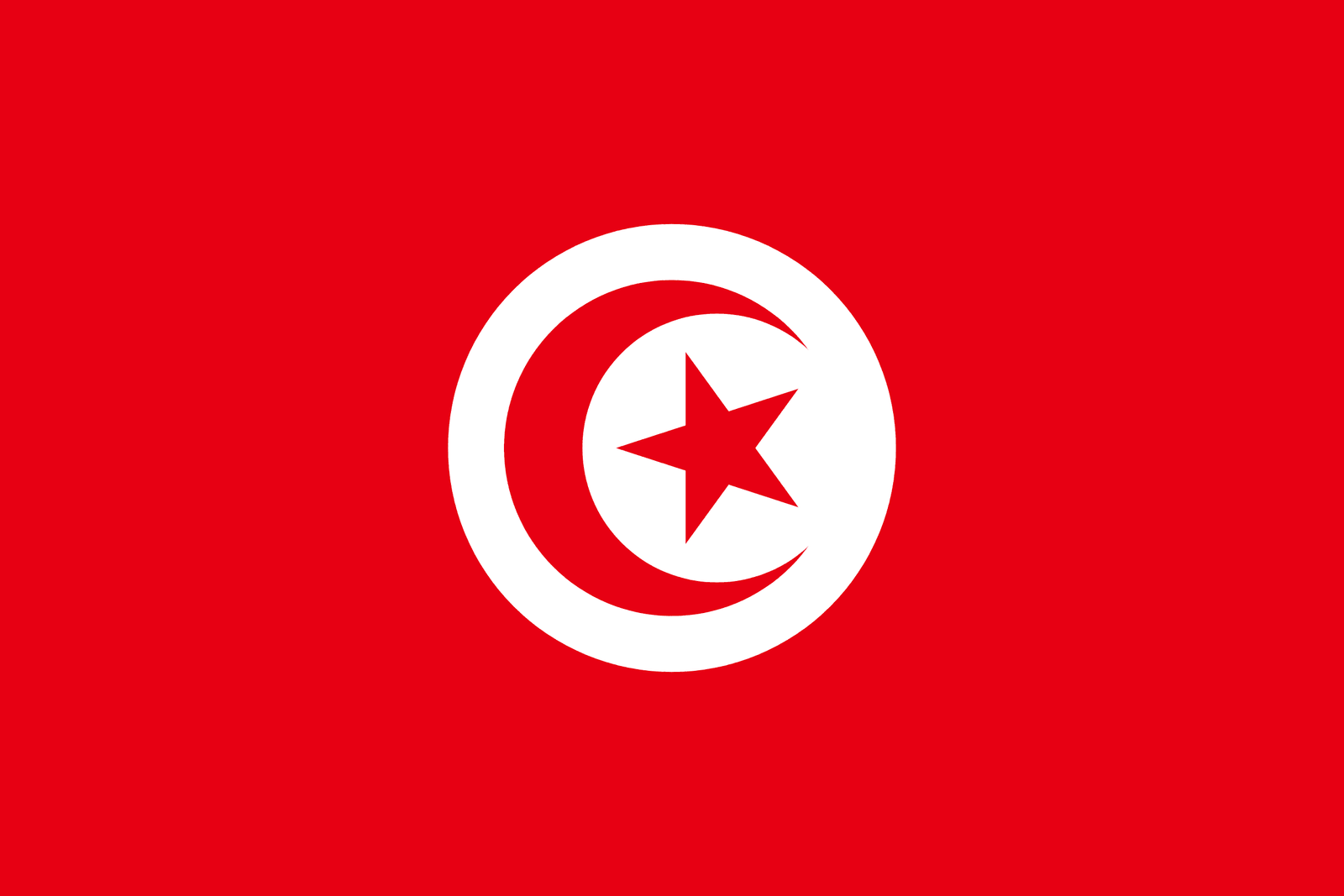
Flag of Tunisia
| Legal Name | Republic of Tunisia |
|---|---|
| Flag |
|
| Capital City |
Tunis |
| Total Area | 163,610 km² |
| Land Area | 155,360 km² |
| Water Area | 8,250 km² |
| Population | Approximately 12.3 million |
| Major Cities | Tunis (2.7 million metro), Sfax (1.0 million), Sousse (0.7 million), Kairouan (0.6 million), Bizerte (0.5 million), Gabès (0.4 million) |
| Currency | Tunisian Dinar (TND) |
| GDP | Approximately USD 52 billion |
| GDP Per Capita | Approximately USD 4,200 (nominal) |
About of Tunisia
Tunisia is a North African country located at the crossroads of the Mediterranean Basin and the Sahara Desert. It occupies the easternmost edge of the Maghreb region and has long served as a cultural and commercial bridge between Africa, Europe, and the Middle East. Its relatively small size and diverse geography have contributed to a dense concentration of historical settlements and cultural influences.
The country borders Algeria to the west and southwest and Libya to the southeast, while its northern and eastern coastlines stretch along the Mediterranean Sea. Tunisia’s maritime position places it directly opposite southern Europe, particularly Italy, reinforcing centuries-old economic and cultural ties across the sea. The capital, Tunis, lies near the ruins of ancient Carthage and functions as the political, economic, and cultural center of the country.
Tunisia’s population is largely urban and concentrated along the coast, where economic activity and infrastructure are most developed. Internationally, Tunisia is a fully recognized sovereign state and a founding member of several regional and international organizations. Its strategic importance stems from its Mediterranean location, relative political influence in North Africa, and role in regional stability, trade, and migration routes.
Etymology
The name “Tunisia” is derived from Tunis, the country’s capital city. The origin of “Tunis” is commonly linked to ancient Berber linguistic roots, possibly meaning “encampment” or “resting place,” reflecting the area’s historical role as a settlement point for travelers and traders. Over time, the name evolved through Phoenician, Roman, and Arabic usage. With the emergence of the modern state, “Tunisia” became the internationally recognized name for the territory centered around Tunis.
History
Prehistoric and Ancient Civilizations
Human settlement in Tunisia dates back to prehistoric times, with archaeological evidence of early human activity across the region. In antiquity, Tunisia became a major center of Phoenician civilization with the founding of Carthage in the 9th century BCE. Carthage grew into a powerful maritime empire, dominating western Mediterranean trade.
Classical and Medieval Periods
Following the Punic Wars, Carthage was defeated by Rome, and the region became a prosperous Roman province known as Africa Proconsularis. Roman rule left a lasting legacy in infrastructure, agriculture, and urban planning. After the fall of the Western Roman Empire, the region passed through Vandal and Byzantine control before the Arab-Islamic expansion in the 7th century transformed its cultural, linguistic, and religious landscape.
Empires and Dynasties
During the medieval period, Tunisia was ruled by various Islamic dynasties, including the Aghlabids, Fatimids, and Hafsids. The country later became part of the Ottoman Empire in the 16th century, enjoying a degree of local autonomy while remaining under Ottoman sovereignty.
Colonial Rule and Independence
In 1881, Tunisia became a French protectorate, marking a period of colonial administration and economic restructuring. Nationalist movements gained momentum in the early 20th century, leading to independence in 1956. Shortly thereafter, Tunisia abolished the monarchy and declared itself a republic.
Modern Political Developments
Post-independence Tunisia pursued modernization, state-led development, and social reforms, particularly in education and women’s rights. The 2011 revolution marked a turning point, ending decades of authoritarian rule and initiating a period of political transformation. In the years since, Tunisia has experienced significant political change, including constitutional revisions and shifts in governance structures, reflecting ongoing debates over democracy, stability, and state authority.
Government and Politics
Tunisia is a republic with a political system that has evolved significantly in recent years. Executive authority is centered on the presidency, while legislative power is vested in a national parliament. The judiciary is constitutionally recognized as independent, though its structure and role have undergone reforms.
Administratively, Tunisia is divided into governorates, which are further subdivided into districts and municipalities. In foreign relations, Tunisia maintains diplomatic ties with a wide range of countries and is a member of the United Nations, African Union, Arab League, and other international organizations. The Tunisian Armed Forces are relatively small but professional, focusing on national defense, border security, and counterterrorism operations.
Economy
Tunisia is classified as a developing economy with diversified sectors. Manufacturing plays a significant role, particularly in automotive components, electrical wiring systems, textiles, and mechanical industries. Agriculture remains important, with olive oil, dates, cereals, and citrus fruits among key products.
The services sector, especially tourism, trade, and telecommunications, contributes a substantial share of national income. Tunisia has limited natural resources but produces phosphates, oil, and natural gas in modest quantities. Major trade partners include European Union countries, regional neighbors, and select global markets. Economic challenges include unemployment, inflation, public debt, and structural reforms, while future prospects depend on investment, institutional stability, and export competitiveness.
Demographics
Tunisia’s population is predominantly Arab-Berber in origin, with a strong sense of national identity shaped by shared language and history. Arabic is the official language, and French is widely used in administration, education, and business. Islam is the dominant religion, with small Christian and Jewish communities.
The population is highly urbanized, with most residents living in cities along the coast. Population growth has slowed over recent decades due to declining fertility rates, increased education levels, and urban living patterns.
Culture and Society
Tunisian culture reflects a blend of Berber, Arab, African, Mediterranean, and European influences. Family life, hospitality, and community ties are central social values. Traditional music, crafts, and architecture coexist with modern artistic expression in film, literature, and visual arts.
Tunisian cuisine is known for its use of olive oil, grains, vegetables, and spices, with dishes such as couscous, brik, and harissa forming staples of daily life. National and religious holidays celebrate independence, labor, and cultural heritage. Football is the most popular sport, followed by handball and athletics.
Education and Healthcare
Education in Tunisia is compulsory at the primary level and widely accessible at secondary and tertiary levels. Literacy rates are high by regional standards, and the country has a network of public universities and technical institutes.
The healthcare system combines public and private providers and offers broad coverage, particularly in urban areas. Tunisia has achieved notable progress in maternal and child health, vaccination, and life expectancy, though challenges remain in funding, regional disparities, and workforce retention.
Geography and Climate
Tunisia’s geography transitions from fertile coastal plains in the north to arid steppes and desert landscapes in the south. The Atlas Mountains extend into the western part of the country, while the Sahara Desert dominates the southern regions. Tunisia’s Mediterranean coastline supports fishing, tourism, and maritime trade.
The climate is Mediterranean in the north, with mild, wet winters and hot, dry summers, becoming increasingly arid toward the south. Natural hazards include droughts and occasional flooding. Environmental concerns focus on desertification, water scarcity, and coastal erosion.
Flora and Fauna
Tunisia hosts a range of ecosystems, from Mediterranean forests to desert habitats. Native plant species include olive trees, cork oak, and date palms. Wildlife includes gazelles, foxes, wild boar, and a variety of bird species, particularly migratory birds. National parks and protected areas aim to conserve biodiversity and fragile desert and wetland environments.
Map of Tunisia
The national flag is a key symbol of Tunisian sovereignty and identity. The coat of arms features elements representing freedom, order, and justice. The national anthem, Humat al-Hima, reflects themes of patriotism and sacrifice. Symbolic landmarks include ancient Carthage, the Great Mosque of Kairouan, and the medina of Tunis.
National Flag (Detailed Section)
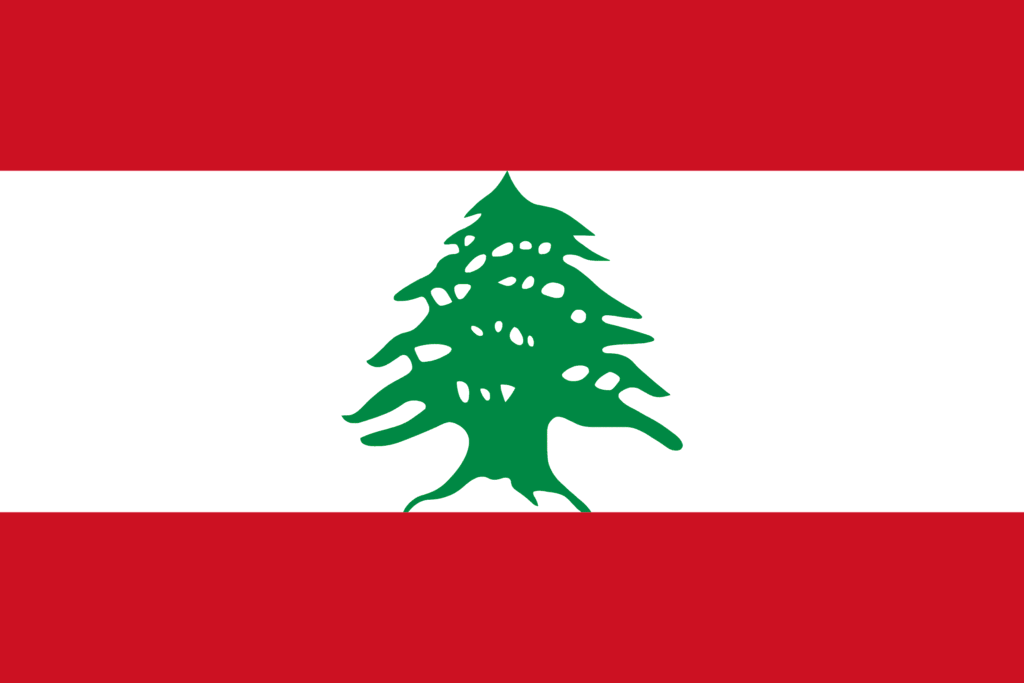
Tunisia’s flag consists of a red field with a white circle at its center, enclosing a red crescent and five-pointed star. The design dates back to the 19th century and was officially adopted in the modern era. Red symbolizes the blood of martyrs and historical struggle, while the crescent and star are traditional symbols associated with Islamic heritage and national unity. The flag is displayed on public buildings, during official ceremonies, and on national holidays, with protocols governing respectful use.
Flag flying days
| Date | Flag Position | Occasion or Reason |
|---|---|---|
| March 20 | Full-mast | Independence Day |
| April 9 | Full-mast | Martyrs’ Day |
| July 25 | Full-mast | Republic Day |
| October 15 | Full-mast | Evacuation Day |
| As Declared | Half-mast | National mourning or remembrance |