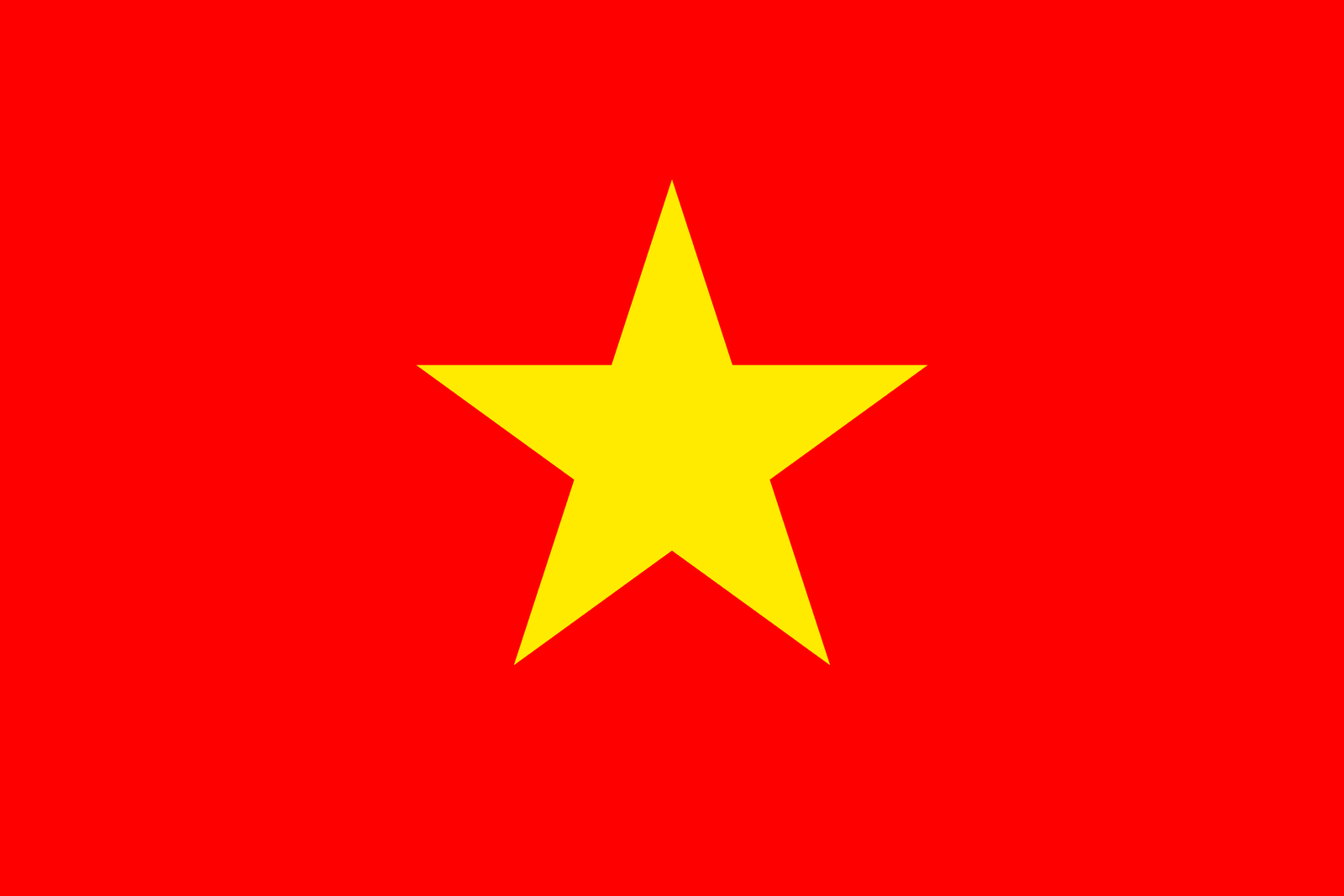
Flag of Vietnam
| Legal Name | Socialist Republic of Vietnam |
|---|---|
| Flag |
|
| Capital City |
Hanoi |
| Total Area | ~331,212 km² |
| Land Area | ~310,070 km² |
| Water Area | ~21,142 km² |
| Population | ~100.5 million |
| Major Cities | Ho Chi Minh City (~9.5M metro), Hanoi (~8.5M metro), Hai Phong (~2.2M), Da Nang (~1.3M), Can Tho (~1.2M) |
| Currency | Vietnamese đồng (VND) |
| GDP | ~USD 430–450 billion |
| GDP Per Capita | ~USD 4,300 (nominal) |
About of Vietnam
Vietnam is a Southeast Asian country located on the eastern edge of the Indochinese Peninsula, stretching along the western coast of the South China Sea. Its elongated S-shaped geography gives it extensive coastlines, fertile river deltas, and mountainous highlands, contributing to significant regional diversity in climate, culture, and economic activity.
The country shares land borders with China to the north and Laos and Cambodia to the west, while its maritime boundaries extend into the South China Sea, placing it near major international shipping lanes. Hanoi, the capital, serves as the political and administrative center, while Ho Chi Minh City is the largest urban area and the economic engine of the nation.
Vietnam is one of the most populous countries in the world, with a relatively young and increasingly urbanized population. Rapid economic growth over recent decades has transformed living standards and reshaped social structures, while traditional rural communities remain influential.
Internationally, Vietnam is a fully recognized sovereign state and an active participant in regional and global affairs. Its strategic importance stems from its geographic position, large labor force, growing economy, and role in Southeast Asian geopolitics and maritime security.
Etymology
The name “Vietnam” derives from the Sino-Vietnamese words Việt and Nam, meaning “Viet” and “south.” Historically, it referred to the lands south of China inhabited by the Viet people. The term evolved over centuries, appearing in various forms such as Nam Việt and later standardized as Việt Nam.
The modern usage of “Vietnam” became widely accepted in the 19th and 20th centuries and was formally adopted as the country’s name in the mid-20th century, reflecting both historical identity and territorial continuity.
History
Archaeological evidence indicates human settlement in present-day Vietnam for tens of thousands of years. Early societies such as the Dong Son culture are known for advanced bronze casting and wet-rice agriculture.
In antiquity, northern Vietnam was incorporated into Chinese imperial administrations for over a millennium, shaping language, governance, and culture. Periods of independence emerged intermittently until sustained autonomy was achieved in the 10th century.
Medieval Vietnam saw the rise of powerful dynasties, including the Ly, Tran, and Le, which expanded southward in a process known as the Nam Tien. The Nguyen dynasty unified much of the territory in the early 19th century.
France established colonial rule in the late 19th century, integrating Vietnam into French Indochina. Resistance movements intensified during the 20th century, culminating in the declaration of independence in 1945 under Ho Chi Minh.
Subsequent conflicts included the First Indochina War and the Vietnam War, which ended in 1975 with national reunification. Post-war reconstruction was followed by economic reforms known as Đổi Mới beginning in 1986, marking a shift toward a socialist-oriented market economy. Since then, Vietnam has experienced rapid growth and increasing global integration.
Government and Politics
Vietnam is a socialist republic governed by a single-party system led by the Communist Party of Vietnam. The constitution provides the legal framework for state institutions and affirms the party’s leading role.
Executive authority is exercised by the President, Prime Minister, and Council of Ministers. The National Assembly serves as the highest legislative body, responsible for lawmaking and oversight. The judiciary includes the Supreme People’s Court and subordinate courts.
Administratively, Vietnam is divided into provinces and centrally governed municipalities. The country maintains an active foreign policy and is a member of organizations such as the United Nations, ASEAN, and the World Trade Organization.
Vietnam’s armed forces focus on national defense, maritime security, and disaster response, reflecting both historical experience and contemporary strategic priorities.
Economy
Vietnam is classified as a lower-middle-income, emerging economy with one of the fastest growth rates in Asia. Economic reforms have encouraged private enterprise, foreign investment, and export-oriented manufacturing.
Key sectors include manufacturing, agriculture, services, and increasingly technology and logistics. Vietnam is a major producer of electronics, textiles, footwear, and furniture, while agriculture remains vital for rice, coffee, seafood, and rubber.
Natural resources include coal, oil, natural gas, and various minerals. Major trade partners include the United States, China, the European Union, Japan, and South Korea.
Economic challenges include income inequality, environmental sustainability, and infrastructure demands. Long-term prospects focus on industrial upgrading, digital transformation, and green growth.
Demographics
Vietnam’s population is predominantly ethnic Kinh (Viet), with 53 recognized minority ethnic groups such as the Tay, Thai, Hmong, and Khmer. The population growth rate has slowed as urbanization and education levels rise.
Vietnamese is the official language, written in the Latin-based quốc ngữ script. Religions include Buddhism, folk beliefs, Christianity, and Cao Dai, with many people practicing a blend of traditions.
Urbanization continues to increase, though a significant rural population remains, particularly in agricultural regions.
Culture and Society
Vietnamese culture reflects a synthesis of indigenous traditions, Confucian values, and influences from Buddhism and Taoism. Family, education, and community harmony are central social values.
The arts encompass traditional music, water puppetry, poetry, and contemporary literature and film. Vietnamese cuisine is internationally renowned for its balance of flavors, featuring dishes such as phở, bánh mì, and spring rolls.
Festivals play a key social role, especially Tết (Lunar New Year), which emphasizes family reunion and renewal. Football, martial arts, and badminton are among the most popular sports.
Education and Healthcare
Vietnam has a structured education system covering primary, secondary, and tertiary levels, with high literacy rates and strong emphasis on science and mathematics. Universities and vocational institutions have expanded rapidly.
Healthcare is delivered through a mix of public and private providers. Significant improvements have been made in life expectancy and disease control, though disparities persist between urban and rural areas.
Geography and Climate
Vietnam’s geography includes mountains and highlands in the north and west, fertile deltas of the Red River and Mekong River, and a long coastline exceeding 3,200 kilometers.
The climate ranges from subtropical in the north to tropical in the south, with monsoon seasons bringing heavy rainfall. Natural hazards include typhoons, flooding, landslides, and droughts.
Environmental challenges involve deforestation, pollution, and vulnerability to climate change, particularly in low-lying delta regions.
Flora and Fauna
Vietnam is one of the world’s biodiversity hotspots, hosting tropical rainforests, mangroves, and coral reefs. Native plant species include bamboo, teak, and numerous medicinal plants.
Wildlife ranges from elephants, primates, and big cats to rich marine life. National parks and protected areas aim to conserve endangered species and fragile ecosystems
Map of Vietnam
The national flag is a prominent symbol of unity and revolution. The coat of arms features a star, cogwheel, and rice stalks representing workers and farmers. The national anthem, “Tiến Quân Ca,” reflects patriotic struggle. National symbols also include iconic landmarks such as Hoan Kiem Lake and the One Pillar Pagoda.
National Flag (Detailed Section)
Vietnam’s flag consists of a red background with a single yellow five-pointed star at the center. The design was adopted during the revolutionary period and officially recognized at independence.
Red symbolizes the revolution and the blood shed for independence, while the yellow star represents the unity of workers, peasants, soldiers, intellectuals, and youth. The flag is displayed prominently on public buildings, schools, and during national celebrations, following established protocols.
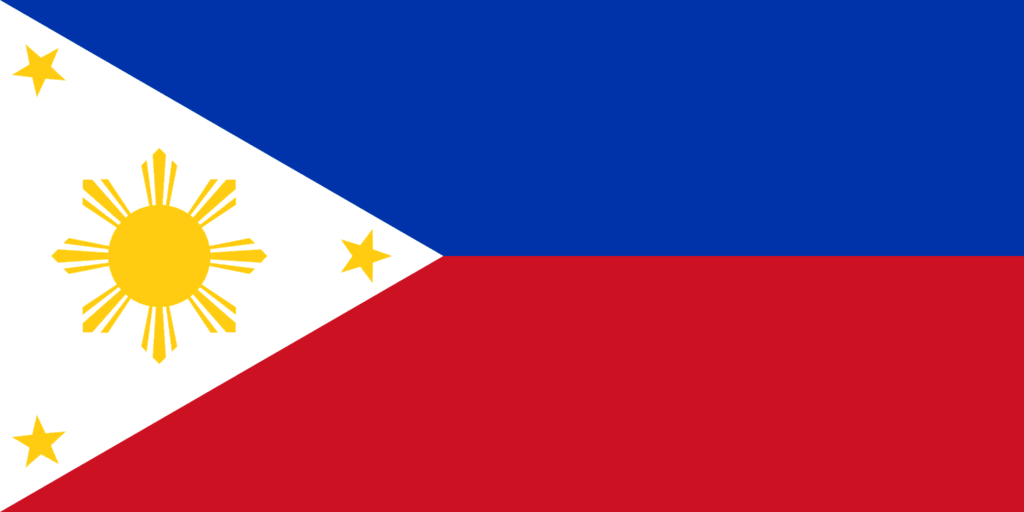
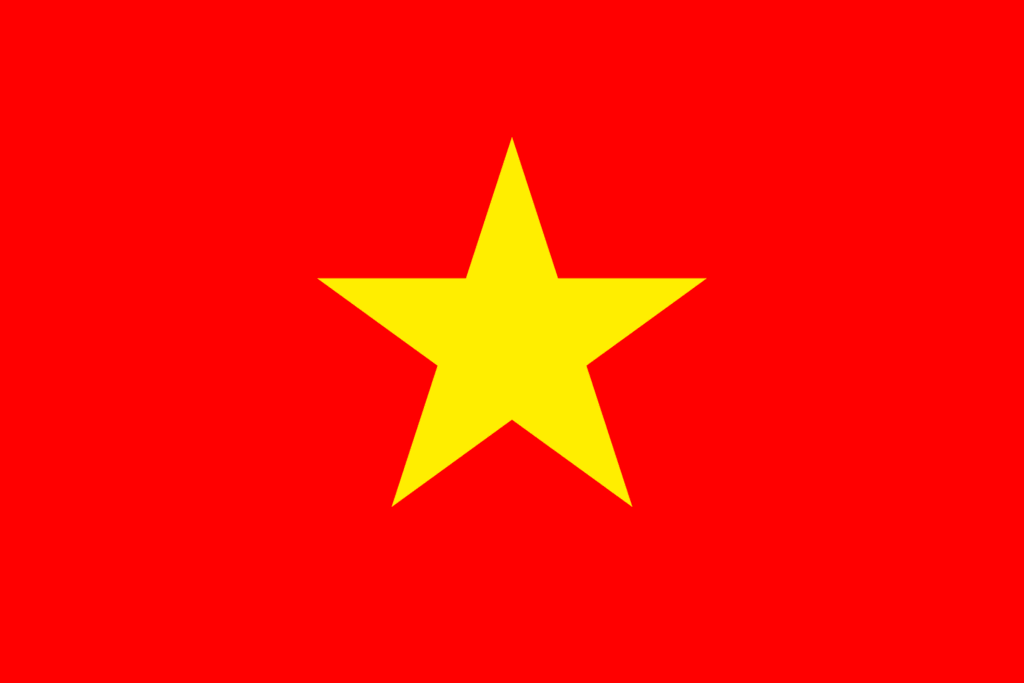
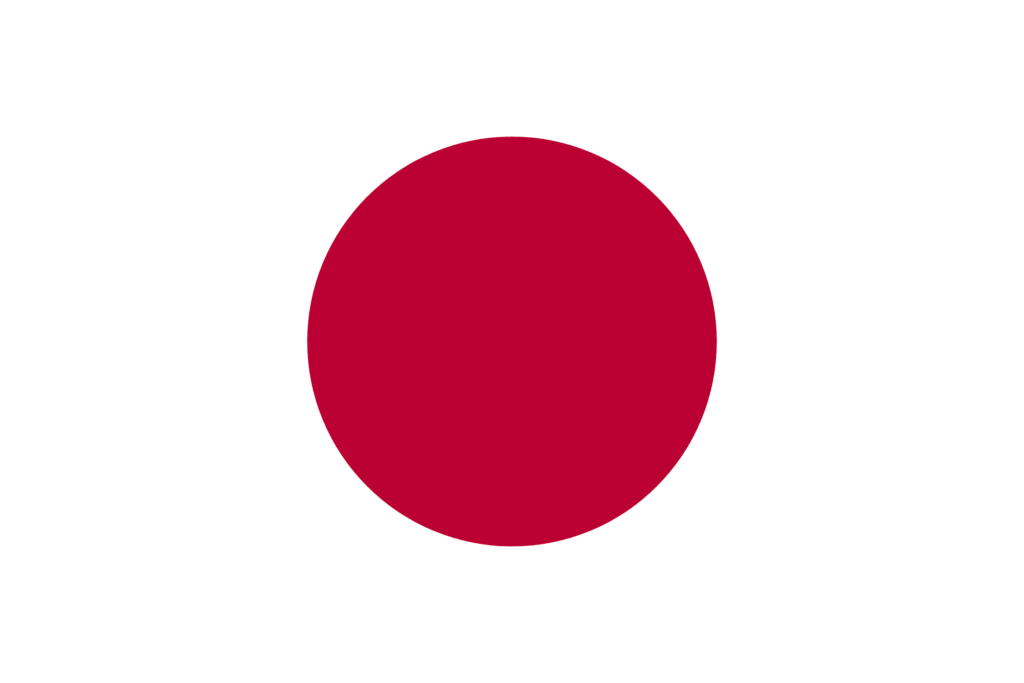
Realted Flags
Flag flying days
| Date | Flag Position | Occasion or Reason |
|---|
| 3 February | Full-mast | Founding of the Communist Party of Vietnam |
| 30 April | Full-mast | Reunification Day |
| 2 September | Full-mast | National Day |
| As decreed | Half-mast | National mourning or remembrance periods |