
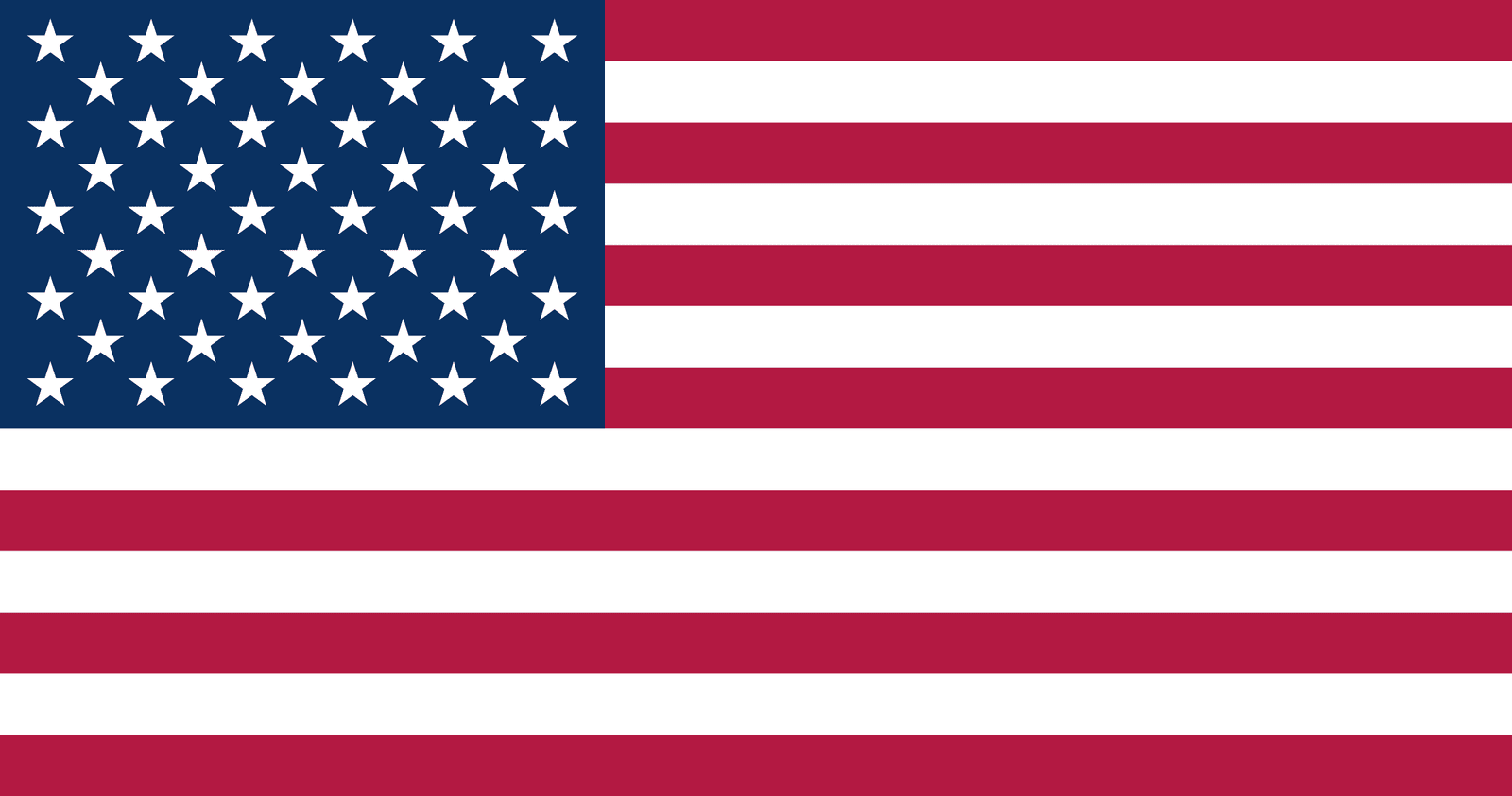
Flag of United States
| Legal Name | United States of America |
|---|---|
| Flag |
|
| Capital City |
Washington, D.C. |
| Total Area | Approximately 9,833,520 km² |
| Land Area | Approximately 9,147,590 km² |
| Water Area | Approximately 685,930 km² |
| Population | Approximately 335 million |
| Major Cities | New York City (8.3M), Los Angeles (3.9M), Chicago (2.7M), Houston (2.3M), Phoenix (1.6M) |
| Currency | United States Dollar (USD) |
| GDP | Approximately USD 27 trillion |
| GDP Per Capita | Approximately USD 80,000 |
About of United States
The United States is a large and diverse country located primarily in North America, extending from the Atlantic Ocean in the east to the Pacific Ocean in the west. It also includes Alaska in the northwest of the continent and the island state of Hawaii in the central Pacific Ocean. This vast geographic spread contributes to the country’s significant climatic, ecological, and cultural diversity.
The United States shares land borders with Canada to the north and Mexico to the south, while its maritime borders connect it to the Caribbean Sea, the Gulf of Mexico, the Atlantic Ocean, and the Pacific Ocean. Washington, D.C. serves as the political capital, while New York City stands as the largest urban center and a global hub of finance, culture, and media.
With a highly diverse population shaped by centuries of immigration, the United States is one of the most multicultural nations in the world. It is fully recognized internationally as a sovereign state and plays a leading role in global political, economic, military, and cultural affairs. Its geopolitical importance is rooted in its economic scale, technological leadership, global alliances, and military reach.
Etymology
The name “America” is derived from Amerigo Vespucci, an Italian explorer whose writings helped establish that the lands of the Western Hemisphere were distinct from Asia. The term “United States of America” reflects the federal nature of the country, emphasizing a union of individual states under a single national government.
Over time, “United States” became the common short name, while “America” evolved into a widely used informal reference. The name symbolizes unity, self-governance, and the political philosophy that underpinned the country’s founding.
History
Prehistoric and Ancient Civilizations
Long before European arrival, the land was inhabited by Indigenous peoples for thousands of years. These societies developed complex cultures, trade networks, agricultural systems, and political structures across the continent.
Colonial Period
From the late 15th century onward, European powers established colonies along the Atlantic coast. British colonies eventually became dominant, developing economies based on agriculture, trade, and early industry.
Independence Movement
Tensions between the colonies and Britain culminated in the American Revolution. The Declaration of Independence was adopted in 1776, and independence was secured after the Revolutionary War.
Nation-Building and Expansion
The late 18th and 19th centuries saw westward expansion, territorial growth, and the establishment of federal institutions. This period also included the Civil War, which preserved the union and ended slavery.
Modern Era
In the 20th century, the United States emerged as a global power following World Wars I and II. The post-war period was marked by economic growth, civil rights reforms, and international leadership. In the 21st century, the country continues to navigate political polarization, technological transformation, and global responsibilities.
Government and Politics
The United States operates as a federal constitutional republic. Its Constitution is the supreme law, establishing a system of checks and balances among three branches of government.
The executive branch is led by the president, who serves as head of state and government. The legislative branch consists of a bicameral Congress made up of the Senate and the House of Representatives. The judicial branch is headed by the Supreme Court and includes a system of federal courts.
Administratively, the country is divided into 50 states, a federal district, and several territories. The United States maintains extensive diplomatic relations and is a member of major international organizations. Its military is one of the most advanced and globally deployed in the world.
Economy
The United States has a highly developed, mixed-market economy and is the world’s largest by nominal GDP. It is driven by innovation, entrepreneurship, and consumer demand.
Major sectors include services, technology, finance, healthcare, manufacturing, and agriculture. The country is a leading producer of energy, agricultural products, and high-value manufactured goods. Natural resources such as oil, natural gas, coal, and minerals contribute significantly to the economy.
Key economic challenges include income inequality, public debt, infrastructure modernization, and global competition. The long-term outlook remains strong due to technological leadership, human capital, and market size.
Demographics
The population of the United States is ethnically and culturally diverse, shaped by immigration from all regions of the world. Major ethnic groups include people of European, African, Asian, Latin American, and Indigenous descent.
English is the de facto national language, though many languages are spoken across the country. Christianity is the largest religion, alongside Judaism, Islam, Buddhism, Hinduism, and a growing number of unaffiliated individuals.
Most Americans live in urban or suburban areas. Population growth has slowed in recent years, influenced by declining birth rates and changing immigration patterns.
Culture and Society
American culture is characterized by individualism, freedom of expression, and cultural pluralism. The country has had a major global influence in music, film, literature, fashion, and digital media.
Cuisine reflects regional diversity and immigrant influences. Social norms emphasize personal liberty, equality under the law, and civic participation. Major public holidays include Independence Day, Thanksgiving, and Memorial Day.
Sports play a significant role in society, with American football, basketball, baseball, and soccer among the most popular.
Education and Healthcare
Education in the United States is decentralized, with primary and secondary education managed at state and local levels. The country hosts many of the world’s leading universities and research institutions, and literacy rates are high.
Healthcare is delivered through a mix of public and private systems. While the country excels in medical research and advanced treatment, access and cost remain ongoing public policy challenges.
Geography and Climate
The United States features diverse physical geography, including mountain ranges, vast plains, deserts, forests, rivers, and extensive coastlines. Major features include the Rocky Mountains, the Great Plains, the Mississippi River, and the Appalachian Mountains.
Climate ranges from Arctic conditions in Alaska to tropical climates in Hawaii and southern Florida. Natural hazards include hurricanes, earthquakes, wildfires, tornadoes, and floods. Environmental issues such as climate change, pollution, and biodiversity loss are major concerns.
Flora and Fauna
The country hosts a wide range of ecosystems and wildlife, from Arctic tundra to tropical rainforests. Native species include bison, bald eagles, bears, wolves, and numerous plant species.
The United States maintains an extensive system of national parks and protected areas aimed at conserving biodiversity and natural heritage.
Map of United States
National symbols reflect the country’s history and ideals. The bald eagle represents strength and freedom, while national monuments commemorate foundational events and leaders. The Great Seal and the national anthem underscore sovereignty and unity.
National Flag (Detailed Section)
The national flag consists of thirteen red and white stripes representing the original colonies and a blue canton with fifty white stars symbolizing the states of the union. Its design has evolved as new states were admitted, with the current version adopted in 1960. The flag is governed by established protocols that emphasize respect and proper display.
Flag flying days
| Date | Flag Position | Occasion or Reason |
|---|
| January 1 | Full-mast | New Year’s Day |
| Third Monday in January | Full-mast | Martin Luther King Jr. Day |
| Last Monday in May | Half-mast until noon, then full | Memorial Day |
| July 4 | Full-mast | Independence Day |
| November 11 | Full-mast | Veterans Day |
| As Proclaimed | Half-mast | National mourning or remembrance |