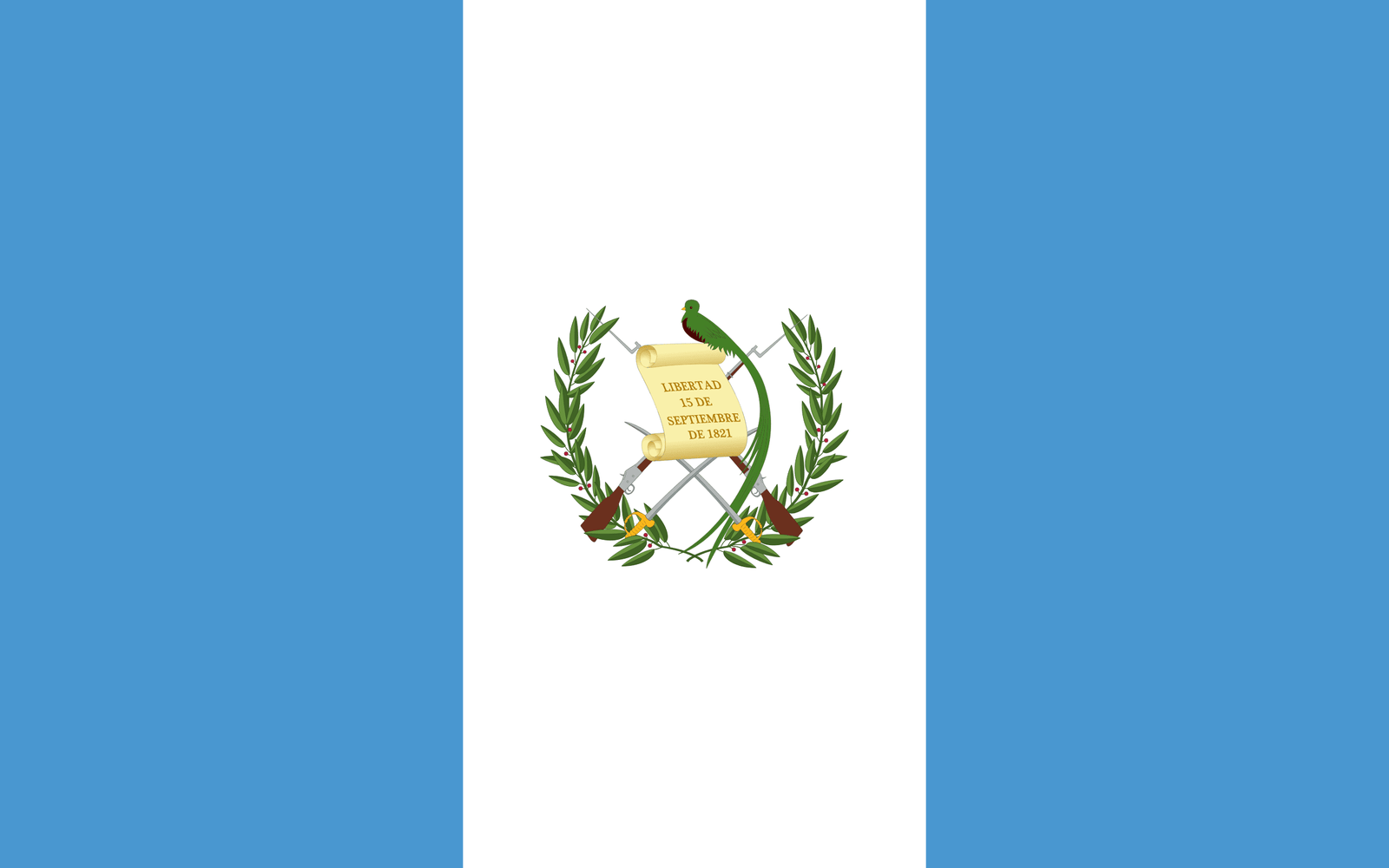
Flag of Guatemala
| Legal Name | Republic of Guatemala |
|---|---|
| Flag |
|
| Capital City |
Guatemala City |
| Total Area | Approximately 108,889 km² |
| Land Area | Approximately 107,159 km² |
| Water Area | Approximately 1,730 km² |
| Population | Approximately 18.3 million |
| Major Cities | Guatemala City (~3.0 million metro), Mixco (~550,000), Villa Nueva (~500,000), Quetzaltenango (~250,000), Escuintla (~200,000) |
| Currency | Guatemalan quetzal (GTQ) |
| GDP | Approximately USD 100–105 billion |
| GDP Per Capita | Approximately USD 5,400 (nominal) |
About of Guatemala
Guatemala is a Central American nation located at the southern end of North America, forming a geographical and cultural bridge between North and South America. It is known for its dramatic landscapes, ancient civilizations, and deep-rooted indigenous heritage.
The country is bordered by Mexico to the north and west, Belize to the northeast, Honduras and El Salvador to the southeast, and is flanked by two coastlines: the Pacific Ocean to the south and the Caribbean Sea to the northeast. Guatemala City, the capital and largest urban center, is the political, economic, and cultural heart of the nation.
Guatemala has one of the largest populations in Central America and is notable for its high proportion of indigenous peoples, many of whom maintain traditional languages and customs. Internationally, Guatemala is recognized as a sovereign republic and plays an influential role in regional Central American affairs.
Its strategic importance stems from its geographic position between major oceans, its growing economy, and its role as a key transit and trade hub within Mesoamerica.
Etymology
The name “Guatemala” is derived from the Nahuatl word Quauhtlemallan, which is commonly interpreted as “place of many trees” or “land of forests.” The name reflects the region’s lush vegetation and dense forests encountered by early Spanish explorers.
Over time, the Spanish adapted the Nahuatl term into “Guatemala,” which became the official name during the colonial period and was retained after independence as a symbol of geographic identity.
History
Guatemala’s history begins with some of the earliest known human settlements in Mesoamerica. The region became the heartland of the ancient Maya civilization, which flourished for thousands of years and produced advanced achievements in astronomy, mathematics, architecture, and writing. Major Maya cities such as Tikal were among the most sophisticated urban centers of the ancient world.
During the Postclassic period, Maya political power fragmented into smaller kingdoms before the arrival of Spanish conquistadors in the 16th century. Spain conquered the region and incorporated it into the Viceroyalty of New Spain, imposing colonial administration, Christianity, and a plantation-based economy.
Guatemala declared independence from Spain in 1821 and briefly became part of the Mexican Empire before joining the United Provinces of Central America. After the federation dissolved, Guatemala emerged as an independent republic.
The 20th century was marked by political instability, military rule, and a prolonged civil war that lasted from 1960 to 1996. The conflict had a profound impact on indigenous communities. Since the peace accords, Guatemala has worked to strengthen democratic institutions, although political polarization and social inequality remain significant challenges.
Government and Politics
Guatemala operates as a constitutional democratic republic under a presidential system. The Constitution establishes the separation of powers and guarantees civil liberties.
The executive branch is led by a President who serves as both head of state and head of government. Legislative authority resides in a unicameral Congress of the Republic, while judicial power is exercised by an independent court system, headed by the Constitutional Court and Supreme Court of Justice.
Administratively, Guatemala is divided into 22 departments, each governed by locally appointed authorities. The country maintains diplomatic relations worldwide and is a member of the United Nations, the Organization of American States, the Central American Integration System, and other international bodies.
The Guatemalan military focuses on national defense, border security, and disaster response, with a reduced political role compared to earlier decades.
Economy
Guatemala has the largest economy in Central America and is classified as a developing, lower-middle-income economy. It benefits from macroeconomic stability and a diversified economic base.
Key industries include agriculture, manufacturing, mining, construction, and services. Agriculture remains vital, producing coffee, sugar, bananas, cardamom, and vegetables. Manufacturing includes food processing, textiles, and light industry, while services dominate GDP, particularly trade and finance.
Natural resources include fertile land, minerals such as nickel and gold, and significant hydroelectric potential. Guatemala’s main trading partners include the United States, Mexico, other Central American nations, and countries in Europe and Asia.
Economic challenges include income inequality, poverty, informality, and limited public infrastructure. Future growth depends on investment in education, infrastructure, institutional transparency, and inclusive development.
Demographics
Guatemala’s population is ethnically diverse, with a large indigenous Maya population alongside Mestizo (Ladino), Xinca, and Garífuna communities. This diversity strongly shapes national culture and identity.
Spanish is the official language, while more than 20 indigenous languages are spoken nationwide. Christianity is the dominant religion, with Roman Catholicism and Protestant denominations being most prevalent, alongside traditional spiritual practices.
Urbanization is increasing, though a significant portion of the population still lives in rural areas. Guatemala has a young population and relatively high population growth rates.
Culture and Society
Guatemalan culture is a rich blend of Maya traditions and Spanish colonial influence. Traditional clothing, festivals, and crafts remain central to daily life, particularly in indigenous communities.
The country is renowned for its textiles, music, dance, and cuisine. Staple foods include maize, beans, rice, and chili peppers, with dishes such as tamales and pepián holding national significance.
Social customs emphasize family, community, and respect for tradition. National holidays include Independence Day and religious observances. Football is the most popular sport, with basketball and traditional games also widely played.
Education and Healthcare
Guatemala’s education system includes primary, secondary, and higher education institutions. Literacy rates have improved but remain uneven, especially in rural and indigenous areas.
Healthcare is delivered through public and private systems. While progress has been made in vaccination and maternal care, challenges persist related to nutrition, access to clean water, and healthcare coverage in remote regions.
Geography and Climate
Guatemala’s geography is highly varied, featuring volcanic mountain ranges, fertile valleys, tropical rainforests, and coastal plains. The country has over 30 volcanoes, several of which are active.
The climate ranges from tropical along the coasts and lowlands to temperate in the highlands. Natural hazards include earthquakes, volcanic eruptions, hurricanes, and landslides.
Environmental concerns include deforestation, soil erosion, and vulnerability to climate change.
Flora and Fauna
Guatemala is one of the most biodiverse countries in Central America. Its ecosystems include rainforests, cloud forests, wetlands, and coral reefs.
Native plant species support traditional medicine and agriculture, while wildlife includes jaguars, howler monkeys, tapirs, and hundreds of bird species. National parks and protected areas play a key role in conservation efforts.
Map of Guatemala
Guatemala’s national symbols reflect its history, independence, and natural beauty. These include the national flag, coat of arms, national anthem, and emblematic wildlife and plants.
National Flag (Detailed Section)
The flag of Guatemala features two vertical light blue bands on the sides and a white central stripe. The national coat of arms is displayed in the center of the white band.
The design dates back to the 19th century and symbolizes the oceans bordering Central America, peace, and purity. The coat of arms includes a quetzal bird, scroll, crossed rifles, and laurel wreaths, representing liberty, defense, and victory.
The flag is flown on government buildings, schools, and during national celebrations according to official protocol
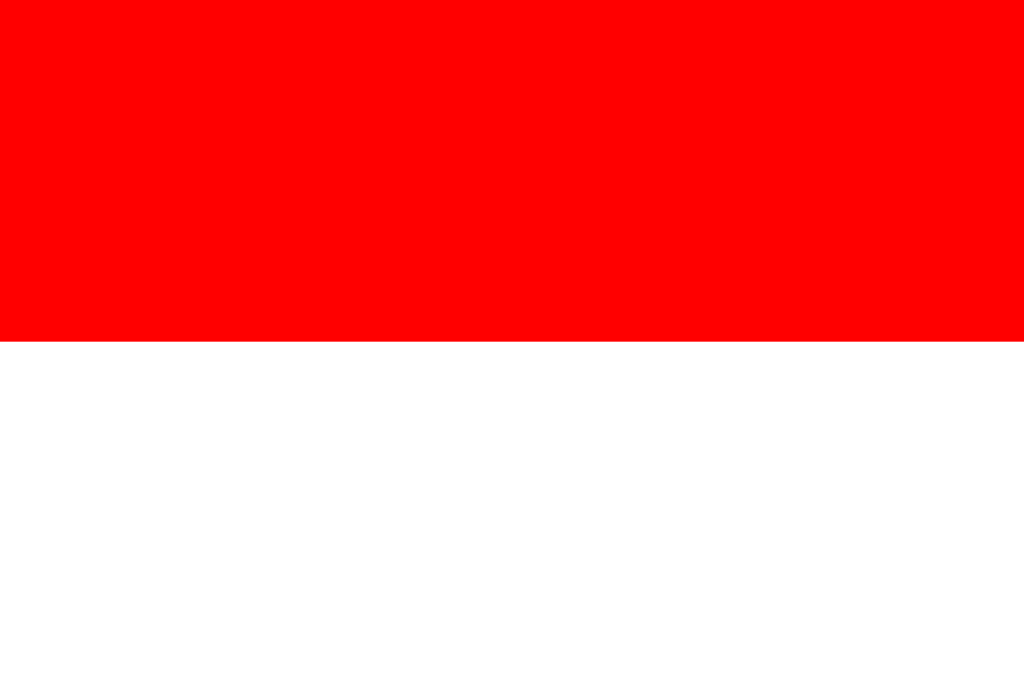
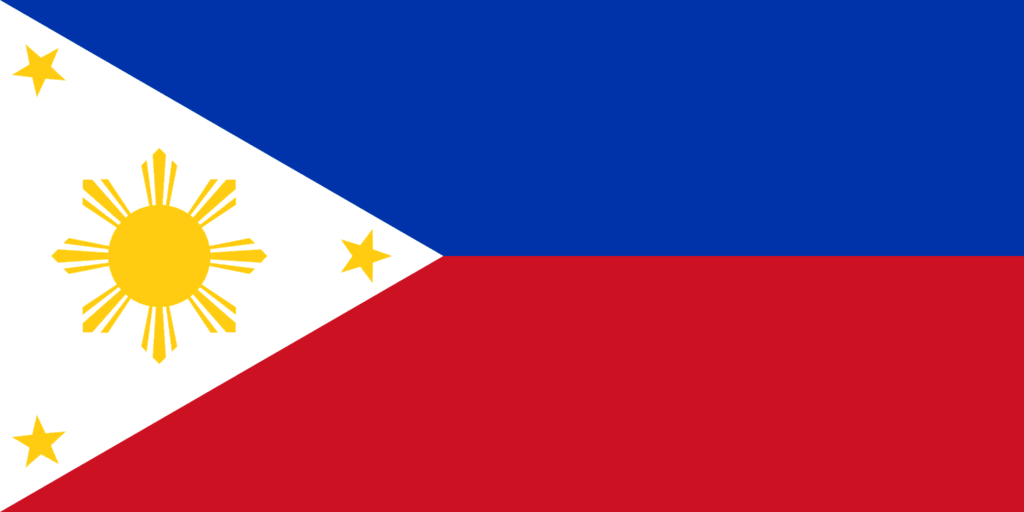
Realted Flags
Flag flying days
| Date | Flag Position | Occasion or Reason |
|---|
| January 1 | Full-mast | New Year’s Day |
| June 30 | Full-mast | Armed Forces Day |
| September 15 | Full-mast | Independence Day |
| October 20 | Full-mast | Revolution Day |
| Official Mourning Periods | Half-mast | National days of mourning |