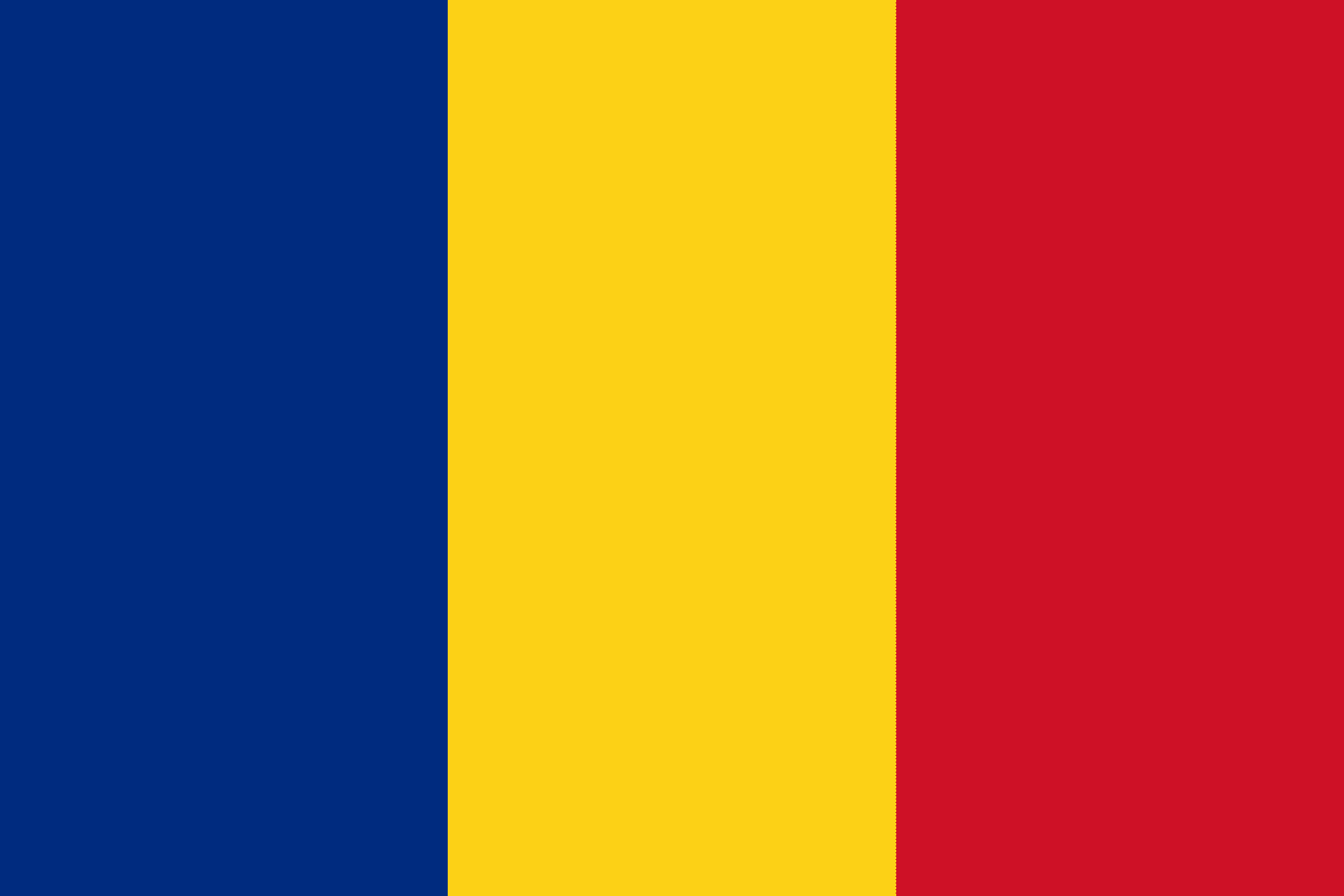
Flag of Romania
| Legal Name | Romania |
|---|---|
| Flag |
|
| Capital City |
Bucharest |
| Total Area | 238,397 |
| Land Area | ~230,080 |
| Water Area | ~8,317 |
| Population | Approximately 19 million |
| Major Cities | Bucharest (~1.8 million), Cluj-Napoca (~330,000), Iași (~290,000), Timișoara (~300,000), Constanța (~260,000) |
| Currency | Romanian leu (RON) |
| GDP | ~USD 350 billion |
| GDP Per Capita | ~USD 18,000 (nominal); ~USD 42,000 (PPP) |
About of Romania
Romania is a sovereign state in Southeastern Europe, located at the crossroads of Central, Eastern, and Balkan Europe. It occupies a strategic position along the lower Danube River and the western coast of the Black Sea, giving it both inland and maritime significance. The country’s geography is defined by the Carpathian Mountains, fertile plains, and the Danube Delta—one of Europe’s most important natural ecosystems.
Romania shares land borders with Hungary, Serbia, Bulgaria, Ukraine, and Moldova, while its maritime border lies along the Black Sea. Bucharest, the capital and largest city, serves as the political, economic, and cultural center of the nation, while cities such as Cluj-Napoca, Timișoara, Iași, and Constanța act as major regional hubs.
With a population of around 19 million, Romania is a unitary nation-state and a full member of the European Union and NATO. Its geopolitical importance stems from its role as a gateway between Western Europe, Eastern Europe, and the Black Sea region, as well as its contribution to regional security and energy transit.
Etymology
The name Romania is derived from the Latin word Romanus, meaning “Roman” or “citizen of Rome.” This reflects the country’s historical roots in the Roman province of Dacia, conquered by the Roman Empire in the 2nd century CE.
Over centuries, the local population retained a Latin-based language and identity, distinguishing Romania from its Slavic and Balkan neighbors. The name evolved through medieval forms and was officially adopted in the 19th century following the unification of the Romanian principalities.
History
Prehistoric and Ancient Civilizations
Romania’s territory has been inhabited since prehistoric times, with archaeological evidence of early human settlement. In antiquity, the region was home to the Dacians, an Indo-European people known for their fortified settlements and resistance to Roman expansion.
Roman and Early Medieval Periods
In 106 CE, the Roman Empire conquered Dacia, leaving a lasting legacy in language, culture, and infrastructure. After Roman withdrawal, the region experienced waves of migration, including Goths, Slavs, and other peoples, shaping medieval Romanian identity.
Medieval Principalities
By the Middle Ages, the Romanian lands were organized into Wallachia, Moldavia, and Transylvania. These principalities maintained varying degrees of autonomy while navigating the influence of the Ottoman, Hungarian, and Habsburg empires.
Modern State Formation
In 1859, Wallachia and Moldavia united, forming the foundation of modern Romania. Independence was achieved in 1877, followed by the establishment of the Kingdom of Romania. After World War I, Romania expanded significantly through territorial unification.
Communist Era and Post-1989 Developments
Following World War II, Romania became a communist state. The regime collapsed in 1989, leading to democratic reforms and a market economy. Since then, Romania has joined NATO (2004) and the European Union (2007), solidifying its Western alignment.
Government and Politics
Romania is a semi-presidential republic governed under a democratic framework.
The President serves as head of state, while executive power is shared with the Prime Minister and Council of Ministers. The Parliament is bicameral, consisting of the Senate and the Chamber of Deputies. Judicial authority is exercised by an independent court system led by the High Court of Cassation and Justice.
Administratively, Romania is divided into 41 counties and the Municipality of Bucharest. The country maintains active foreign relations and is a member of major international organizations, contributing to regional stability and defense through NATO.
Economy
Romania has a developing, upper-middle-income economy with strong growth over the past decade. It features a diverse economic base encompassing manufacturing, services, agriculture, energy, and information technology.
Key industries include automotive manufacturing, electronics, IT services, agriculture, and construction. Romania is rich in natural resources, including oil, natural gas, coal, timber, and fertile agricultural land.
Trade is heavily oriented toward European Union partners, with exports ranging from machinery and vehicles to agricultural products. Challenges include regional disparities, infrastructure gaps, and demographic decline, while future prospects focus on digitalization, renewable energy, and innovation.
Demographics
Romania’s population is predominantly ethnic Romanian, with notable minorities including Hungarians, Roma, Ukrainians, and Germans. The official language is Romanian, a Romance language closely related to Italian and Spanish.
The majority religion is Eastern Orthodox Christianity, alongside Roman Catholicism, Protestant denominations, and other faiths. The population is moderately urbanized, though rural communities remain culturally significant. Long-term trends show population decline due to low birth rates and emigration.
Culture and Society
Romanian culture blends Latin heritage with Balkan and Central European influences. Folk traditions, music, and dance remain central to national identity, alongside a strong literary tradition represented by poets, novelists, and philosophers.
Cuisine emphasizes hearty, traditional dishes such as sarmale, mămăligă, and ciorbă. Social customs value hospitality, family ties, and respect for tradition. National holidays include Great Union Day (December 1) and Orthodox religious celebrations. Popular sports include football, gymnastics, handball, and tennis.
Education and Healthcare
Romania provides free and compulsory education through secondary school, with a well-established university system. Literacy rates exceed 98%, and Romanian universities are recognized across Europe.
Healthcare is based on a public insurance system, supplemented by private providers. Key public health challenges include regional access disparities and workforce migration, while improvements continue through modernization and EU-supported programs.
Geography and Climate
Romania’s geography is highly diverse, featuring the Carpathian Mountains, rolling hills, fertile plains, and the Danube Delta, a UNESCO-recognized wetland. The country has a temperate-continental climate, with four distinct seasons.
Natural hazards include earthquakes, floods, and landslides, particularly in mountainous and riverine regions. Environmental concerns focus on deforestation, pollution, and habitat preservation.
Flora and Fauna
Romania hosts some of Europe’s richest biodiversity, including old-growth forests and extensive wetlands. Native plant species include beech, oak, and fir trees.
Wildlife features brown bears, wolves, lynx, deer, and rare bird species, especially in the Danube Delta. Numerous national parks and protected areas safeguard ecosystems and endangered species.
Map of Romania
National Flag: Blue-yellow-red vertical tricolor
Coat of Arms: Golden eagle holding a cross
National Anthem: “Deșteaptă-te, române!”
National Animal: Golden eagle
National Monument: Palace of the Parliament
National Flag (Detailed Section)
Romania’s flag consists of three vertical stripes of blue, yellow, and red. Its origins trace back to revolutionary movements of the 19th century and earlier heraldic traditions.
The colors symbolize freedom (blue), justice and prosperity (yellow), and courage and sacrifice (red). The current design was reaffirmed after the fall of communism in 1989 and is governed by national flag laws outlining its official use.
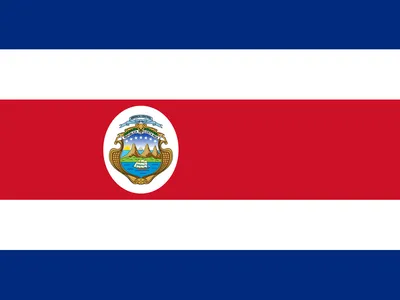
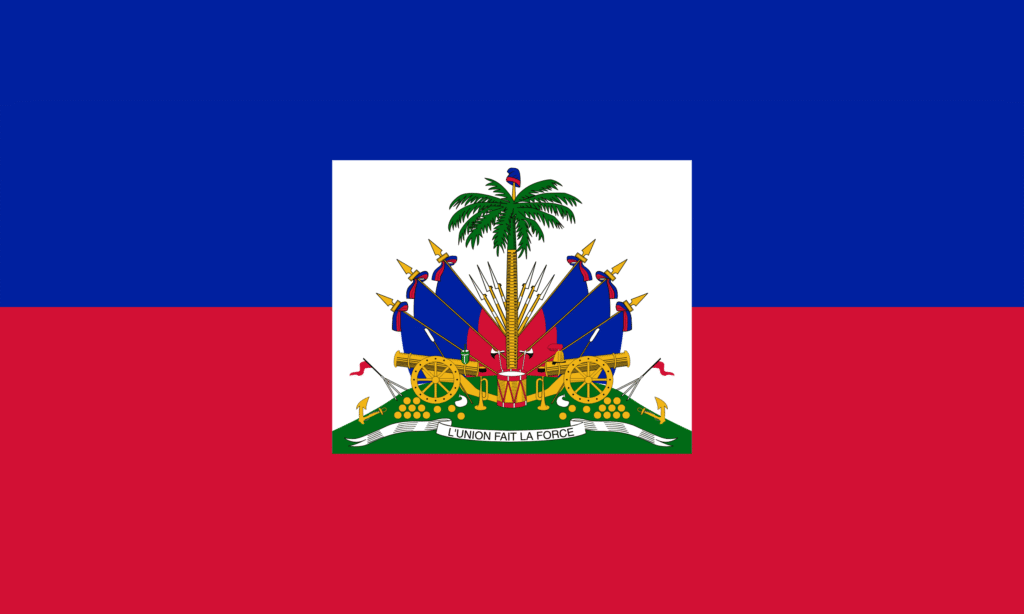
Realted Flags
Flag flying days
| Date | Flag Position | Occasion / Reason |
|---|
| December 1 | Full-mast | Great Union Day (National Day) |
| June 26 | Full-mast | National Flag Day |
| January 24 | Full-mast | Unification of the Romanian Principalities |
| National Mourning Days | Half-mast | State-declared mourning |