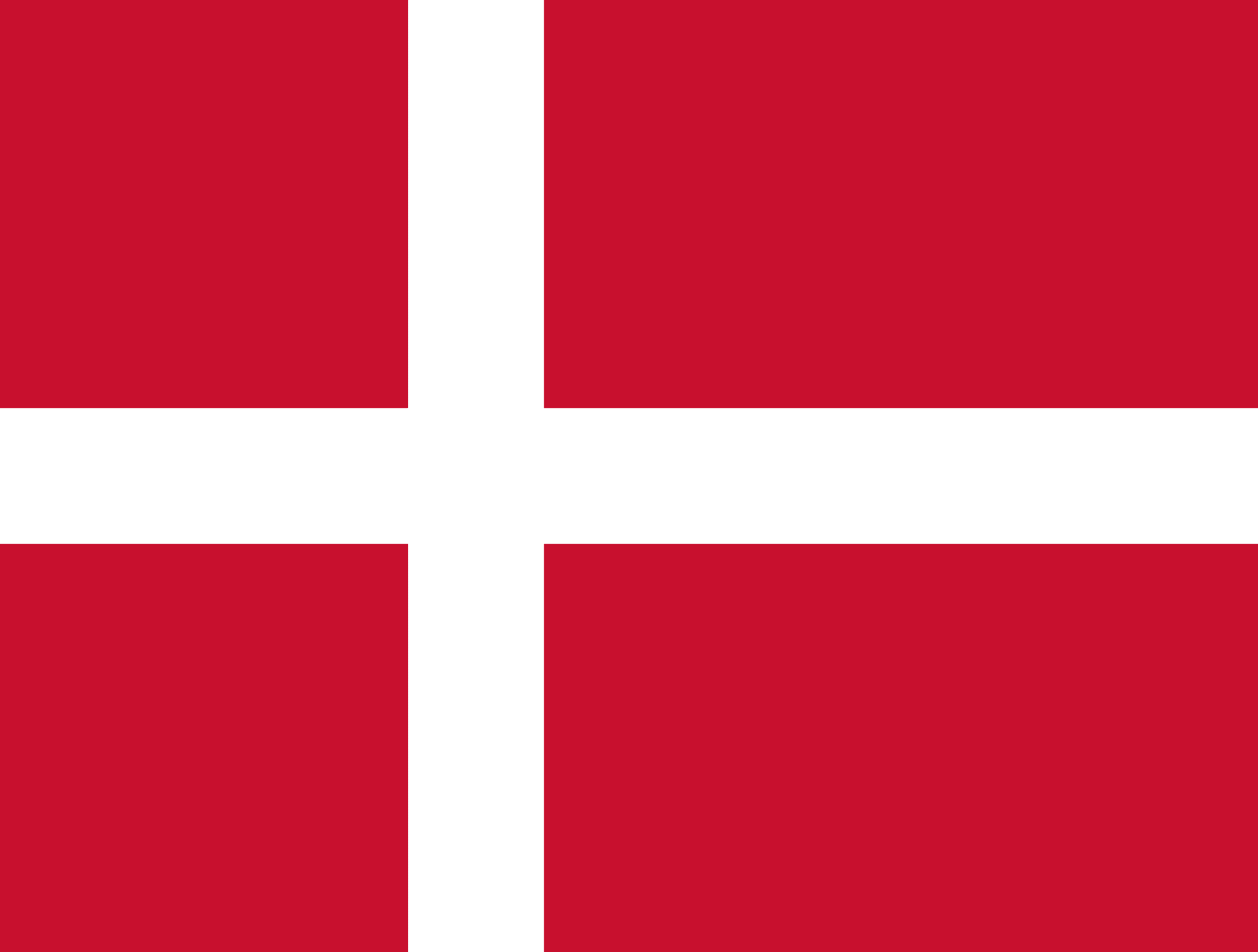
Flag of Denmark
| Legal Name | Kingdom of Denmark |
|---|---|
| Flag |
|
| Capital City |
Copenhagen |
| Total Area | ~42,933 |
| Land Area | ~42,394 |
| Water Area | ~539 |
| Population | ~5.9 million |
| Major Cities | Copenhagen (~1.3 million metro), Aarhus (~350,000), Odense (~210,000), Aalborg (~140,000), Esbjerg (~115,000) |
| Currency | Danish Krone (DKK) |
| GDP | ~USD 410 billion |
| GDP Per Capita | ~USD 69,000 (nominal) |
About of Denmark
Denmark is a Nordic country located in Northern Europe, forming the southernmost part of Scandinavia. It consists of the Jutland Peninsula and an archipelago of more than 400 islands, of which around 70 are inhabited. The country occupies a strategic position between mainland Europe and the Nordic region, controlling access between the North Sea and the Baltic Sea.
Denmark shares a single land border with Germany to the south and has maritime boundaries with Sweden, Norway, Poland, and the United Kingdom. Copenhagen, the capital and largest city, is a major cultural, political, and economic center, situated on the islands of Zealand and Amager.
The population of Denmark is relatively small but highly urbanized, with a strong emphasis on social welfare, equality, and quality of life. Denmark is a fully sovereign state and an internationally recognized constitutional monarchy. Its geopolitical importance lies in its strategic waterways, advanced economy, strong democratic institutions, and active role in European and transatlantic affairs.
Etymology
The name “Denmark” derives from the Old Norse term Danmǫrk, meaning “the borderland of the Danes.” The Danes were a North Germanic tribe that inhabited the region during the early medieval period. The word mark refers to a border or frontier area, reflecting Denmark’s position at the edge of continental Europe.
Over time, the name evolved through Latin and Old Danish forms before stabilizing as “Denmark” in English. The name has remained closely tied to the Danish people and their historical identity.
History
Human settlement in Denmark dates back to the Stone Age, with evidence of early farming communities during the Neolithic period. The Bronze Age brought advances in metalwork and trade, while the Iron Age laid the foundations for organized societies.
During the Viking Age (8th–11th centuries), Denmark emerged as a powerful kingdom. Danish Vikings explored, traded, and settled across Europe, including parts of England, Ireland, and France. The medieval period saw the consolidation of the Danish monarchy and the spread of Christianity.
Denmark became a major regional power during the Kalmar Union, which united Denmark, Norway, and Sweden under a single crown. Following the union’s dissolution, Denmark remained influential but gradually lost territory through wars with Sweden and other powers.
In the 19th century, Denmark transitioned toward constitutional democracy, adopting its first constitution in 1849. The country remained neutral during World War I but was occupied by Nazi Germany during World War II. Post-war Denmark became a founding member of NATO and later joined the European Economic Community, now the European Union.
Modern Denmark is known for political stability, strong democratic governance, and a high standard of living.
Government and Politics
Denmark is a constitutional monarchy with a parliamentary system. The monarch serves as head of state with largely ceremonial duties, while executive power rests with the government, led by the Prime Minister.
The legislative branch is the unicameral Folketing, whose members are elected through proportional representation. The judiciary is independent, with the Supreme Court serving as the highest legal authority.
Denmark is administratively divided into five regions and 98 municipalities. It maintains active foreign relations and is a member of the European Union, NATO, United Nations, Nordic Council, and other international organizations. The Danish Armed Forces are modern, professional, and primarily focused on defense, peacekeeping, and international cooperation.
Economy
Denmark has a highly developed, high-income economy characterized by a strong welfare state and a flexible labor market. It is often described as a mixed economy, combining free-market principles with extensive social protections.
Key economic sectors include pharmaceuticals, renewable energy, maritime shipping, food processing, information technology, and design. Agriculture remains efficient and export-oriented, particularly in dairy and meat products.
Denmark has limited natural resources but benefits from North Sea oil and natural gas, as well as significant wind energy production. Major trading partners include Germany, Sweden, the United States, and other EU countries. Economic challenges include an aging population and global economic volatility, but long-term prospects remain strong due to innovation and sustainability initiatives.
Demographics
Denmark’s population is ethnically diverse, though the majority identify as ethnic Danes. Immigration has contributed to growing minority communities from Europe, the Middle East, Africa, and Asia.
Danish is the official language, while English is widely spoken. The Evangelical Lutheran Church is the largest religious denomination, though society is largely secular. Most Danes live in urban areas, particularly around Copenhagen. Population growth is modest, driven mainly by immigration.
Culture and Society
Danish culture emphasizes equality, trust, and social cohesion. The concept of hygge, which reflects comfort and well-being, is central to everyday life. Denmark has a rich literary tradition, with figures such as Hans Christian Andersen, and a strong reputation in modern design, architecture, and cinema.
Cuisine includes traditional dishes such as smørrebrød, rye bread, and seafood, alongside modern Nordic gastronomy. Social norms stress punctuality, modesty, and respect for personal space.
Public holidays include Constitution Day, Christmas, and Easter. Football, handball, and cycling are among the most popular sports.
Education and Healthcare
Denmark offers a comprehensive public education system, free at all levels, including higher education. Literacy rates are near universal, and Danish universities are internationally recognized.
Healthcare is publicly funded and universally accessible, providing high-quality medical services. Public health outcomes are strong, though challenges include lifestyle-related diseases and an aging population.
Geography and Climate
Denmark’s terrain is generally flat, with rolling plains, low hills, and extensive coastlines. The country has no mountains and few rivers, but numerous beaches and wetlands.
The climate is temperate maritime, with mild winters, cool summers, and frequent winds. Natural hazards are limited but include coastal flooding and storms. Environmental priorities focus on renewable energy, biodiversity protection, and climate resilience.
Flora and Fauna
Denmark’s natural environment includes deciduous forests, grasslands, and coastal ecosystems. Native wildlife includes deer, foxes, hares, and numerous bird species.
Several national parks protect landscapes and biodiversity, including Wadden Sea National Park, a UNESCO World Heritage site. Conservation efforts emphasize sustainable land use and marine protection.
Map of Denmark
Denmark’s national symbols include the Dannebrog flag, the royal coat of arms, and the national anthem “Der er et yndigt land.” There is no officially designated national animal, though the mute swan is commonly associated with the country.
National Flag (Detailed Section)
The Danish flag, known as the Dannebrog, features a white Nordic cross on a red background. According to legend, it fell from the sky during a 13th-century battle, making it one of the oldest continuously used national flags in the world.
The red symbolizes bravery, while the white cross reflects Christianity. The flag is widely used by citizens, businesses, and institutions, and holds a unique place in everyday Danish culture.
Flag flying days
| Date | Flag Position | Occasion or Reason |
|---|---|---|
| January 1 | Full-mast | New Year’s Day |
| April 16 | Full-mast | Queen’s Birthday |
| June 5 | Full-mast | Constitution Day |
| December 25 | Full-mast | Christmas Day |
| National Mourning Days | Half-mast | Officially declared periods of mourning |