Flag of Montenegro
| Legal Name | Montenegro |
|---|---|
| Flag |
|
| Capital City |
Podgorica |
| Total Area | 13,812 km² |
| Land Area | Approximately 13,452 km² |
| Water Area | Approximately 360 km² |
| Population | Approximately 620,000 |
| Major Cities | Podgorica (190,000), Nikšić (56,000), Herceg Novi (33,000), Pljevlja (27,000), Bar (18,000) |
| Currency | Euro (EUR) |
| GDP | Approximately USD 8–9 billion |
| GDP Per Capita | Approximately USD 14,000 (nominal) |
About of Montenegro
Montenegro is a sovereign state in Southeastern Europe, located on the Balkan Peninsula along the Adriatic Sea. Though relatively small in size and population, the country occupies a strategically significant position between Central Europe and the Mediterranean basin. Its dramatic coastline, rugged mountains, and historic towns make it one of the most geographically diverse nations in Europe.
Montenegro shares land borders with Croatia to the west, Bosnia and Herzegovina to the northwest, Serbia to the northeast, Kosovo to the east, and Albania to the southeast. It also has a maritime border across the Adriatic Sea with Italy. Podgorica serves as the capital and largest city, functioning as the political, economic, and administrative center. Other important urban centers include Nikšić, Herceg Novi, and Bar.
With a population of roughly 620,000, Montenegro is one of Europe’s smallest countries by population. It is internationally recognized as an independent state and became a member of NATO in 2017. It is also a candidate for European Union membership. Its geopolitical importance lies in its Adriatic coastline, energy corridors, and role in Balkan regional stability.
Etymology
The name “Montenegro” originates from the Venetian term Monte Negro, meaning “Black Mountain.” The name refers to the dark, forested mountain ranges that dominate much of the country’s landscape.
In the Montenegrin language, the country is called Crna Gora, which also means “Black Mountain.” The name reflects the dense forests and rugged terrain observed by medieval traders and travelers. Over time, the Venetian designation became widely used in Western Europe, while the Slavic name remained standard domestically.
History
Prehistoric and Ancient Civilizations
The territory of modern Montenegro has been inhabited since prehistoric times. Ancient Illyrian tribes settled the region, followed by Roman conquest in the 2nd century BCE. The Romans integrated the area into the province of Dalmatia, developing roads and urban centers.
Classical and Medieval Periods
After the fall of the Western Roman Empire, the region became part of the Byzantine Empire. Slavic tribes settled the Balkans during the 6th and 7th centuries, forming early medieval principalities such as Duklja (Doclea), which later became known as Zeta.
Kingdoms and Dynasties
During the Middle Ages, Montenegro maintained varying degrees of independence under local rulers, including the Petrović-Njegoš dynasty, which governed from the late 17th century. The region resisted Ottoman expansion more successfully than many neighboring Balkan territories, maintaining a distinct identity.
Ottoman and Venetian Influence
Although parts of Montenegro fell under Ottoman control, the mountainous interior retained autonomy. Coastal areas were influenced by Venice, which shaped architecture and trade.
19th and Early 20th Century
Montenegro was internationally recognized as an independent kingdom at the Congress of Berlin in 1878. It later united with Serbia after World War I and became part of the Kingdom of Serbs, Croats, and Slovenes (later Yugoslavia).
Yugoslav Era
Throughout the 20th century, Montenegro was one of the six republics of socialist Yugoslavia. Following Yugoslavia’s dissolution in the 1990s, Montenegro remained in a federation with Serbia.
Independence and Modern Developments
In 2006, Montenegro declared independence following a referendum. Since then, it has pursued integration with Euro-Atlantic institutions, joined NATO in 2017, and advanced EU accession negotiations. Political life has evolved toward multi-party democracy, though governance reforms and anti-corruption measures remain ongoing priorities.
Government and Politics
Montenegro is a parliamentary republic governed under the Constitution adopted in 2007. The president serves as head of state, while the prime minister heads the government.
The executive branch consists of the government led by the prime minister. Legislative authority is vested in a unicameral parliament known as the Assembly of Montenegro. The judiciary operates independently and includes constitutional and supreme courts.
Administratively, Montenegro is divided into municipalities. The country maintains active diplomatic relations worldwide and is a member of the United Nations, NATO, the Council of Europe, and other international organizations. Its defense forces are professional and relatively small, focused on territorial security and NATO commitments.
Economy
Montenegro is classified as an upper-middle-income developing economy. It transitioned from a socialist system to a market-oriented economy in the early 2000s.
Tourism is the leading sector, particularly along the Adriatic coast and in historic towns such as Kotor and Budva. Other key sectors include energy production, aluminum processing, agriculture, and services. Natural resources include bauxite, hydropower potential, and forest products.
The country uses the euro unilaterally, though it is not part of the Eurozone. Major trade partners include European Union countries and neighboring Balkan states. Economic challenges include high public debt, reliance on tourism, and the need for structural reforms. Long-term prospects are closely linked to EU accession and sustainable tourism development.
Demographics
Montenegro’s population is ethnically diverse. Major groups include Montenegrins, Serbs, Bosniaks, Albanians, and Croats. This diversity reflects centuries of cultural interaction in the Balkans.
Montenegrin is the official language, though Serbian, Bosnian, Albanian, and Croatian are also widely spoken. The dominant religion is Eastern Orthodox Christianity, with significant Muslim and Catholic minorities.
The population is primarily urban, with Podgorica serving as the main population center. Montenegro faces demographic challenges, including low birth rates and outward migration.
Culture and Society
Montenegrin culture reflects a blend of Slavic, Mediterranean, and Balkan influences. Traditional values emphasize family, honor, and hospitality.
Cultural heritage includes epic poetry, traditional music, and distinctive mountain architecture. Coastal towns display Venetian influences in design and cuisine. National dishes feature seafood, grilled meats, and dairy products.
Major holidays include Independence Day (May 21) and Statehood Day (July 13). Sports such as football, basketball, and water polo are popular, and Montenegro has achieved notable success in international water polo competitions.
Education and Healthcare
Montenegro provides free primary and secondary education. The University of Montenegro is the largest higher education institution in the country. Literacy rates are high, reflecting strong educational traditions.
Healthcare services are provided through a public system supplemented by private providers. The country has made progress in public health indicators, though modernization and funding improvements remain ongoing priorities.
Geography and Climate
Montenegro’s terrain is dominated by rugged mountains, karst landscapes, and a narrow Adriatic coastline. The Dinaric Alps cover much of the interior, while Lake Skadar—shared with Albania—is one of the largest lakes in the Balkans.
The coastal region experiences a Mediterranean climate with hot, dry summers and mild winters. Inland and mountainous areas have a continental climate with colder winters and significant snowfall.
Natural hazards include earthquakes and seasonal flooding. Environmental concerns involve coastal development and forest management.
Flora and Fauna
Montenegro hosts diverse ecosystems due to its varied terrain. Forests cover a significant portion of the country, featuring beech, pine, and oak species.
Wildlife includes bears, wolves, chamois, and numerous bird species. Protected areas such as Durmitor National Park and Biogradska Gora preserve biodiversity and promote eco-tourism.
Map of Montenegro
Montenegro’s national symbols emphasize sovereignty and historical continuity. The coat of arms features a golden double-headed eagle with a shield bearing a lion, symbolizing strength and heritage.
The national anthem is “Oj, svijetla majska zoro.” The eagle serves as a central emblem of state authority and continuity with historical dynasties.
National Flag (Detailed Section)
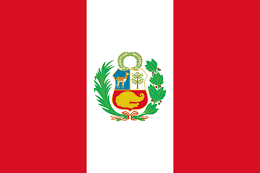
Montenegro’s flag consists of a red field with a golden border. At its center is the golden double-headed eagle from the national coat of arms, holding a scepter and orb, with a shield depicting a golden lion on a blue background.
The design was adopted in 2004, prior to independence, and retained in 2006. The red symbolizes bravery and the nation’s historical struggles. The gold represents sovereignty and royal heritage. The double-headed eagle traces its origins to Byzantine and medieval Balkan symbolism, reflecting both Eastern and Western cultural influences.
The flag is displayed on government buildings, during official ceremonies, and on national holidays. Proper protocol dictates respectful handling and prominent placement during state events.
Flag flying days
| Date | Flag Position | Occasion or Reason |
|---|
| May 21 | Full-mast | Independence Day |
| July 13 | Full-mast | Statehood Day |
| November 13 | Full-mast | Njegoš Day (Cultural Day) |
| As Proclaimed | Half-mast | National mourning |