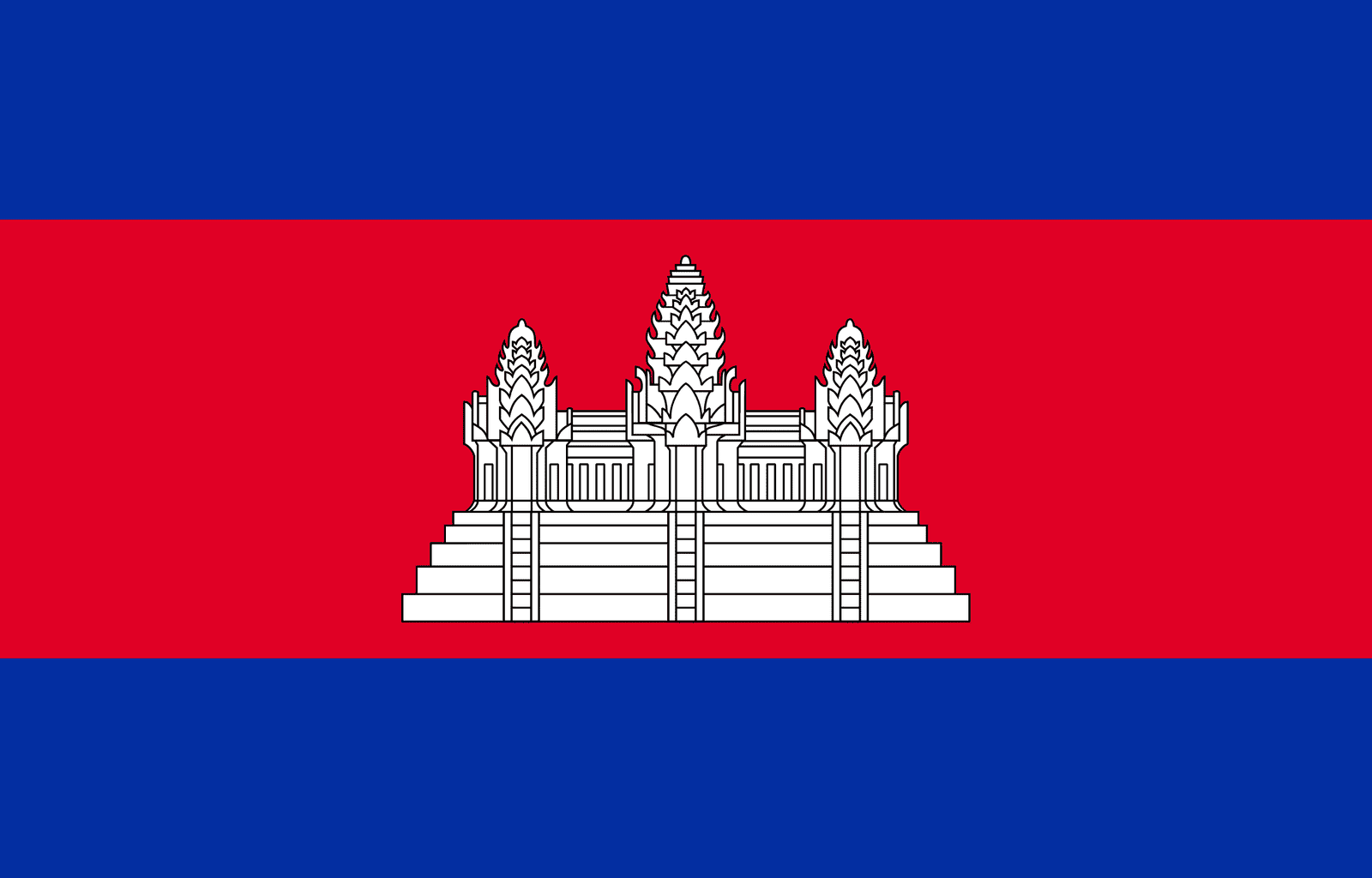
Flag of Cambodia
| Legal Name | Kingdom of Cambodia |
|---|---|
| Flag |
|
| Capital City |
Phnom Penh |
| Total Area | 181,035 km² |
| Land Area | 176,520 km² |
| Water Area | 4,515 km² |
| Population | ~17.5 million |
| Major Cities | Phnom Penh (~2.3 million), Siem Reap (~250,000), Battambang (~160,000), Sihanoukville (~120,000) |
| Currency | Cambodian Riel (KHR) |
| GDP | ~US$30 billion |
| GDP Per Capita | ~US$1,700 |
About of Cambodia
Cambodia is located in Southeast Asia, bordering Thailand to the west and northwest, Laos to the north, Vietnam to the east and southeast, and the Gulf of Thailand to the southwest. Positioned in the Indochina Peninsula, Cambodia serves as a bridge between the Mekong River basin and the broader Southeast Asian region.
The country’s capital and largest city, Phnom Penh, is the political, economic, and cultural hub, featuring historic architecture, markets, and administrative institutions. Other major urban centers include Siem Reap, home to the iconic Angkor Wat temple complex, and Sihanoukville, Cambodia’s primary seaport.
Cambodia has a population exceeding 17 million, predominantly of Khmer ethnicity, and exhibits a youthful demographic profile. Internationally, Cambodia is recognized as a sovereign constitutional monarchy, a member of the United Nations, ASEAN, and other regional organizations. Strategically, Cambodia’s location along the Mekong River and proximity to major Southeast Asian economies enhances its geopolitical relevance for trade, regional security, and cultural tourism.
3. Etymology
The name “Cambodia” derives from the Sanskrit “Kambuja”, referring to an ancient kingdom believed to have been founded by the descendants of the legendary Indian prince Kambu Svayambhuva. Over centuries, the name evolved into Kampuchea, which remains the local name, while “Cambodia” became the internationally recognized English term. The name reflects Cambodia’s deep historical and cultural ties with ancient Indian civilization and Hindu-Buddhist traditions.
4. History
Prehistoric and Ancient Civilizations: Archaeological evidence indicates human habitation in Cambodia as early as the Neolithic period, with sophisticated communities developing along the Mekong River.
Classical Period: The rise of the Funan Kingdom (1st–6th centuries) marked early state formation and Indian cultural influence. Funan was succeeded by Chenla (6th–9th centuries), a period of consolidation and territorial expansion.
Angkor Era (9th–15th centuries): The Khmer Empire, centered at Angkor, became a major political, cultural, and architectural power in Southeast Asia, leaving behind the iconic Angkor Wat and extensive irrigation systems.
Colonial Period: Following decline in the 15th century, Cambodia came under Siamese and Vietnamese influence, eventually becoming a French protectorate in 1863 as part of French Indochina.
Independence: Cambodia gained independence from France in 1953, under King Norodom Sihanouk.
Post-Independence Turmoil: The country experienced civil conflict, the rise of the Khmer Rouge regime (1975–1979), and subsequent Vietnamese intervention.
Modern Era: The 1991 Paris Peace Agreements restored peace and constitutional monarchy. Cambodia has since experienced relative political stability, economic growth, and development of tourism and infrastructure.
5. Government and Politics
Cambodia is a constitutional monarchy with a parliamentary system:
Executive: The King serves as the ceremonial head of state, while the Prime Minister is the head of government and exercises executive power.
Legislative: Bicameral Parliament consisting of the National Assembly and Senate
Judiciary: Independent courts uphold civil and criminal law, influenced by civil law traditions
Administrative Divisions: 25 provinces (khaet), including the capital Phnom Penh
Foreign Relations: Active member of ASEAN, UN, World Trade Organization, and regional cooperation initiatives
Defense: Royal Cambodian Armed Forces include the army, navy, air force, and gendarmerie, primarily focused on internal security and border protection
6. Economy
Cambodia is classified as an emerging economy with growth driven by agriculture, tourism, manufacturing, and services:
Major Industries: Garments and textiles, tourism, construction, food processing, cement, telecommunications
Agriculture: Rice, cassava, rubber, corn, and fisheries remain key for employment and exports
Natural Resources: Timber, gemstones, hydropower potential, and oil and gas exploration
Trade Partners: United States, European Union, China, Thailand, Vietnam
Economic Challenges: Poverty, limited infrastructure, dependence on foreign investment, vulnerability to climate change
Outlook: Continued growth in tourism, textiles, and investment in infrastructure and renewable energy
7. Demographics
Cambodia is predominantly Khmer, with ethnic minorities including Cham, Vietnamese, Chinese, and hill tribes.
Languages: Khmer (official), English, French (widely used in business and administration)
Religions: Theravada Buddhism (dominant), Islam, Christianity, and indigenous beliefs
Urban vs Rural: ~24% urban, ~76% rural, reflecting strong rural communities and agriculture-based livelihoods
Population Growth: Moderate growth, with a youthful population and improving life expectancy
8. Culture and Society
Cambodian culture is rich and heavily influenced by Buddhist and Hindu traditions:
Arts and Music: Classical dance (Apsara), traditional music, shadow puppetry, and contemporary arts
Cuisine: Rice, freshwater fish, coconut milk dishes, amok, lok lak, and regional specialties
Social Norms: Respect for elders, religious observances, family-oriented values, community cohesion
Festivals: Khmer New Year (Chaul Chnam Thmey), Pchum Ben (Ancestor Day), Water Festival (Bon Om Touk)
Sports: Football, volleyball, martial arts (Pradal Serey), and traditional boat racing
9. Education and Healthcare
Education: Structured into primary, lower secondary, and upper secondary levels; higher education includes institutions like Royal University of Phnom Penh
Literacy: Approximately 80% literacy rate among adults
Healthcare: Public hospitals and clinics supported by international organizations; challenges include infectious diseases, maternal and child health, and rural healthcare access
Public Health Achievements: Vaccination campaigns, malaria reduction programs, and improved access to basic healthcare
10. Geography and Climate
Physical Geography: Central plains surrounding Tonle Sap Lake, Mekong River basin, Cardamom Mountains, and coastal plains along the Gulf of Thailand
Climate: Tropical monsoon with distinct wet (May–October) and dry (November–April) seasons
Natural Hazards: Floods, droughts, occasional tropical storms
Environmental Concerns: Deforestation, wetland degradation, loss of biodiversity, and water pollution
11. Flora and Fauna
Cambodia supports rich biodiversity:
Flora: Tropical forests, mangroves, hardwoods, lotus plants in wetlands
Wildlife: Elephants, tigers, gibbons, sun bears, freshwater fish, and migratory birds
National Parks: Virachey, Bokor, Ream, Tonle Sap Biosphere Reserve for conservation and eco-tourism
Map of Cambodia
National Flag: Depicts Angkor Wat on a red field with blue borders
Coat of Arms: Features Angkor Wat, mythical lions, and royal parasols symbolizing monarchy and sovereignty
National Anthem: “Nokor Reach” (Royal Kingdom)
National Animals: Kouprey (wild ox), Giant Ibis
National Plants: Rumdul flower (Mitrella mesnyi)
Monuments: Angkor Wat, Royal Palace in Phnom Penh
National Flag (Detailed Section)
The flag of Cambodia consists of three horizontal stripes: blue-red-blue, with the red stripe being twice the width of the blue bands, and Angkor Wat depicted in white at the center.
Historical Development: The design reflects Cambodia’s heritage, adopted in its modern form in 1993 after restoration of the monarchy
Symbolism: Blue represents liberty and cooperation, red symbolizes bravery, and white Angkor Wat represents the nation’s cultural and religious heritage
Protocol: Displayed on government buildings, schools, and national celebrations; half-mast for mourning events
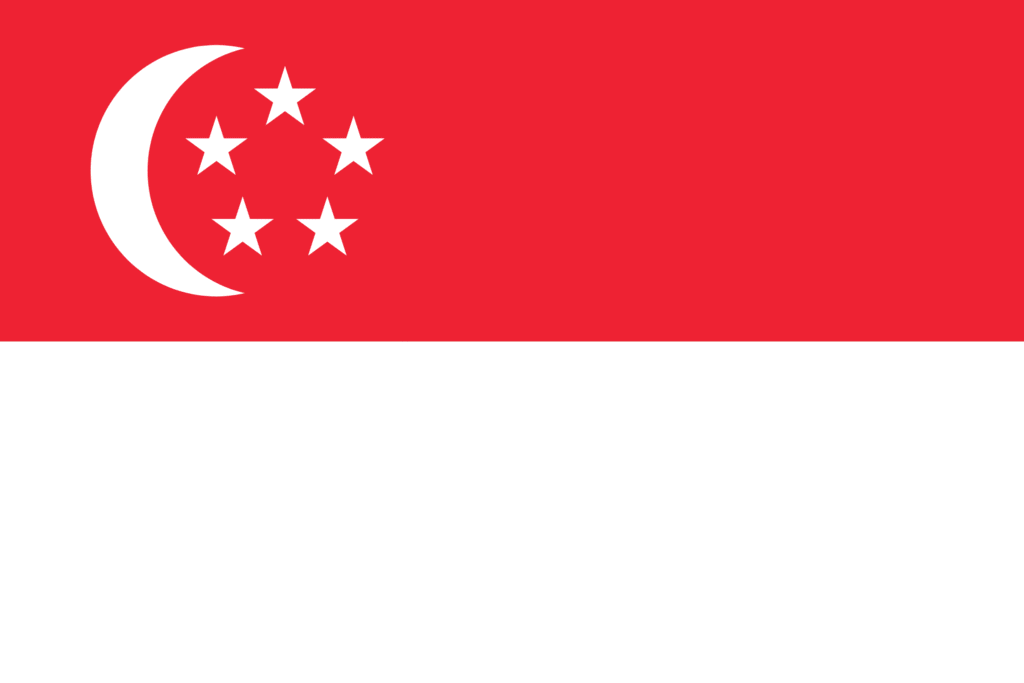
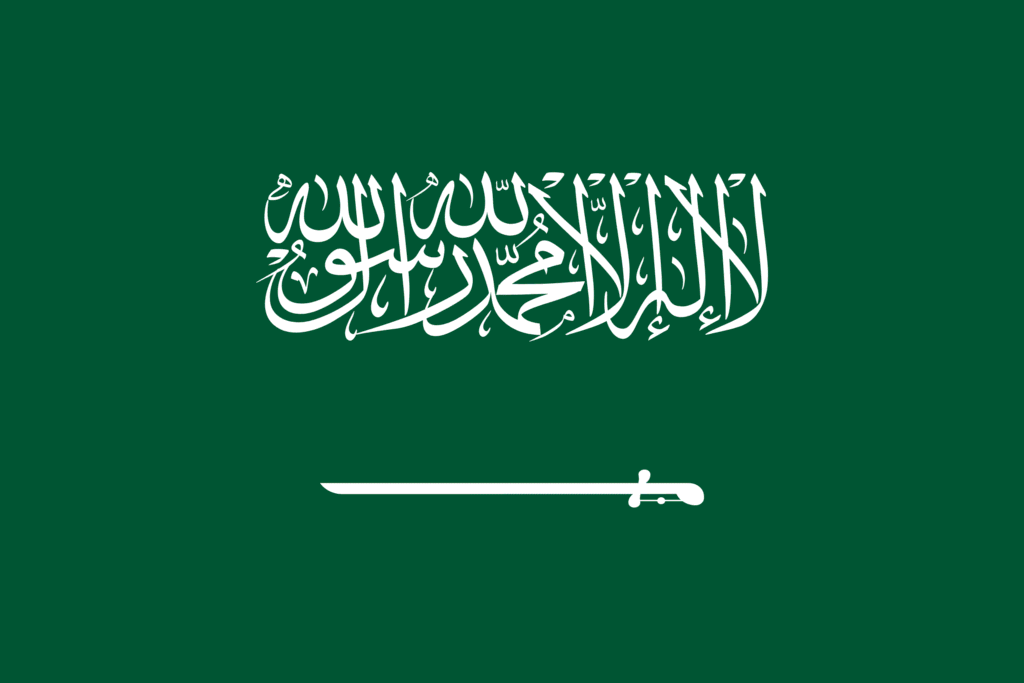
Realted Flags
Flag flying days
| Date | Flag Position | Occasion |
|---|---|---|
| 9 November | Full-mast | Constitution Day |
| 13 April | Full-mast | Khmer New Year |
| 1 May | Full-mast | International Labor Day |
| State mourning | Half-mast | Death of national leaders or tragedies |
| National holidays | Full-mast | Independence Day (9 November), Royal ceremonies |