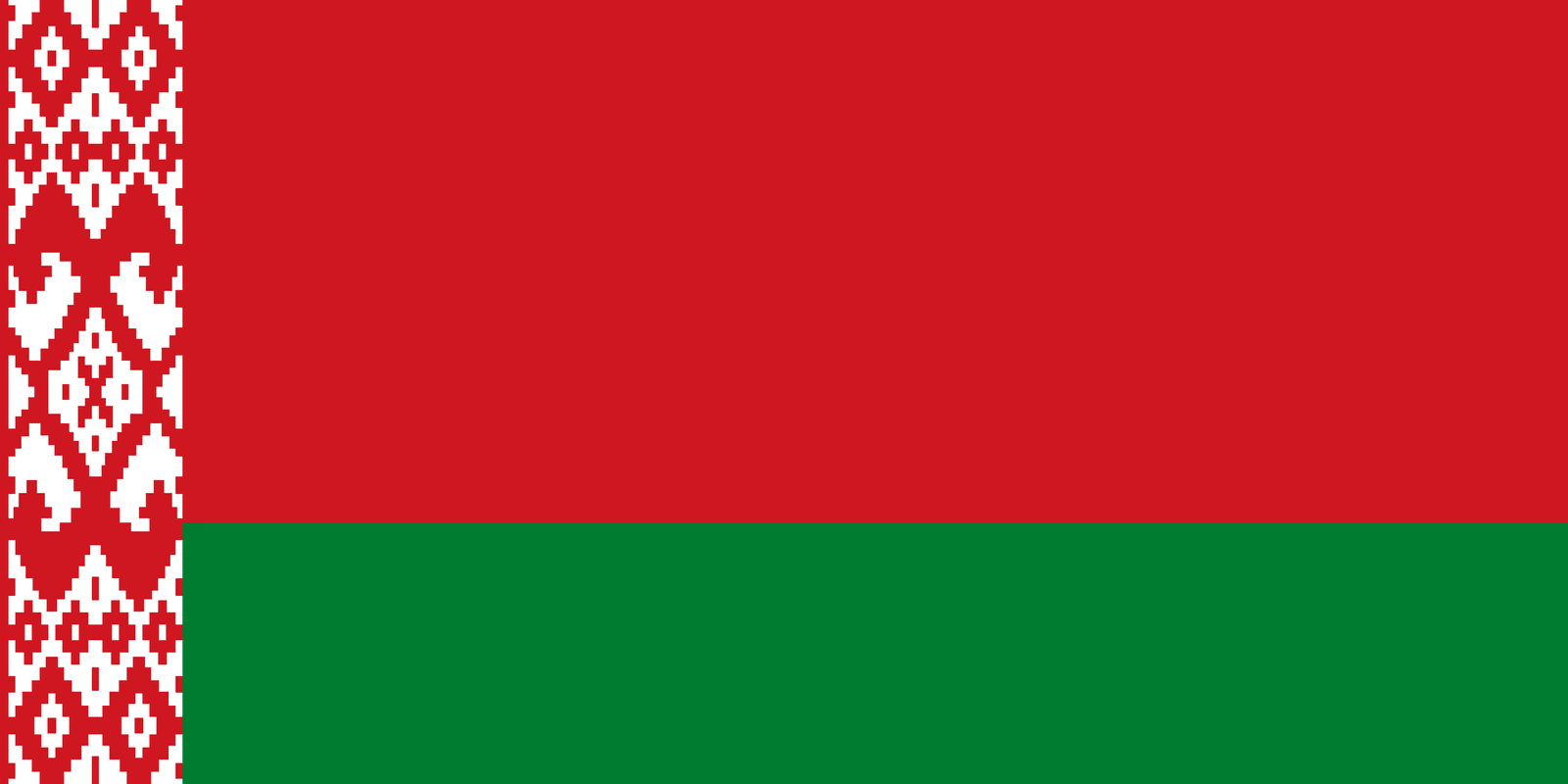
Flag of Belarus
| Legal Name | Republic of Belarus |
|---|---|
| Flag |
|
| Capital City |
Minsk |
| Total Area | ~207,600 km² |
| Land Area | ~202,900 km² |
| Water Area | ~4,700 km² |
| Population | ~9.1 million |
| Major Cities | Minsk (2.0 million), Gomel (510,000), Mogilev (355,000), Vitebsk (360,000), Grodno (370,000), Brest (340,000) |
| Currency | Belarusian Ruble (BYN) |
| GDP | ~US$70–75 billion |
| GDP Per Capita | ~US$7,500 (nominal) |
About of Belarus}
Belarus is a landlocked country in Eastern Europe, positioned between the European Union and Russia. It lies on the East European Plain and is characterized by vast forests, rivers, wetlands, and gently rolling terrain rather than mountains. Its central location has historically made it a crossroads of trade routes and military campaigns, shaping both its culture and geopolitical role.
The country shares land borders with Russia to the east and northeast, Ukraine to the south, Poland to the west, and Lithuania and Latvia to the northwest. Belarus has no maritime borders, which influences its dependence on neighboring countries for port access and international shipping routes. Minsk, the capital and largest city, functions as the administrative, economic, and cultural hub, while regional centers such as Gomel, Brest, and Grodno play significant industrial and logistical roles.
Belarus is internationally recognized as a sovereign state and is a member of the United Nations, the Commonwealth of Independent States (CIS), and several regional organizations. Its strategic position between Western Europe and Russia gives it considerable geopolitical importance, particularly in energy transit, transportation corridors, and regional security dynamics.
3. Etymology
The name “Belarus” originates from the Slavic phrase “Belaya Rus,” meaning “White Rus’.” The term historically referred to territories inhabited by Eastern Slavic peoples and was used in medieval chronicles to distinguish different regions of the broader Rus’ lands.
The “white” descriptor has been interpreted in several ways, including references to free lands not occupied by foreign powers, traditional clothing colors, or geographic distinctions. Over centuries, the term evolved linguistically through Polish, Russian, and Latin influences before stabilizing as “Belarus” following independence in the late 20th century.
4. History
The territory of modern Belarus has been inhabited since prehistoric times, with early settlements linked to Baltic and Slavic tribes. During the early medieval period, the region became part of Kievan Rus’, a federation of Eastern Slavic principalities that laid cultural and religious foundations, including the spread of Orthodox Christianity.
From the 13th century onward, Belarusian lands were incorporated into the Grand Duchy of Lithuania, later forming part of the Polish-Lithuanian Commonwealth. This era introduced legal reforms, urban growth, and religious diversity but also frequent warfare. In the late 18th century, following the partitions of the Commonwealth, the territory was annexed by the Russian Empire.
The 20th century brought major upheavals. After World War I and brief independence attempts, Belarus became one of the founding republics of the Soviet Union in 1922. World War II devastated the region, resulting in massive population losses and infrastructure destruction. Post-war Soviet industrialization transformed Belarus into a manufacturing center.
Belarus declared independence in 1991 following the dissolution of the Soviet Union. Since then, its political development has been marked by strong centralized governance, close economic and security ties with Russia, and gradual modernization alongside periods of domestic political tension and constitutional reforms.
5. Government and Politics
Belarus operates as a presidential republic with a centralized political structure. The President serves as head of state and holds significant executive authority, including appointing government officials and influencing legislative processes. The Prime Minister oversees day-to-day administration alongside the Council of Ministers.
The Legislative Branch is the National Assembly, a bicameral body consisting of the House of Representatives and the Council of the Republic. The Judicial Branch includes the Constitutional Court and the Supreme Court, which interpret laws and oversee legal proceedings. The country’s constitution outlines the legal framework, civil rights, and governmental powers.
Administratively, Belarus is divided into six regions (oblasts) and the capital city of Minsk, which holds special administrative status. In foreign relations, Belarus maintains strong ties with Russia and participates in regional alliances such as the Eurasian Economic Union. The Belarusian Armed Forces focus on territorial defense, border security, and cooperation within regional defense agreements.
6. Economy
Belarus is generally classified as an upper-middle-income emerging economy with a significant state presence in key industries. The economic structure combines manufacturing, heavy industry, agriculture, and a growing information technology sector. Industrial production includes machinery, vehicles, chemicals, and refined petroleum products.
Agriculture remains important, with major outputs including dairy products, grains, potatoes, and livestock. The services sector, especially IT outsourcing and software development, has expanded in recent years. Natural resources are modest, consisting mainly of forests, peat, and limited oil reserves.
Key trade partners include Russia, China, and European countries. Exports often consist of machinery, fertilizers, and refined fuels. Economic challenges include dependence on energy imports, exposure to external market fluctuations, and the need for diversification. Long-term outlooks emphasize digital innovation, industrial modernization, and infrastructure development.
7. Demographics
Belarus has a relatively homogeneous population, with ethnic Belarusians forming the majority. Minority groups include Russians, Poles, Ukrainians, and smaller communities of Jews and Tatars. Both Belarusian and Russian are official languages, with Russian widely used in urban and administrative settings.
Christianity is the dominant religion, primarily Eastern Orthodoxy, alongside Roman Catholicism and smaller religious communities. The population is highly urbanized, with most residents living in cities and industrial centers. Demographic trends show low birth rates, gradual population decline, and an aging population structure.
8. Culture and Society
Belarusian culture reflects a blend of Eastern Slavic traditions, folklore, and historical influences from neighboring regions. Folk music, dance, embroidery, and woodcraft remain integral to national identity. Literature and poetry have long served as expressions of cultural resilience and linguistic heritage.
Cuisine features hearty dishes such as potato-based meals, soups, and rye bread. Social customs emphasize hospitality, family values, and seasonal celebrations. Public holidays often commemorate historical events and cultural milestones. Popular sports include ice hockey, football, athletics, and winter sports due to the country’s climate.
9. Education and Healthcare
Belarus maintains a comprehensive public education system with near-universal literacy. Education is compulsory through secondary level, and higher education institutions in Minsk and other cities provide specialized training in science, engineering, and humanities.
Healthcare is primarily state-funded and widely accessible, with an extensive network of clinics and hospitals. Public health achievements include high vaccination coverage and broad medical training. Ongoing challenges involve modernization of facilities and addressing non-communicable diseases linked to lifestyle and aging demographics.
10. Geography and Climate
Belarus is dominated by plains, forests, rivers, and wetlands, including parts of the extensive Pripyat Marshes. Major rivers such as the Dnieper, Neman, and Western Dvina play key roles in transportation and ecology. The country lacks mountains and coastlines, contributing to a relatively uniform landscape.
The climate is temperate continental, with cold winters, mild to warm summers, and moderate precipitation throughout the year. Natural hazards are limited but can include floods and severe winter storms. Environmental concerns focus on forest conservation, water quality, and the long-term effects of past nuclear contamination in certain regions.
11. Flora and Fauna
Belarus is rich in forests and wetlands, supporting diverse plant and animal life. Pine, spruce, and birch trees dominate woodland areas. Wildlife includes elk, deer, wild boar, wolves, lynx, and numerous bird species. Protected areas such as Belovezhskaya Pushcha National Park, a UNESCO-recognized forest reserve, preserve ancient woodland ecosystems and European bison populations.
Map of Belarus
National Flag: Red and green horizontal stripes with traditional ornament
Coat of Arms: Emblem featuring a map of Belarus over a globe, surrounded by wheat and a red-green ribbon
National Anthem: “My Belarusy” (We Belarusians)
National Animal: European Bison
National Ornament: Traditional Slavic geometric pattern used in textiles and flag design
National Flag (Detailed Section)
The national flag of Belarus consists of two horizontal bands—red on top and green below—with a vertical red-and-white ornamental pattern along the hoist side. The red color symbolizes historical struggles and victory, while green represents the country’s forests, fields, and hope for prosperity. The ornamental design is inspired by traditional Belarusian embroidery and reflects cultural heritage and continuity.
Adopted in its modern form in the mid-1990s, the flag incorporates elements of earlier historical symbols while presenting a distinct national identity. It is displayed on government buildings, during official ceremonies, and on national holidays as a sign of sovereignty and unity.
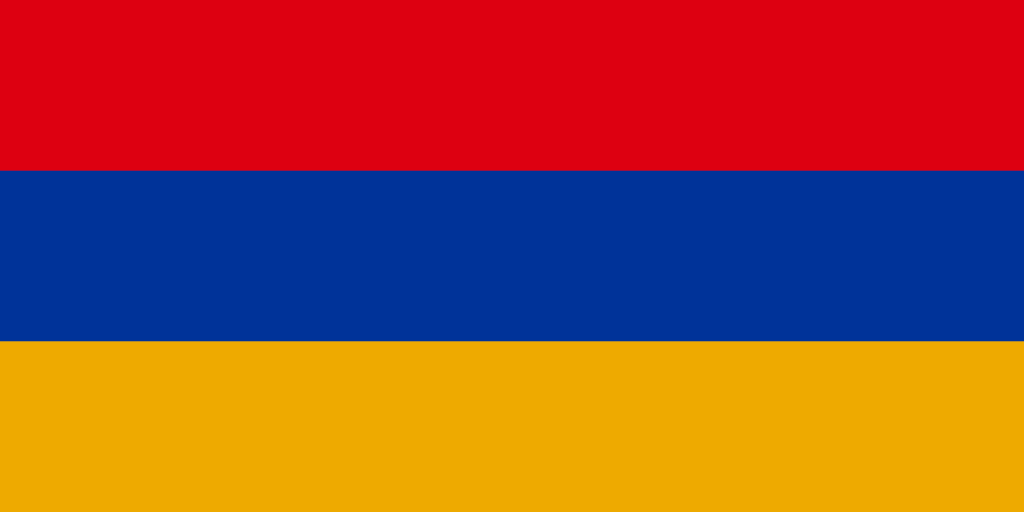
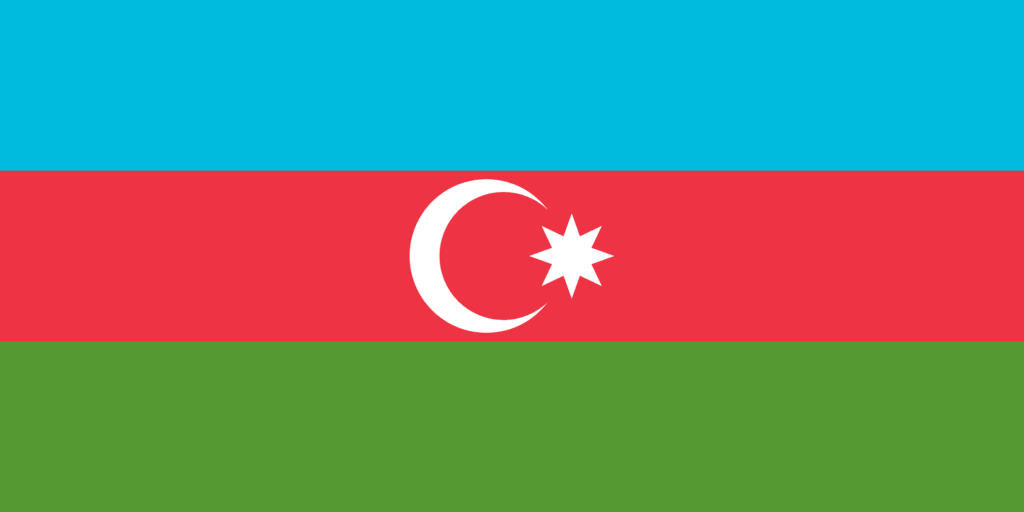
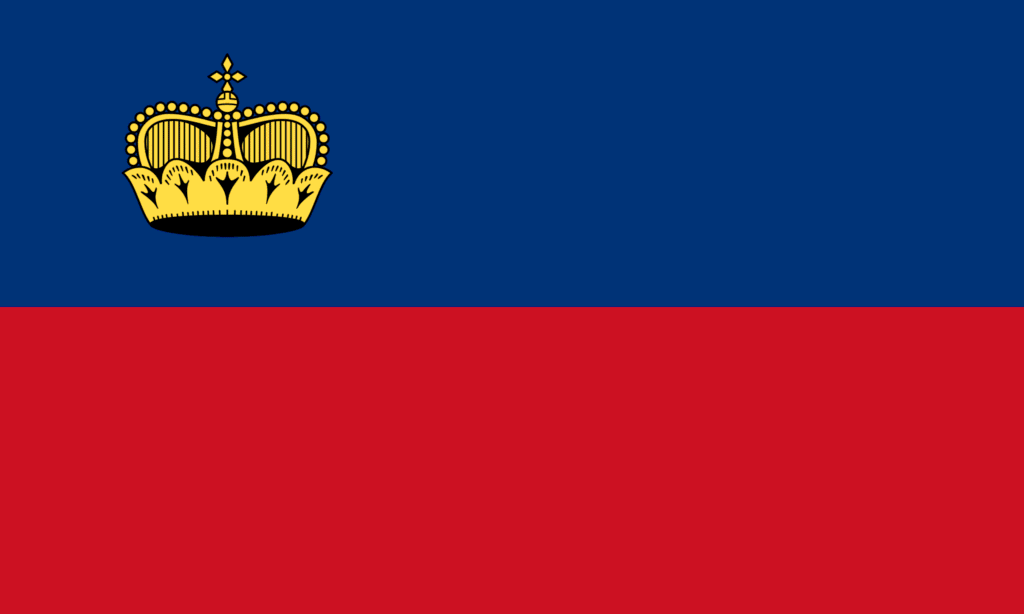
Realted Flags
Flag flying days
| Date | Flag Position | Occasion |
|---|---|---|
| 1 January | Full-mast | New Year’s Day |
| 15 March | Full-mast | Constitution Day |
| 9 May | Full-mast | Victory Day |
| 3 July | Full-mast | Independence Day (Republic Day) |
| 7 November | Full-mast | October Revolution Day |
| National Days of Mourning | Half-mast | State Mourning Observances |