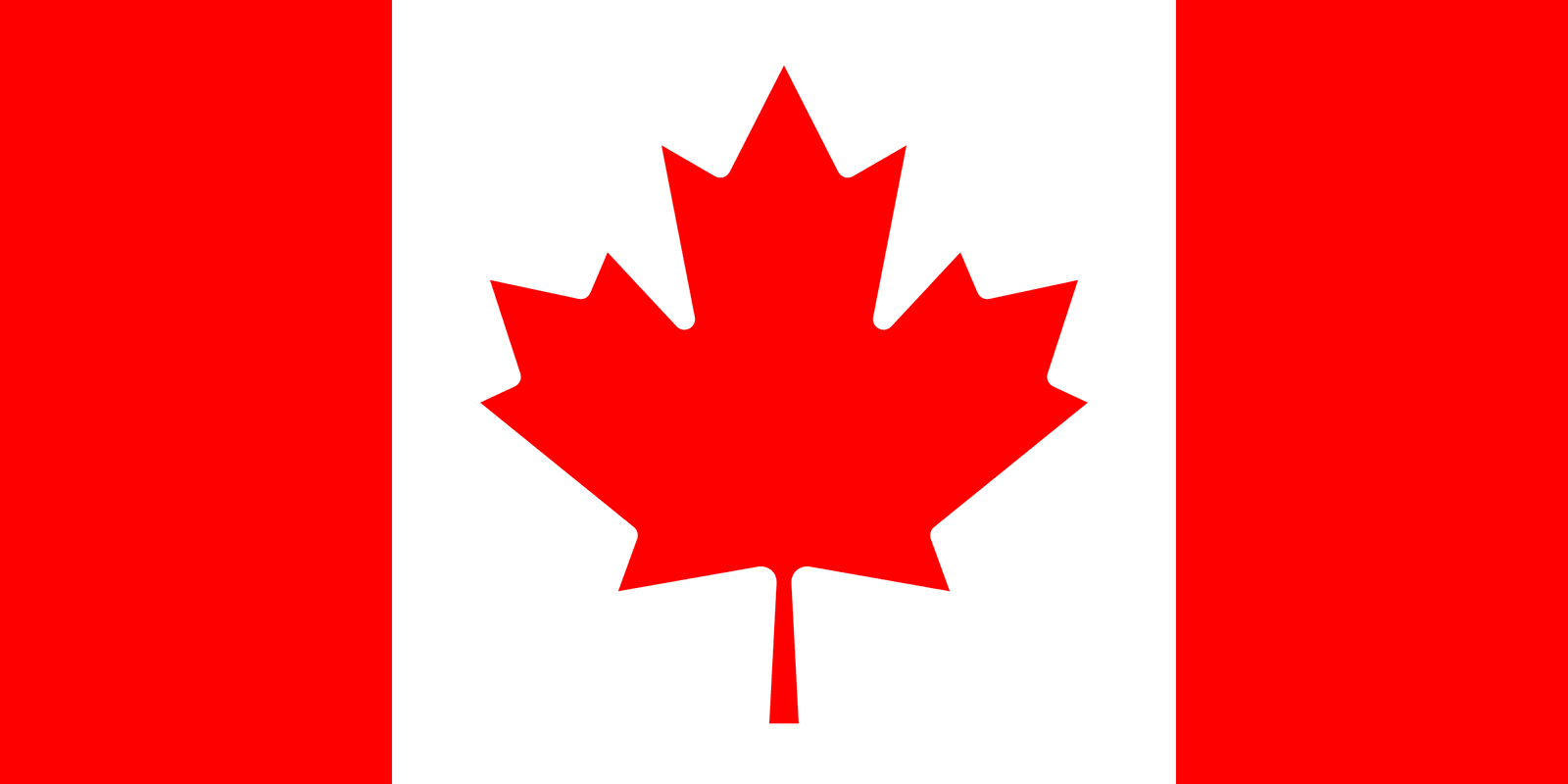
Flag of Canada
| Legal Name | Canada |
|---|---|
| Flag |
|
| Capital City |
Ottawa |
| Total Area | 9,984,670 km² |
| Land Area | 9,093,507 km² |
| Water Area | 891,163 km² |
| Population | ~39 million |
| Major Cities | Toronto (~2.9 million), Montreal (~1.8 million), Vancouver (~675,000), Calgary (~1.3 million), Ottawa (~1 million) |
| Currency | Canadian Dollar (CAD) |
| GDP | ~US$2.2 trillion |
| GDP Per Capita | ~US$55,000 |
About of Canada
Canada is the second-largest country in the world by total area, spanning from the Atlantic Ocean in the east to the Pacific Ocean in the west, and northward into the Arctic Ocean. It occupies the majority of the northern part of North America and is known for its vast landscapes, including forests, mountains, prairies, and extensive freshwater systems.
Canada shares the longest international land border in the world with the United States to the south and northwest, and maritime boundaries with Greenland and France (Saint Pierre and Miquelon). Its political and economic capital is Ottawa, while Toronto, Montreal, and Vancouver are major population and economic centers.
With a population concentrated near the southern border, Canada is characterized by high urbanization, cultural diversity, and bilingualism. The country is recognized globally as a stable, peaceful, and prosperous nation, playing a strategic role in international trade, peacekeeping, and environmental leadership, particularly within the G7, G20, and United Nations frameworks.
3. Etymology
The name “Canada” originates from the St. Lawrence Iroquoian word “kanata”, meaning “village” or “settlement.” Early French explorers in the 16th century used “Canada” to refer specifically to the area around present-day Quebec City, and over time, it expanded to denote the vast territory of modern Canada.
4. History
Human presence in Canada dates back over 12,000 years, with diverse Indigenous peoples establishing complex societies across the continent.
Classical and Medieval Periods: Various Indigenous nations, including the Cree, Haudenosaunee, and Inuit, developed rich cultures and trading networks long before European contact.
European Colonization: Beginning in the late 15th century, explorers such as John Cabot and Jacques Cartier established European presence. French colonization led to the founding of New France, while British control expanded following conflicts such as the Seven Years’ War.
Confederation and Nationhood: Canada became a self-governing dominion in 1867 through the British North America Act, uniting Ontario, Quebec, New Brunswick, and Nova Scotia.
20th Century: Canada participated in both World Wars, expanded territorially, and evolved into a sovereign nation with full independence from Britain in 1982 via the Canada Act, which patriated the Constitution.
Modern Era: Canada has focused on multiculturalism, Indigenous rights, environmental stewardship, and global diplomacy, becoming a leader in education, healthcare, and human rights.
5. Government and Politics
Canada is a constitutional monarchy and federal parliamentary democracy:
Head of State: Monarch of Canada (represented by the Governor General)
Executive: Prime Minister and Cabinet
Legislative: Bicameral Parliament, consisting of the House of Commons and the Senate
Judiciary: Independent courts, headed by the Supreme Court of Canada
Canada is divided into 10 provinces and 3 territories, each with significant political and administrative autonomy. The country maintains robust foreign relations, participates in NATO, the UN, G7, G20, and promotes peacekeeping and global cooperation. Defense is provided by the Canadian Armed Forces, focused on sovereignty protection, Arctic security, and international missions.
6. Economy
Canada is a highly developed, diversified economy with significant natural resources, manufacturing, and service sectors.
Major Industries: Energy (oil, gas, hydroelectric), mining, forestry, automotive manufacturing, aerospace, technology, and services
Agriculture: Wheat, barley, dairy, beef, and maple products
Trade Partners: United States, China, European Union, Mexico, Japan
Challenges: Balancing resource extraction with environmental protection, housing affordability, and economic diversification
Canada ranks among the wealthiest nations, with high GDP per capita, advanced infrastructure, and strong social programs.
7. Demographics
Canada is ethnically and culturally diverse:
Ethnic Groups: European descent (mainly English and French), Indigenous peoples, Asian, African, and Middle Eastern communities
Languages: English and French (official), Indigenous languages, and immigrant languages widely spoken
Religions: Christianity (majority), Islam, Hinduism, Buddhism, Judaism, and secular communities
Urbanization: Approximately 81% of the population lives in urban areas, particularly near the southern border
Population Growth: Driven primarily by immigration, with a stable birth rate
8. Culture and Society
Canadian culture emphasizes multiculturalism, inclusivity, and bilingualism. National identity blends Indigenous traditions, British and French heritage, and immigrant influences.
Arts and Literature: Canadian literature, visual arts, music, and cinema have global recognition, with artists such as Leonard Cohen, Margaret Atwood, and Emily Carr
Cuisine: Diverse, including poutine, maple products, seafood, and multicultural culinary influences
Social Norms: Emphasis on politeness, equality, and environmental stewardship
Festivals: Canada Day, Thanksgiving, Victoria Day, multicultural celebrations
Sports: Ice hockey, lacrosse, and winter sports are popular
9. Education and Healthcare
Canada has publicly funded education, including primary, secondary, and post-secondary systems, with high literacy and enrollment rates. Universities such as University of Toronto and McGill University are globally recognized.
Healthcare is provided through a publicly funded system, offering universal coverage. The country is known for high life expectancy, low infant mortality, and effective public health initiatives, though challenges include rural healthcare accessibility and an aging population.
10. Geography and Climate
Canada’s geography is vast and varied, including:
Physical Features: Rocky Mountains, Canadian Shield, Great Lakes, Arctic tundra, plains, forests, and extensive coastlines
Climate Zones: Arctic, subarctic, temperate, and maritime climates
Natural Hazards: Snowstorms, forest fires, floods, and occasional earthquakes
Environmental Concerns: Climate change, wildlife conservation, deforestation, and pollution
11. Flora and Fauna
Canada hosts diverse ecosystems, including boreal forests, tundra, wetlands, and temperate regions.
Flora: Maple, spruce, pine, birch, and native wildflowers
Wildlife: Moose, black bear, polar bear, beavers, caribou, wolves, and various bird species
Conservation: Protected through national parks like Banff, Jasper, and Wood Buffalo
Map of Canada
National Flag: Red and white with a maple leaf
Coat of Arms: Includes a shield, unicorn, lion, and maple leaves representing heritage
National Anthem: “O Canada”
National Animal: Beaver
National Plant: Maple tree
National Monument: Peace Tower in Ottawa
National Flag (Detailed Section)
The Canadian flag, adopted in 1965, is a red-white-red vertical triband with an 11-pointed red maple leaf at the center.
Symbolism: Red represents strength and bravery, white represents peace and neutrality, and the maple leaf symbolizes nature, unity, and Canadian identity
Usage: Flown on government buildings, schools, and during national celebrations
Protocol: Must be treated respectfully; half-mast indicates mourning
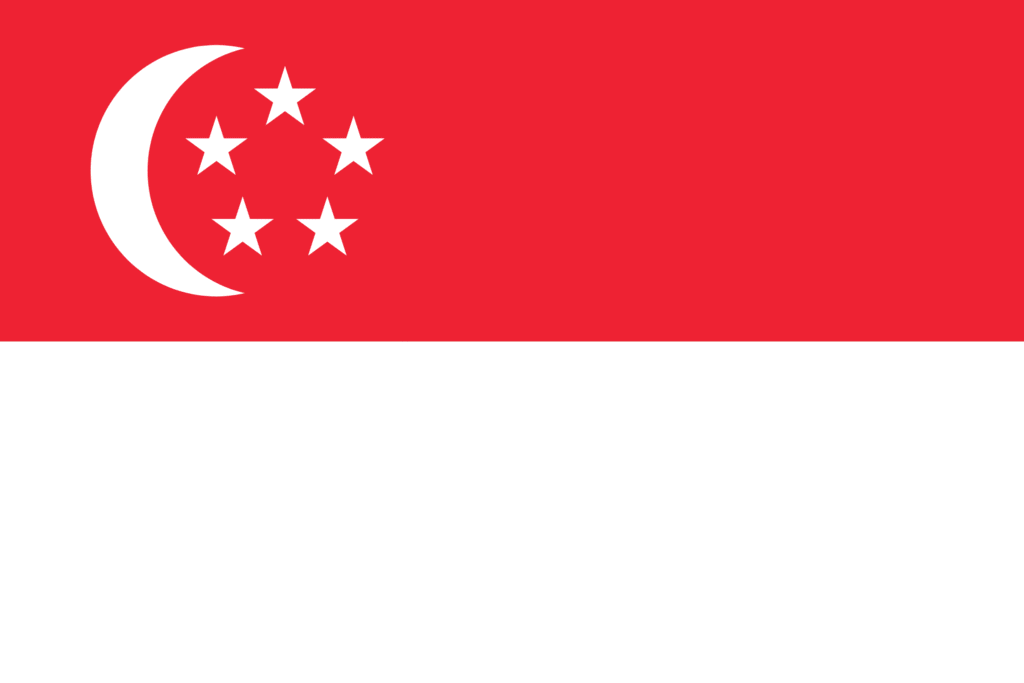
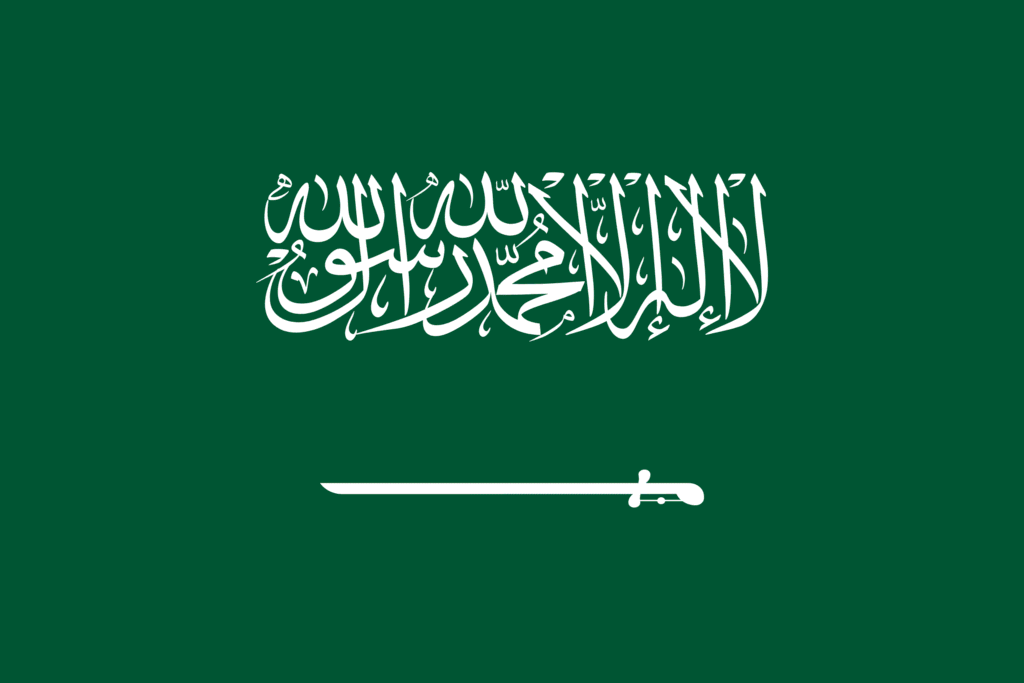
Realted Flags
Flag flying days
| Date | Flag Position | Occasion |
|---|---|---|
| 1 July | Full-mast | Canada Day |
| 11 November | Half-mast | Remembrance Day |
| 25 December | Full-mast | Christmas |
| 6 February | Full-mast | National Flag of Canada Day |
| State mourning | Half-mast | National tragedies or death of dignitaries |