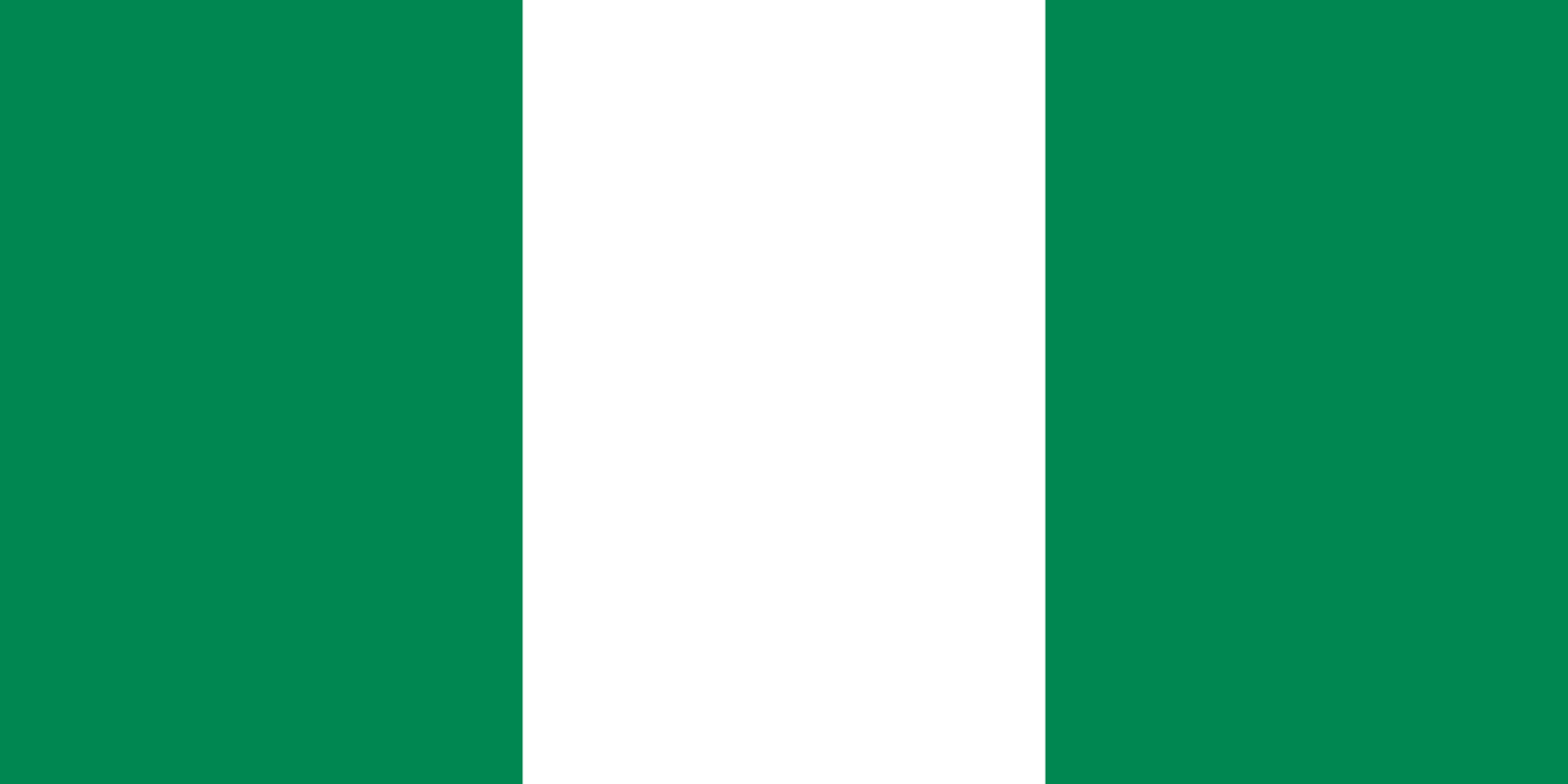
Flag of Nigeria
| Legal Name | Federal Republic of Nigeria |
|---|---|
| Flag |
|
| Capital City |
Abuja |
| Total Area | 923,769 km² |
| Land Area | ~910,769 km² |
| Water Area | ~13,000 km² |
| Population | ~13,000 km² |
| Major Cities | Lagos ~17.8M; Kano ~4.8M; Abuja ~4.4M; Ibadan ~4.3M; Port Harcourt ~3.9M; Benin City ~2.1M; Onitsha ~1.8M; Uyo ~1.5M; Aba ~1.4M; Kaduna ~1.3M |
| Currency | Nigerian naira (₦) |
| GDP | ~$285billion (2025 IMF) |
| GDP Per Capita | ~$1,200 nominal; ~$9,488 PPP (2025 IMF) |
About of Nigeria
The Federal Republic of Nigeria is a prominent sovereign state located in West Africa, positioned between the Sahelian zone to the north and the Gulf of Guinea along the Atlantic Ocean to the south. With an area of approximately 923,769 km², Nigeria is one of the region’s largest countries by landmass. Its geography includes a mix of fertile river basins, high plateaus, and coastal plains. The Niger River, one of West Africa’s major waterways, flows through the interior, nurturing agricultural and urban settlements.
Nigeria borders Benin to the west, Niger to the north, Chad and Cameroon to the east, and the Gulf of Guinea to the south, which gives the nation important maritime access.
The political capital is Abuja, a centrally located city conceived in the 1970s to replace Lagos as the administrative headquarters. Abuja has grown rapidly into a major governmental and diplomatic hub. Meanwhile, Lagos remains Nigeria’s largest city, a megacity with an estimated population approaching 18 million and a driving force in commerce, technology, culture, and transportation across West Africa.
With an estimated population surpassing 239 million, Nigeria is Africa’s most populous nation and ranks among the world’s most populous countries. Its demographic landscape is diverse, with hundreds of ethnic groups and languages. The population’s youth bulge and rapid growth rate contribute to dynamic socioeconomic trends and potential, while also posing challenges for infrastructure, education, and employment.
Internationally, Nigeria is recognized as a major political and economic player within Africa and globally. It holds leadership roles in the African Union (AU), Economic Community of West African States (ECOWAS), and participates in global forums. Its strategic importance emanates from demographic weight, natural resources—especially oil and gas—and cultural influence through media, literature, and music.
Etymology
The name “Nigeria” originates from the Niger River, which traverses the western region of the country and serves as a central feature of its geography. The term was coined in the late 19th century by British journalist Flora Shaw, who later married colonial administrator Lord Lugard. The name reflects the river’s significance to the region and was adopted during the period of British colonial administration. Over time, “Nigeria” became the official designation upon independence in 1960, symbolizing the nationhood forged around this defining natural landmark.
History
Early and Precolonial Civilizations
Human habitation in modern Nigeria stretches back millennia, with archaeological sites such as the Nok culture (circa 500 BCE–200 CE) demonstrating early ironworking and terracotta artistry.
Over centuries, complex kingdoms and city‑states arose across the region, including the Kanem‑Bornu Empire in the northeast, the Oyo Empire and Yoruba city‑states in the southwest, and the Benin Kingdom in the south, all of which shaped political and cultural life prior to European contact.
Colonial Era and Formation
By the late 19th century, British influence expanded across the territory through treaties and military campaigns. In 1914, the British formally amalgamated the Northern and Southern Nigeria Protectorates, creating a unified colonial entity.
Independence and Post‑Colonial Development
Nigeria achieved independence on 1 October 1960, becoming a sovereign nation within the Commonwealth with a parliamentary government. The subsequent years were marked by political turbulence, including military coups and the Nigerian Civil War (1967–1970), fought largely over regional and ethnic tensions.
Civilian rule returned in 1999, instituting democratic governance after prolonged military dominance. Since then, Nigeria has navigated economic reforms, democratic consolidation, and security challenges, while remaining a leading voice in African affairs.
Government and Politics
Nigeria operates as a federal presidential republic composed of a president serving as both head of state and government. The constitution establishes a separation of powers among executive, legislative, and judicial branches. The bicameral National Assembly includes the Senate and House of Representatives. Nigeria’s 36 states and the Federal Capital Territory are administrative divisions with significant autonomy under the federal system.
Nigeria engages robustly in international relations, participating in regional and global organizations including the AU, ECOWAS, the United Nations, and the World Trade Organization. The country maintains diplomatic missions worldwide and contributes to peacekeeping under the United Nations framework. Defense responsibilities rest with the Nigerian Armed Forces, which play a significant role in internal security and regional stability.
Economy
Nigeria’s economy is classified as developing and emerging, with a mixed system integrating public and private sectors. It is among Africa’s largest economies by nominal output and purchasing power. Petroleum and natural gas have historically been dominant, generating significant export revenue and government income. Agriculture remains vital, employing a large share of the workforce and contributing to food security.
Despite abundant resources, the economy faces structural challenges including inflation, infrastructure gaps, and dependence on oil price volatility. Efforts to diversify into telecommunications, technology, manufacturing, and services are ongoing, fostering resilience. Recent statistical rebasing has expanded the measured size of the economy, underscoring Nigeria’s varied economic activities.
Trade partners include regional neighbors and global economies, with exports of crude oil, natural gas, agricultural products, and manufactured goods. Economic reforms aim to boost revenue, attract investment, and stabilize the currency, although constraints persist in poverty reduction and inclusive growth.
Demographics
Nigeria’s population is extremely diverse, comprising over 250 ethnic groups with three largest: Hausa‑Fulani, Yoruba, and Igbo. English serves as the official language, facilitating governance and education, while indigenous languages such as Hausa, Yoruba, and Igbo remain widely spoken.
Religious composition is split primarily between Islam and Christianity, with traditional beliefs also present. Urbanization is rapid, with slightly more than half of Nigerians residing in urban areas, particularly major cities like Lagos, Kano, and Abuja. Population growth rates are high, positioning Nigeria as one of the world’s most dynamic demographic landscapes.
Culture and Society
Nigerian culture is celebrated for its rich heritage and diversity. Traditional music, dance, literature, and visual arts form a vibrant cultural fabric, complemented by globally influential contemporary music and film industries—most notably Nollywood, a prolific movie industry. Festivals blend indigenous and religious practices, reflecting pluralism. Culinary traditions vary regionally but share staples such as yams, rice, and soups rich in local spices.
Social structures emphasize community, extended family networks, and respect for cultural traditions. National holidays such as Independence Day (1 October) commemorate collective history and identity. Sports, especially football (soccer), are deeply embedded in national life, fostering unity and international representation.
Education and Healthcare
Education in Nigeria encompasses primary, secondary, and tertiary levels, with an expanding network of universities and vocational institutions. Literacy rates have improved over time, though disparities remain across regions and between genders.
Healthcare services are publicly administered but face resource limitations, particularly in rural areas. Public health challenges include infectious diseases, maternal and child health, and infrastructure deficits. Ongoing reforms aim to strengthen health systems and expand access.
Geography and Climate
Nigeria’s physical geography includes coastal plains along the Gulf of Guinea, rolling plateaus in the interior, and wooded savannas toward the north. The Niger and Benue rivers form major drainage systems that support agriculture, transport, and urban development.
Climates vary from equatorial in the south to tropical in the center, and arid in the far north. Seasonal variations include wet and dry periods, with rainfall supporting rainforests and savanna ecosystems. Natural hazards include flooding, droughts, and erosion, influenced by climate patterns and land use.
Flora and Fauna
Nigeria’s biodiversity encompasses tropical rainforests, mangroves, savannas, and freshwater systems that support numerous plant and animal species. Indigenous flora includes mahogany, iroko, and various grasses, while wildlife ranges from primates and antelopes to bird species adapted to diverse habitats. National parks and reserves serve conservation goals, though habitat loss and human expansion challenge ecological sustainability.
Map of Nigeria
The national flag of Nigeria—green, white, green—symbolizes agriculture and peace. The coat of arms features a shield, horses, and an eagle, representing strength and unity. The national anthem, “Arise, O Compatriots,” evokes patriotic commitment. Other symbols include the Nigerian Eagle and cultural monuments celebrating historical identity.
National Flag (Detailed Section)
Nigeria’s flag comprises three vertical bands: green represents the country’s rich natural wealth and agricultural heritage; white signifies peace and unity. The design dates to independence in 1960 and was created through a national contest. Flag protocol emphasizes respectful display on official buildings, national events, and public holidays, reflecting civic pride and historical continuity.
Realted Flags
Flag flying days
| Date | Flag Position | Occasion or Reason |
|---|---|---|
| 1 October | Full‑mast | Independence Day — Nigeria’s national celebration of sovereignty. |
| 1 May | Full‑mast | Workers’ Day — honors labour and national development. |
| Democracy Day (varies) | Full‑mast | Commemorates democratic governance and elections. |