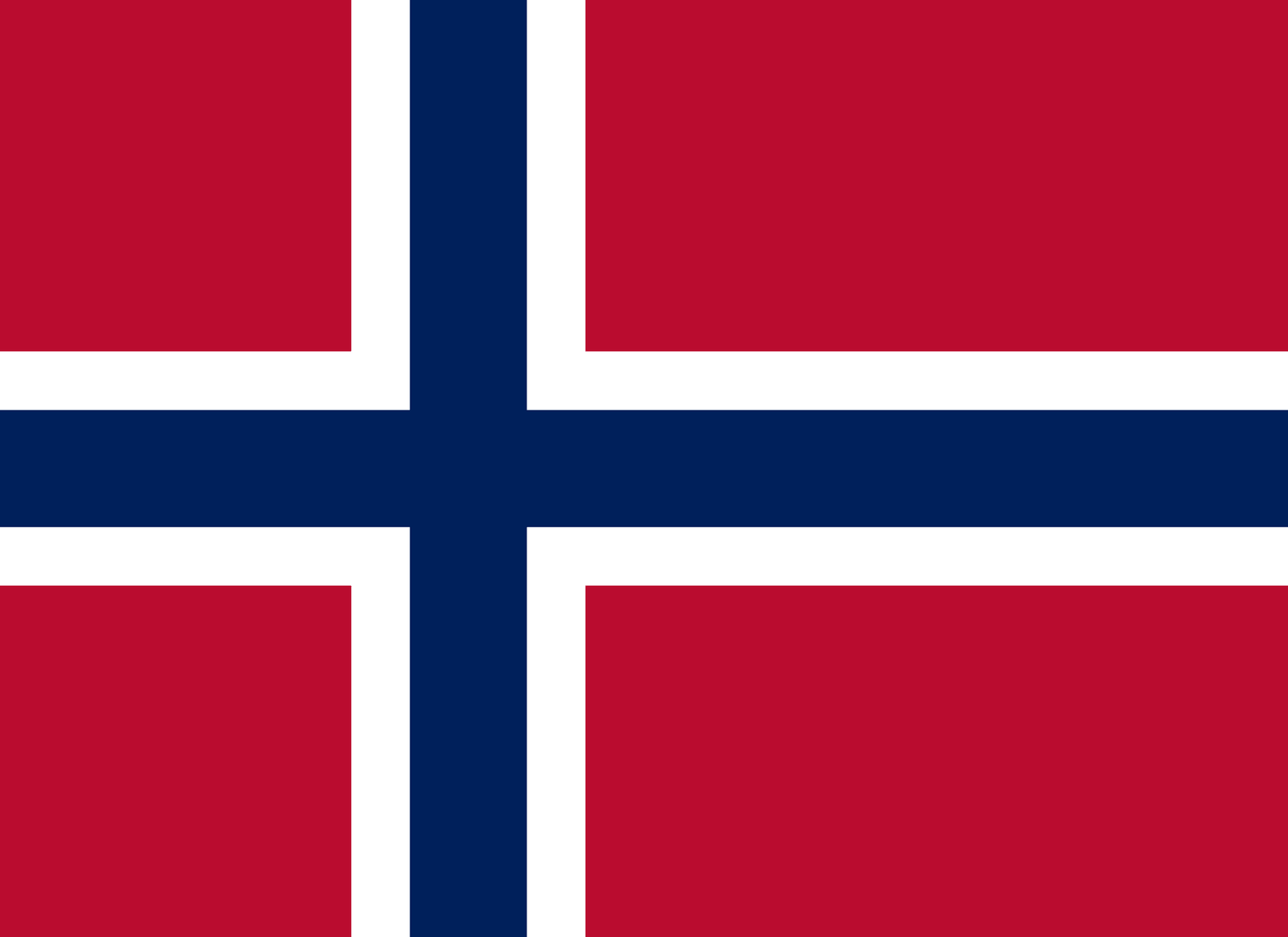
Flag of Norway
| Legal Name | Kingdom of Norway |
|---|---|
| Flag |
|
| Capital City |
Oslo |
| Total Area | 385,207 km² |
| Land Area | 323,802 km² |
| Water Area | 61,405 km² |
| Population | Approximately 5.5 million |
| Major Cities | Oslo (~700,000), Bergen (~280,000), Stavanger (~140,000), Trondheim (~205,000) |
| Currency | Norwegian Krone (NOK) |
| GDP | USD 650 billion |
| GDP Per Capita | USD 115,000 (PPP) |
About of Norway
Norway is a Nordic country located in Northern Europe, occupying the western portion of the Scandinavian Peninsula. It shares land borders with Sweden, Finland, and Russia and has an extensive maritime boundary along the North Atlantic Ocean, the Norwegian Sea, and the Barents Sea. Its long coastline is deeply indented by fjords, providing strategic access to international waters and maritime trade routes.
The capital, Oslo, is the country’s political, economic, and cultural hub, with other major urban centers including Bergen, Trondheim, and Stavanger. Norway has a population of approximately 5.5 million, characterized by a high standard of living, low population density, and an ethnically homogenous composition predominantly of Norwegians, with Sami and immigrant communities. Internationally, Norway is recognized for its humanitarian initiatives, environmental stewardship, and active participation in global organizations, though it is not a member of the EU. Its strategic importance includes Arctic access, energy resources, and maritime influence in the North Atlantic.
Etymology
The name “Norway” derives from the Old Norse term “Norðrvegr”, meaning “the northern way” or “way leading to the north”, reflecting the country’s long coastline and its orientation as a passage for seafaring. Over centuries, this name evolved into Norway in English and Norge in Norwegian. Historically, it signified both a navigational route for traders and a territorial identity for the Norwegian people.
History
Prehistoric and Ancient Civilizations
Evidence of human habitation in Norway dates back to 10,000 BCE following the last Ice Age. Early inhabitants were hunter-gatherers who settled along the coast and river valleys. By 2000 BCE, Bronze Age societies had emerged, leaving rock carvings and early metalwork.
Classical and Medieval Periods
From the 8th to 11th centuries, Norway experienced the Viking Age, during which Norwegian seafarers explored, traded, and raided across Europe and beyond. The unification of Norway under King Harald Fairhair around 872 marked the foundation of the Norwegian kingdom. The medieval period saw the establishment of Christianity, consolidation of monarchy, and the development of trade networks across the North Sea and Baltic Sea.
Early Modern Period and Union
Norway entered into unions with Denmark (1380–1814) and later Sweden (1814–1905). Under Danish rule, Norway experienced centralized governance and influence from European Renaissance and Reformation movements. Nationalism and cultural revival in the 19th century culminated in Norway’s full independence from Sweden in 1905.
20th Century and Contemporary Developments
Norway remained neutral during World War I but was occupied by Germany during World War II (1940–1945). Post-war, Norway became a founding member of the United Nations and the North Atlantic Treaty Organization (NATO), while opting out of the European Union in favor of bilateral agreements. Norway has consistently ranked highly in human development, democracy, and environmental sustainability.
Government and Politics
Norway is a constitutional monarchy with a parliamentary system:
Monarch: Ceremonial head of state.
Prime Minister: Head of government and executive authority.
Legislature: Stortinget, a unicameral parliament responsible for legislation, budget, and oversight.
Judiciary: Independent courts, including the Supreme Court and lower courts.
Administratively, Norway is divided into 11 counties (fylker), further subdivided into municipalities (kommuner). Norway maintains active foreign relations, emphasizing diplomacy, peacekeeping, and Arctic cooperation. Its military focuses on defense, NATO obligations, and international humanitarian missions.
Economy
Norway has a high-income, mixed economy, heavily reliant on natural resources:
Major Industries: Oil and gas, shipping, fishing, forestry, telecommunications, and renewable energy.
Agriculture: Limited by terrain but includes dairy, grains, and livestock.
Services: Significant role in finance, public administration, and tourism.
Natural Resources: Oil, natural gas, hydroelectric power, minerals, and forests.
Trade Partners: EU countries, USA, China, UK.
Challenges: Managing oil dependence and ensuring sustainable development while addressing climate change.
Demographics
Ethnic Composition: Predominantly ethnic Norwegians; Sami indigenous population; immigrant communities from Europe, Africa, and Asia.
Languages: Norwegian (Bokmål and Nynorsk), Sami languages in the north.
Religions: Predominantly Evangelical Lutheran; minority Catholic, Muslim, and other Christian denominations.
Urban vs Rural: ~82% urban; concentrated in Oslo, Bergen, Trondheim, Stavanger.
Population Growth: Slow but steady, supported by immigration and high quality of life.
Culture and Society
Norwegian culture emphasizes equality, community, and outdoor lifestyle. Traditional music, literature, and art reflect Viking heritage and natural landscapes. Cuisine features seafood, dairy, and traditional breads. Social norms promote egalitarianism, environmental stewardship, and democratic participation. Major festivals include Constitution Day (17 May), Sami National Day (6 February), and cultural arts festivals. Outdoor sports such as skiing, hiking, and football are widely practiced.
Education and Healthcare
Norway has a free, compulsory education system with high literacy rates and accessible higher education. Healthcare is universal and publicly funded, emphasizing preventive care, advanced medical infrastructure, and equitable access. Public health achievements include low infant mortality, high life expectancy, and comprehensive vaccination coverage.
Geography and Climate
Norway features mountains (Scandinavian Mountains), fjords, rivers, glaciers, and Arctic islands (Svalbard, Jan Mayen). Climate ranges from temperate along the coast with mild winters to subarctic and polar in the north. Natural hazards include avalanches, landslides, and severe storms. Environmental concerns focus on climate change, coastal erosion, and preservation of ecosystems.
Flora and Fauna
Norway’s biodiversity includes boreal forests, tundra, and marine ecosystems. Native plant species include pine, spruce, birch, and Arctic flora. Wildlife features reindeer, moose, lynx, polar bears (Svalbard), and seabirds. National parks and protected areas ensure conservation of habitats and species.
Pakistan,[f] officially the Islamic Republic of Pakistan,[g] is a country in South Asia. It is the fifth-most populous country, with a population of over 241.5 million,[d] having the second-largest Muslim population as of 2023. Islamabad is the nation’s capital, while Karachi is its largest city and financial centre. Pakistan is the 33rd-largest country by area. Bounded by the Arabian Sea on the south, the Gulf of Oman on the southwest, and the Sir Creek on the southeast, it shares land borders with India to the east; Afghanistan to the west; Iran to the southwest; and China to the northeast. It shares a maritime border with Oman in the Gulf of Oman, and is separated from Tajikistan in the northwest by Afghanistan’s narrow Wakhan Corridor.
Pakistan is the site of several ancient cultures, including the 8,500-year-old Neolithic site of Mehrgarh in Balochistan, the Indus Valley Civilisation of the Bronze Age,[8] and the ancient Gandhara civilisation.[9] The regions that compose the modern state of Pakistan were the realm of multiple empires and dynasties, including the Achaemenid, the Maurya, the Kushan, the Gupta;[10] the Umayyad Caliphate in its southern regions, the Hindu Shahis, the Ghaznavids, the Delhi Sultanate, the Samma, the Shah Miris, the Mughals,[11] and finally, the British Raj from 1858 to 1947.
Spurred by the Pakistan Movement, which sought a homeland for the Muslims of British India, and election victories in 1946 by the All-India Muslim League, Pakistan gained independence in 1947 after the partition of British India, which awarded separate statehood to its Muslim-majority regions and was accompanied by an unparalleled mass migration and loss of life.[12][13] Initially a dominion of the British Commonwealth, Pakistan adopted a republican constitution in 1956 and became an Islamic republic with two geographically separate provinces, East Pakistan and West Pakistan. East Pakistan seceded as the new country of Bangladesh in 1971 after a nine-month-long civil war. In the following four decades, Pakistan has been ruled by governments that alternated between civilian and military, democratic and authoritarian, relatively secular and Islamist.[14]
Pakistan is considered a middle power nation, with the world’s seventh-largest standing armed forces. It is a declared nuclear-weapons state, and is ranked amongst the emerging and growth-leading economies,[15] with a large and rapidly growing middle class.[16][17] Pakistan’s political history since independence has been characterized by periods of significant economic and military growth as well as those of political and economic instability. It is an ethnically and linguistically diverse country, with similarly diverse geography and wildlife. The country continues to face poverty, illiteracy, corruption, and terrorism.[18][19][20] Pakistan is a member of the United Nations, the Shanghai Cooperation Organisation, the Organisation of Islamic Cooperation, the Commonwealth of Nations, the South Asian Association for Regional Cooperation, and the Islamic Military Counter-Terrorism Coalition, and is designated as a major non-NATO ally by the United States.
Map of Norway
Flag: Red with blue cross outlined in white.
Coat of Arms: Golden lion holding an axe on red shield.
National Anthem: Ja, vi elsker dette landet
National Animals / Plants: Eurasian elk (moose), lion (heraldic), Norway spruce.
National Flag (Detailed Section)
The Norwegian flag, adopted in 1821, features a red field with a blue cross outlined in white, inspired by the Danish Dannebrog and symbolizing Norway’s independence and connection to other Nordic nations.
Symbolism:
Red and white: Historical ties to Denmark and traditional Nordic colors.
Blue: Freedom and Norway’s maritime heritage.
Protocol: Displayed on public buildings, homes, and official events; proper folding and illumination rules apply.
Usage: Represents national pride, sovereignty, and unity.
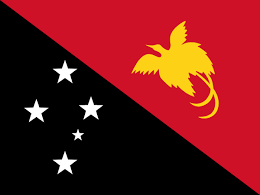
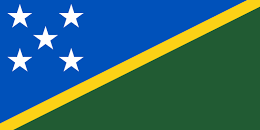
Realted Flags
Flag flying days
| Date | Flag Position | Occasion / Reason |
|---|
| 17 May | Full-mast | Constitution Day (National Day) |
| 7 June | Full-mast | King Harald V’s Birthday |
| 21 February | Full-mast | Sami National Day |
| National Mourning | Half-mast | Death of monarch or national leaders |
| 25 December / 1 January | Full-mast | Christmas / New Year |