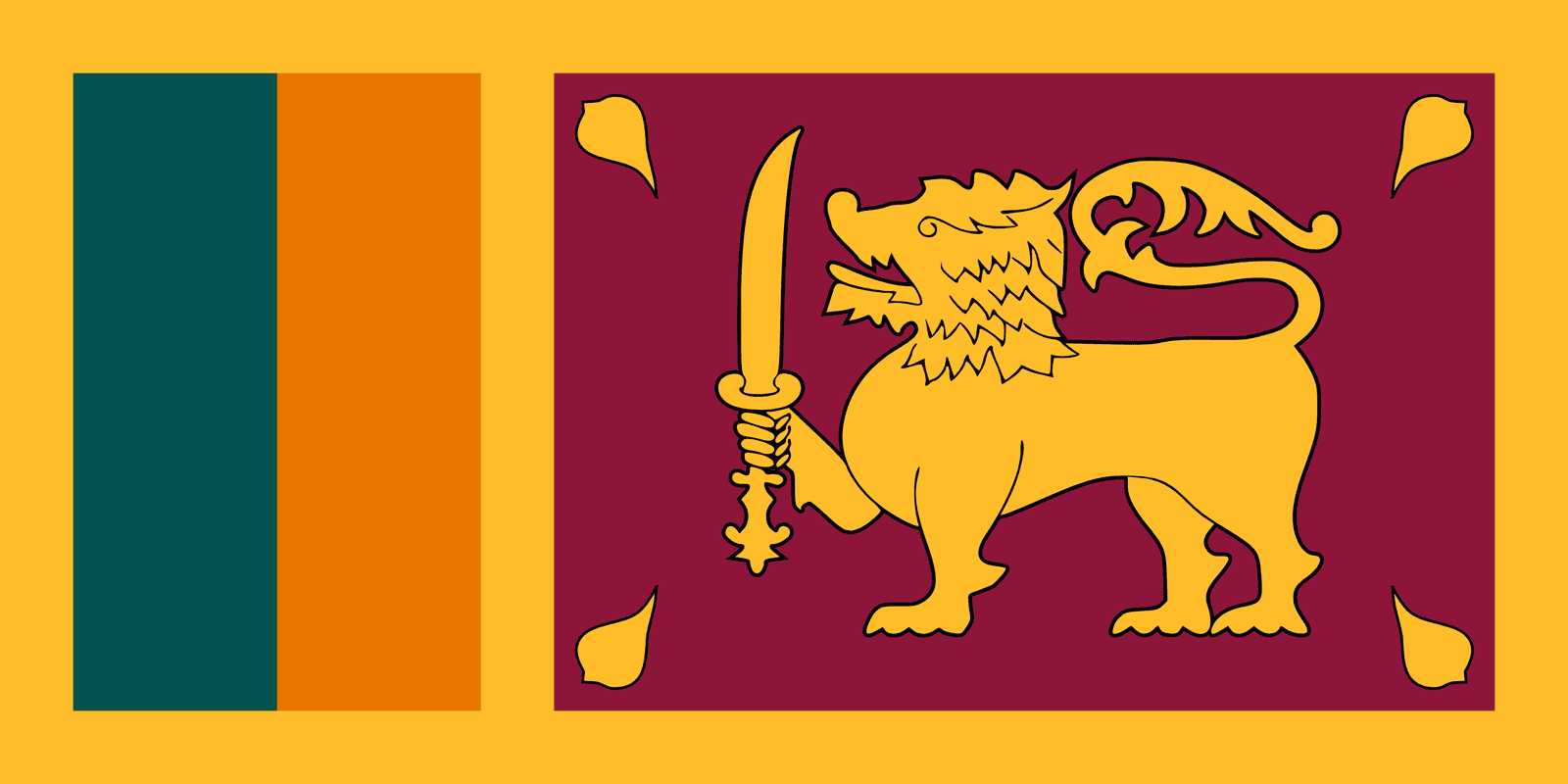
Flag of Sri Lanka
| Legal Name | Democratic Socialist Republic of Sri Lanka |
|---|---|
| Flag |
|
| Capital City |
Sri Jayawardenepura Kotte |
| Total Area | 65,610 km² |
| Land Area | 64,630 km² |
| Water Area | 980 km² |
| Population | Approximately 22 million |
| Major Cities | Colombo (5.6 million metro), Kandy (125,000), Galle (100,000), Jaffna (88,000) |
| Currency | Sri Lankan Rupee (LKR) |
| GDP | USD 92 billion |
| GDP Per Capita | USD 16,050 (PPP) |
About of Sri Lanka
Sri Lanka is a tropical island nation in South Asia, located in the Indian Ocean, southwest of the Bay of Bengal and southeast of the Arabian Sea. It lies near the southern tip of India, separated by the Palk Strait. Its location makes it a crucial maritime hub along historic Indian Ocean trade routes.
The country has no land borders but has extensive maritime boundaries with India to the northwest and the Maldives to the southwest. Its capital, Sri Jayawardenepura Kotte, serves as the administrative center, while Colombo is the largest and most economically vibrant city. The island exhibits a diverse demographic composition, including Sinhalese, Tamil, Moor, and other minority groups, reflecting centuries of migration, trade, and colonial influence.
Sri Lanka is recognized internationally as a sovereign state and is a member of the United Nations, the Commonwealth, the South Asian Association for Regional Cooperation (SAARC), and the Indian Ocean Rim Association (IORA). Strategically located along major shipping lanes, it plays an important role in regional trade, maritime security, and geopolitical affairs in the Indian Ocean region.
Etymology
The name “Sri Lanka” comes from Sanskrit, where “Sri” means “resplendent” or “holy” and “Lanka” means “island,” translating to “Resplendent Island.” Historically, the island was known as Lanka in ancient Hindu epics like the Ramayana, while colonial powers referred to it as Ceylon. The modern name was officially adopted in 1972 when the country became a republic.
History
Prehistoric and Ancient Civilizations
Evidence of human settlement in Sri Lanka dates back over 125,000 years. Early inhabitants practiced agriculture and developed complex irrigation systems. The ancient kingdoms of Anuradhapura (377 BCE–1017 CE) and Polonnaruwa (1017–1236 CE) laid foundations for advanced governance, Buddhism, architecture, and hydraulic engineering.
Classical and Medieval Periods
During medieval times, regional kingdoms such as Kandy, Jaffna, and Sitawaka emerged. Buddhism became the dominant cultural and religious force, influencing literature, law, and art. Trade with India, China, and the Arab world flourished, particularly in cinnamon and gemstones.
Colonial and Imperial Rule
Portuguese traders arrived in 1505, followed by the Dutch in the 17th century. The British gained control in 1815, consolidating the island as Ceylon and integrating it into the British Empire. Plantation agriculture, particularly tea, coffee, and rubber, transformed the economy.
Independence Movement
Nationalist movements emerged in the early 20th century, advocating for political representation and self-governance. Sri Lanka gained independence from Britain on February 4, 1948, becoming a dominion within the Commonwealth.
Post-Independence Events
The country became a republic in 1972, adopting the name Sri Lanka. Ethnic tensions escalated between Sinhalese and Tamil populations, culminating in a civil war from 1983 to 2009, which ended with the defeat of the Liberation Tigers of Tamil Eelam (LTTE). Post-war reconstruction and political reforms have been central to modern developments.
Government and Politics
Sri Lanka is a democratic republic with a semi-presidential system.
Executive: The President is head of state, government, and commander-in-chief of the armed forces, assisted by a cabinet of ministers.
Legislature: Unicameral Parliament with elected representatives enacting laws.
Judiciary: Independent, with the Supreme Court as the highest judicial authority.
Administratively, Sri Lanka is divided into 9 provinces and 25 districts. Internationally, the country maintains diplomatic ties with most nations and participates actively in regional organizations. The Sri Lanka Armed Forces comprise the Army, Navy, and Air Force, focusing on internal security, maritime defense, and disaster response.
Economy
Sri Lanka is classified as an emerging economy. Agriculture, manufacturing, and services drive growth, with major industries including textiles, tea, rubber, coconut, and tourism. Natural resources such as graphite, mineral sands, and precious stones contribute to export revenues.
Key trade partners include India, China, the United States, and the European Union. Economic challenges include debt management, inflation, and reliance on imports for energy. Future outlooks focus on tourism revival, technology-driven industries, and sustainable development.
Demographics
Sri Lanka’s population is diverse:
Ethnic Groups: Sinhalese (~74%), Sri Lankan Tamils (~11%), Indian Tamils (~4%), Moors (~9%), and others.
Languages: Sinhala (official), Tamil (official), English (widely used).
Religions: Buddhism (~70%), Hinduism (~12%), Islam (~10%), Christianity (~7%).
Urban vs Rural: Around 18% urban population, with most residing in rural areas.
Population Growth: Moderate growth, with urbanization increasing in key cities.
Culture and Society
Sri Lanka boasts rich cultural heritage blending South Asian and indigenous traditions. National identity emphasizes Buddhism, art, and historical continuity. Music and dance, particularly Kandyan and Low Country styles, are integral, alongside literature reflecting both Sinhala and Tamil traditions. Cuisine emphasizes rice, coconut, seafood, and spices, with national dishes such as rice and curry and hoppers.
Festivals include Vesak, Sinhala and Tamil New Year, Deepavali, and Christmas. Sports, particularly cricket, rugby, and volleyball, are widely followed.
Education and Healthcare
The education system includes primary, secondary, and tertiary levels, with free government education and universities such as the University of Colombo. Literacy rates exceed 92%, reflecting strong investment in education.
Healthcare is provided through public hospitals and private clinics. Key public health challenges include non-communicable diseases and post-conflict rehabilitation, with significant progress in maternal and child health.
Geography and Climate
Sri Lanka features coastal plains, central highlands, and mountain ranges such as Pidurutalagala. Major rivers include the Mahaweli, Kelani, and Kalu. Climate is tropical, with distinct wet and dry monsoon seasons. Natural hazards include cyclones, floods, and occasional droughts. Environmental concerns focus on deforestation, coastal erosion, and biodiversity loss.
Flora and Fauna
The island hosts diverse ecosystems, including rainforests, mangroves, and dry zones. Native plants include cinnamon, ebony, and teak. Wildlife comprises elephants, leopards, sloth bears, and numerous endemic bird species. National parks, such as Yala and Sinharaja, protect biodiversity and attract eco-tourism.
Map of Sri Lanka
National Flag: Lion holding a sword on maroon background with green and orange vertical stripes.
Coat of Arms: Features a lion, Dharmachakra, and traditional symbols of agriculture and heritage.
National Anthem: Sri Lanka Matha (“Mother Sri Lanka”).
National Animals/Plants: Sri Lankan elephant, blue sapphire, and the Ceylon ironwood tree.
National Flag (Detailed Section)
Adopted in 1950 and modified in 1972, the flag’s maroon field represents the Sinhalese majority, the golden lion symbolizes bravery, and the sword denotes sovereignty. Orange and green stripes represent Tamil and Muslim minorities, respectively, while the yellow border signifies unity. Flag protocol mandates display on national holidays, government buildings, and international events.
Realted Flags
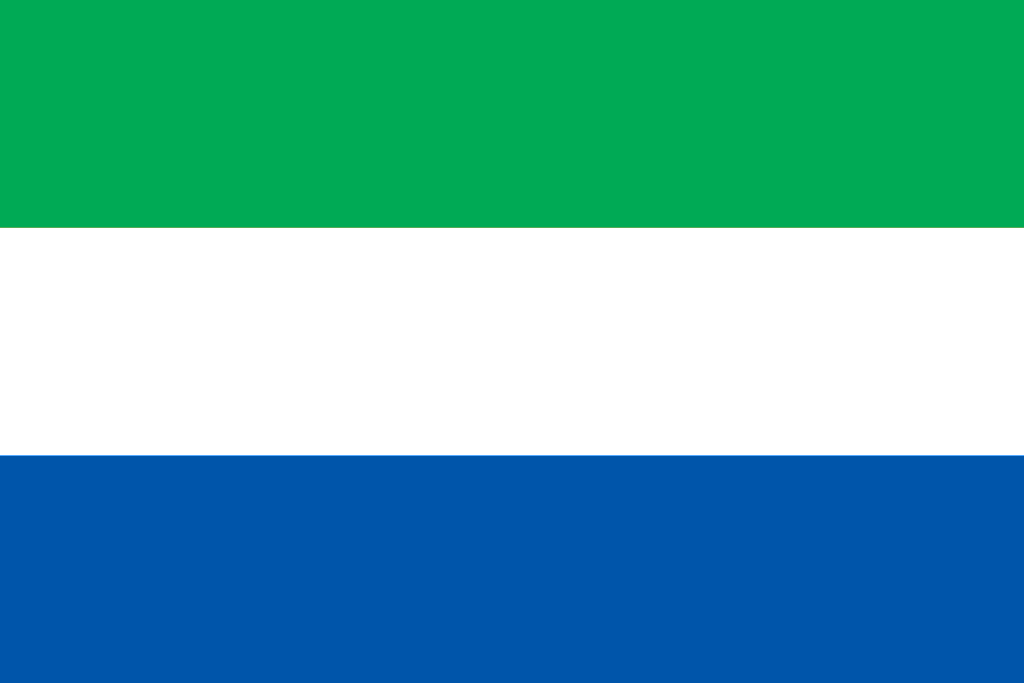
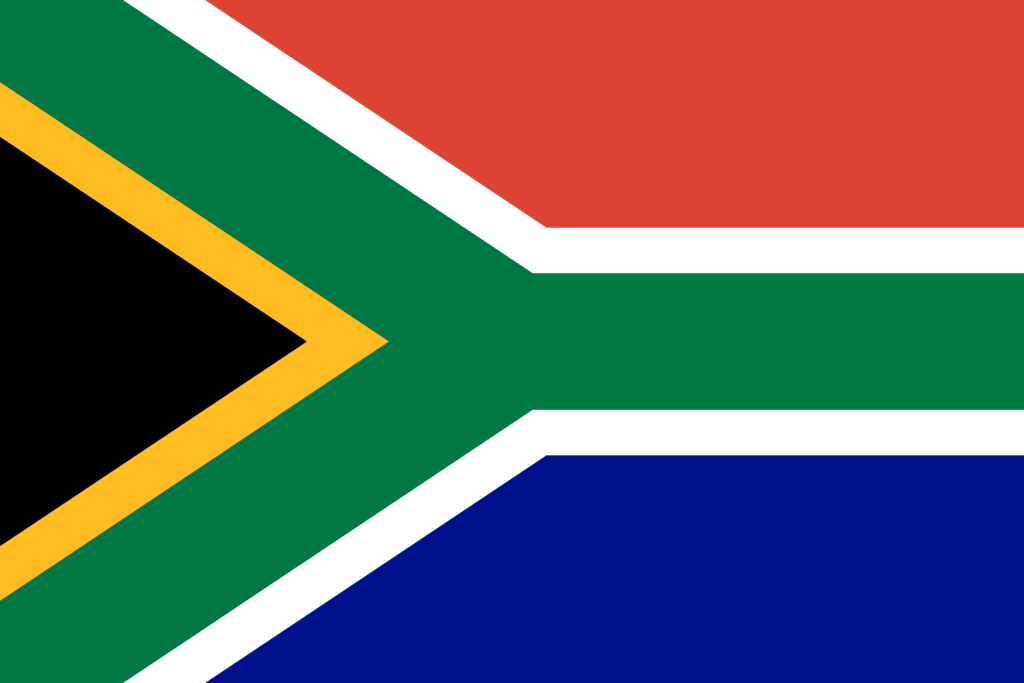
Flag flying days
| Date | Flag Position | Occasion or Reason |
|---|---|---|
| February 4 | Full-mast | Independence Day |
| May 1 | Full-mast | Labour Day |
| December 16 | Full-mast | National Heroes Day |
| As Declared | Half-mast | Mourning or state funerals |