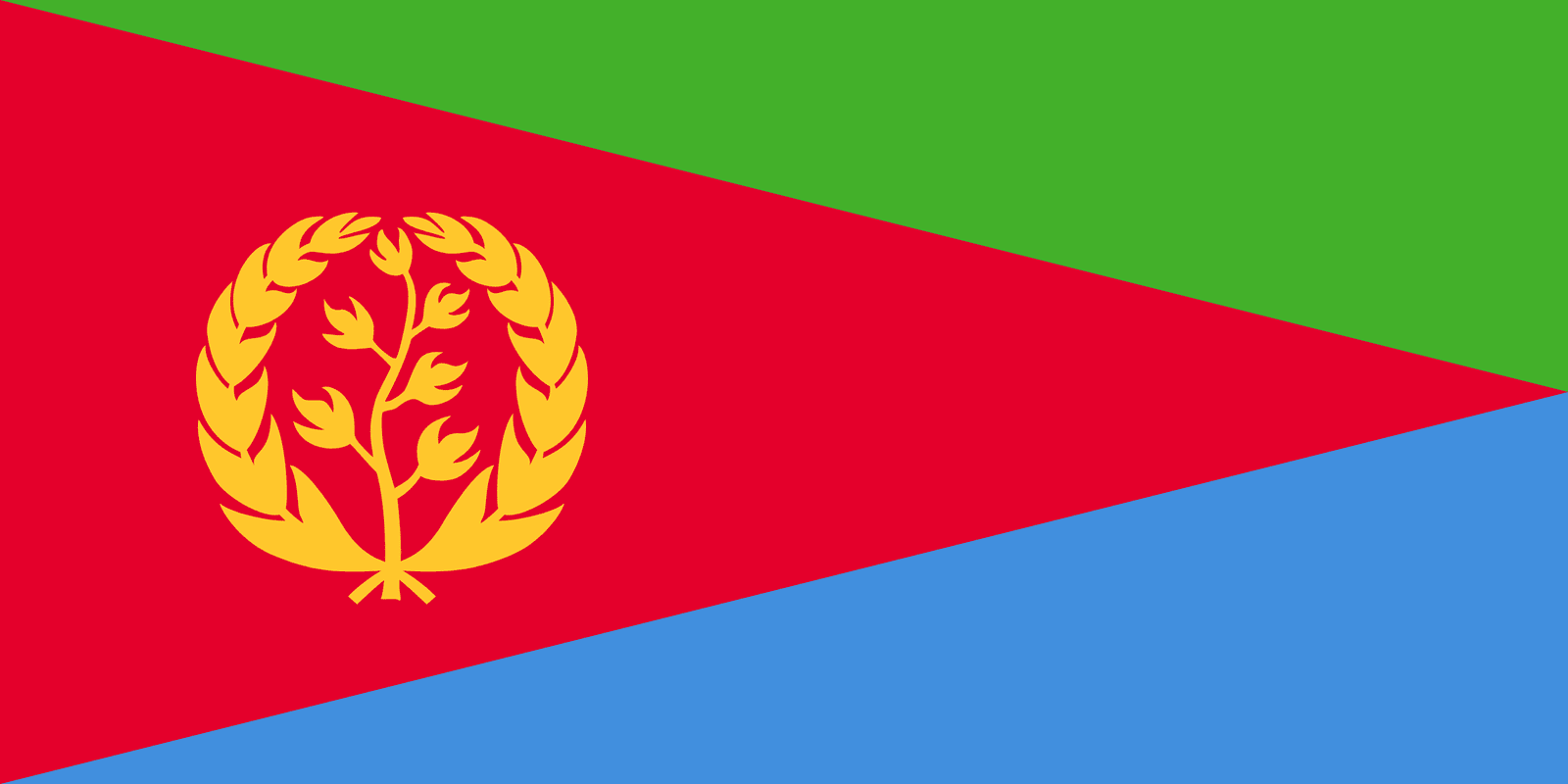
Flag of Eritrea
| Legal Name | State of Eritrea |
|---|---|
| Flag |
|
| Capital City |
Asmara |
| Total Area | 117,600 |
| Land Area | 101,000 |
| Water Area | 16,600 |
| Population | ~3.7 million |
| Major Cities | Asmara (~1 million), Keren (~125,000), Massawa (~60,000), Assab (~35,000) |
| Currency | Eritrean Nakfa (ERN) |
| GDP | ~USD 6.2 billion |
| GDP Per Capita | ~USD 4,050 (PPP) |
About of Eritrea
Eritrea is a country located in the Horn of Africa, bordering the Red Sea to the northeast, Sudan to the west, Ethiopia to the south, and Djibouti to the southeast. Its geographic position provides strategic access to maritime trade routes in the Red Sea, making it historically significant for commerce and military presence in the region.
The capital and largest city, Asmara, is known for its Italian colonial architecture and vibrant urban culture. Other major urban centers include Keren, Massawa, and Assab, which serve as commercial, port, and administrative hubs. Eritrea has a population of approximately 3.7 million people, predominantly living in the highlands and along the western and coastal regions.
Eritrea is recognized as a sovereign state and is a member of the African Union and the United Nations. Its geopolitical significance stems from its Red Sea coastline, which places it near key shipping lanes connecting Europe, the Middle East, and Asia, as well as its proximity to regional conflict zones, influencing security and diplomacy.
Etymology
The name “Eritrea” derives from the ancient Greek term Erythraia, meaning “red,” in reference to the Red Sea. This name was formalized during the Italian colonial period in the late 19th century. Linguistically, it reflects the long-standing interaction between the region and Mediterranean civilizations, emphasizing its coastal identity and strategic maritime position.
History
Eritrea has a rich and diverse history, with evidence of human habitation dating back over 125,000 years. Early civilizations included the Ona culture and other prehistoric communities that developed agriculture and metallurgy.
During classical and medieval periods, the region saw the rise of the Kingdom of Aksum (c. 1st–7th centuries AD), which controlled parts of modern-day Eritrea and Ethiopia, fostering trade with the Arabian Peninsula and Mediterranean civilizations.
From the 16th century, the Ottoman Empire and later Egypt asserted influence over coastal areas. In 1890, Italy established Eritrea as a colony, initiating infrastructure development and urbanization, particularly in Asmara and Massawa.
Eritrea was federated with Ethiopia in 1952, but tensions led to a 30-year independence war. Full independence was achieved in 1993 following a UN-supervised referendum. Post-independence, Eritrea has maintained a one-party political system and has experienced regional conflicts, notably the 1998–2000 border war with Ethiopia.
Government and Politics
Eritrea is a single-party state governed by the People’s Front for Democracy and Justice (PFDJ). While a constitution was ratified in 1997, it has not been fully implemented, and national elections have not occurred. Executive authority is vested in the President, who also serves as the head of state and government.
Legislative functions are theoretically handled by the National Assembly, while the judiciary operates under civil, customary, and Islamic law. The country is divided into six administrative regions (zobas), each managed by regional administrators. Eritrea maintains foreign relations with selective partners and is a member of the African Union and United Nations. Its defense is highly centralized, with mandatory national service contributing to a large standing military.
Economy
Eritrea is classified as a developing economy. Major sectors include agriculture, mining, and small-scale manufacturing. Agriculture employs the majority of the population, with subsistence crops such as sorghum, millet, and livestock. Mining, particularly gold, copper, and zinc extraction, contributes significantly to exports and government revenue. Services, including transport and trade, are gradually expanding.
Natural resources include mineral deposits, fisheries, and potential geothermal and solar energy. Key trade partners include China, Saudi Arabia, and European countries. Economic challenges include international sanctions, limited foreign investment, and infrastructural constraints, while prospects for growth center on mining, renewable energy, and port development.
Demographics
Eritrea has a population composed of nine recognized ethnic groups. The largest are the Tigrinya (≈50%) and Tigre (≈30%), with smaller groups including Saho, Bilen, and Kunama. Languages reflect this diversity, with Tigrinya, Tigre, Arabic, and English widely used.
Religious composition includes Christianity (primarily Eritrean Orthodox) and Islam, with small numbers adhering to traditional faiths. Approximately 60% of the population resides in rural areas, while urban growth in Asmara and other cities continues steadily.
Culture and Society
Eritrean culture blends African, Arab, and European influences. National identity is strongly shaped by the independence struggle and resilience in the face of conflict. Music and dance, such as the traditional Tigrinya dances, are central to social life, while cuisine combines grains, legumes, and spices with coffee rituals reflecting the broader Horn of Africa.
Social norms emphasize family and community ties, hospitality, and respect for elders. Festivals include religious holidays (Eid al-Fitr, Christmas) and independence commemorations. Football, long-distance running, and cycling are popular sports, often tied to community and youth programs.
Education and Healthcare
Education is compulsory and free at the primary level, with secondary and tertiary institutions concentrated in urban areas. Literacy rates are estimated around 80%, with expanding access to higher education and vocational training. Healthcare is provided through public hospitals, regional clinics, and community health programs, but challenges persist due to limited resources and ongoing military obligations. Public health initiatives focus on maternal and child health, vaccination programs, and malaria prevention.
Geography and Climate
Eritrea’s terrain is highly varied, featuring highland plateaus, lowland deserts, and coastal plains along the Red Sea. Major physical features include the Danakil Depression, the Asmara Highlands, and extensive coral reefs. Rivers are seasonal, with limited perennial flow.
The climate ranges from temperate in highlands to arid in lowlands and coastal areas, with a wet season from June to September. Natural hazards include droughts, occasional floods, and earthquakes. Environmental concerns involve deforestation, soil erosion, and water scarcity.
Flora and Fauna
Eritrea has diverse ecosystems ranging from savannas to highland forests. Native plant species include acacia, frankincense trees, and various endemic shrubs. Wildlife includes gazelles, baboons, hyenas, and numerous bird species. Conservation efforts focus on protecting endangered species and habitats, particularly in the Dahlak Archipelago Marine Park and national reserves.
Map of Eritrea
The national flag features a red isosceles triangle with a gold olive wreath and star, over green, blue, and red triangles. The coat of arms depicts a camel surrounded by olive branches. The national anthem, Eritrea, Eritrea, Eritrea, celebrates independence and national unity. National symbols emphasize peace, resilience, and the country’s unique geography and biodiversity.
National Flag (Detailed Section)
The flag’s green represents agriculture and the highlands, blue symbolizes the Red Sea and marine wealth, and red signifies the struggle for independence. The gold star within the olive wreath emphasizes national unity and hope. The flag was adopted in 1993, following independence from Ethiopia, building on symbols used during the liberation struggle.
Protocol requires display on government buildings, during official ceremonies, and at international events, with half-mast reserved for mourning or national remembrance.
Realted Flags
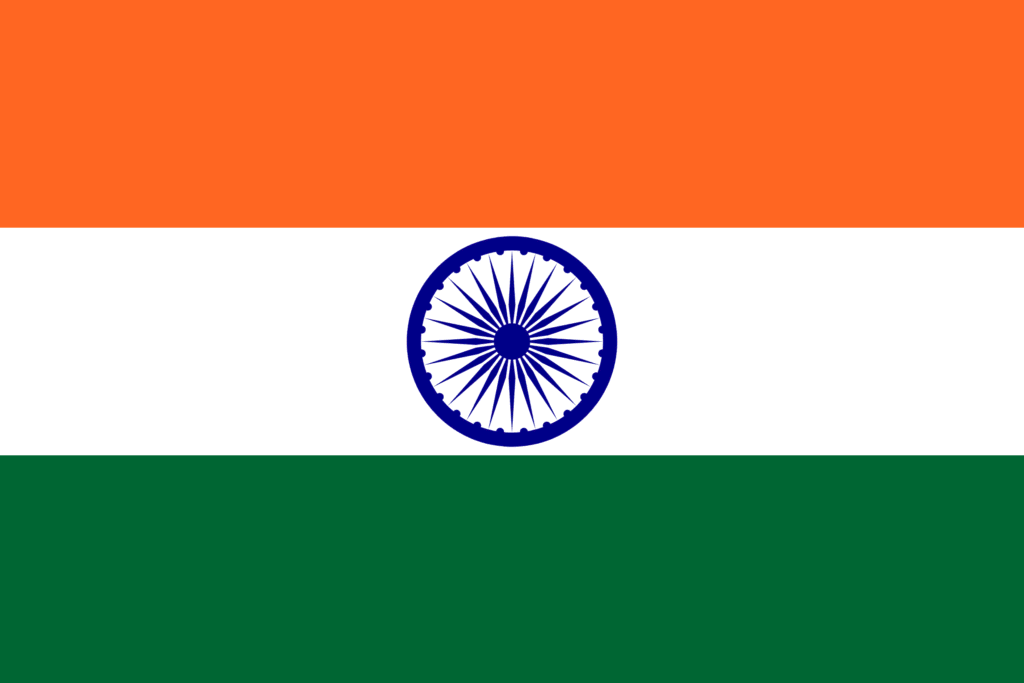
Flag flying days
| Date | Flag Position | Occasion or Reason |
|---|---|---|
| May 24 | Full-mast | Independence Day |
| June 20 | Full-mast | Martyrs’ Day |
| National Mourning Days | Half-mast | Deaths of prominent figures or national tragedies |
| December 1 | Full-mast | Eritrean Liberation Front anniversary |