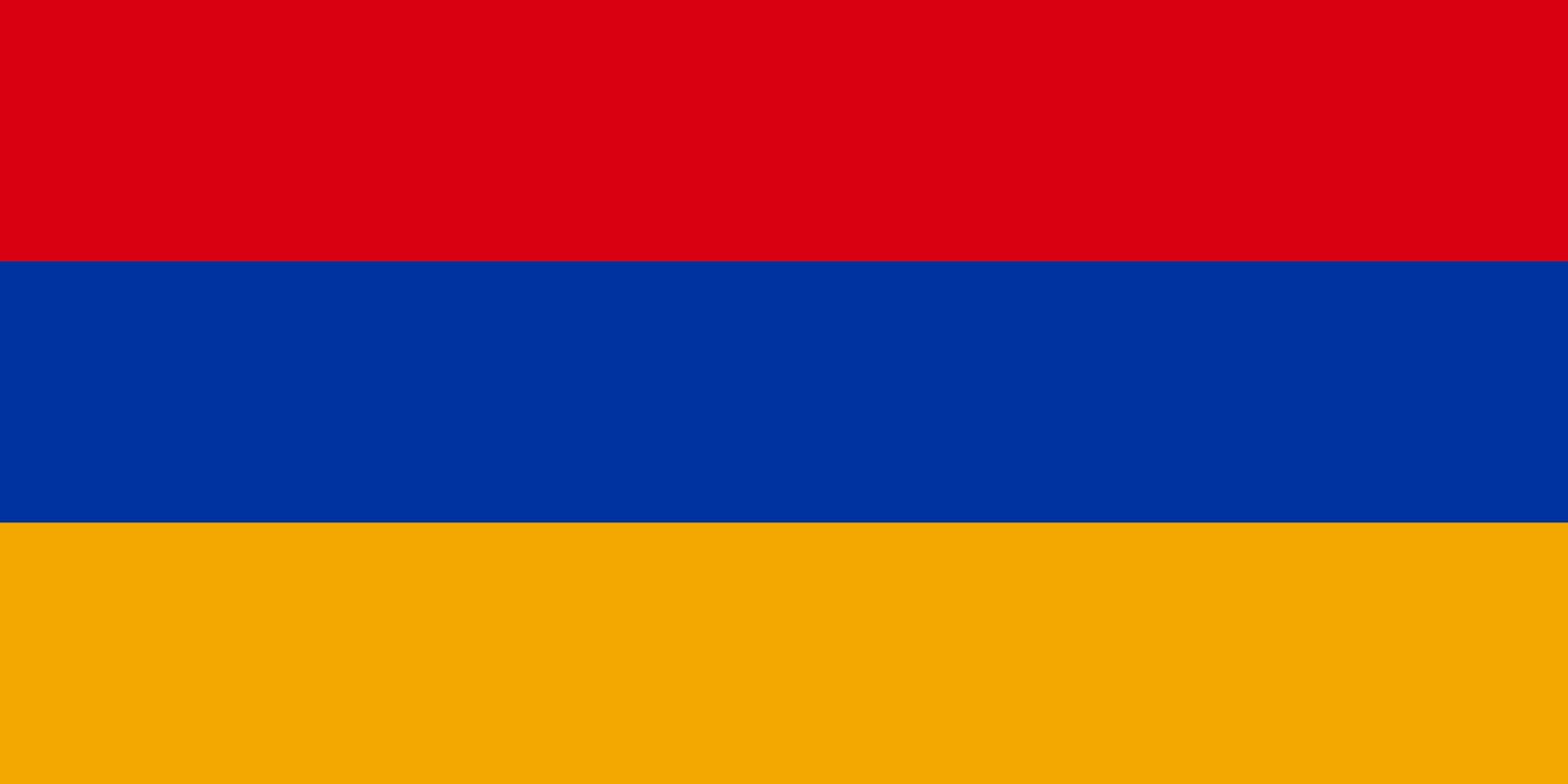
Flag of Armenia
| Legal Name | Republic of Armenia |
|---|---|
| Flag |
|
| Capital City |
Yerevan |
| Total Area | ~29,743 km² |
| Land Area | ~28,470 km² |
| Water Area | ~1,270 km² |
| Population | 3 Million |
| Major Cities | Yerevan (~1.1 million), Gyumri (~115,000), Vanadzor (~85,000), Vagharshapat (~45,000), Hrazdan (~40,000) |
| Currency | Armenian Dram (AMD) |
| GDP | ~US$24–26 billion |
| GDP Per Capita | ~US$8,000 (Nominal), ~US$25,000 (PPP) |
About of Armenia
Armenia is a landlocked country in the South Caucasus region, positioned at the crossroads of Eastern Europe and Western Asia. Despite its relatively small geographic size, Armenia holds deep historical and cultural significance as one of the world’s oldest continuously inhabited regions. The country is characterized by mountainous terrain, highland plateaus, and scenic valleys, with an average elevation exceeding 1,800 meters above sea level.
Armenia shares land borders with Turkey to the west, Georgia to the north, Azerbaijan to the east, and Iran to the south. It has no maritime borders, making regional connectivity highly dependent on land and air routes. The capital and largest city, Yerevan, is one of the world’s oldest continuously inhabited cities and serves as the political, economic, and cultural heart of the nation. Other urban centers such as Gyumri and Vanadzor play important industrial and regional roles.
Internationally, Armenia is recognized as a sovereign republic and is a member of the United Nations, Council of Europe, Commonwealth of Independent States (CIS), Eurasian Economic Union (EAEU), and the Organization for Security and Co-operation in Europe (OSCE). Geopolitically, Armenia occupies a strategic position in the Caucasus, linking trade routes between Europe, Central Asia, and the Middle East. Its regional importance is also influenced by historical conflicts and diplomatic relationships with neighboring states.
2. Etymology
The name “Armenia” is derived from ancient inscriptions dating back to the 6th century BCE, where it appeared as “Armina” or “Arminiya.” The native name, “Hayastan,” originates from the legendary patriarch Hayk, a foundational figure in Armenian mythology. The suffix “-stan,” meaning “land,” translates the native name to “Land of Hayk.” Over centuries, the external term “Armenia” became widely used in international languages, while “Hayastan” remains central to national identity.
3. History
Armenia’s history stretches back to prehistoric settlements and early Bronze Age cultures, including the Urartian Kingdom (9th–6th century BCE), which established advanced irrigation and fortification systems. Following Urartu’s fall, Armenia came under the influence of Persian, Hellenistic, and Roman powers, becoming a crossroads of civilizations.
In 301 CE, Armenia became the first nation to adopt Christianity as a state religion, shaping its identity and culture profoundly. During the medieval period, Armenian kingdoms and principalities flourished, particularly the Bagratid Kingdom and the Kingdom of Cilicia, before succumbing to Mongol and later Ottoman and Persian dominance.
In the early 20th century, Armenia experienced significant upheaval, including the Armenian Genocide during World War I and the collapse of empires. It briefly achieved independence in 1918, before incorporation into the Soviet Union in 1922 as the Armenian Soviet Socialist Republic. Armenia regained full independence in 1991 following the dissolution of the USSR. Post-independence history includes political reforms, economic transition, and regional conflicts, most notably disputes involving Nagorno-Karabakh and evolving diplomatic relations.
4. Government and Politics
Armenia is a unitary parliamentary republic governed by a constitution adopted in 1995 and amended multiple times. The political system is structured around three main branches:
Executive: Led by the Prime Minister, who holds primary executive authority. The President serves as head of state with largely ceremonial duties.
Legislative: A unicameral National Assembly responsible for lawmaking, budget approval, and oversight.
Judicial: An independent judiciary headed by the Constitutional Court and Court of Cassation.
Administratively, Armenia is divided into 10 provinces (marzes) and the capital city of Yerevan, which has special administrative status. In foreign relations, Armenia participates in regional alliances, peacekeeping missions, and international diplomacy. The country maintains armed forces focused on territorial defense and regional security.
5. Economy
Armenia is considered an emerging and upper-middle-income economy, transitioning from a Soviet-planned system to a market-oriented structure. The economy is diversified across information technology, mining, agriculture, manufacturing, and services.
Key economic sectors include:
Information Technology and Software Development: A rapidly growing sector attracting foreign investment.
Mining and Natural Resources: Copper, molybdenum, gold, and precious stones.
Agriculture: Fruits, vegetables, wine, and livestock production.
Manufacturing and Services: Textiles, food processing, tourism, and finance.
Primary trade partners include Russia, the European Union, China, and regional neighbors. Economic challenges involve limited natural energy resources, geopolitical tensions, and migration trends, while future growth is linked to technology innovation, renewable energy, and regional trade corridors.
6. Demographics
Armenia’s population is predominantly ethnic Armenian, representing over 95% of residents. Minority communities include Yezidis, Russians, Kurds, and Assyrians. The official and national language is Armenian, which has its own unique alphabet developed in the 5th century.
Religion plays a significant role, with the Armenian Apostolic Church being the dominant faith. Urbanization is high, with the majority of citizens residing in cities—particularly Yerevan. Population growth has been relatively slow due to low birth rates and outward migration, although diaspora communities remain closely connected to the homeland.
7. Culture and Society
Armenian culture is deeply rooted in ancient traditions, Christianity, and artistic heritage. Music, dance, and architecture reflect centuries of cultural continuity. Traditional instruments like the duduk and folk dances such as kochari are central to celebrations. Armenian cuisine features dishes like lavash bread, dolma, khorovats (barbecue), and apricot-based desserts.
Social values emphasize family ties, respect for elders, and education. National holidays commemorate independence, religious observances, and historical milestones. Chess, football, wrestling, and weightlifting are among the most popular sports, with chess holding a particularly prominent place in education and society.
8. Education and Healthcare
Education in Armenia is compulsory and free at the primary and secondary levels, with a literacy rate exceeding 99%. Higher education institutions, including Yerevan State University, attract regional and international students, especially in science and technology fields.
Healthcare operates through a mixed public-private system, offering universal access to essential services. Public health initiatives focus on vaccination, maternal care, and disease prevention. Challenges include rural access disparities and modernization of medical infrastructure, while achievements include expanded coverage and improved health indicators.
9. Geography and Climate
Armenia is largely mountainous, featuring the Lesser Caucasus range, volcanic plateaus, and fertile valleys. Major geographic features include Mount Aragats, the country’s highest peak, and Lake Sevan, one of the largest high-altitude freshwater lakes in the world. Rivers such as the Aras and Hrazdan are vital for agriculture and energy.
The climate is predominantly continental, with hot summers and cold winters, varying by altitude. Natural hazards include earthquakes, landslides, and droughts. Environmental concerns focus on deforestation, water management, and air pollution, alongside conservation initiatives for natural reserves.
10. Flora and Fauna
Armenia hosts rich biodiversity due to its varied elevation and climate zones. Native plant species include apricot trees, oak forests, wildflowers, and alpine grasses. Wildlife features brown bears, lynxes, wolves, Armenian mouflon, and diverse bird species. Protected areas such as Dilijan National Park and Khosrov Forest State Reserve safeguard ecosystems and promote eco-tourism.
Map of Armenia
National symbols express Armenia’s identity and heritage:
National Flag: Red, blue, and orange tricolor.
Coat of Arms: Features Mount Ararat, a shield with historic dynasties, and an eagle and lion symbolizing strength.
National Anthem: “Mer Hayrenik” (“Our Fatherland”).
National Animal: Golden Eagle (symbolic).
National Flower: Apricot blossom.
National Monument: Mount Ararat, a cultural and historical emblem.
National Flag (Detailed Section)
The Armenian flag consists of three horizontal stripes: red (top), blue (middle), and orange (bottom). Officially adopted in 1918 and re-established in 1991, the colors carry symbolic meaning. Red represents the Armenian Highlands and the struggle for survival and independence. Blue symbolizes the peaceful skies and the nation’s aspiration for stability. Orange signifies creativity, courage, and the hardworking nature of the people.
Flag protocol mandates respectful display on government buildings, public institutions, and national holidays. It is also used internationally to represent Armenia in diplomatic and sporting events.
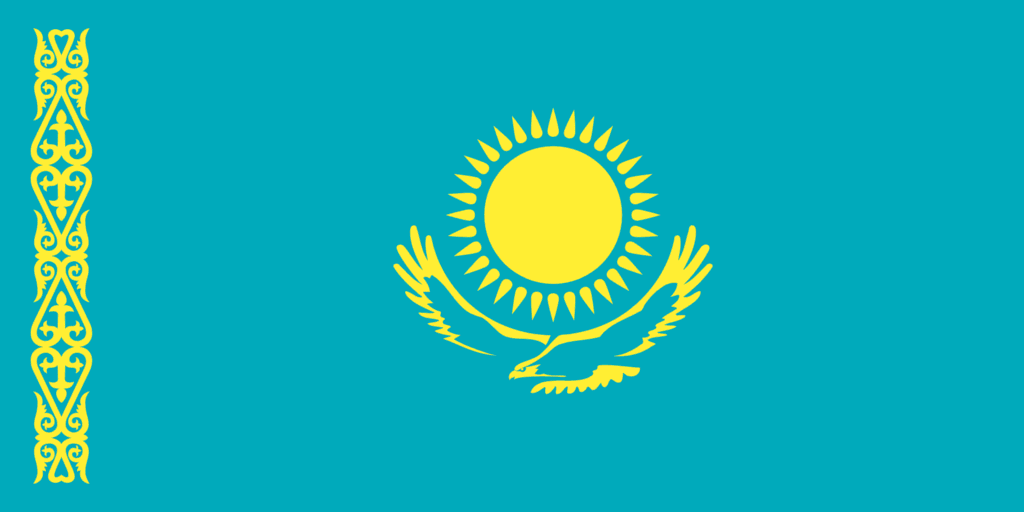
Realted Flags
Flag flying days
| Date | Flag Position | Occasion / Reason |
|---|---|---|
| May 28 | Full-mast | Republic Day (First Independence, 1918) |
| September 21 | Full-mast | Independence Day (1991) |
| December 7 | Half-mast | Earthquake Remembrance Day |
| Official mourning days | Half-mast | National remembrance or state funerals |