Flag of Latvia
| Legal Name | Republic of Latvia |
|---|---|
| Flag |
|
| Capital City |
Riga |
| Total Area | 64,589 km² |
| Land Area | Approximately 62,249 km² |
| Water Area | Approximately 2,340 km² |
| Population | Approximately 1.88–1.9 million |
| Major Cities | Riga (610,000), Daugavpils (80,000), Liepāja (65,000), Jelgava (55,000), Jūrmala (50,000) |
| Currency | Euro (EUR) |
| GDP | Approximately USD 40–45 billion |
| GDP Per Capita | Approximately USD 21,000–23,000 (Nominal) |
About of Latvia
Latvia is a Northern European country located in the Baltic region along the eastern shore of the Baltic Sea. It is one of the three Baltic states, together with Estonia and Lithuania, and forms part of the European Union and the broader Nordic–Baltic geopolitical space. Latvia’s position has historically placed it at the crossroads of trade routes connecting Eastern and Western Europe.
The country shares land borders with Estonia to the north, Lithuania to the south, Russia to the east, and Belarus to the southeast, while its western boundary is formed by the Baltic Sea and the Gulf of Riga. Riga, the capital and largest city, dominates Latvia’s political, economic, and cultural life and serves as a major port and regional hub.
Latvia’s population is relatively small but culturally diverse, shaped by centuries of foreign rule, migration, and trade. Internationally, Latvia is recognized as a sovereign democratic republic and an active participant in European and transatlantic institutions. Its strategic importance lies in its location on NATO’s eastern flank and its role in regional security, energy transit, and Baltic maritime trade.
Etymology
The name “Latvia” derives from the Latgalians, an ancient Baltic tribe that inhabited parts of eastern Latvia. The Latinized form Latvia entered European usage during the medieval period. Linguistically, the name reflects the Baltic roots of the Latvian people and language, maintaining continuity from early tribal identities to the modern nation-state.
History
Prehistoric and Ancient Periods
Human settlement in present-day Latvia dates back to the end of the last Ice Age. Early inhabitants practiced hunting, fishing, and later agriculture. Baltic tribes, including the Latgalians, Semigallians, Selonians, and Curonians, formed distinct cultural groups.
Medieval Period
From the 12th century, German crusading orders and merchants established control over the region, integrating it into the medieval trade network of the Hanseatic League. Riga emerged as a major commercial city during this era.
Foreign Rule and Empires
Over subsequent centuries, Latvia came under Polish-Lithuanian, Swedish, and eventually Russian imperial rule. By the late 18th century, the territory was fully absorbed into the Russian Empire.
Independence and Interwar Period
Following World War I and the collapse of imperial powers, Latvia declared independence in 1918. The interwar period saw the development of state institutions, culture, and the economy.
World War II and Soviet Era
Latvia was occupied successively by the Soviet Union and Nazi Germany during World War II, suffering significant human and material losses. After the war, it was incorporated into the Soviet Union as the Latvian Soviet Socialist Republic until 1991.
Restoration of Independence and Modern Era
Latvia restored its independence in 1991 amid the dissolution of the Soviet Union. Since then, it has pursued democratic governance, market reforms, and integration into Western institutions, joining the European Union and NATO in 2004. Contemporary politics focus on security, economic development, and demographic sustainability.
Government and Politics
Latvia is a parliamentary republic governed under a democratic constitutional framework. The Constitution, adopted in 1922 and later restored, defines the separation of powers and the protection of fundamental rights.
Executive authority is exercised by the government, led by the Prime Minister, while legislative power rests with the unicameral parliament, the Saeima. The President serves as head of state with primarily ceremonial and supervisory functions. The judiciary operates independently through a system of courts culminating in the Supreme Court and Constitutional Court.
Administratively, Latvia is divided into municipalities and cities of national significance. The country maintains active foreign relations and is a member of the European Union, NATO, the United Nations, and other international organizations. National defense is centered on the Latvian National Armed Forces, integrated into NATO’s collective security framework.
Economy
Latvia is classified as a high-income, developed economy with a strong orientation toward services and exports. Since independence, it has transitioned from a centrally planned system to a market-based economy.
Key industries include logistics and transport, information technology, manufacturing, woodworking, food processing, and financial services. Agriculture remains important in rural areas, producing grains, dairy products, and meat.
Natural resources are limited, primarily forests, peat, and agricultural land. Latvia’s main trade partners include other EU member states, with exports consisting largely of machinery, wood products, foodstuffs, and services. Economic challenges include demographic decline, labor shortages, and exposure to external economic shocks, while long-term prospects emphasize innovation, digitalization, and green energy.
Demographics
Latvia’s population is ethnically mixed, with Latvians forming a majority alongside Russian, Belarusian, Ukrainian, and other minorities. Latvian is the official language and a core element of national identity.
Christianity, particularly Lutheranism and Catholicism, is the dominant religion, alongside Orthodox Christianity and a significant secular population. Most residents live in urban areas, particularly around Riga. Population growth has been negative in recent decades due to low birth rates and emigration, though stabilization efforts continue.
Culture and Society
Latvian culture is deeply rooted in folk traditions, music, and seasonal rituals. National identity places strong emphasis on language, song, and historical continuity. Choral singing and folk festivals are especially prominent and internationally recognized.
The arts flourish through literature, theater, and contemporary design. Latvian cuisine reflects Northern European influences, featuring rye bread, dairy products, fish, and seasonal ingredients. Social norms emphasize modesty, respect for nature, and community cohesion. Ice hockey, basketball, and football are popular sports, alongside outdoor recreation.
Education and Healthcare
Latvia maintains a comprehensive education system with compulsory primary and secondary schooling and a strong emphasis on higher education and research. Literacy rates are high, and universities in Riga serve both domestic and international students.
The healthcare system is publicly funded with private sector participation. While access to basic care is widespread, challenges include funding constraints and population aging. Public health initiatives focus on preventive care and modernization of services.
Geography and Climate
Latvia’s landscape is predominantly flat, characterized by low plains, forests, rivers, and an extensive coastline along the Baltic Sea. Major rivers include the Daugava, Gauja, and Venta.
The climate is temperate and maritime, with mild summers and cold winters. Seasonal variation is significant, with snowfall common in winter. Natural hazards are generally limited, though flooding and coastal erosion occur. Environmental priorities include forest management, biodiversity protection, and water quality.
Flora and Fauna
Latvia is one of Europe’s most forested countries, with forests covering over half of its territory. Native plant species include pine, spruce, birch, and oak.
Wildlife features deer, wild boar, foxes, beavers, and a rich variety of bird species. National parks and protected areas, such as Gauja National Park, play a key role in conservation and sustainable tourism.
Map of Latvia
Latvia’s national symbols emphasize endurance, cultural continuity, and independence. They reflect the country’s historical struggles and close connection to nature.
National Flag (Detailed Section)
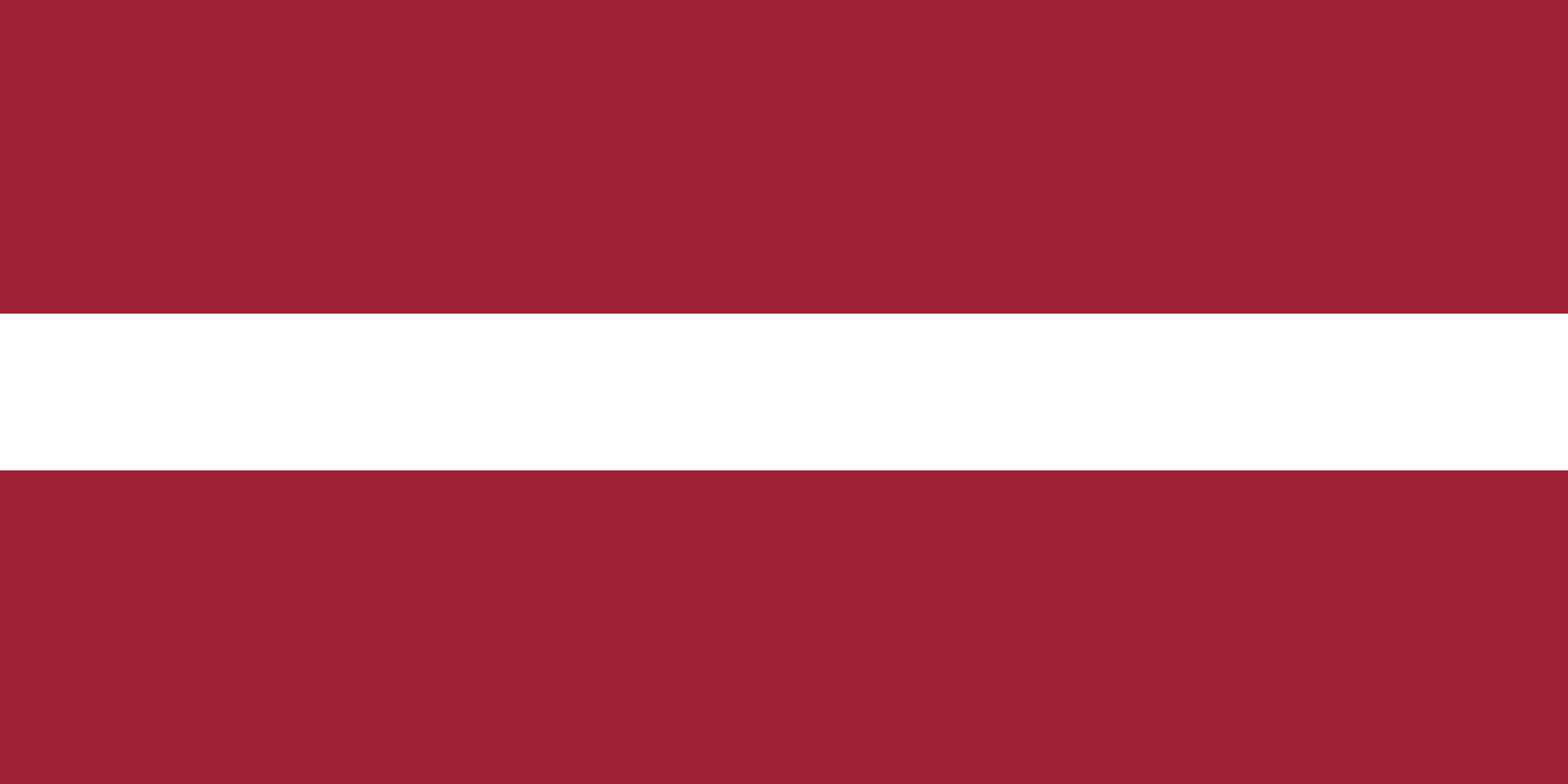
The Latvian flag consists of two dark red horizontal bands separated by a white stripe. Its design dates back to medieval times and was officially adopted in the modern era during the independence movement. The red symbolizes courage and sacrifice, while the white represents truth and justice. The flag is prominently displayed on public buildings and during national celebrations in accordance with official protocol.
Realted Flags
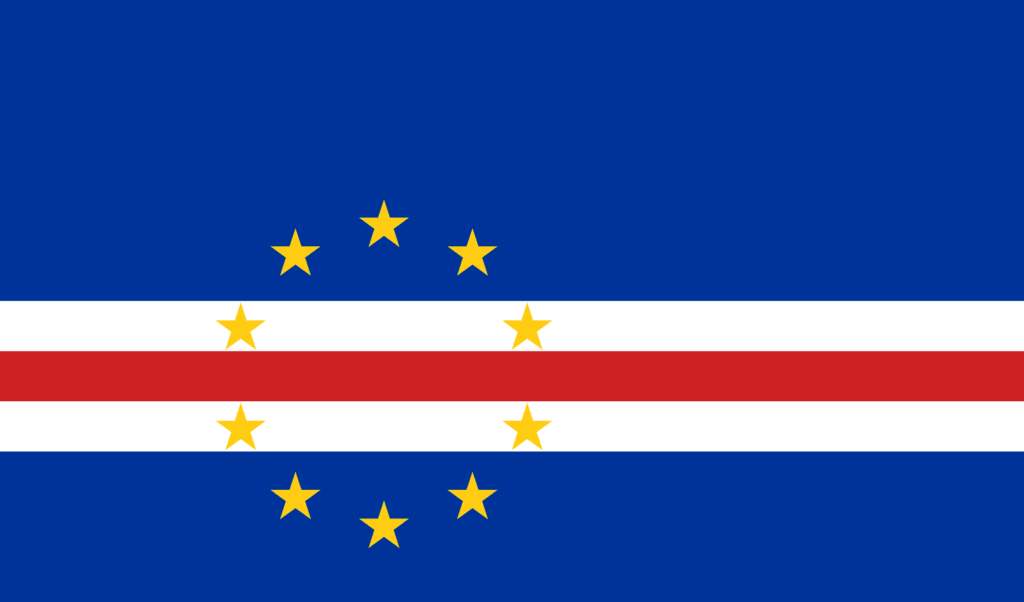
Flag flying days
| Date | Flag Position | Occasion or Reason |
|---|---|---|
| November 18 | Full-mast | Proclamation of the Republic of Latvia |
| May 4 | Full-mast | Restoration of Independence Day |
| June 14 | Half-mast | Commemoration of Victims of Communist Repression |
| National mourning days | Half-mast | Officially declared remembrance periods |