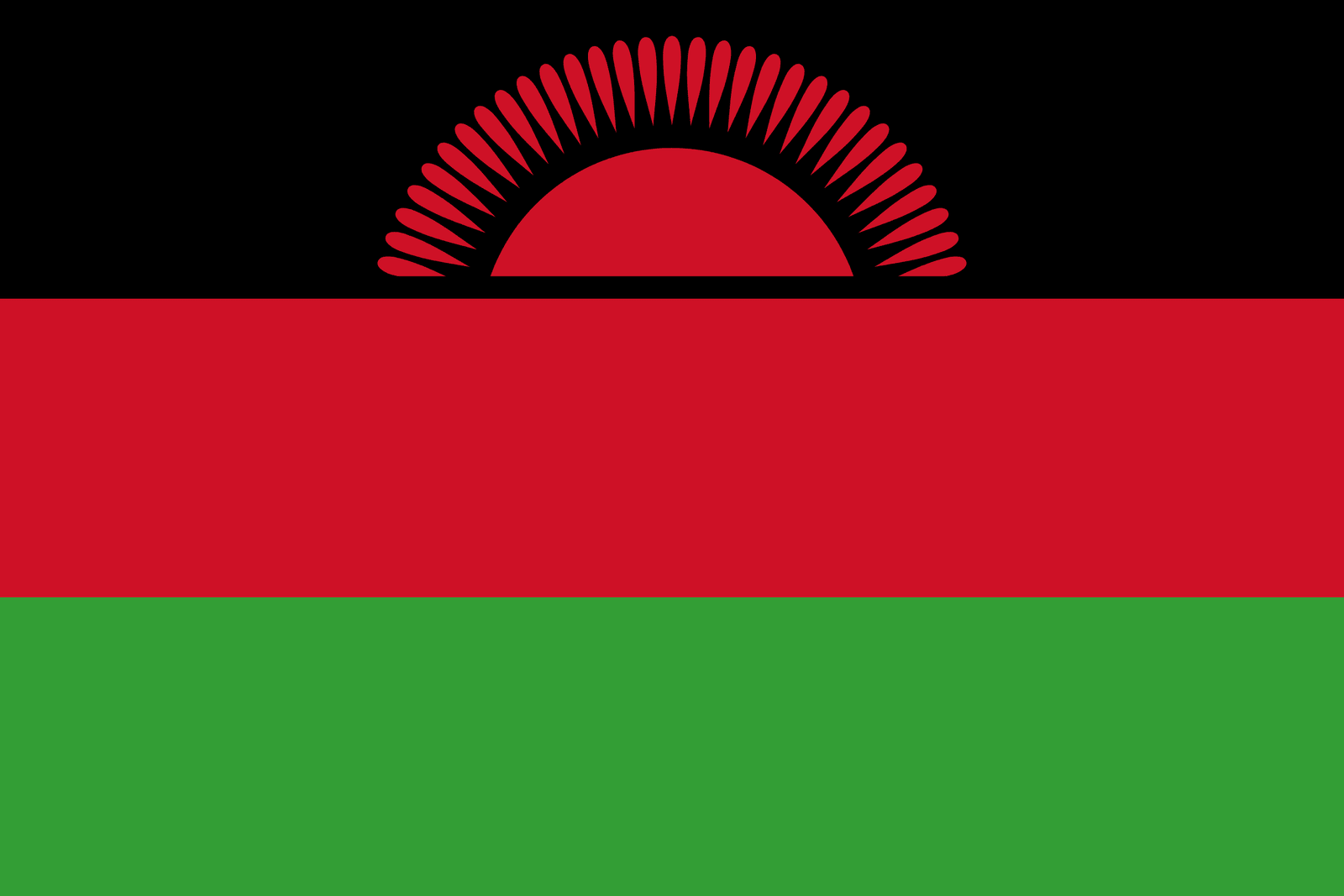
Flag of Malawi
| Legal Name | Republic of Malawi |
|---|---|
| Flag |
|
| Capital City |
Lilongwe |
| Total Area | Approximately 118,484 km² |
| Land Area | Approximately 94,276 km² |
| Water Area | Approximately 24,208 km² |
| Population | Approximately 20.5 million |
| Major Cities | Lilongwe (1.3 million), Blantyre (1.1 million), Mzuzu (221,000), Zomba (88,000), Mangochi (66,000) |
| Currency | Malawian Kwacha (MWK) |
| GDP | Approximately USD 14.2 billion |
| GDP Per Capita | Approximately USD 690 (Nominal) |
About of Malawi
Malawi is a landlocked country in southeastern Africa, bordered by Tanzania to the north and northeast, Mozambique to the east, south, and southwest, and Zambia to the west. It is dominated by the Great Rift Valley, Lake Malawi, and a range of plateaus and mountains that contribute to its varied topography and fertile soil.
The capital, Lilongwe, is the administrative and political hub, while Blantyre serves as the economic and financial center. Malawi’s population is primarily rural, with agriculture forming the backbone of the economy. Despite its modest size, Malawi holds a significant role in regional cooperation within the Southern African Development Community (SADC) and is recognized internationally for its political stability and efforts in environmental conservation.
Strategically, Malawi’s proximity to Lake Malawi, one of Africa’s largest lakes, provides access to freshwater resources and fisheries, critical for domestic consumption and regional trade. The nation’s positioning also connects it to vital trade corridors within southern Africa.
Etymology
The name “Malawi” is derived from the Maravi people, an ethnic group that historically inhabited the region. The term “Maravi” means “flames” or “light,” likely referencing the dazzling sunrise over Lake Malawi or the expansive horizon of the plateau lands. Over time, European explorers and colonial administrators adapted the term into “Malawi,” which was officially adopted upon independence in 1964.
History
Prehistoric and Ancient Civilizations
Archaeological evidence indicates that humans have inhabited Malawi for tens of thousands of years. Early communities relied on hunting, fishing, and later settled agriculture.
Medieval Period and Maravi Kingdom
From the 15th century, the Maravi Kingdom flourished, establishing trade networks for ivory, iron, and slaves with coastal Swahili merchants and central African kingdoms. The kingdom shaped cultural and linguistic patterns still observed today.
Colonial Rule
In the late 19th century, Malawi fell under British influence as part of the British Central Africa Protectorate, later renamed Nyasaland. Missionaries introduced Western education and Christianity, while colonial administration focused on cash crops such as tobacco and tea.
Independence Movement
The nationalist movement, led by Dr. Hastings Kamuzu Banda, demanded political reforms, culminating in Nyasaland gaining independence on July 6, 1964. Banda became the first Prime Minister and later President, establishing Malawi as a one-party state until the 1990s.
Key Post-Independence Events
Malawi transitioned to multi-party democracy in 1994, with Bakili Muluzi elected as the first democratically chosen president. Since then, Malawi has pursued political pluralism and socioeconomic reforms, though it continues to face challenges in poverty alleviation and infrastructure development.
Government and Politics
Malawi is a unitary presidential republic. The President serves as both head of state and government, elected by popular vote for a five-year term. Legislative authority is vested in a unicameral National Assembly, while an independent judiciary oversees the rule of law.
Administratively, Malawi is divided into three regions—Northern, Central, and Southern—further subdivided into 28 districts. The country maintains active engagement with international organizations such as the United Nations, African Union, Commonwealth, and SADC. The Malawi Defence Force focuses on border security, disaster response, and peacekeeping operations.
Economy
Malawi is classified as a developing country with an economy heavily dependent on agriculture, which accounts for about one-third of GDP and employs the majority of the population. Key crops include tobacco, tea, sugarcane, maize, and coffee. The manufacturing sector is limited but includes food processing, textiles, and cement production. The services sector is growing, especially in tourism, finance, and retail.
Natural resources include uranium, coal, bauxite, and freshwater from Lake Malawi. Major trade partners include South Africa, Zimbabwe, Zambia, and the European Union. Economic challenges include vulnerability to climate shocks, high poverty rates, and limited industrialization. Future economic growth focuses on diversification, sustainable agriculture, and investment in renewable energy.
Demographics
Malawi has a young and ethnically diverse population. Major ethnic groups include Chewa, Lomwe, Yao, Tumbuka, and Sena. Chichewa is the national language, while English is widely used in government, education, and business. The population is predominantly Christian, with significant Muslim communities in the south and east. About 85% of the population lives in rural areas, though urbanization is increasing gradually. Population growth is moderate, supported by high fertility rates and improving healthcare.
Culture and Society
Malawi’s culture is deeply rooted in ethnic traditions, music, dance, and oral storytelling. National identity blends local customs with influences from colonial history and Christianity. Music genres include traditional drumming, gule wamkulu masked dances, and contemporary pop and gospel.
Festivals and holidays include Independence Day (July 6), Martyrs’ Day, Christmas, and Eid al-Fitr. Social norms emphasize community cohesion, respect for elders, and strong family networks. Football is the most popular sport, alongside netball and athletics.
Education and Healthcare
The education system consists of primary, secondary, and tertiary levels, with government schools offering free primary education. Literacy rates are improving, and universities such as the University of Malawi provide higher education opportunities.
Healthcare is primarily public, with private facilities supplementing services. Major challenges include infectious diseases such as malaria and HIV/AIDS, though vaccination programs and maternal health initiatives have improved outcomes in recent years.
Geography and Climate
Malawi is dominated by the Great Rift Valley and Lake Malawi, which stretches over 560 km along the eastern border. Highlands, plateaus, and lowlands shape diverse agricultural zones. Rivers such as the Shire feed into Lake Malawi, supporting irrigation and hydropower.
The climate is tropical, with a rainy season from November to April and a dry season from May to October. Natural hazards include floods, droughts, and occasional earthquakes. Environmental concerns focus on deforestation, soil erosion, and water pollution in Lake Malawi.
Flora and Fauna
Malawi’s biodiversity includes miombo woodlands, montane forests, and freshwater ecosystems. Plant species include baobab, acacia, and endemic orchids. Wildlife includes elephants, hippos, antelope, and a variety of bird species. Conservation efforts include national parks such as Liwonde, Majete, and Nyika, promoting ecotourism and habitat preservation.
Map of Malawi
Flag: Three horizontal stripes of black, red, and green with a rising red sun in the black stripe.
Coat of Arms: Features a lion and leopard, a rising sun, and agricultural symbols reflecting national heritage.
National Anthem: “Mlungu dalitsani Malaŵi” (O God Bless Malawi) emphasizes faith and patriotism.
National Animals/Plants: African fish eagle, lion, and the baobab tree represent wildlife and natural heritage.
National Flag (Detailed Section)
The Malawian flag, adopted in 1964, reflects national identity. The black stripe represents the people, the red symbolizes the blood of martyrs for independence, and green signifies the land’s vegetation. The rising sun in the black stripe signifies hope and a new beginning. Flag protocol requires display during national holidays, government events, and mourning periods when flown at half-mast.
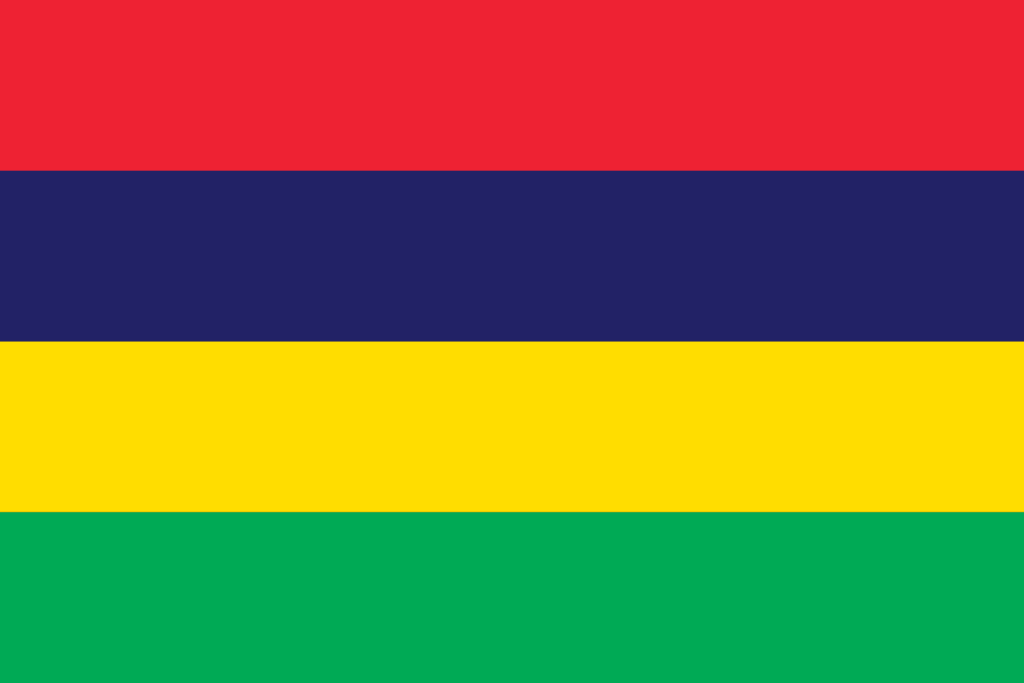
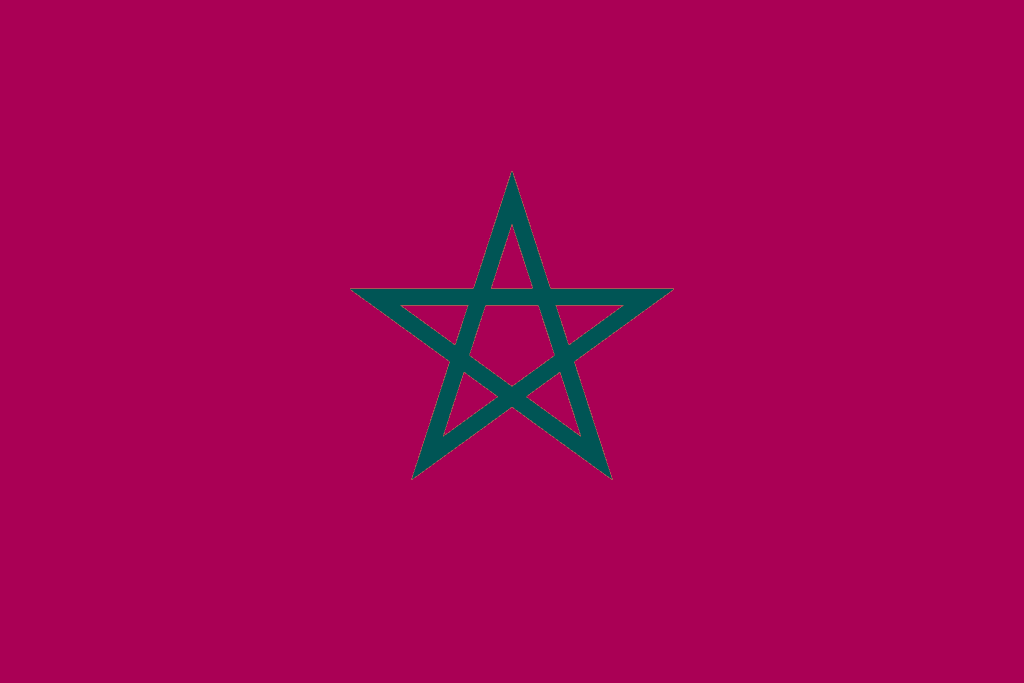
Realted Flags
Flag flying days
| Date | Flag Position | Occasion or Reason |
|---|
| July 6 | Full-mast | Independence Day |
| April 14 | Full-mast | Martyrs’ Day |
| Official mourning days | Half-mast | National mourning or death of leaders |
| National celebrations | Full-mast | Public holidays and government ceremonies |