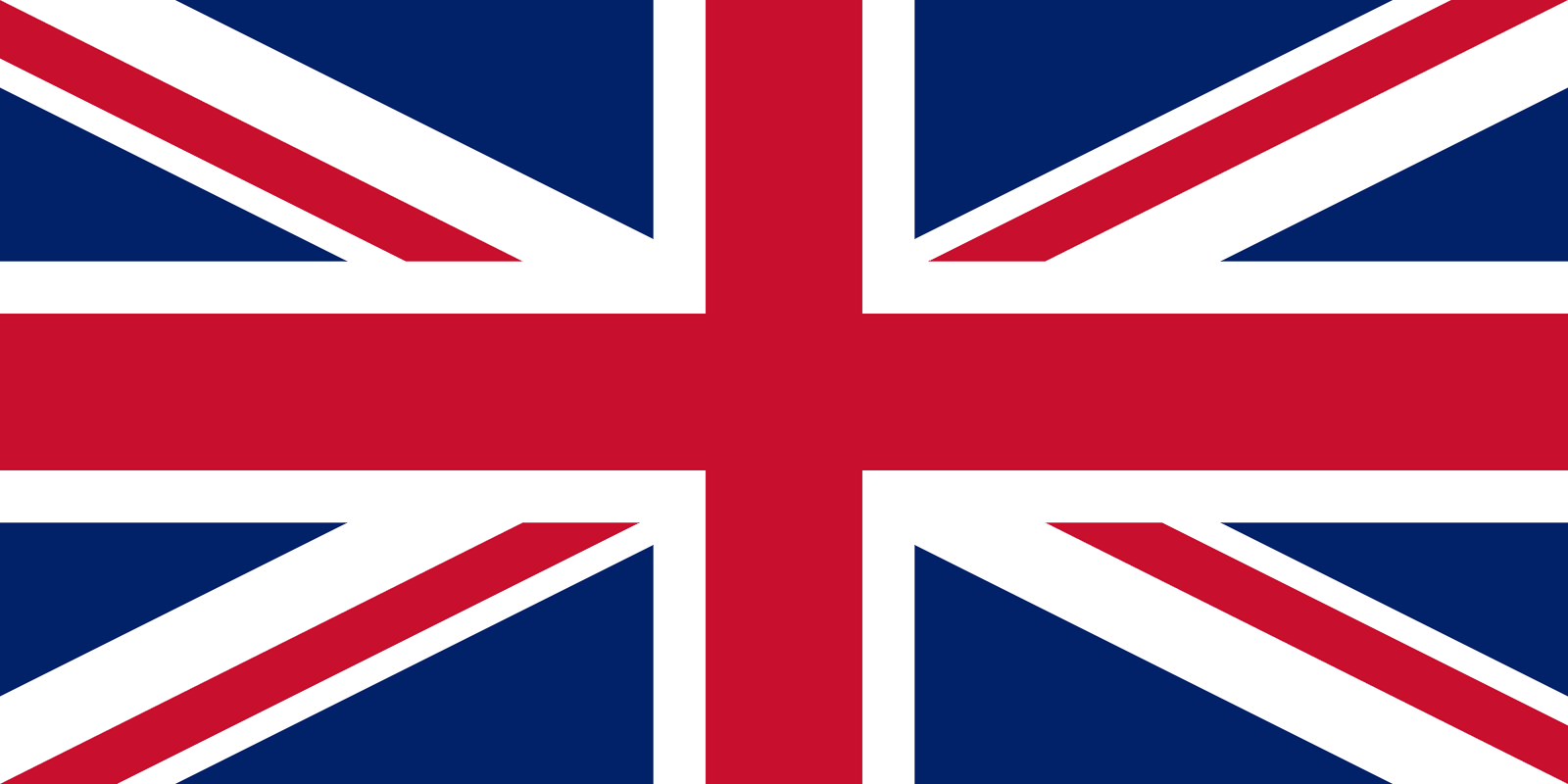
Flag of United Kingdom
| Legal Name | United Kingdom of Great Britain and Northern Ireland |
|---|---|
| Flag |
|
| Capital City |
London |
| Total Area | Approximately 243,610 km² |
| Land Area | Approximately 241,930 km² |
| Water Area | Approximately 1,680 km² |
| Population | Approximately 67 million |
| Major Cities | London (9.0M), Birmingham (1.1M), Manchester (550k), Glasgow (635k), Leeds (520k) |
| Currency | Pound Sterling (GBP) |
| GDP | Approximately USD 3.3 trillion |
| GDP Per Capita | Approximately USD 49,000 |
About of United Kingdom
The United Kingdom is a sovereign state located off the northwestern coast of mainland Europe. It consists of four constituent countries: England, Scotland, Wales, and Northern Ireland. The UK occupies the island of Great Britain, the northeastern part of the island of Ireland, and numerous smaller surrounding islands, giving it extensive coastlines along the Atlantic Ocean, North Sea, Irish Sea, and English Channel.
The country shares a land border only with the Republic of Ireland, while maritime borders connect it to several European neighbors. London, the capital and largest city, is one of the world’s leading global cities, serving as a major center for finance, culture, diplomacy, and education. Other important urban areas include Birmingham, Manchester, Glasgow, and Leeds.
The United Kingdom has a highly diverse population shaped by centuries of migration and global connections. It is fully recognized as a sovereign nation and plays a prominent role in international affairs. Strategically, the UK is significant due to its historical influence, nuclear capabilities, permanent membership on the United Nations Security Council, and its position as a bridge between Europe and the wider transatlantic world.
Etymology
The name “United Kingdom” reflects the political union of several historically independent kingdoms. “Great Britain” originally referred to the island comprising England, Scotland, and Wales, while “United Kingdom” emerged as these territories became politically unified.
The full legal name, “United Kingdom of Great Britain and Northern Ireland,” evolved following the partition of Ireland in the early 20th century. Over time, “UK” became the commonly used abbreviation, symbolizing unity under a single sovereign state while preserving distinct national identities.
History
Prehistoric and Ancient Civilizations
Human settlement in the British Isles dates back tens of thousands of years. Early inhabitants built monuments such as Stonehenge and developed agricultural societies during the Neolithic period.
Classical and Medieval Periods
The Roman Empire occupied much of Britain from the 1st to the 5th centuries, introducing urban planning, infrastructure, and governance. After Roman withdrawal, Anglo-Saxon kingdoms emerged, followed by Viking incursions and the Norman Conquest of 1066, which reshaped English society and governance.
Kingdoms and Dynasties
During the medieval period, England, Scotland, and Wales developed distinct political identities. Wales was incorporated into the English crown, while Scotland remained independent until the early modern era.
Formation of the United Kingdom
The Acts of Union in 1707 united England and Scotland, creating Great Britain. Ireland was later united with Great Britain in 1801, forming the United Kingdom. Following Irish independence in 1922, the state took its current form.
Modern Developments
The UK played a central role in the Industrial Revolution and built one of the largest empires in history. In the 20th century, it emerged from two world wars as a major global power, later transitioning into a post-imperial state. Recent decades have been marked by devolution, social change, and evolving relations with Europe and the wider world.
Government and Politics
The United Kingdom is a constitutional monarchy with a parliamentary democracy. The monarch serves as head of state, while executive power is exercised by the government led by the prime minister.
The UK does not have a single written constitution; instead, its constitutional framework is based on statutes, conventions, judicial decisions, and historical documents. Parliament is bicameral, consisting of the House of Commons and the House of Lords. The judiciary is independent, with the Supreme Court as the highest court.
Administratively, the UK includes devolved governments in Scotland, Wales, and Northern Ireland, alongside local authorities. The UK maintains extensive diplomatic relations and is an active member of international organizations. Its armed forces are among the most capable globally, with a focus on defense, deterrence, and international cooperation.
Economy
The United Kingdom has a highly developed, high-income economy and is one of the world’s largest financial centers. It is classified as a developed economy with a strong emphasis on services.
Key sectors include financial services, insurance, technology, creative industries, manufacturing, and pharmaceuticals. Agriculture plays a smaller but efficient role. Natural resources include oil and gas reserves in the North Sea.
Major trade partners include European countries, the United States, and emerging markets. Economic challenges include productivity growth, regional inequality, inflationary pressures, and adapting to global trade realignments. Long-term prospects remain supported by innovation, education, and global financial integration.
Demographics
The UK population is ethnically and culturally diverse, particularly in urban areas. Ethnic groups include people of European, Asian, African, Caribbean, and mixed heritage.
English is the primary language, with Welsh, Scottish Gaelic, and Irish recognized regionally. Christianity remains the largest religion, alongside Islam, Hinduism, Sikhism, Judaism, and a growing non-religious population.
The majority of residents live in urban and suburban areas. Population growth has moderated in recent years due to demographic changes and migration trends.
Culture and Society
British culture reflects a blend of tradition and modernity. The UK has made profound contributions to literature, music, science, and popular culture, influencing societies worldwide.
Cuisine varies regionally and increasingly reflects global influences. Social norms emphasize rule of law, tolerance, and civic responsibility. Major holidays include Christmas, Easter, and national observances tied to each constituent country.
Sports are deeply embedded in society, with football, rugby, cricket, and tennis enjoying widespread popularity.
Education and Healthcare
Education is compulsory for children and is overseen by devolved administrations. The UK is home to some of the world’s oldest and most prestigious universities and maintains high literacy rates.
Healthcare is primarily provided through the publicly funded National Health Service, which offers universal access. While healthcare outcomes are generally strong, challenges include funding pressures and demographic aging.
Geography and Climate
The UK features varied landscapes, including rolling plains, rugged highlands, mountains, rivers, and extensive coastlines. Notable features include the Scottish Highlands, Pennines, and major rivers such as the Thames and Severn.
The climate is temperate maritime, characterized by mild winters, cool summers, and regular rainfall. Natural hazards are generally limited but include flooding and coastal erosion. Environmental concerns focus on climate change, habitat protection, and sustainable development.
Flora and Fauna
The UK supports diverse ecosystems ranging from woodlands and wetlands to coastal habitats. Native species include red deer, foxes, badgers, and numerous bird species.
A network of national parks and protected areas works to conserve biodiversity and natural landscapes amid dense human settlement.
Map of United Kingdom
National symbols reflect the UK’s history and unity. These include the Union Flag, royal emblems, and culturally significant animals and plants associated with the constituent nations. The national anthem symbolizes continuity and the constitutional monarchy.
National Flag (Detailed Section)
The Union Flag combines the red cross of St. George (England), the white diagonal cross of St. Andrew (Scotland), and the red diagonal cross of St. Patrick (Ireland) on a blue field. Its design developed through successive unions of the kingdoms.
The flag symbolizes unity among the nations of the UK and is governed by established protocols regarding display, precedence, and respectful use.
Flag flying days
| Date | Flag Position | Occasion or Reason |
|---|---|---|
| Second Saturday in June | Full-mast | Monarch’s Official Birthday |
| November 11 | Full-mast | Remembrance Day |
| March 1 (Wales) | Full-mast | St. David’s Day |
| March 17 (Northern Ireland) | Full-mast | St. Patrick’s Day |
| April 23 (England) | Full-mast | St. George’s Day |
| November 30 (Scotland) | Full-mast | St. Andrew’s Day |
| As Proclaimed | Half-mast | National mourning |